
Personalized Treatment Planning: Genetic Testing in Istanbul Turkey
Cancer care is experiencing a profound paradigm shift globally. Historically, oncology relied on generalized treatment protocols based primarily on organ location, tumor size, and clinical staging. While standard chemotherapy, radiation, and surgery have saved countless lives, patients with identical cancer types often experienced vastly different treatment outcomes. Today, advanced molecular diagnostics have unlocked a deeper understanding of cancer: every tumor possesses a unique genomic signature driving its growth, progression, and treatment response.
Leading this innovative shift in international medical tourism is Biruni Hospital, located in the historical and medical hub of Istanbul, Turkey. Under the expert leadership of experienced oncologists such as Professor Ozcan Yildiz, Biruni Hospital integrates state-of-the-art molecular diagnostics into everyday clinical practice. By providing comprehensive Genetic Testing Oncology in Istanbul Turkey, the hospital empowers international patients with access to highly targeted, individualized therapeutic strategies. This in-depth guide explores how genetic profiling transforms oncology care, the vital distinction between germline and somatic mutations, and why choosing Cancer Genetic Testing in Istanbul Turkey at Biruni Hospital opens new horizons of hope for cancer patients worldwide.
Video Chapters & Quick Navigation
- Introduction to Oncology at Biruni Hospital
- Solid Tumors and Their Genetic Drivers
- Germline vs. Somatic Genetic Changes
- Clinical Benefits of Comprehensive Testing
- The Personalized Treatment Pathway
- Why Choose Biruni Hospital in Istanbul
- The International Patient Journey
- The Future of Cancer Therapeutics
Introduction to Advanced Oncology at Biruni Hospital
Biruni Hospital, situated in the heart of Istanbul, Turkey, stands as a beacon of clinical excellence and medical innovation. Named after the historic polymath Abu Rayhan al-Biruni, the institution embodies a legacy of rigorous scientific inquiry, patient-centric compassion, and cutting-edge technology. The oncology department at Biruni Hospital is recognized internationally for delivering world-class diagnostic, surgical, and therapeutic services across a wide spectrum of malignancies.
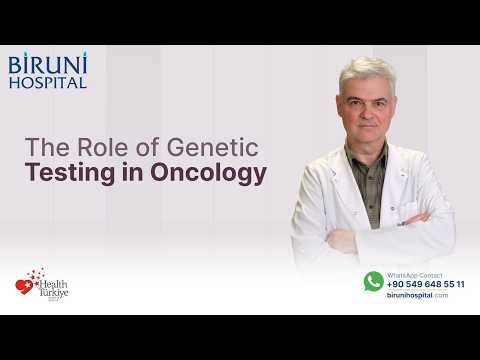
In a clinical overview shared at [00:00], Professor Ozcan Yildiz introduces his clinical specialization within the hospital. Professor Yildiz focuses heavily on localized and metastatic solid tumors, managing complex presentations across various tissue types. His daily practice involves treating prevalent malignancies including non-small cell lung cancer, colorectal cancer, prostate cancer, urinary bladder cancer, and diverse gastrointestinal (GI) cancers.
The oncology facility at Biruni Hospital combines multidisciplinary medical boards with state-of-the-art laboratory infrastructure. When patients seek Personalized Cancer Care in Istanbul Turkey, they gain access to integrated teams of medical oncologists, surgical specialists, radiation oncologists, biological pathologists, and clinical geneticists. This holistic framework ensures that every patient benefit from a thoroughly vetted treatment blueprint tailored precisely to their specific disease profile.
Solid Tumors and Their Underlying Genetic Drivers
Solid tumors account for the vast majority of adult cancer diagnoses worldwide. Whether originating in the delicate bronchial linings of the lungs, the mucosal walls of the colon, or the parenchymal tissues of the prostate and bladder, these tumors exhibit complex cellular growth mechanisms. As emphasized by Professor Yildiz at [00:15], solid tumors are fundamentally genetic diseases. Every tumor formation stems from dynamic changes within cellular DNA that override standard biological checks and balances.
In healthy biological tissues, cellular proliferation, repair, and programmed cell death (apoptosis) are strictly regulated by proto-oncogenes and tumor suppressor genes. However, when alterations or mutations occur within these vital genomic sequences, cells begin to divide uncontrollably, evade immune detection, stimulate localized blood vessel growth (angiogenesis), and invade surrounding anatomical structures.
Primary Solid Tumor Categories Evaluated via Genomic Profiling
- Non-Small Cell Lung Carcinomas (NSCLC): Frequently driven by targetable mutations in EGFR, ALK, ROS1, KRAS, and RET genes.
- Colorectal Malignancies: Evaluated routinely for RAS/RAF mutations, microsatellite instability (MSI-H), and mismatch repair (MMR) deficiencies.
- Prostate & Urological Malignancies: Analyzed for homologous recombination repair (HRR) gene alterations including BRCA1, BRCA2, and ATM.
- Gastrointestinal & Gastric Cancers: Profiled for HER2 amplification, NTRK gene fusions, and tumor mutational burden (TMB).
- Metastatic Solid Tumors of Unknown Primary: Sequenced comprehensively to pinpoint underlying tissue origins and specific targetable biomarkers.
Because every individual solid tumor possesses a unique pattern of genomic alterations, universal treatment protocols often fall short. At [00:29], Professor Yildiz highlights the imperative clinical rule: oncologists must test each tumor genetically to uncover its underlying natural pathogenesis. Identifying these precise molecular drivers allows medical teams to transition away from empirical treatment strategies toward highly predictable targeted interventions.
Distinguishing Germline vs. Somatic Genetic Alterations
A crucial foundation of modern cancer diagnostics lies in differentiating between two distinct categories of genetic alterations: germline mutations and somatic mutations. As detailed by Professor Yildiz starting at [00:34], understanding whether a genetic change is inherited or acquired dictates both therapeutic selection and long-term hereditary risk management for the patient's family.
Germline alterations originate within reproductive cells (egg or sperm) and are present in every cell of the offspring's body from conception onward. As noted at [00:40], germline mutations represent hereditary cancer syndromes passed down through generations—from parents to siblings and children. Individuals carrying germline mutations, such as BRCA1/2 or Lynch syndrome gene variants, possess a significantly higher baseline risk of developing specific cancers over their lifetime.
Conversely, somatic alterations occur spontaneously in non-reproductive body cells throughout an individual's lifetime. As explained at [00:57], somatic changes accumulate gradually as a patient ages due to environmental exposures, metabolic processes, DNA replication errors, and biological factors. Somatic mutations are isolated exclusively within tumor tissues and are not transmissible to future generations.
| Feature Comparison | Germline Genetic Changes | Somatic Genetic Changes |
|---|---|---|
| Origin & Source | Inherited from parents via germ cells (sperm or egg). | Acquired spontaneously in body cells over time. |
| Cellular Presence | Present in every cell throughout the entire body. | Restricted strictly to tumor tissues and cancer cells. |
| Hereditary Risk | High probability of transmission to siblings and children. | Non-heritable; cannot be passed to family members. |
| Primary Testing Method | Peripheral blood sampling or buccal (saliva) swab analysis. | Tumor tissue biopsy profiling or liquid biopsy (ctDNA). |
| Main Clinical Goal | Risk assessment, early screening, family counseling. | Selecting targetable therapies, PARP/tyrosine kinase inhibitors. |
At [01:09], Professor Yildiz concludes with a vital recommendation for comprehensive clinical management: oncologists must test all genetic changes, evaluating both hereditary germline variants and acquired somatic mutations. Analyzing both domains guarantees that no critical therapeutic target or preventative insight is overlooked.
Clinical Benefits of Comprehensive Cancer Genetic Testing
The introduction of Next-Generation Sequencing (NGS) and multi-gene panel profiling has redefined modern clinical oncology. Patients undergoing Cancer Genetic Testing in Istanbul Turkey benefit from diagnostic precision that directly influences treatment efficacy, minimizes unnecessary pharmaceutical toxicity, and improves long-term survival statistics.
Key Clinical Advantages of Molecular Profiling
- Precision Targeting: Identifies specific oncogenic mutations susceptible to targeted small-molecule inhibitors and monoclonal antibodies.
- Immunotherapy Guidance: Evaluates tumor mutational burden (TMB), PD-L1 expression, and microsatellite instability to predict response to immune checkpoint inhibitors.
- Avoidance of Ineffective Treatments: Prevents administration of treatments known to fail against specific mutations (e.g., avoiding anti-EGFR therapies in KRAS-mutated colorectal cancer).
- Monitoring Treatment Resistance: Enables liquid biopsy surveillance to detect secondary resistance mutations early, allowing timely treatment adjustments.
- Family Risk Assessment: Uncovers hereditary syndromes, enabling proactive screening, preventive interventions, and cascade testing for relatives.
By assessing both somatic driver mutations within the tumor and baseline germline DNA from blood samples, physicians at Biruni Hospital assemble an actionable genomic report. This rigorous scientific approach transforms oncology from a trial-and-error model into an exact science tailored to the individual patient.
The Personalized Cancer Treatment Pathway at Biruni Hospital
Delivering true precision oncology requires a seamless diagnostic and therapeutic infrastructure. At Biruni Hospital, the delivery of Personalized Cancer Care in Istanbul Turkey follows a structured, multi-phase clinical pathway designed for accuracy, speed, and patient comfort.
Upon arrival or initial online consultation, international patients undergo complete clinical re-evaluation. Existing tissue blocks, biopsy slides, and radiological imaging are reviewed by senior pathologists and radiologists. If additional tissue sampling is necessary, minimally invasive image-guided needle biopsies or liquid biopsies are performed on-site.
Step-by-Step Precision Oncology Care Flow
- Comprehensive Clinical Intake: Full medical history review, physical examination, and family pedigree analysis conducted by senior oncologists.
- Specimen Acquisition & Quality Control: Surgical tissue biopsy or peripheral blood draw prepared for high-depth Next-Generation Sequencing.
- Genomic Sequencing & Bioinformatics: Comprehensive profiling of cancer gene panels in accredited molecular pathology laboratories.
- Molecular Tumor Board Review: Interdisciplinary panel discussion analyzing genomic findings to select optimal FDA/EMA-approved targeted drugs or clinical trial options.
- Tailored Administration & Monitoring: Delivery of targeted therapies, immunotherapy, or adjusted chemotherapy regimens with regular liquid biopsy tracking.
This structured workflow eliminates diagnostic ambiguity and ensures that patients receive scientifically backed treatments tailored to their tumor's exact molecular alterations.
Why Choose Biruni Hospital and Istanbul for Precision Cancer Care
Istanbul, Turkey has emerged as one of the premier global destinations for specialized medical care, attracting hundreds of thousands of international patients annually. Choosing Biruni Hospital for Genetic Testing Oncology in Istanbul Turkey offers distinct medical, organizational, and financial advantages.
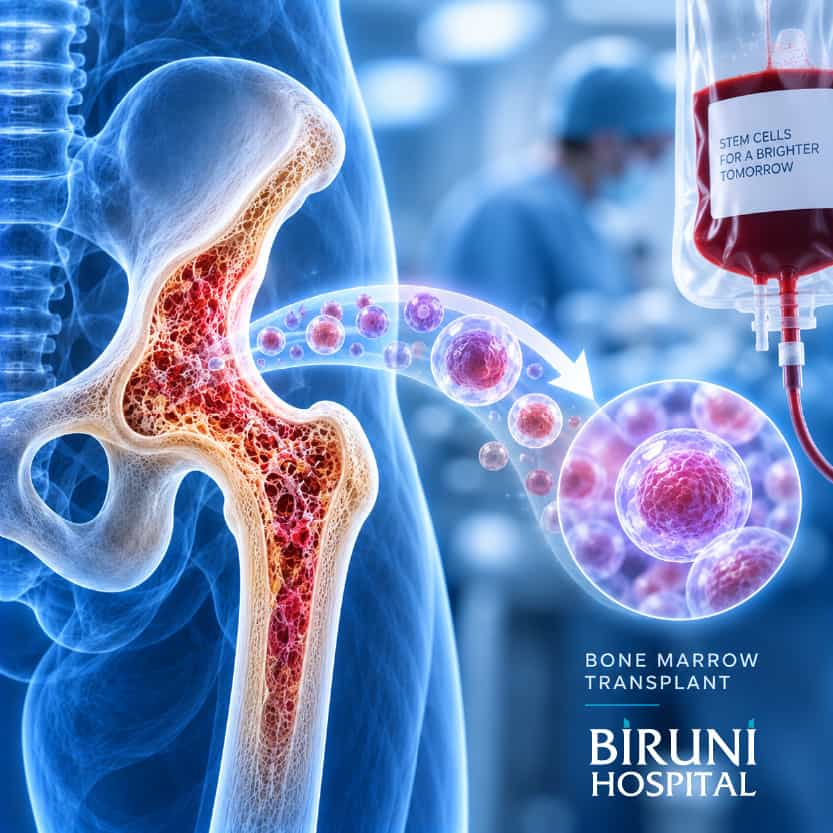
Biruni Hospital combines world-class medical expertise with university-affiliated research infrastructure. The institution features JCI-accredited clinical standards, state-of-the-art PET-CT imaging, advanced linear accelerators for radiation therapy, and specialized bone marrow transplant units. Furthermore, the hospital's academic connection fosters continuous integration of the latest oncological research and international clinical guidelines.
Key Advantages of Treatment at Biruni Hospital
- Expert Medical Faculty: Led by respected professors and subspecialists like Professor Ozcan Yildiz with extensive international clinical experience.
- Advanced Laboratory Technology: In-house molecular pathology platforms ensuring rapid turnaround times for genetic testing results.
- Cost-Effective Excellence: Top-tier precision oncology services available at a fraction of Western European or North American healthcare costs.
- Comprehensive International Services: Dedicated multi-lingual patient coordinators managing travel, translation, airport transfers, and accommodation.
- Strategic Geographical Location: Seamlessly connecting Europe, Asia, and the Middle East with direct flight connectivity into Istanbul.
International patients at Biruni Hospital experience an integrated environment where scientific innovation meets compassionate patient care, making complex cancer treatment manageable and stress-free.
Navigating the International Patient Experience at Biruni Hospital
Traveling abroad for cancer treatment is a significant decision that requires meticulous planning and support. Biruni Hospital's International Patient Center provides end-to-end concierge services designed to make every step of the journey seamless and reassuring for patients and their families.
Prior to traveling to Turkey, patients can request a preliminary remote document review. By submitting medical records, pathology reports, and imaging scans electronically, the oncology team can provide an initial assessment and recommend appropriate diagnostic sequencing options. This ensures that travel plans are optimized before departure.
Comprehensive Concierge Services for Overseas Patients
- Pre-Arrival Teleconsultations: Remote medical evaluations and secondary opinions with senior medical oncologists.
- Seamless Travel Coordination: Assistance with medical visa documentation, priority flight arrangements, and dedicated airport transfers.
- Dedicated Language Support: Full-time personal medical interpreters fluent in English, Arabic, Russian, French, and other major languages.
- Accommodation & Logistics: Partnered hotel options near the hospital complex customized for patient comfort and family stay.
- Post-Treatment Remote Monitoring: Continued post-discharge coordination and remote follow-up consultations upon returning home.
This level of support minimizes travel-related stress, allowing patients to focus entirely on their recovery and therapeutic journey.
The Future of Precision Oncology & Targeted Therapeutics
The field of precision oncology is advancing at an unprecedented pace. Innovations in liquid biopsy technology, single-cell sequencing, artificial intelligence in bioinformatics, and antibody-drug conjugates (ADCs) are continually expanding the boundaries of cancer care.
Liquid biopsies, which detect circulating tumor DNA (ctDNA) from a standard blood sample, are transforming how clinicians monitor treatment response and disease recurrence. Rather than relying solely on periodic CT or MRI scans, oncologists can track tumor dynamics in real-time, detecting molecular resistance weeks or months before physical tumor progression becomes visible.
Furthermore, the integration of artificial intelligence and machine learning algorithms allows bioinformaticians to interpret complex genomic interactions rapidly. This enables clinicians to identify rare gene fusions and targetable driver mutations that might previously have gone unnoticed. Biruni Hospital remains committed to staying at the forefront of these advancements, continuously incorporating next-generation diagnostic tools into its clinical practice.
As science uncovers additional genomic markers, the division between organ-specific oncology and molecular oncology will continue to narrow. Tumor-agnostic therapies—drugs approved based on molecular biomarkers rather than organ origin—represent the future of treatment. Through comprehensive molecular testing and individualized treatment planning, Biruni Hospital offers cancer patients worldwide a path toward higher efficacy, fewer side effects, and improved long-term outcomes.
Ready to Explore Precision Cancer Care in Istanbul?
PlacidWay Medical Tourism connects you with top-rated hospitals like Biruni Hospital, offering state-of-the-art genetic testing and Personalized Cancer Care in Istanbul Turkey. Contact our team today to get your personalized quote and medical evaluation.
GET A FREE QUOTEView Full Video Transcript
[00:00:00] Hello, I am Professor Ozcan Yildiz from
[00:00:02] Biruni Hospital.
[00:00:03] [music]
[00:00:04] I am interested in localized and
[00:00:05] metastatic solid tumors such as lung
[00:00:08] cancer, colorectal cancer,
[00:00:10] prostate cancer, bladder cancer, and GI
[00:00:13] cancers. Solid tumors,
[00:00:15] [music]
[00:00:15] especially, are very important tumors
[00:00:18] which are related to genetic background.
[00:00:20] Every solid tumor has a genetic
[00:00:23] change in their natural pathogenesis
[00:00:26] because they are related to
[00:00:29] genes. We have to test each tumor
[00:00:32] genetically. We have two types of
[00:00:34] genetic change,
[00:00:36] which is germline genetic changes and
[00:00:38] somatic genetic changes.
[00:00:40] Germline means
[00:00:42] the tumor is coming from the ancestries
[00:00:45] of the patients. For example, the mother
[00:00:47] or father
[00:00:48] [music]
[00:00:48] has a tumor and they transmit their
[00:00:51] disease to their siblings. This
[00:00:54] is genetic, but somatic is different.
[00:00:57] Somatic means
[00:00:58] the tumor
[00:01:02] originates from somatic changes
[00:01:02] in the tumor itself. As the patient
[00:01:04] ages, somatic changes accumulate and
[00:01:07] then a specific type of tumor
[00:01:09] occur. Therefore, we have to test all
[00:01:12] these genetic changes,
[00:01:13] either genetics or somatic.
[00:01:19] [music]























Share this listing