
Understanding the Knee Surface Prosthesis in Hamburg, Germany
Knee joint degeneration caused by osteoarthritis, severe wear, or trauma can severely impair mobility and quality of life. When conservative treatments such as physical therapy, joint injections, and medication no longer offer relief, advanced orthopedic surgery becomes the most effective path toward restoring pain-free movement. Patients worldwide frequently seek surgical solutions at premier medical centers like Asklepios Kliniken Hamburg in Germany, known for excellence in joint reconstruction and state-of-the-art surgical technology.
Among the various arthroplasty techniques available today, the surface replacement procedure stands out as the most widely performed and highly successful treatment for localized joint degeneration. Rather than removing the entire knee structure, this approach preserves maximum bone stock and natural ligaments. In this guide, we explore the mechanical principles, surgical steps, candidate selection criteria, and rehabilitation expectations surrounding Knee Surface Prosthesis in Hamburg Germany, offering patients a detailed overview of what to expect when undergoing Knee Surface Replacement in Hamburg Germany.
Video Chapters & Quick Navigation
What Is a Knee Surface Prosthesis?
A surface prosthesis, often referred to as a resurfacing implant, represents a specific philosophical and surgical approach to joint restoration. Unlike total joint replacement systems that require significant bone resection, a resurfacing device acts as a precise cap over damaged articular surfaces. As highlighted at [00:03], surface replacement is the most frequently utilized prosthetic technique worldwide due to its ability to retain healthy underlying bone structures while restoring smooth articulation.
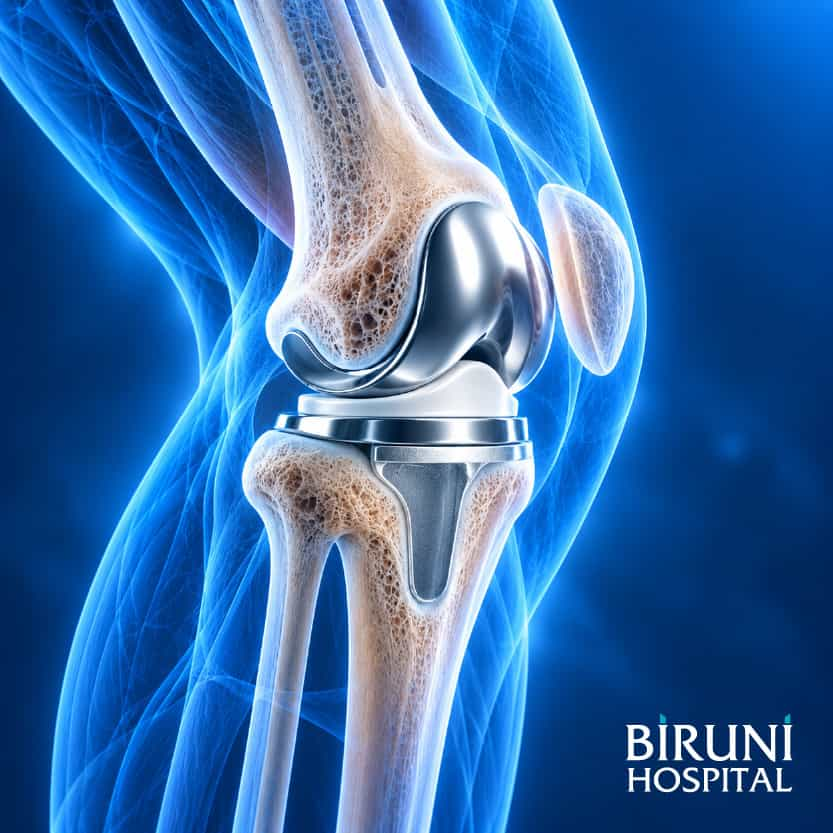
When patients inquire about receiving a Knee Surface Prosthesis in Hamburg Germany, they are often suffering from advanced gonarthrosis where articular cartilage has thinned or entirely worn away. The primary objective is to replace only the damaged gliding surfaces on the distal femur and proximal tibia. By attaching thin, durable metal caps lined with highly cross-linked polyethylene inserts, orthopedic specialists reproduce the natural anatomy of the knee joint without compromising its structural integrity.
The primary indications for choosing resurfacing solutions include:
- Severe pain and functional impairment resulting from osteoarthritis or post-traumatic arthritis.
- Intact lateral and collateral ligamentous structures that provide baseline joint stability.
- Adequate bone density capable of supporting surface capping components without risk of subsidence.
- Failed conservative treatments, including intra-articular injections, specialized bracing, and anti-inflammatory drug regimes.
- Desire for a natural post-operative gait and preservation of joint proprioception.
The Surgical Mechanics: How Surface Resurfacing Preserves Natural Joint Structure
To fully grasp why resurfacing is preferred by leading orthopedic surgeons, it is essential to understand the structural dynamics of the operation. During traditional invasive joint replacements, substantial portions of the femoral condyles and tibial plateau are sawed away to accommodate stem-anchored components. In contrast, at [00:16], the expert notes that during a surface replacement, the joint itself is not removed; rather, only the precise, worn surfaces are surgically shaved down and removed.
This conservative bone removal process allows surgeons to fit customized prosthetic components directly onto the natural contours of the patient's bone. The femoral component covers the end of the thigh bone with a contoured metal shield, while the tibial component provides a smooth tray topped with a specialized plastic spacer. Because the foundational architecture of the joint remains untouched, the mechanical axis of the leg is corrected with minimal disruption to surrounding soft tissues.
Patients undergoing Knee Surface Replacement in Hamburg Germany benefit immensely from this tissue-sparing mechanism. Because bone stock is conserved, future revision surgeries—should they ever become necessary decades down the road—are vastly simpler to perform compared to revision procedures required after total stem-anchored joint replacements.
Preservation of Natural Ligaments and Kinematics
One of the most notable advantages of surface resurfacing is the preservation of crucial ligamentous structures within the knee capsule. As emphasized at [00:31], the patient's natural ligaments remain entirely intact during the operation. This means that after the surgical resurfacing is complete, the joint continues to function in a manner that closely mimics a natural, healthy joint.
The retention of the anterior cruciate ligament (ACL) and posterior cruciate ligament (PCL)—when clinically viable—alongside the medial and lateral collateral ligaments, delivers distinct physiological advantages:
- Enhanced Kinematics: The natural roll-back mechanism of the knee during flexion is maintained, allowing for deeper bending and natural movement patterns.
- Superior Proprioception: Sensory receptors within natural ligaments remain functional, providing the brain with real-time feedback regarding joint position and balance.
- Improved Stability: Natural soft tissue tension prevents unnatural slipping or mechanical instability during active physical movements.
- Quicker Adaptation: Patients report that the implant feels like their own natural joint rather than an artificial mechanical device.
For individuals seeking high-precision procedures like Knee Replacement in Hamburg Germany, preserving these soft tissue structures translates directly to higher patient satisfaction scores and smoother post-operative gait restoration.
Comparing Arthroplasty Techniques: Surface vs. Total Joint Replacement
Choosing the right orthopedic intervention requires a clear understanding of how surface resurfacing differs from conventional total or constrained joint prostheses. Below is a detailed breakdown comparing the primary functional and structural characteristics of these procedures:
| Feature / Metric | Knee Surface Prosthesis | Conventional Total Knee Replacement |
|---|---|---|
| Bone Resection | Minimal; shaves only worn surface layers. | Substantial; cuts away end portions of femur and tibia. |
| Ligament Preservation | Preserves cruciate and collateral ligaments. | Often requires sacrificing the anterior (and sometimes posterior) cruciate ligament. |
| Joint Kinematics | Nearly identical to natural knee mechanics. | Altered mechanical flex motion dictated by prosthesis design. |
| Recovery & Rehabilitation | Faster physical recovery and rapid muscle re-education. | Standard multi-month rehabilitation period. |
| Revision Complexity | Simpler revision due to preserved bone stock. | Complex revision requiring specialized stem extensions and bone grafts. |
Orthopedic Excellence at Asklepios Kliniken Hamburg
Germany has long been established as a global hub for medical precision, engineering rigor, and healthcare innovation. Within this landscape, Asklepios Kliniken Hamburg stands as one of the premier hospital networks in Europe, renowned for its specialized orthopedic and joint replacement departments. Patients traveling internationally for a top-tier Knee Implant in Germany find world-class care, advanced diagnostic imaging, and highly experienced surgical teams at Asklepios facilities.
Key standards that define orthopedic care at Asklepios Kliniken Hamburg include:
- Computer-Assisted Navigation & Robotics: Utilizing high-precision intraoperative tracking to ensure ideal alignment and accurate component positioning.
- Certified Endoprosthetics Centers: Adhering to strict quality criteria, high surgical volumes, and regular third-party clinical audits.
- Patient-Specific Implants: Utilizing 3D pre-operative planning and CT modeling to select prostheses tailored to individual anatomical variations.
- Integrated Rehabilitation Pathways: Combining immediate post-operative mobilization with structured physiotherapy to ensure optimal long-term joint function.
- Multi-Lingual International Patient Care: Offering seamless coordination, translation services, and administrative support for global travelers.
Diagnostic Process and Determining Candidate Eligibility
Determining whether a patient is suitable for a surface prosthesis involves a comprehensive diagnostic evaluation. Orthopedic specialists at Asklepios Kliniken Hamburg perform thorough clinical assessments to evaluate joint alignment, ligament stability, range of motion, and localized pain distribution.
The diagnostic protocol typically involves:
- Weight-Bearing Digital Radiographs: Full-length leg X-rays to assess the mechanical load axis and measure joint space narrowing.
- Magnetic Resonance Imaging (MRI): Detailed soft-tissue scanning to verify that the cruciate and collateral ligaments remain intact and healthy.
- Bone Density (DEXA) Scans: Evaluating surrounding bone quality to ensure strong fixation of the resurfacing caps.
- Gait Analysis: Assessing functional biomechanics during walking to pinpoint structural imbalances.
Ideal candidates for surface resurfacing typically present with intact joint ligaments and localized cartilage wear. If severe bone deformities or widespread ligament loss are detected during evaluation, alternative prosthetic options may be recommended to guarantee long-term stability.
Post-Operative Rehabilitation and Recovery Timeline
Recovery following a surface joint replacement is generally fast and structured, thanks to the preservation of natural soft tissue structures and conservative bone cuts. Rehabilitation begins almost immediately after surgery, with physical therapists guiding patients through passive and active movement exercises within the first 24 hours.
The typical recovery timeline unfolds across distinct phases:
- Days 1–5 (Inpatient Hospitalization): Early mobilization, pain management, continuous passive motion (CPM) therapy, and walking assistance using crutches or a walker.
- Weeks 2–6 (Outpatient Rehabilitation): Progressive weight-bearing, gait training, quadriceps strengthening, and achieving at least 110 to 120 degrees of knee flexion.
- Weeks 6–12 (Functional Recovery): Transitioning to independent walking, stationary cycling, swimming, and returning to everyday daily activities.
- Months 3–6 (Full Integration): Resuming low-impact sports such as hiking, golfing, and cycling with full joint confidence.
Because the cruciate ligaments are retained during resurfacing, patients experience a smoother, more natural transition during gait re-education, avoiding the "mechanical" sensation sometimes reported with traditional implants.
Navigating Medical Tourism for Joint Surgery in Hamburg
Traveling abroad for orthopedic care requires careful planning and coordination. Germany remains a premier destination for medical travelers due to transparent healthcare regulations, rigorous hygiene standards, and internationally certified clinical protocols. Hamburg, as one of Germany's major cultural and economic centers, provides an ideal environment for recovery, boasting world-class infrastructure and peaceful surroundings.
International patients planning their surgical trip can expect a streamlined process:
- Remote Case Review: Surgeons review digital X-rays and MRI scans prior to travel to confirm eligibility for resurfacing.
- Structured Treatment Packages: Comprehensive planning covering pre-operative consultations, surgical fees, implant costs, hospital stays, and immediate post-operative rehabilitation.
- Dedicated Travel Coordination: Assistance with visa support documents, medical translation, airport transfers, and local accommodation arrangements.
By pairing advanced technology with specialized surgical expertise, receiving treatment at Asklepios Kliniken Hamburg offers international patients a reliable route to restoring active, pain-free mobility.
Ready to Restore Your Mobility in Germany?
PlacidWay Medical Tourism connects you with top orthopedic specialists for Knee Implant in Germany at Asklepios Kliniken Hamburg. Discover high-quality knee resurfacing solutions tailored to your life.
GET A FREE QUOTEView Full Video Transcript
[00:00:01] [Music]
[00:00:03] The surface replacement is the type of prosthesis that is actually used most frequently worldwide.
[00:00:07] With this type of prosthesis, all the worn surfaces of the knee joint are replaced by the artificial joint.
[00:00:16] It is called a surface replacement because the joint itself is not removed.
[00:00:20] Instead, only the worn surfaces are removed during the operation.
[00:00:27] The joint is then, so to speak, covered with the prosthetic components.
[00:00:31] The ligaments remain intact, meaning that the joint functions in the end in a similar way to a natural joint.
[00:00:39] [Music]





















Share this listing