


Shoulder Replacement for Seniors: Why Turkey is a Prime Choice
Key Takeaways for Senior Patients
- Massive Cost Savings: Shoulder Replacement Surgery for Seniors in Turkey provides up to 70% savings without compromising on medical implant quality or surgical expertise.
- Advanced Geriatric Safety: Hospitals utilize strict cardiovascular and respiratory screening protocols tailored for seniors to minimize anesthesia risks.
- State-of-the-Art Technology: Access to reverse shoulder arthroplasty, robotic-assisted joint replacement, and FDA-approved titanium implants.
- Holistic Rehabilitation: Programs include immediate post-operative physical therapy to prevent joint stiffness and accelerate healing.
- Seamless Coordination: PlacidWay offers expertly vetted medical providers to guarantee a secure, transparent, and high-quality surgical experience.
Why is Turkey a top choice for shoulder replacement for seniors?
Over the last decade, Turkey has transformed into a global hub for specialized orthopedic care. For older adults suffering from debilitating osteoarthritis or severe rotator cuff injuries, finding high-quality, timely, and affordable care is critical. The nation's healthcare infrastructure features modern facilities that frequently mirror or exceed the standards found in North America and Western Europe, making it an optimal destination for complex joint reconstructions.
One of the primary drivers making Turkey a top choice is the emphasis on senior-specific medical protocols. Older patients often present with comorbidities such as hypertension, diabetes, or cardiovascular issues. Turkish hospitals that cater to international patients feature robust multidisciplinary teams—comprising cardiologists, internal medicine specialists, and anesthesiologists—who collaborate closely with orthopedic surgeons to ensure that seniors are thoroughly optimized before entering the operating theater.
Furthermore, the growth of medical tourism in Turkey has resulted in an ecosystem specifically designed to support international patients. From the moment an elderly patient arrives, they are supported by patient coordinators, language translators, and dedicated nursing staff. This holistic environment reduces the anxiety associated with traveling for medical care and allows seniors to focus entirely on their recovery and physical rehabilitation.
How much does a shoulder replacement surgery for seniors cost in Turkey?
Understanding the financial aspects of joint replacement is vital for seniors living on fixed incomes. In the United States, an uninsured or underinsured patient can expect to pay upwards of $25,000 to $35,000 out of pocket for a shoulder replacement. In contrast, the comprehensive cost in Turkey covers not just the surgeon’s fee, but also the anesthesia, operating room charges, standard globally recognized implants (such as Zimmer or Stryker), and the initial days of hospital recovery.
The drastically lower pricing is not indicative of inferior care. Rather, it reflects Turkey's lower cost of living, favorable currency exchange rates, and government subsidies aimed at bolstering the medical tourism sector. This economic advantage allows seniors to access top-tier medical expertise without depleting their retirement savings.
Below is a comparative breakdown illustrating the financial advantages of choosing Turkey over other Western nations for this orthopedic procedure.
| Country | Estimated Cost (USD) | Quality of Care / Implants |
|---|---|---|
| Turkey | $6,000 - $8,500 | Excellent (FDA-approved implants, JCI hospitals) |
| United States | $25,000 - $40,000+ | Excellent |
| United Kingdom | $15,000 - $22,000 | Excellent |
| Canada | $18,000 - $25,000 | Excellent |
Expert Medical Insight
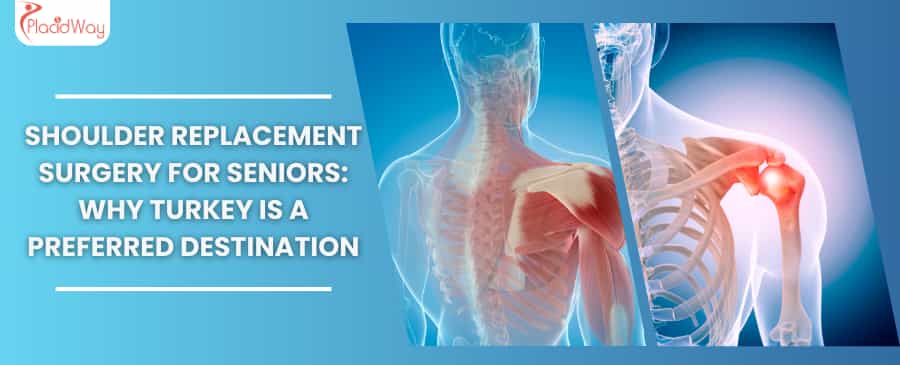
For seniors experiencing massive rotator cuff tears combined with severe arthritis—a condition known as cuff tear arthropathy—standard shoulder replacements often fail. In these cases, Turkish surgeons excel at performing Reverse Total Shoulder Replacement, which alters the biomechanics of the shoulder to rely on the deltoid muscle, successfully restoring arm mobility even in advanced age.
Is it safe for older adults to undergo shoulder surgery abroad?
- JCI-Accredited Hospitals: Many medical facilities in Turkey hold Joint Commission International (JCI) accreditation. This ensures they adhere to the same rigorous safety, hygiene, and clinical care standards required of top-tier hospitals in the United States.
- Comprehensive Pre-Operative Screening: Senior patients undergo exhaustive testing before surgery. This includes EKGs, echocardiograms, extensive blood panels, and pulmonary function tests to verify that their heart and lungs can safely handle anesthesia.
- Specialized Anesthesia Protocols: Instead of general anesthesia alone, surgeons often utilize advanced regional nerve blocks (like interscalene blocks). This significantly reduces post-operative pain, limits the need for heavy systemic narcotics, and lowers cognitive risks for elderly patients.
- Intensive Care Availability: High-quality medical centers are equipped with advanced Intensive Care Units (ICUs). Should a senior patient experience any unexpected fluctuations in blood pressure or respiratory function, immediate, life-saving intervention is on hand.
- Strict Infection Control: Surgical site infections are a primary concern for seniors. Turkish hospitals utilize ultra-clean operating theaters with laminar airflow systems and strictly enforce prophylactic antibiotic protocols to minimize infection risks.
What types of shoulder replacement surgeries are available in Turkey?
The specific type of surgery a senior requires depends heavily on the condition of their rotator cuff and the extent of bone loss in the shoulder joint. A Total Anatomic Shoulder Replacement is the traditional approach. During this procedure, the arthritic ball (humeral head) is replaced with a smooth metal ball, and the socket (glenoid) is fitted with a durable plastic cup. This is ideal for seniors with severe osteoarthritis but who still possess a healthy, intact rotator cuff tendon.
For older adults who have suffered irreversible damage to their rotator cuff alongside arthritis, a Reverse Total Shoulder Replacement is often the surgical method of choice. This innovative procedure switches the anatomy—the metal ball is attached to the shoulder bone, and the plastic socket is attached to the arm bone. This mechanical shift allows the patient to lift their arm using the larger deltoid muscle, bypassing the torn rotator cuff entirely.
Additionally, in cases where only the humeral head is severely damaged and the socket remains relatively healthy, surgeons may opt for a Partial Shoulder Replacement (Hemiarthroplasty). Turkish orthopedic surgeons utilize cutting-edge 3D pre-operative planning software to map out the exact implant size and surgical angle, minimizing bone loss and maximizing the longevity of the joint for the patient.
How do I prepare for orthopedic surgery as a senior patient?
- Medical Clearance: Before flying to Turkey, consult with your primary care physician or cardiologist. A formal medical clearance confirming your fitness for surgery and international travel is a crucial first step for senior safety.
- Medication Management: Blood thinners, NSAIDs, and certain herbal supplements must be paused days or weeks before surgery to prevent excess bleeding. Your Turkish surgical team will provide a strict timeline for tapering off these medications.
- Pre-habilitation Exercises: Engaging in gentle, targeted exercises to strengthen the core, back, and unaffected arm muscles will make post-surgery mobility much easier. A stronger body recovers significantly faster from orthopedic trauma.
- Home Modification Planning: Since you will return home with one arm immobilized in a sling for several weeks, prepare your living space beforehand. Move everyday items to waist height, install safety rails in the shower, and secure loose rugs to prevent fall hazards.
- Packing Smartly: Pack loose-fitting button-down or zip-up shirts. You will not be able to pull clothing over your head for several weeks following a shoulder replacement. Slip-on shoes are also highly recommended.
Did You Know?
Modern shoulder implants used in Turkish hospitals are composed of highly advanced biomaterials, including titanium alloys and cross-linked polyethylene. With proper rehabilitation and care, these implants boast a survival rate of over 90% at the 15-year mark, ensuring long-lasting relief for seniors.
What is the typical recovery process for seniors after shoulder surgery?
The initial recovery phase begins immediately in the Turkish hospital. To ensure senior patients are safe and pain-free, they generally remain admitted for 3 to 5 days. During this time, nurses manage pain through IV medications and nerve blocks. Physical therapy starts on day one, focusing strictly on passive range of motion—where the therapist moves the arm without the patient actively flexing the shoulder muscles. This early movement is critical to prevent scar tissue build-up and "frozen shoulder."
Upon discharge from the hospital, the senior patient will wear a specialized sling to protect the newly reconstructed joint. For the next 4 to 6 weeks, active lifting, pushing, or pulling is strictly prohibited. However, the patient will be given a specific set of at-home exercises focusing on moving the hand, wrist, and elbow to maintain blood flow and prevent joint stiffness. Sleep is often the most challenging part of this phase, with many seniors finding it more comfortable to sleep in a recliner rather than flat in a bed.
As the soft tissues heal, the rehabilitation transitions into active-assisted, and eventually, active strengthening exercises. Around the 3-month mark, most seniors report a profound reduction in their baseline arthritis pain and can resume light daily activities, driving, and self-care. Maximum medical improvement and a return to hobbies like golf or swimming typically occur between 6 and 9 months post-operation.
How do I select the right shoulder replacement surgery for seniors clinic in Turkey?
- Surgeon Expertise & Volume: The most crucial factor is the surgeon's experience. Look for orthopedic surgeons who perform a high volume of shoulder replacements annually and have specific fellowship training in shoulder and upper extremity reconstruction.
- International Accreditation: Ensure the clinic or hospital holds prestigious certifications, such as the JCI (Joint Commission International) or ISO. These accreditations guarantee strict adherence to global safety and hygiene protocols.
- Implant Transparency: A reputable clinic will be completely transparent about the hardware they use. Confirm that they utilize FDA-approved or CE-marked implants from major global biomedical companies to ensure longevity and safety.
- Integrated Rehabilitation: Superior clinics do not just perform the surgery; they offer integrated physical therapy services. Having access to experienced physiotherapists immediately post-surgery is vital for a senior’s long-term functional outcome.
- Language and Patient Support: Ensure the facility has a dedicated international patient department with fluent English speakers to assist with medical translations, ensuring clear communication regarding medications, pain management, and recovery instructions.
What are the benefits of combining medical tourism in Turkey with joint surgery?
Medical tourism is no longer just about cost-savings; it is about upgrading the entire patient experience. For seniors, the logistical stress of surgery is significantly mitigated by the VIP services standard in the Turkish medical tourism sector. From the moment a patient lands, they are greeted by dedicated coordinators who manage hospital transfers, appointment scheduling, and communication with the medical team, creating a frictionless environment.
Furthermore, recovering in Turkey provides a tranquil, therapeutic environment. Many seniors choose to spend their initial 2-week recovery phase in comfortable, medically-assisted environments near the hospital. The mild Mediterranean climate found in many Turkish coastal medical hubs is particularly soothing for patients dealing with joint stiffness and arthritis, promoting a more comfortable early rehabilitation phase.
Lastly, the cultural warmth and hospitality deeply ingrained in Turkish society translate seamlessly into their healthcare system. Seniors frequently report that the bedside manner, attentiveness of the nursing staff, and unhurried consultations with surgeons far exceed the rushed healthcare experiences they often encounter in their home countries. This compassionate care is critical for emotional well-being during surgical recovery.
What are the long-term outcomes for seniors getting shoulder replacements?
The primary goal of a shoulder replacement in an older adult is pain relief, and in this regard, the surgery is highly successful. Prior to surgery, many seniors suffer from chronic, grinding pain that severely disrupts sleep and diminishes their overall quality of life. Within a few months post-operation, the vast majority of patients report that their debilitating arthritis pain is completely eradicated, replaced only by occasional, mild muscle soreness after heavy activity.
Functional restoration is the second major outcome. While a replaced shoulder may not have the extreme range of motion of a healthy 20-year-old joint, it provides more than enough mobility for seniors to regain their independence. Patients can comfortably reach overhead to dress themselves, comb their hair, cook, and lift moderate weights. For many, this marks a return to personal independence and a reduction in reliance on family caregivers.
With advancements in implant technology, the longevity of the joint is also impressive. For senior patients, a modern shoulder replacement will often last for the remainder of their lives. By adhering to weight-lifting restrictions (usually avoiding repetitive heavy lifting over 25-30 pounds) and maintaining regular, low-impact exercise, the artificial joint provides decades of durable, pain-free performance.
Why Choose PlacidWay for Shoulder Replacement Surgery for Seniors in Turkey?
- Rigorous Medical Provider Vetting: PlacidWay exclusively partners with medical facilities that hold top-tier accreditations (like JCI) and have a proven track record of successful orthopedic outcomes for elderly patients.
- Transparent Surgical Pricing: Through PlacidWay, seniors receive comprehensive, upfront cost estimates for their surgery, eliminating the stress of hidden hospital fees or unexpected surgical charges.
- Access to Elite Orthopedic Surgeons: PlacidWay provides direct access to board-certified surgeons who specialize heavily in complex joint reconstructions and geriatric orthopedics.
- Comprehensive Pre-Surgical Consultations: Patients can engage in detailed telehealth consultations with their chosen Turkish medical team prior to committing, allowing them to ask questions and establish medical trust.
- Dedicated Patient Advocacy: PlacidWay’s robust communication support ensures that seniors are guided through the medical process, keeping patient safety, informed consent, and medical clarity as the highest priorities.
Expert Rehabilitation Tip
Compliance with physical therapy is just as crucial as the surgery itself. Seniors who commit to daily, gentle range-of-motion exercises as prescribed by their Turkish physiotherapists experience less scar tissue formation and achieve significantly better final mobility than those who remain sedentary.
Frequently Asked Questions
What is the age limit for shoulder replacement in Turkey?
There is no strict upper age limit for shoulder replacement surgery in Turkey. Candidacy is determined by physiological health, bone density, and overall fitness for surgery rather than chronological age. Many patients in their 70s and 80s successfully undergo the procedure, provided they pass comprehensive cardiovascular and respiratory pre-operative screenings.
How long must a senior stay in Turkey after shoulder surgery?
Seniors are typically advised to stay in Turkey for 10 to 14 days following their shoulder replacement surgery. This timeframe is essential as it accommodates the initial hospital stay (usually 3 to 5 days), careful post-operative monitoring for infection or blood clots, the initiation of physical therapy, and the final medical clearance required to fly safely.
Can I have both shoulders replaced at the same time?
Bilateral (both sides) shoulder replacement is generally not recommended, particularly for senior patients. Operating on both shoulders simultaneously severely limits a patient's mobility, making self-care, eating, and bathroom use incredibly difficult. Furthermore, it increases the duration of anesthesia and surgical risk. Surgeons typically stage the procedures 3 to 6 months apart.
Are the implants used in Turkey the same quality as in the US?
Yes, absolutely. Top-tier Turkish hospitals utilize FDA-approved and CE-marked orthopedic implants sourced from premier global manufacturers such as Zimmer Biomet, Stryker, and DePuy Synthes. You receive the exact same high-grade titanium and cross-linked polyethylene components as you would in the best hospitals in the United States and Europe.
Will my home health insurance or Medicare cover shoulder replacement in Turkey?
Generally, US domestic health insurance plans and Medicare do not cover elective medical procedures performed overseas. However, the comprehensive self-pay cost of a shoulder replacement in Turkey is often significantly lower than the deductibles, copayments, and out-of-pocket maximums required for the exact same surgery performed domestically in the US.
What happens if there is a complication during surgery?
Leading internationally accredited hospitals in Turkey are fully equipped to handle medical emergencies. They feature state-of-the-art Intensive Care Units (ICUs) and employ multi-disciplinary teams of cardiologists, pulmonologists, and emergency medicine specialists to instantly manage any cardiac, respiratory, or surgical complications, ensuring the highest level of safety for older adults.
Is a reverse shoulder replacement better for older adults?
Often, yes. Many seniors suffer from a specific condition known as cuff tear arthropathy, where severe arthritis is combined with massive, irreparable rotator cuff tears. A reverse shoulder replacement relies on the deltoid muscle rather than the damaged rotator cuff to elevate the arm, making it highly effective and frequently the preferred choice for older adults.
How soon can a senior fly after shoulder replacement surgery?
Most senior patients are officially cleared by their surgeon to fly 10 to 14 days post-surgery, provided recovery is progressing normally with no signs of infection or deep vein thrombosis (DVT). During the flight, patients will need to keep their arm secured in a sling, get up periodically to promote blood flow, and arrange for wheelchair assistance at the airport.
Do Turkish orthopedic surgeons speak English?
Yes, the vast majority of orthopedic surgeons who specialize in treating international patients in Turkey are highly fluent in English. Many of these elite specialists have completed advanced fellowships, medical training programs, or attended extensive medical conferences in the United States, the United Kingdom, or other English-speaking nations.
How painful is the recovery for a senior patient?
While any joint replacement involves post-operative discomfort, surgical pain is managed comprehensively. Surgeons use advanced regional nerve blocks during surgery to numb the shoulder for the first 24 hours. After that, oral pain medications manage the discomfort. Most seniors find that the acute surgical pain of the first two weeks is actually more tolerable than the chronic, daily arthritis pain they lived with previously.
Ready to Reclaim Your Mobility and Live Pain-Free?
Don't let shoulder arthritis dictate your retirement. PlacidWay connects you with globally recognized, expertly vetted orthopedic specialists in Turkey for safe, affordable, and life-changing joint replacement surgery.
Get Your Free Quote












Share this listing