
Cost, Quality & Tech: Why the World Chooses Turkey for Rhinoplasty

Every year, thousands of individuals look across international borders to find aesthetic and functional nasal surgery, making rhinoplasty in Turkey a widely discussed topic. The country has developed a highly organized healthcare infrastructure designed to accommodate international patients seeking various medical and cosmetic interventions.
Understanding why this specific destination draws such a high volume of patients requires looking beyond just the price tag. The ecosystem of medical tourism in Turkey involves rigorous medical training, a high concentration of specialized reconstructive surgeons, and specialized clinics equipped to manage international care logistics.
Key Takeaways
- Surgeons in this region often perform a high volume of rhinoplasties, contributing to specialized experience in complex and ethnic nasal surgeries.
- Cost differences are primarily driven by local economic factors and exchange rates rather than a lack of medical regulation or standard of care.
- Techniques such as piezo (ultrasonic) and preservation rhinoplasty are widely practiced by specialists focusing on facial aesthetics.
- Traveling for surgery requires a strict commitment to extended stays for initial recovery, usually 7 to 10 days before flying home.
- Post-operative care for international patients involves careful planning, as follow-up consultations often occur virtually once the patient returns home.
What makes surgeons in Turkey so experienced in rhinoplasty?
Medical professionals practicing in major aesthetic hubs often operate on hundreds of patients annually. This high concentration of cases provides them with extensive practical exposure. In many medical systems, a plastic surgeon performs a broad spectrum of body and facial surgeries. However, in major medical tourism hubs, surgeons often sub-specialize strictly in facial aesthetics or exclusively in rhinoplasty.
Furthermore, medical training in this region is highly regulated. Specialists undergo rigorous academic and practical education, often participating in international fellowships or attending global aesthetic conferences. The Turkish Society of Plastic Reconstructive and Aesthetic Surgeons maintains strict membership criteria, ensuring that board-certified surgeons adhere to modern safety and efficacy standards.
Because these surgeons see a global clientele, they regularly navigate diverse nasal anatomies, ranging from varying cartilage strengths to different skin thicknesses. This variety requires adaptable skill sets, enabling them to customize their surgical approach rather than relying on a single, standardized technique for every patient.
How much does a rhinoplasty cost in Turkey compared to other countries?
When patients begin researching options, the rhinoplasty cost in Turkey is often a primary factor. It is helpful to understand that this price difference is rooted in macroeconomic factors rather than a compromise in medical quality. Lower operational costs, reduced labor expenses for medical staff, and favorable currency exchange rates make surgical procedures more financially accessible for foreign visitors.
A standard treatment estimate often includes not just the surgeon's fee, but also anesthesia, facility usage, pre-operative testing, and post-operative medications. Some facilities even provide medical tourism packages that include local transportation and accommodation. However, exact pricing varies widely depending on several factors:
- Complexity of Surgery: Revision rhinoplasties or structural reconstructions take longer and require advanced skills, increasing the total fee.
- Surgeon Reputation: Highly sought-after specialists with international recognition often charge higher rates.
- Facility Type: Procedures performed in internationally accredited multi-specialty hospitals may cost more than those in smaller private clinics.
What advanced rhinoplasty techniques are commonly used?
The field of nasal surgery has evolved significantly, moving away from aggressive tissue removal toward restructuring and preserving the natural anatomy. One widely adopted technique in the region is ultrasonic or Piezo rhinoplasty. Instead of using traditional rasps and hammers, surgeons use ultrasonic energy to reshape the nasal bones gently. This approach aims to reduce damage to surrounding soft tissues, which can result in less post-operative bruising and swelling.
Another prevalent approach is preservation rhinoplasty. This philosophy focuses on modifying the nasal structures from beneath rather than removing the dorsal hump from the top. By preserving the natural nasal dorsum and adjusting the underlying cartilage and bone, surgeons aim to maintain natural breathing pathways and prevent structural collapse over time.
The availability of these specialized techniques often draws patients who are seeking particular surgical philosophies that may not be widely available or may be prohibitively expensive in their home healthcare systems.
What is the typical recovery timeline for international patients?
Recovery from nasal surgery involves distinct phases, and flying too soon after surgery poses significant risks due to cabin pressure changes and the potential for bleeding. The initial week of recovery involves resting with the head elevated, managing swelling, and attending follow-up appointments. During this time, patients usually wear a nasal splint and may have internal packing.
| Recovery Phase | Typical Milestones |
|---|---|
| Days 1-3 | Maximum swelling and bruising; rest and hydration required. |
| Days 6-8 | Splint removal by the surgeon; clearance for air travel is usually granted. |
| Weeks 2-4 | Noticeable reduction in swelling; return to non-strenuous work and social activities. |
| 6 to 12 Months | Subtle swelling resolves entirely, revealing the final refined nasal contour. |
While the immediate recovery requires staying close to the surgical facility, the long-term healing process continues for up to a year. Patients must understand that the nose they see on the day their cast is removed will continue to refine and change over many months.
Are there risks associated with traveling for a nose job?
Combining surgery with travel adds a layer of complexity. From a medical perspective, rhinoplasty risks include adverse reactions to anesthesia, excessive bleeding, infection, breathing difficulties, septal perforation, and aesthetic dissatisfaction. No surgical outcome can be entirely guaranteed, and results vary significantly depending on an individual’s anatomy and healing response.
Travel introduces the risk of Deep Vein Thrombosis (DVT). Sitting for long periods on an airplane shortly after surgery can increase the likelihood of blood clots. Medical guidelines typically advise against flying immediately after surgery, which is why surgeons mandate the 7-to-10-day local recovery period.
Patients with pre-existing conditions—such as bleeding disorders, uncontrolled high blood pressure, or severe allergies—must undergo careful pre-operative evaluation. An individualized assessment by an appropriately qualified healthcare professional is mandatory to determine if international surgery is a medically responsible choice.
How do international patients handle consultations and follow-up care?
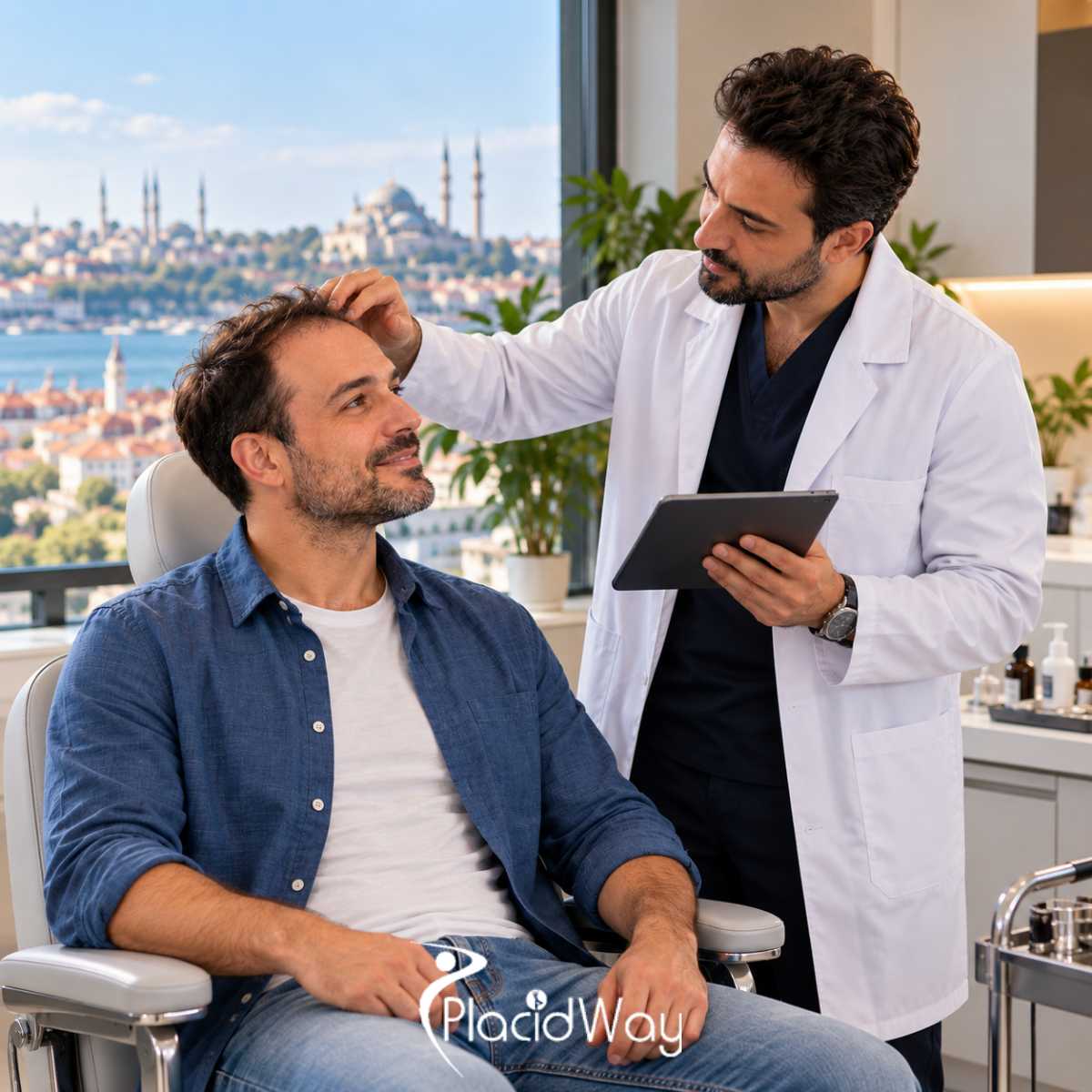
Distance creates logistical challenges for the doctor-patient relationship. A typical process begins with a patient sending photographs and medical history to the clinic. The surgeon reviews these details during a virtual consultation to discuss goals, assess preliminary eligibility, and explain potential outcomes.
The most complex phase of medical travel is long-term follow-up care. After returning home, patients usually send monthly photo updates to their surgeon. However, if a complication arises—such as an infection or breathing issue—the patient cannot simply visit their surgeon for a physical exam.
It is strongly recommended that patients establish a relationship with a local general practitioner or an Ear, Nose, and Throat (ENT) specialist before traveling. This ensures that they have immediate access to professional medical care in their home country if post-operative support is required.
What should patients look for in a rhinoplasty clinic in Turkey?
Selecting an appropriate rhinoplasty clinic in Turkey requires careful research. Patients should not base their decisions solely on social media popularity or aggressively low pricing. Proper vetting is critical to patient safety and a satisfactory outcome.
A diligent selection process involves checking for the following:
- Board Certification: Ensure the doctor is a registered member of recognized bodies, such as the Turkish Medical Association and the Turkish Society of Plastic Reconstructive and Aesthetic Surgeons.
- Facility Accreditation: Look for clinics or hospitals accredited by national health ministries or international organizations like the Joint Commission International (JCI).
- Pre-Operative Transparency: A reputable clinic will thoroughly discuss potential risks, contraindications, and the limitations of surgery, rather than presenting the procedure as entirely risk-free.
- Language Support: Clear communication is vital for informed consent. Ensure the facility provides fluent translators or medical staff who speak the patient’s native language.
Does ethnic rhinoplasty differ when performed internationally?
Nasal anatomy varies significantly among different ethnic backgrounds. Patients of African, Asian, Middle Eastern, or Hispanic descent often seek aesthetic refinement that preserves their ethnic identity while improving facial harmony or respiratory function. These procedures are frequently more complex than standard reduction rhinoplasty.
For example, ethnic rhinoplasty often requires structural augmentation rather than reduction. Surgeons may need to harvest cartilage from the septum, ear, or rib to build up the nasal bridge or provide adequate support for the nasal tip. Furthermore, managing thick skin requires specific techniques to ensure the underlying surgical changes are visible and that scar tissue is minimized.
Because these surgeons routinely treat individuals from all over the world, they often develop a deep understanding of varied structural needs. When consulting remotely, it is helpful for patients to ask for before-and-after case studies of individuals with similar ethnic backgrounds and skin types.
How does the medical tourism infrastructure support international patients?
The growth of medical tourism in Turkey is not accidental; it is supported by a structured, state-regulated framework. The Turkish Ministry of Health heavily regulates hospitals and clinics that cater to foreign patients. Facilities must obtain specific health tourism authorization certificates, which require them to meet stringent hygiene, equipment, and staffing standards.
Most major hospitals and established clinics feature specialized international patient departments. These teams act as a bridge between the clinical staff and the patient. They handle translation services, assist with pre-operative paperwork, organize local transportation between the hotel and clinic, and provide logistical support during the recovery period.
This organized infrastructure reduces the stress of navigating a foreign healthcare system, allowing patients to focus on their surgical preparation and post-operative recovery.
Why Choose PlacidWay for Medical Tourism?
Researching international healthcare requires access to clear, factual, and organized information. PlacidWay serves as an educational platform and directory to help patients explore global medical options.
- Compare Global Options: PlacidWay allows individuals to research and compare facilities, procedures, and estimated costs across multiple countries.
- Educational Resources: The platform provides extensive articles and guides to help patients understand medical procedures and healthcare systems abroad.
- Facility Information: Patients can access detailed profiles of international hospitals and clinics, including lists of available specialties.
- Direct Communication: The service facilitates initial contact between the patient and the chosen healthcare provider for consultation purposes.
- Extensive Network: Users have access to a directory that includes a wide range of international medical centers specializing in aesthetic and functional procedures.
Frequently Asked Questions
How long does a rhinoplasty surgery usually take?
A standard rhinoplasty typically takes between 1.5 to 3 hours to complete, depending on the complexity of the procedure and whether it is a primary or revision surgery.
Is there an age limit for getting a nose job in Turkey?
Surgeons typically require patients to be at least 18 years old, ensuring facial growth is complete. There is no strict upper age limit, provided the patient is in good overall health.
Can I combine rhinoplasty with other procedures?
Yes, suitable patients may combine rhinoplasty with procedures like chin augmentation or septoplasty. However, combining surgeries increases the duration of anesthesia and may extend recovery time.
Will I have visible scars after the surgery?
Closed rhinoplasty involves internal incisions with no visible scarring. Open rhinoplasty requires a small incision on the columella, which typically fades and becomes barely noticeable over time.
What kind of anesthesia is used during the procedure?
Most rhinoplasty procedures are performed under general anesthesia to ensure the patient is completely comfortable and still. In some minor tip-refinement cases, local anesthesia with IV sedation may be used.
How soon can I wear glasses after rhinoplasty?
Patients are generally advised to avoid resting glasses on the bridge of their nose for at least four to six weeks to prevent indentations and pressure on the healing nasal bones.
Are revision rhinoplasties common in Turkey?
Many patients travel to Turkey specifically for revision rhinoplasty due to the high level of specialist experience available. Revisions are more complex and require surgeons with advanced reconstructive skills.
What is the difference between open and closed rhinoplasty?
Open rhinoplasty involves an external incision between the nostrils for better visibility, while closed rhinoplasty is performed entirely through internal incisions, resulting in less swelling but offering slightly less structural visibility.
Do medical teams in Turkey speak English?
Facilities catering to international patients typically employ English-speaking surgeons and provide dedicated medical translators to ensure clear communication throughout consultations and recovery.
How long will the final results take to show?
While initial changes are visible once the splint is removed, swelling can take up to a year—and sometimes longer for thick-skinned patients—to fully resolve and reveal the final contour.
Ready to Compare Treatment Options?
Gather information, review clinic profiles, and request details for your potential treatment.
Request Treatment InformationReferences
- Rhinoplasty Overview – American Society of Plastic Surgeons (ASPS)
- Rhinoplasty Procedure Information – International Society of Aesthetic Plastic Surgery (ISAPS)
- Medical Tourism Guidelines – Centers for Disease Control and Prevention (CDC)
- Piezoelectric Surgery in Rhinoplasty – National Center for Biotechnology Information (NCBI)
- Preservation Rhinoplasty Principles – PubMed Central (PMC)
- Healthcare Regulations and Tourism Guidelines – Republic of Turkey Ministry of Health
























Share this listing