


Top Board-Certified Bariatric Surgeons in Mexico
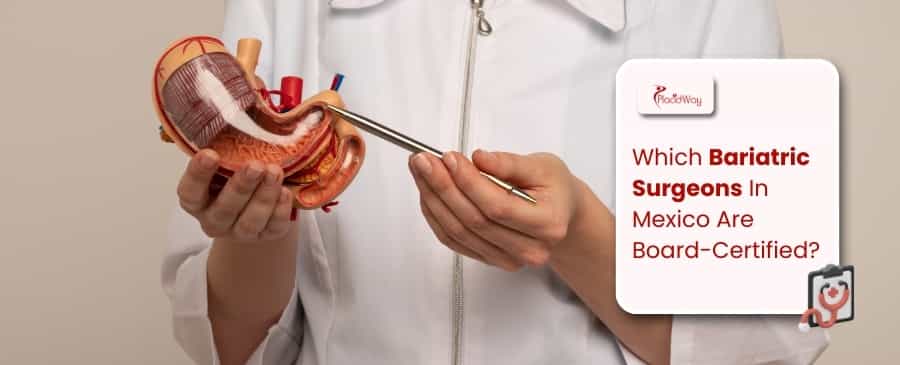
To find board-certified bariatric surgeons in Mexico, patients must verify accreditation from the Mexican Council of General Surgery and CMCOEM. These credentials guarantee rigorous medical training and optimal safety for your weight loss procedure.
Key Takeaways: Safety & Quality Metrics
- Rigorous Verification: Dual certification from general surgery and metabolic councils is mandatory for top safety standards.
- Cost Efficiency: Average prices range from $4,000 to $8,000, offering massive savings without compromising clinical excellence.
- Advanced Facilities: Top-rated facilities maintain international accreditations such as Joint Commission International and CSG.
- Comprehensive Care: Reputable teams utilize a multidisciplinary approach involving nutritionists, psychologists, and internal medicine specialists.
How can I verify if a bariatric surgeon in Mexico is genuinely board-certified?
You can verify credentials by checking the official online registries of the Mexican Council of General Surgery and the Mexican College of Surgery for Obesity and Metabolic Diseases.
Ensuring that your chosen medical professional possesses the proper credentials is the most critical step in planning your healthcare journey. The primary regulatory body you need to look for is the Consejo Mexicano de Cirugía General. This organization functions similarly to the American Board of Surgery, demanding extensive examinations, proven surgical experience, and peer reviews before granting certification. Patients can access their public database online to cross-reference a specific professionals medical license number.
Beyond general surgery, the specialist must also hold active membership and certification with the Colegio Mexicano de Cirugía para la Obesidad y Enfermedades Metabólicas. This specific college governs all metabolic and weight loss procedures within the nation. They ensure that their members follow updated international protocols, participate in continuous medical education, and maintain an extremely low complication rate in their clinical practice.
You should never hesitate to ask your medical coordinator or the facility directly for copies of these certifications. Ethical and highly skilled professionals display their credentials proudly on their official websites and clinic walls. Verifying these two specific board certifications acts as an absolute safeguard, ensuring you are in the hands of someone who has dedicated their entire career to mastering laparoscopic weight reduction techniques.
What is the average bariatric surgery cost in Mexico with a certified specialist?
The average bariatric surgery cost in Mexico ranges between $4,000 and $8,000 depending on the exact procedure, facility type, and the expertise of the attending specialist.
Financial considerations are often the primary catalyst for patients seeking healthcare options across borders. The bariatric surgery cost in Mexico represents a fraction of the prices typically quoted in the United States or Canada, where similar interventions can easily exceed twenty thousand dollars. This remarkable price difference is not a reflection of lower quality care, but rather the result of lower operational costs, subsidized medical education, and favorable exchange rates.
When you receive a quote from a reputable provider, it is usually structured as an all-inclusive package. These comprehensive packages generally cover the primary surgical fee, the anesthesiologist fee, operating room expenses, pre-operative cardiovascular and pulmonary evaluations, and post-operative medications during your hospital stay. It is crucial to request a fully itemized breakdown to guarantee there are no hidden fees related to specialized equipment or extended hospital nights.
While the initial price tag is highly attractive, patients must prioritize board certification over finding the absolute cheapest option available. Discounted procedures offered by non-certified practitioners often utilize substandard surgical staplers or operate out of non-accredited facilities, which drastically increases the risk of severe complications. Investing in a certified specialist guarantees safety and long-term success.
| Procedure Type | Estimated Average Cost | Expected Hospital Stay |
|---|---|---|
| Gastric Sleeve | $4,000 - $5,500 | 2 Nights |
| Gastric Bypass | $5,500 - $7,000 | 2-3 Nights |
| Duodenal Switch | $6,500 - $8,000 | 3 Nights |
| Revision Surgery | $5,500 - $8,500 | 3 Nights |
Are there specific accreditation bodies for a bariatric surgery clinic in Mexico?
A reputable bariatric surgery clinic in Mexico should hold accreditations from national regulatory organizations like CSG and international bodies like the Joint Commission International.
- CSG Accreditation: The Consejo de Salubridad General is the highest national healthcare certification, ensuring the facility meets stringent federal safety and hygiene standards.
- Joint Commission International: JCI accreditation signifies that the hospital operates with the exact same stringent patient safety protocols found in top-tier American and European medical centers.
- Center of Excellence Designation: Organizations like the Surgical Review Corporation award this status only to facilities demonstrating exceptional clinical outcomes and high-volume success rates.
- COFEPRIS Approval: This is the national health regulatory agency responsible for inspecting medical devices, pharmacological supplies, and overall sanitary conditions within the operating theaters.
- Specialized Intensive Care Units: Accredited centers must possess fully equipped adult intensive care units on-site to handle any rare but serious post-operative emergencies without needing patient transfers.
- In-House Diagnostic Laboratories: Premium clinics maintain their own radiological and hematological departments to expedite pre-operative clearance and effectively monitor the patient during recovery.
How does medical tourism in Mexico ensure high safety standards for weight loss patients?
The industry of medical tourism in Mexico maintains safety by establishing dedicated international patient departments, enforcing strict hygiene protocols, and requiring continuous medical education for staff.
The robust framework supporting medical tourism in Mexico has evolved drastically over the last two decades. To attract and maintain a global patient base, leading healthcare networks have invested heavily in creating environments tailored specifically for international visitors. These dedicated departments act as an internal audit system, ensuring that every protocol from sterilization to medication administration aligns perfectly with international safety guidelines.
Safety is further reinforced through stringent language and communication requirements. Top facilities employ fully bilingual professionals, eliminating any risk of medical errors caused by mistranslation. Dedicated patient case managers remain by your side from the moment you complete your initial consultation until you receive your final medical clearance, ensuring that all dietary guidelines and medication schedules are completely understood.
Furthermore, the competitive nature of international healthcare requires facilities to continuously upgrade their technological infrastructure. Hospitals catering to cross-border patients frequently adopt the latest advancements in minimally invasive surgical techniques, implement rigorous infection control measures, and participate in independent audits to prove their complication rates remain well below the global average.
Many internationally accredited facilities utilize advanced HEPA filtration systems and positive pressure technology in their operating rooms, which drastically reduces airborne contaminants and minimizes the risk of surgical site infections to nearly zero.
What training requirements must weight loss surgeons complete for bariatric surgery in Mexico?
To perform bariatric surgery in Mexico, specialists undergo extensive general surgery residencies followed by specialized fellowships in advanced laparoscopic and bariatric techniques.
The educational pathway to become a recognized expert in bariatric surgery in Mexico is exceptionally rigorous and demands over a decade of continuous academic and clinical dedication. The journey begins with six to seven years of comprehensive medical school, culminating in a mandatory year of social service where young doctors provide healthcare to underserved communities. Only after this can they apply for highly competitive specialty programs.
Once accepted into a specialty track, the physician must complete a grueling four-year residency in general surgery at major public or private hospital institutions. During this period, they perform thousands of diverse surgical interventions, mastering the fundamentals of anatomy, trauma, and critical patient care. At the conclusion of this residency, they must pass demanding board examinations to earn their initial general surgery certification.
The final and most crucial step is completing a specialized fellowship focused entirely on advanced laparoscopy and metabolic procedures. These fellowships last one to two additional years. Many top-tier practitioners choose to complete these fellowships or clinical rotations internationally, often training under world-renowned pioneers in the United States or Europe to master complex procedures like the duodenal switch and advanced revisional operations.
Do certified Mexican bariatric surgeons use internationally approved medical equipment?
Board-certified specialists exclusively utilize advanced medical equipment and surgical supplies that are rigorously tested and approved by international health and safety organizations.
A major concern for individuals traveling abroad for medical care involves the quality of the materials used inside their bodies. Fully credentialed professionals maintain strict supply chain standards, utilizing exact replicas of the inventory found in top North American hospitals. They strictly use surgical staplers, trocars, and biocompatible materials manufactured by leading global brands recognized by the FDA and European health authorities.
The technological sophistication extends into the operating room infrastructure itself. Certified experts perform these minimally invasive procedures utilizing state-of-the-art high-definition laparoscopic towers. These advanced camera systems provide crystal-clear, magnified visualization of the internal organs, allowing for incredibly precise tissue manipulation, reduced blood loss, and significantly shorter operative times.
Furthermore, advanced energy devices like harmonic scalpels are standard tools among elite practitioners. These instruments simultaneously cut and coagulate tissue using ultrasonic vibrations, which drastically minimizes internal trauma compared to traditional electrocautery. Patients can rest assured that accreditation boards continuously monitor clinics to verify that unapproved, counterfeit, or reused disposable instruments are strictly prohibited.
What happens during the preoperative consultation with a board-certified specialist?
The preoperative consultation involves a comprehensive review of your medical history, physiological assessments, and an in-depth discussion to determine the most suitable weight loss procedure.
- Comprehensive Medical History Review: The specialist examines past surgical interventions, chronic comorbidities like hypertension or diabetes, and current medication regimens to assess overall surgical risk.
- Nutritional Assessment: A dedicated dietitian analyzes eating habits and explains the mandatory preoperative liver-shrinking diet required to ensure operative safety.
- Psychological Evaluation: Professionals assess emotional readiness, ensuring the patient understands the drastic lifestyle changes required for long-term postoperative success.
- Cardiovascular and Pulmonary Screenings: Specialists conduct electrocardiograms, chest X-rays, and comprehensive blood panels to guarantee the body can safely process general anesthesia.
- Procedure Selection: Based on the physiological findings and the patients specific metabolic profile, the doctor recommends the most effective technique, whether it be a sleeve, bypass, or alternative method.
- Expectation Management: The clinical team clearly outlines realistic weight loss timelines, potential surgical complications, and strict post-operative dietary transition phases.
How long should I plan to stay in the country for postoperative monitoring?
Patients typically need to stay under direct medical supervision for five to eight days to ensure optimal healing, manage immediate dietary transitions, and prevent early complications.
Proper postoperative monitoring is crucial for identifying and mitigating early complications such as internal bleeding or anastomotic leaks. Immediately following the operation, patients are required to spend two to three nights in the hospital. During this acute phase, dedicated nursing staff monitor vital signs continuously, manage pain intravenously, and assist the patient with early ambulation to prevent deep vein thrombosis.
After being discharged from the primary medical facility, you are not immediately cleared to fly or drive long distances. Patients must transition to a partnered recovery hotel or designated recovery house for an additional two to four days. These specialized accommodations provide a comfortable, stress-free environment while keeping you close to the clinical team should any immediate medical needs arise.
Before making your final departure, you will undergo a comprehensive final physical examination. The specialist will review your hydration levels, check the healing progress of your external incisions, and conduct specific radiological swallow tests to ensure complete structural integrity of the newly formed stomach. Only after passing these rigorous checks will you receive official medical clearance to return home safely.
What complications are mitigated by choosing a certified bariatric specialist?
Selecting an accredited specialist significantly lowers the risks of surgical site infections, anastomotic leaks, severe bleeding, and improper anatomical alterations during the procedure.
All surgical interventions carry inherent physiological risks, but the expertise of the operating professional dramatically influences the likelihood of these events occurring. The most feared complication in metabolic operations is an anastomotic leak, where stomach fluids escape into the abdominal cavity. Certified professionals mitigate this risk by utilizing advanced reinforcement techniques, double-layer suturing, and performing intraoperative leak tests using specialized dyes.
Another critical risk involves improper anatomical sizing. If a stomach sleeve is made too narrow, the patient will suffer from chronic severe acid reflux, constant nausea, and debilitating strictures. Conversely, if too much tissue is left behind, the patient will fail to achieve meaningful weight loss. Highly trained experts possess the tactile experience and spatial awareness necessary to calibrate the exact stomach volume required for optimal, healthy results.
Furthermore, credentialed teams excel in perioperative management to prevent systemic issues like pulmonary embolisms or nutritional deficiencies. They utilize sequential compression devices during the operation, administer prophylactic blood thinners, and provide rigorous, long-term vitamin supplementation schedules. Their extensive training ensures they know not only how to perform the operation flawlessly but how to manage the patients lifelong metabolic transformation.
Why Choose PlacidWay for your weight loss journey?
PlacidWay connects patients with globally recognized medical providers, offering transparent pricing, extensive provider vetting, and comprehensive healthcare facilitation services.
Selecting the right medical provider in a foreign healthcare system requires extensive research and absolute trust. PlacidWay acts as your dedicated healthcare advocate, ensuring that your decision is based on verified clinical data and unwavering safety standards. Here are the core reasons patients trust our platform:
- 1. Rigorous Background Verification: We perform extensive audits on medical licenses, ensuring every listed professional holds active board certifications and maintains a pristine clinical safety record.
- 2. Guaranteed Price Transparency: We negotiate direct, all-inclusive medical packages that prevent unexpected hidden hospital fees, providing clear financial predictability for your entire surgical intervention.
- 3. Premier Hospital Partnerships: Our network exclusively features internationally accredited medical centers equipped with advanced intensive care units and state-of-the-art surgical technology.
- 4. Comprehensive Clinical Coordination: Our dedicated case managers seamlessly facilitate the secure transfer of your medical records and coordinate remote preliminary consultations with your chosen specialist.
- 5. Verified Patient Outcomes: We provide access to an extensive database of verified patient testimonials, detailed before-and-after portfolios, and transparent success metrics for specific medical facilities.
Frequently Asked Questions About Weight Loss Procedures
Is a passport required to undergo weight loss surgery in Mexican border cities?
Yes, international patients must possess a valid passport to cross the border and receive medical treatment. Even if you are visiting a border city for a short period, federal regulations require proper identification for entry and return, and medical facilities require government-issued identification for admission and medical records.
Can I use my local health insurance to cover bariatric procedures across the border?
Standard health insurance policies generally do not cover planned medical treatments abroad. However, some specialized medical tourism insurance policies or employer-sponsored self-funded health plans might offer coverage or reimbursement for international weight loss procedures if performed at internationally accredited hospitals.
What dietary changes are mandatory before undergoing a gastric sleeve in Mexican facilities?
Patients are required to follow a strict pre-operative liquid diet for one to three weeks depending on their initial body mass index. This specific diet shrinks the liver, making the laparoscopic procedure significantly safer and reducing the risk of complications during the surgical intervention.
How do patients communicate with non-English speaking medical staff during their stay?
Premium facilities catering to international patients employ fully bilingual medical professionals, including surgeons, specialized nurses, and patient coordinators. Dedicated English-speaking case managers are assigned to each patient to ensure seamless communication and absolute clarity regarding medications, recovery protocols, and medical instructions.
Are follow-up appointments conducted virtually after returning to my home country?
Yes, specialized centers offer robust virtual aftercare programs. Patients attend video consultations with their surgical team, dietitians, and psychologists at regular intervals. These virtual check-ins monitor weight loss progress, address dietary concerns, and ensure optimal healing without requiring repeated international travel.
What types of pain management are provided immediately following stomach reduction procedures?
Post-operative pain is typically managed through intravenous analgesics during the hospital stay. Specialists utilize a multimodal pain management approach that minimizes narcotic use, favoring specialized anti-inflammatory medications and targeted muscle relaxants to ensure patient comfort while promoting faster mobility.
How soon can patients safely return to work after laparoscopic bariatric surgery?
Most patients can return to desk jobs or light duty within ten to fourteen days post-operation. However, individuals with physically demanding occupations requiring heavy lifting or strenuous activity must wait four to six weeks to prevent incisional hernias and allow internal healing to complete.
Do medical facilities provide specialized bariatric furniture and recovery rooms?
Top-tier accredited hospitals are fully equipped with specialized infrastructure to accommodate bariatric patients comfortably. This includes reinforced hospital beds, properly sized diagnostic equipment, reinforced seating in waiting areas, and larger restroom facilities designed specifically for patient safety and dignity.
What happens if a patient does not meet the minimum body mass index requirements for surgical intervention?
Ethical and accredited professionals will refuse to perform irreversible surgical procedures on patients who do not meet international criteria. Instead, they may recommend non-surgical alternatives such as endoscopic gastric balloons or medically supervised weight loss programs tailored to the patients specific metabolic needs.
How do specialized bariatric centers handle potential surgical emergencies during the operation?
Accredited surgical centers are located within or directly adjacent to full-service hospitals equipped with advanced intensive care units, on-site blood banks, and comprehensive emergency diagnostic equipment. This ensures immediate, life-saving interventions are available should any unforeseen medical emergency arise during the procedure.
.jpg)





.png)



.png)










Share this listing