


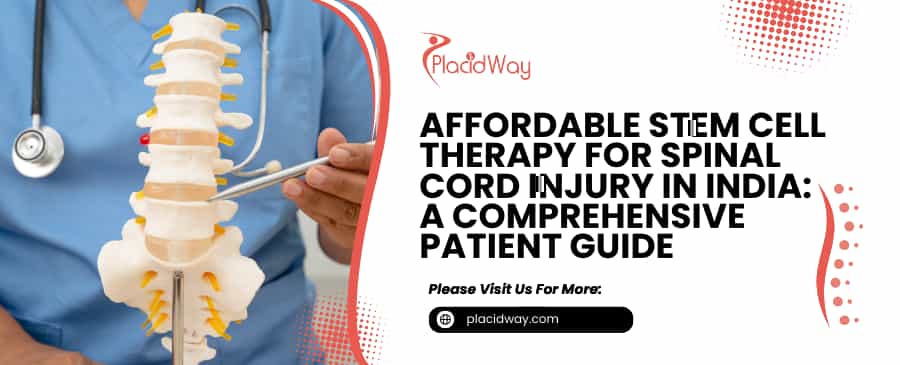
For patients grappling with the life-altering effects of a spinal cord injury (SCI), the search for recovery often leads beyond conventional borders. Stem cell therapy for spinal cord injury in India has emerged as a global beacon of hope, combining cutting-edge regenerative medicine with intensive neuro-rehabilitation at a fraction of Western costs. Unlike traditional management that focuses solely on coping, this therapy aims for neuroregeneration—helping the body repair damaged neural pathways.
India’s medical infrastructure now rivals global standards, attracting thousands of patients from the UAE, UK, USA, and Africa annually. By leveraging mesenchymal stem cells (MSCs) and world-class physiotherapy, top Indian hospitals offer a comprehensive approach to restoring function, sensation, and dignity to SCI survivors.
Key Takeaways: SCI Treatment in India
Before planning your medical journey, consider these critical value propositions that make India a leading destination for regenerative care:
- Massive Cost Savings: Patients typically save 60-75% compared to experimental treatments in the US or Europe, with packages often including accommodation and rehab.
- Comprehensive Protocols: Treatment is not just an injection; it is a holistic 2-4 week program combining stem cell implantation with aggressive Occupational and Physiotherapy.
- Accessible Expertise: Zero waiting lists for consultations with leading neurosurgeons in New Delhi and Mumbai.
- Regulatory Clarity: While experimental, treatments are conducted under strict ICMR (Indian Council of Medical Research) clinical trial guidelines to ensure patient safety.
Estimated Cost Snapshot:
- India: $6,500 – $12,000 (All-inclusive packages)
- Mexico: $12,000 – $25,000 (Procedure only)
- USA: $25,000 – $50,000+ (Often outpatient only)
Why Choose India for Spinal Cord Injury Treatment?
Beyond affordability, India offers a unique "high-volume, high-skill" ecosystem where neurosurgeons treat thousands of complex cases annually, honing expertise that is difficult to find elsewhere.
The decision to travel for medical tourism in India is driven by more than just price. It is about access to a medical ecosystem that integrates advanced biotechnology with labor-intensive rehabilitation. In Western healthcare systems, long-term inpatient rehabilitation is prohibitively expensive and often limited by insurance caps. In India, manpower is abundant and affordable, meaning patients receive 4-6 hours of daily, one-on-one physiotherapy—a critical component for activating transplanted stem cells.
Furthermore, India's leading hospitals are often JCI-accredited and equipped with the latest MRI, CT, and cellular processing laboratories. This ensures that the stem cell processing—from harvesting to culture expansion—maintains the highest sterility and viability standards (often ISO certified).
India is one of the few countries with a dedicated government body, the Stem Cell Task Force, which works alongside the Department of Biotechnology to regulate research. This rigorous oversight ensures that major hospitals adhere to ethical standards, preventing the "wild west" scenario seen in some other medical tourism destinations.
The Science: How Stem Cells Treat Spinal Injuries
Understanding the mechanism of action helps patients set realistic expectations: it's not magic, but a biological jump-start for neural repair.
Spinal cord injuries often result in a permanent loss of function because the central nervous system has a limited ability to regenerate. Stem cell therapy for SCI aims to bridge this gap. The procedure typically uses Mesenchymal Stem Cells (MSCs), which are "multipotent" cells capable of differentiating into various cell types.
When injected into the spinal canal (intrathecal administration) or directly at the injury site, these cells perform three primary functions:
- Paracrine Effect: They release growth factors and anti-inflammatory proteins that reduce scarring (gliosis) and inflammation around the spinal cord.
- Neuroprotection: They protect existing healthy neurons from further degeneration.
- Regeneration: They may help stimulate the growth of new blood vessels (angiogenesis) and axonal sprouting, potentially reconnecting severed neural pathways.
Legal Status & Safety: Is It Permitted in India?
Navigating the regulatory landscape is crucial for safety. India permits these treatments under specific "clinical trial" and experimental frameworks.
It is vital for international patients to understand that stem cell therapy for spinal cord injury is not yet a standard "cure" approved by the FDA or the Indian government for routine commercial use. However, the Indian Council of Medical Research (ICMR) allows these treatments to be conducted under investigational protocols.
This means reputable hospitals will enroll you in a registered clinical study or experimental compassionate use program. They must have an Institutional Committee for Stem Cell Research (IC-SCR) that reviews the protocol. Patients should be wary of small, standalone clinics promising "100% guarantees" and instead stick to large, accredited multidisciplinary hospitals in major metros.
"The real value of treating SCI in India isn't just the stem cells—it's the rehabilitation. We often see patients from the West who received stem cells elsewhere but failed to recover because they went home immediately. In India, our packages mandate 3-4 weeks of intense physical therapy. You have to 'teach' the new cellular environment how to function; the biology needs the physical stimulus to translate into movement."
Top Destinations: Delhi, Mumbai & Bangalore
Each city offers unique advantages, from diplomatic ease in Delhi to the commercial efficiency of Mumbai and the biotech innovation of Bangalore.
New Delhi: The Diplomatic Hub
As the capital, New Delhi (and the NCR region including Gurgaon) hosts some of the largest hospital chains like Fortis and Max Healthcare. These facilities are highly experienced in handling international patients, often featuring dedicated "International Desks" that handle everything from airport transfers to currency exchange. The proximity to the international airport makes it ideal for patients with limited mobility.
Mumbai: The Medical Capital
Mumbai is home to pioneering standalone institutes dedicated specifically to regenerative medicine. Surgeons here are often the most published in the field of stem cell research. While the city is bustling, the medical facilities in areas like Navi Mumbai offer serene environments conducive to long-term recovery.
Bangalore: The Biotech Center
Known as the "Silicon Valley of India," Bangalore is the heart of India's biotechnology sector. Stem cell laboratories here are state-of-the-art, often collaborating with global research firms. The mild climate is also a significant advantage for patients who may struggle with the extreme heat or cold of the north.
The "Golden Window" for stem cell therapy is typically considered to be within 6 months to 2 years of the injury. However, Indian clinics have documented significant quality-of-life improvements in chronic SCI patients (5+ years post-injury), particularly regarding spasticity reduction and trunk stability, challenging the notion that old injuries cannot be helped.
Step-by-Step Treatment Journey for International Patients
From the first email to the flight home, here is what a typical 30-day treatment timeline looks like for a patient traveling to India.
Phase 1: Pre-Arrival (Weeks 1-2)
You send your MRI scans, medical history, and ASIA (American Spinal Injury Association) score to the provider. A multidisciplinary board reviews your case to determine eligibility. Once approved, you receive a Medical Visa Invitation Letter to apply for an Indian e-Medical Visa.
Phase 2: Arrival & Evaluation (Day 1-2)
Upon landing in India, an ambulance or specialized vehicle transfers you to the hospital. You undergo comprehensive blood work, fresh MRI/CT scans, and a baseline neurological assessment to map your current sensation and motor function.
Phase 3: The Procedure (Day 3-5)
The stem cell procedure is performed. If using autologous cells, bone marrow is harvested (usually from the hip bone) under local anesthesia. The cells are processed/enriched in the lab and then injected intrathecally (into the spinal fluid) or at the injury site. This is minimally invasive.
Phase 4: Intensive Rehabilitation (Day 6-25)
This is the core of the treatment. You undergo rigorous physiotherapy and occupational therapy daily. Therapies may include aquatic therapy, exoskeleton-assisted walking, electrical stimulation, and balance training.
Phase 5: Discharge & Follow-up
You receive a detailed home rehabilitation plan and a supply of medications if needed. Follow-up is conducted via video calls at 3, 6, and 12-month intervals to track progress.
Cost Analysis: India vs. The World
A transparent breakdown of why India is the most cost-effective option without compromising clinical standards.
| Destination | Avg. Price Range (USD) | Inclusions | Typical Stay |
|---|---|---|---|
| India | $6,500 – $12,000 | Proc + Hospital Stay + 2-4 Weeks Rehab + Nursing | 21 - 30 Days |
| USA | $25,000 – $50,000+ | Procedure Only (Outpatient) | 1 - 3 Days |
| Mexico | $12,000 – $18,000 | Procedure + Short Stay (2-3 days) | 3 - 5 Days |
| Germany | $20,000 – $35,000 | Procedure + limited rehab | 7 - 10 Days |
Success Rates & Realistic Expectations
Defining "success" is critical—patients should expect improvements in quality of life rather than overnight miracles.
Data from Indian clinical registries indicates that approximately 70% to 90% of patients show measurable objective improvements. However, "improvement" is nuanced. For a quadriplegic patient, gaining trunk control or hand function is a massive life-changing success, even if walking remains elusive.
Commonly Reported Outcomes:
- Bladder & Bowel Control: Often the first and most significant improvement, reducing infection risks and social anxiety.
- Reduced Spasticity: Decrease in involuntary muscle stiffness, making daily care easier.
- Sensory Return: Regaining sensation in limbs, which helps prevent pressure sores.
- Motor Function: Improved strength in upper body or legs, depending on injury level (Cervical vs. Thoracic/Lumbar).
"Patients must understand that stem cells are the 'hardware upgrade,' but physiotherapy is the 'software update.' One without the other is ineffective. The unique advantage of medical tourism in India is that we can afford to provide 4 hours of therapy a day for a month—a protocol that would cost tens of thousands of dollars in the US."
Frequently Asked Questions (FAQ)
Common queries from patients planning their treatment journey to India.
Is stem cell therapy for spinal cord injury legal in India?
Yes, but it is highly regulated. The Indian Council of Medical Research (ICMR) classifies stem cell therapy for spinal cord injury as "investigational." This means it is not a standard over-the-counter treatment but is legally permitted under strict clinical trial protocols and experimental frameworks at authorized hospitals.
What is the success rate of stem cell therapy for SCI in India?
While there is no guaranteed cure, reputable data suggests that 70-90% of patients experience measurable improvements. These benefits typically include enhanced bladder and bowel control, improved trunk stability, and some return of sensation, rather than a full restoration of walking ability.
How much does stem cell treatment for spinal cord injury cost in India?
The average cost of stem cell treatment for spinal cord injury in India ranges from $6,000 to $12,000 USD. This price typically includes the stem cell procedure, a 2-4 week hospital stay, intensive neuro-rehabilitation, and nursing care, which is significantly cheaper than similar experimental treatments in the US or Europe.
Which cities in India are best for spinal cord injury treatment?
New Delhi, Mumbai, and Bangalore are the top destinations. These cities house JCI-accredited hospitals and specialized neuro-rehabilitation centers that attract patients from the Middle East, Africa, and CIS countries due to their advanced infrastructure and connectivity.
What type of stem cells are used for treating SCI in India?
Most Indian facilities use Autologous Mesenchymal Stem Cells (MSCs), derived from the patient's own bone marrow or adipose tissue. Some centers also offer Allogeneic cells from umbilical cord tissue, depending on the specific protocol and patient suitability.
Do I need a medical visa for stem cell treatment in India?
Yes, international patients require a Medical Visa (e-Medical Visa). To obtain this, you will need a "Medical Invitation Letter" from the treating hospital in India, which confirms your appointment and the duration of your treatment.
How long is the stay required for treatment?
A typical stay lasts between 2 to 4 weeks. The procedure itself is quick, but the extended stay is crucial for the intensive neuro-rehabilitation program that "trains" the new cells and maximizes functional recovery.
Is rehabilitation included in the package cost?
Yes, most comprehensive packages in India include physiotherapy and occupational therapy. Indian specialists believe that stem cell injections alone are insufficient without aggressive rehabilitation to stimulate neural pathways.
Can stem cell therapy treat chronic spinal cord injuries?
Yes, patients with chronic injuries (more than 1-2 years old) can still benefit, though results may be slower compared to acute cases. The goal in chronic cases is often to improve quality of life, reduce spasticity, and regain independent bodily functions.
Ready to Reclaim Your Quality of Life?
Don't let uncertainty delay your recovery. PlacidWay partners with India's top JCI-accredited research institutes to provide safe, affordable, and comprehensive stem cell therapy packages tailored for international patients.
Get a free, no-obligation evaluation from our medical care team. We handle the logistics—from visa assistance to hospital selection—so you can focus entirely on healing.





.png)
.png)
.png)













Share this listing