


Avascular Necrosis Treatment at StemRx Hospital: Breakthrough Relief for Stage 2 AVN
Facing a diagnosis of irreversible bone death can be absolutely terrifying for any patient, but groundbreaking 2nd Stage Avascular Necrosis Treatment at StemRx Hospital and Research Centre is drastically changing long-term prognoses. For decades, individuals suffering from restricted blood flow to the femoral head have been pushed towards highly invasive and irreversible joint replacement surgeries. This traditional approach often ignores the underlying cellular deficiencies that lead to bone degeneration in the first place.
Today, advanced regenerative medicine offers a highly effective alternative. Why immediately resort to a total hip arthroplasty when targeted cellular therapy can preserve your natural joint, halt disease progression, and restore pain-free mobility? Watch how innovative medical protocols are seamlessly integrating with state-of-the-art cellular biology to provide non-surgical relief for patients battling early-stage avascular necrosis.
Video Chapters & Quick Navigation
Understanding Avascular Necrosis and Silent Bone Death
Avascular necrosis, commonly referred to as osteonecrosis or "bone death," is an extremely debilitating orthopedic condition that strips patients of their mobility and independence. The pathology begins when the localized blood supply to a specific bone segment is severely restricted or entirely compromised. Without constant and adequate nourishment from red blood cells, oxygen, and vital nutrients, the cellular structures within the bone tissue begin to starve and eventually die.
This condition most frequently attacks the femoral head, which is the ball-shaped portion of the hip joint. As seen at in the patient documentation, the initial onset of the disease can be subtle, mimicking minor muscle strains or temporary joint fatigue. However, beneath the surface, the trabecular bone architecture is steadily weakening under the stress of daily weight-bearing activities.
The etiology of avascular necrosis is multifaceted, making diagnosis and targeted treatment quite complex. High-dose corticosteroid usage, excessive alcohol consumption, and traumatic joint injuries are primary catalysts for disrupting vascular pathways. Additionally, autoimmune disorders and coagulation anomalies can trigger micro-thromboses that block the tiny capillaries feeding the subchondral bone, setting the stage for irreversible joint collapse if left untreated.
The Clinical Reality of 2nd Stage Avascular Necrosis
Orthopedic specialists universally categorize avascular necrosis using the Ficat and Arlet staging system, which grades the severity of bone degradation from Stage 0 to Stage 4. Stage 2 represents a critical crossroads in the lifecycle of the disease. During this specific phase, the affected patient begins to experience distinct, consistent pain in the groin, thigh, or buttock, especially during weight-bearing movements.
Unlike Stage 1, where X-rays often appear completely normal, Stage 2 avascular necrosis presents visible radiographic changes. Doctors will typically observe cystic and sclerotic changes within the femoral head. Sclerosis indicates an abnormal hardening of the bone tissue, while cystic lesions denote areas where the bone marrow has completely necrosed and liquefied.
Crucially, during Stage 2, the actual spherical shape of the femoral head remains intact. There is no subchondral collapse, meaning the "crescent sign" synonymous with Stage 3 has not yet materialized. This anatomical preservation makes Stage 2 the absolute ideal window for intervening with non-surgical avascular necrosis treatment options. If the joint structure has not yet flattened, regenerative medicine has a highly optimal environment to stimulate new vascular growth and save the native hip.
Why Traditional Hip Replacement Is Not Always the Ideal Answer
For decades, the standard orthopedic response to advancing osteonecrosis has been highly invasive surgical intervention. Core decompression surgery is often attempted in early stages, involving drilling holes into the femoral head to relieve pressure and theoretically stimulate blood flow. Unfortunately, clinical outcomes for core decompression are notoriously inconsistent, often failing to halt the progression of necrosis in a large percentage of patients.
When decompression fails, patients are subsequently pushed toward a Total Hip Arthroplasty (THA), or a complete joint replacement. While THA can effectively eliminate pain, it comes with a myriad of heavy drawbacks, particularly for younger patients diagnosed with AVN. Artificial joints have a finite lifespan, typically lasting between 15 and 20 years before the materials begin to degrade or loosen.
For a patient diagnosed with avascular necrosis in their 30s or 40s, committing to a hip replacement guarantees the need for complex, higher-risk revision surgeries later in life. Furthermore, surgical intervention carries inherent risks such as deep vein thrombosis, severe infections, and permanent alterations to leg length and gait mechanics. It is these exact surgical limitations that make the cell-based therapy for joint preservation offered at specialized clinics so vital.
Comparing Treatment Pathways for Joint Necrosis
| Treatment Modality | Invasiveness | Primary Mechanism | Long-Term Joint Preservation |
|---|---|---|---|
| Total Hip Replacement | High (Major Surgery) | Removes and replaces native bone with metal/plastic | None. Native joint is completely amputated. |
| Core Decompression | Moderate | Drills channels to relieve intraosseous pressure | Variable. Often delays rather than prevents collapse. |
| StemRx Cellular Therapy | Low (Minimally Invasive) | Stimulates angiogenesis and tissue regeneration | High. Aims to heal and retain the natural hip. |
Pioneering Avascular Necrosis Treatment at StemRx Hospital
Located at the forefront of medical innovation, StemRx Hospital and Research Centre has cultivated a global reputation for shifting the paradigm of musculoskeletal treatments. Under the guidance of renowned regenerative medicine specialists, the facility rejects the notion that bone death is a one-way street to amputation and synthetic replacement.
The core philosophy of StemRx Hospital relies heavily on tapping into the human body's innate capacity to heal itself. By utilizing high concentrations of biologically active cells, growth factors, and specialized peptides, the medical team targets the root cause of avascular necrosis: the lack of robust blood flow. Their proprietary protocols are designed to reverse the ischemic environment within the femoral head.
Patients traveling for avascular necrosis treatment at StemRx Hospital undergo exhaustive pre-treatment evaluations. High-resolution MRI mapping, inflammatory marker blood panels, and advanced gait analysis ensure that every individual receives a highly customized therapeutic dosage tailored specifically to the unique topography of their necrotic lesions.
The Science of Cellular Therapy and Angiogenesis
To truly appreciate the patient's recovery described at in the video, one must understand the microscopic warfare happening within the joint. Regenerative cellular therapy primarily utilizes autologous cells—meaning they are harvested safely from the patient's own body, eliminating the risk of tissue rejection or severe allergic responses.
Once isolated and concentrated in a state-of-the-art laboratory, these potent cellular mediators are meticulously introduced precisely into the necrotic zone of the hip under advanced ultrasound or fluoroscopic guidance. The primary biological objective is twofold: angiogenesis and osteogenesis. Angiogenesis is the physiological process through which new blood vessels form from pre-existing vessels.
The introduced cells act as master signaling centers. They secrete potent vascular endothelial growth factors (VEGF) that prompt the body to construct new capillary networks around the dead bone zone. Simultaneously, osteogenic pathways are activated, encouraging specialized cells called osteoblasts to lay down fresh, healthy bone matrix, effectively filling in the cystic cavities that characterize Stage 2 AVN.
Analyzing the Patient's Journey to Pain Relief
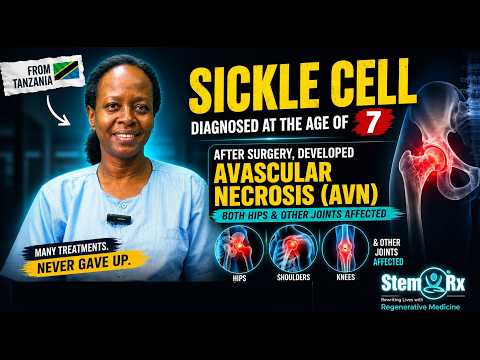
The clinical outcomes resulting from these advanced protocols are vividly illustrated by patient testimonials. Prior to treatment, individuals in the second stage of osteonecrosis often report a sharp, stabbing sensation during basic actions such as climbing stairs, entering vehicles, or tying their shoes. Night pain is also a frequent, exhausting symptom that severely deteriorates overall quality of life.
As noted around in the case study, the transition following the StemRx protocol is often profound. Because the therapy is minimally invasive, the immediate postoperative trauma associated with traditional joint surgery is completely bypassed. Patients do not endure massive incisions, muscle severing, or extensive blood loss, allowing for a remarkably swifter initial recovery phase.
Within weeks of receiving cellular therapy for hip necrosis, patients frequently document a noticeable reduction in localized inflammation. As the new micro-vessels begin to perfuse the previously starved bone tissue, the sharp, mechanical joint pain progressively subsides into a dull, manageable ache, before resolving completely in successful cases. The patient regains an astonishing degree of natural range of motion without the artificial stiffness inherent in prosthetic implants.
Key Milestones in Regenerative Recovery
- Weeks 1-3: Focus on off-loading the joint. Cellular mediators begin signaling for vascular repair. Reduction in acute inflammatory pain.
- Weeks 4-8: Early stages of angiogenesis. Capillary budding occurs. Patients experience increased tolerance for light weight-bearing activities.
- Months 3-6: Active osteogenesis. New bone tissue gradually replaces the necrotic lesions. Significant improvements in joint flexibility and deep pain resolution.
Comprehensive Rehabilitation and Adjunct Therapies
A pivotal factor in the success rates at StemRx Hospital and Research Centre is the understanding that cellular injections are not standalone magic bullets. Achieving long-term relief from Stage 2 AVN requires a holistic, multi-disciplinary approach to joint preservation. The medical team engineers comprehensive rehabilitation protocols designed to support the fragile, newly forming bone cells.
As detailed at , adjunct therapies play a critical role in the healing cascade. Patients frequently undergo specialized sessions of Hyperbaric Oxygen Therapy (HBOT). By breathing pure oxygen in a pressurized chamber, the amount of oxygen dissolved in the blood plasma increases exponentially. This oxygen-rich plasma bathes the ischemic femoral head, vastly accelerating tissue repair and reducing bone marrow edema.
Furthermore, customized physical therapy is strictly enforced. Expert physiotherapists work meticulously to correct compensatory gait abnormalities that patients develop to avoid pain. Strengthening the surrounding hip abductors, glutes, and core musculature essentially creates a muscular brace that unloads mechanical stress from the healing femoral head. Nutritional counseling is also provided to ensure the body has the fundamental building blocks—such as Vitamin D3, calcium, and collagen—required for optimal osteogenesis.
The Economics and Future of Non-Surgical AVN Protocols
When assessing treatment modalities, patients must also weigh the profound economic implications of their healthcare choices. While a traditional hip replacement may seem straightforward, the hidden financial burdens are immense. Prolonged hospital stays, extensive physical therapy for synthetic joints, potential revision surgeries, and significant lost wages during months of recovery quickly compound.
Conversely, opting for high-quality regenerative avascular necrosis treatment in India offers tremendous value, especially for international medical tourists. StemRx Hospital delivers world-class, scientifically backed cell-based therapy for joint preservation at a fraction of the cost associated with major orthopedic surgeries in Western nations. The minimally invasive nature of the procedure means patients can often return to their normal daily lives and employment significantly faster.
The relief experienced by patients in the 2nd stage of avascular necrosis is not just physical; it is profoundly emotional. Regaining the ability to walk gracefully, play with children, and live free from the shadow of an impending joint replacement represents the true triumph of modern regenerative medicine. StemRx Hospital continues to illuminate a promising, non-surgical path forward for those battling degenerative bone diseases.
Ready to Explore Non-Surgical AVN Treatment?
Don't let avascular necrosis dictate your future. Discover advanced, minimally invasive cellular therapies at top-rated facilities like StemRx Hospital. Contact PlacidWay today to evaluate your case and see if you are a candidate for joint preservation therapy.
GET A FREE MEDICAL EVALUATION



.png)




.png)
-(5).png)
.png)

-(4).png)


.png)








Share this listing