
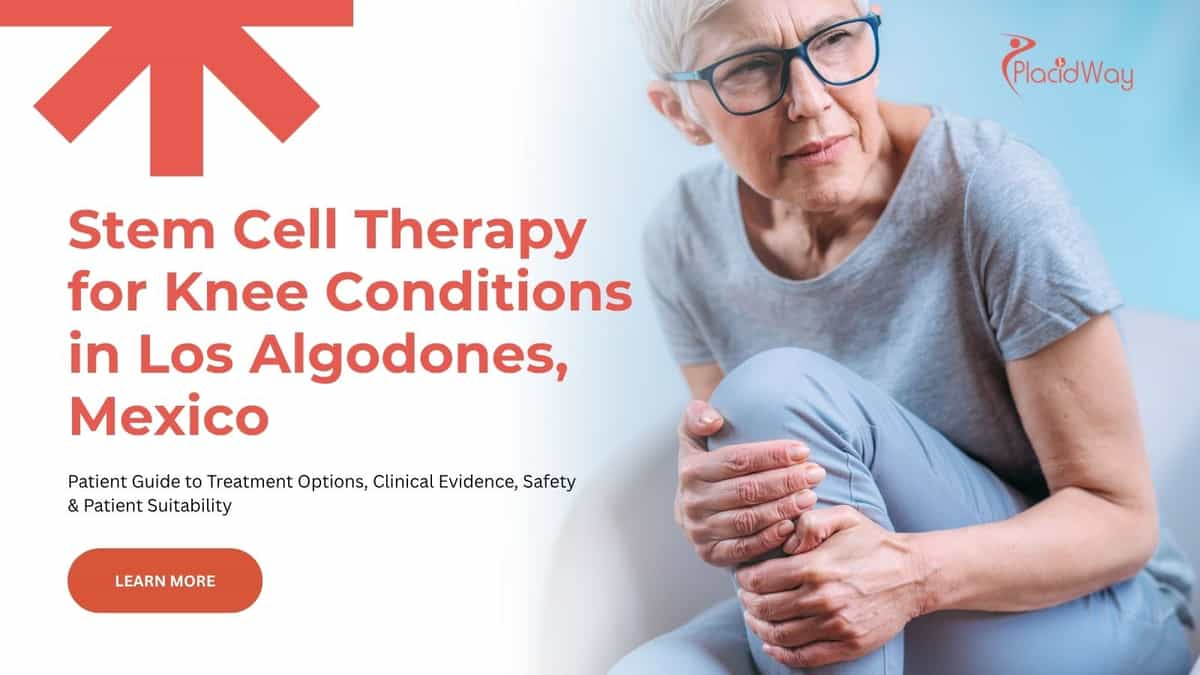
If you are struggling with chronic knee pain and want to avoid invasive surgery you might be researching regenerative treatments across the border. Navigating the options for regenerative knee treatments requires a careful look at clinic certifications safety protocols and realistic out-of-pocket expenses. By understanding how the Mexican health authority COFEPRIS regulates biological treatments and verifying your doctor's board credentials you can confidently explore this non-surgical alternative just minutes from the US border.
Quick Answer Summary
- Estimated Cost: Typically ranges from $2,500 to $6,000 USD per knee depending on the cell source and clinic.
- Safety Overview: Generally well-tolerated when performed in COFEPRIS-licensed facilities by board-certified orthopedic or regenerative medicine specialists.
- Ideal Candidate: Patients with mild to moderate osteoarthritis or partial meniscus tears seeking to delay joint replacement surgery.
- Recovery Time: Most patients resume normal light activities within three to seven days but full biological remodeling can take several months.
- Why Los Algodones: Offers significant cost savings high-quality private healthcare and easy border access for US and Canadian patients.
- Important Caution: Always verify that the clinic holds a valid COFEPRIS license for cellular extraction and manipulation before booking your procedure.
Understanding the Appeal of Cross Border Knee Regeneration
Knee pain limits your mobility and drastically reduces your quality of life. For many international patients dealing with degenerative joint disease standard medical advice often points directly toward a total knee replacement. While surgery may be necessary for severe cases many individuals look for conservative non-surgical approaches that encourage the body to heal itself.
Los Algodones has evolved from a dental tourism hub into a broader medical destination offering advanced biological treatments. Patients travel here to access procedures that are often restrictively expensive or bound by different regulatory limitations in their home countries. When evaluating this destination you must weigh the biological possibilities against the realities of cross-border medical care.
- Geographic proximity allows easy drive-in access from Arizona and California.
- Out-of-pocket costs are substantially lower compared to uninsured US clinical rates.
- Bilingual medical coordinators simplify the consultation and treatment process.
- Shorter wait times for appointments compared to Canadian public health systems.
- Access to private specialized clinics equipped with modern processing laboratories.
Identifying the Ideal Candidate for Cell Therapy
Regenerative medicine is not a universal cure for all types of joint pain. To achieve the best possible outcome your doctor must perform a thorough evaluation of your knee joint architecture. Cartilage degrades differently in every patient and the remaining biological environment dictates how well introduced cells can function.
Specialists in Los Algodones typically request recent MRI scans or X-rays to assess your joint space before you even travel. If you have severe bone-on-bone osteoarthritis the biological scaffolding required for new tissue growth may no longer exist. In these cases regenerative injections might temporarily reduce inflammation but will not rebuild missing cartilage.
| Candidate Status | Clinical Indicators | Expected Treatment Goal |
|---|---|---|
| Excellent Candidate | Mild to moderate osteoarthritis partial ligament tears good general health | Delay surgery reduce pain improve joint function |
| Moderate Candidate | Moderate cartilage loss mild mechanical misalignment | Symptom management and reduced dependency on pain medication |
| Poor Candidate | Severe bone-on-bone arthritis active infection autoimmune joint disease | Treatment generally not recommended surgical consultation advised |
Clinical Demographics and Treatment Trends
Understanding who travels for regenerative care can help you evaluate if this pathway aligns with your situation. Recent data from the 2024 cross-border healthcare utilization registries indicates a steady increase in North American patients seeking orthobiologic treatments in Mexican border towns. This shift is largely driven by aging populations who wish to maintain active lifestyles without undergoing major joint reconstruction.
The patient profile primarily consists of active adults retirees and former athletes. Men and women seek treatment in roughly equal numbers though the underlying causes often vary from sports injuries in younger cohorts to degenerative wear in older demographics. Analyzing these trends highlights the growing acceptance of medical travel for specialized joint care.
Cross Border Patient Volume for Joint Treatments
This line graph illustrates the upward trend of North American patients seeking regenerative joint therapies in Mexican border regions from early 2024 through projected 2026 data points reflecting increased alternative therapy adoption.
Age Distribution of Regenerative Patients
Based on 2024 to 2025 clinical intake data from established Mexican medical tourism providers this bar chart shows the age ranges of patients seeking non-surgical knee joint interventions.
Analyzing Out of Pocket Expenses for Joint Regeneration
Cost is frequently the primary catalyst for patients looking beyond their domestic healthcare system. In the United States and Canada regenerative treatments are often classified as experimental or investigational by major insurance providers. Consequently patients are forced to pay entirely out of pocket with US clinics routinely charging upwards of ten thousand dollars for complex cellular joint injections.
Los Algodones provides a financially viable alternative without necessarily compromising the quality of the biological material. The lower cost of living subsidized medical education and favorable exchange rates allow Mexican clinics to offer these therapies at a fraction of North American prices. However you must always ask exactly what is included in your quoted price.
| Treatment Location | Estimated Cost per Knee USD | Standard Inclusions |
|---|---|---|
| United States | $5,000 to $12,000 | Consultation injection follow-up |
| Canada | $4,500 to $9,000 | Injection only restricted cell sources |
| Los Algodones Mexico | $2,500 to $6,000 | Consultation imaging injection ground transfers |
Hidden Costs to Watch for During Your Medical Trip
While the advertised price for the biological injection may be low you must calculate the total cost of your medical journey. Transparent clinics will provide an itemized quote detailing the medical fees but travel logistics remain your responsibility. Failing to budget for these ancillary expenses can lead to unexpected financial stress during your recovery.
Because Los Algodones is located directly on the border many patients choose to fly into Yuma Arizona and walk across the border crossing. This unique geography minimizes expensive international flights but you still need to account for accommodations food and potential medical contingencies.
- Pre-travel diagnostic imaging if your local doctor requires an MRI before approval.
- Hotel accommodations in Yuma or Los Algodones for two to three nights.
- Post-treatment physical therapy sessions once you return home.
- Prescription medications for pain management and inflammation control.
- Specialized knee braces or mobility aids required for the journey back.
Evaluating Clinic Safety and Local Licensing Requirements
Safety should be your absolute highest priority when evaluating medical facilities abroad. Mexico possesses a robust regulatory framework for healthcare but enforcement can vary by region. For regenerative and cellular therapies a standard medical clinic license is not sufficient to ensure safety and legality.
You must verify that the facility is specifically authorized to handle manipulate and inject biological materials. The primary regulatory body you need to look for is the Federal Commission for the Protection against Sanitary Risk also known as COFEPRIS. A valid COFEPRIS license for cellular extraction and application is the strongest indicator that a clinic operates legally and safely.
Understanding Mexican Healthcare Certifications
When reviewing a clinic ask for their COFEPRIS license number. Furthermore reputable hospitals may also carry certification from the General Health Council which is the Mexican equivalent of national hospital accreditation. International certifications are rare for small border clinics but adherence to national COFEPRIS standards is mandatory.
Validating Orthopedic Surgeon and Specialist Credentials
The success of an intra-articular injection depends heavily on the skill of the practitioner administering it. Injecting biological material into the precise location of cartilage damage requires deep anatomical knowledge and frequently the use of ultrasound or fluoroscopic guidance. You should not allow a general practitioner or aesthetic doctor to perform joint injections.
Look for specialists who are board-certified in orthopedics rheumatology or sports medicine. In Mexico doctors must hold a valid Cedula Profesional which acts as their national medical registration. You can verify this number through the Mexican government public registry to ensure the doctor has the specialized training they claim.
- What is your Mexican National Medical Registry number?
- Are you a member of the Mexican Board of Orthopedics and Traumatology?
- Do you use ultrasound guidance to ensure the cells reach the precise joint capsule?
- How many knee regeneration procedures do you perform annually?
Comparing Cell Sources Used in Joint Injections
Not all biological therapies are identical. The type of cells used plays a critical role in the cost healing potential and regulatory status of your treatment. Clinics in Los Algodones typically offer treatments utilizing autologous cells which are harvested directly from your own body or allogeneic cells which are ethically sourced from regulated laboratories.
Your doctor will recommend a specific source based on your age overall health and the extent of your knee degeneration. Older patients with depleted biological reserves may benefit more from lab-derived sources while younger patients might achieve excellent results using their own tissue.
| Cellular Source | Extraction Method | Pros and Cons |
|---|---|---|
| Bone Marrow Aspirate | Drawn from the patient pelvic bone under local anesthesia | Rich in growth factors but extraction can be uncomfortable and yield decreases with age. |
| Adipose Derived | Extracted via mini-liposuction from the abdomen or flanks | High cell count and easy extraction but requires processing time in the lab. |
| Umbilical Cord Derived | Sourced from donated tissues processed in a COFEPRIS lab | Highly potent and requires no extraction from the patient but carries a higher cost. |
Step by Step Breakdown of the Clinical Process
Nervousness before a medical procedure often stems from a fear of the unknown. Understanding exactly what happens when you arrive at a clinic in Los Algodones can significantly reduce travel anxiety. The process is typically designed to be completed efficiently over a few days catering specifically to international travelers.
Most clinics assign you a patient coordinator who meets you near the border crossing. From the moment you arrive your schedule will follow a structured clinical pathway designed to prioritize safety accurate diagnosis and proper administration of the therapy.
Day One Consultation
Your specialist will review your home MRIs perform a physical examination of your knee and finalize the treatment plan. Blood tests may also be drawn.
Day Two Extraction
If you are using your own cells the doctor will extract bone marrow or adipose tissue. The sample is then sent to the on-site laboratory for concentration.
Day Three Injection
Using precise ultrasound guidance the doctor injects the concentrated biological material directly into the damaged knee capsule followed by a brief observation period.
Navigating Post Treatment Recovery and Mobility
The injection itself takes only minutes but the biological healing process takes months. You must protect the joint immediately following the procedure to allow the cells to adhere and begin their regenerative work. Rushing back into strenuous physical activity is the most common reason patients experience poor outcomes.
Your doctor will likely advise against taking non-steroidal anti-inflammatory drugs like ibuprofen because inflammation is a necessary first step in the cellular healing cascade. Following the specific rehabilitation protocol provided by your Mexican clinic is vital for long-term success.
| Recovery Phase | Biological Activity | Patient Instructions |
|---|---|---|
| Days 1 to 3 | Initial cellular adhesion and induced inflammatory response | Strict rest ice application use crutches if recommended to offload weight. |
| Weeks 1 to 4 | Cellular proliferation and early tissue remodeling | Begin gentle range of motion exercises avoid high-impact activities. |
| Months 2 to 6 | Maturation of the biological scaffolding and joint stabilization | Gradual return to normal activities structured physical therapy is highly beneficial. |
Recognizing Potential Complications and Red Flags
While non-surgical treatments generally carry a lower risk profile than total knee replacement no medical procedure is entirely devoid of risks. When evaluating a clinic you must ask how they handle complications especially once you return home. A trustworthy clinic will have a clear follow-up protocol and emergency contact lines.
Infection is the most severe risk associated with joint injections. Clinics mitigate this by maintaining sterile environments and utilizing closed processing systems. You must monitor your knee closely during the first week and seek immediate medical attention if you notice warning signs.
- Severe throbbing pain that worsens rather than improves after 48 hours.
- Significant swelling accompanied by intense heat radiating from the knee.
- A systemic fever or chills developing shortly after the procedure.
- Inability to bear any weight on the joint beyond the initial recovery window.
Preparing for Cross Border Medical Travel
Traveling to Los Algodones requires less logistical planning than flying to destinations deep within Mexico but it still demands careful preparation. Located just across the border from Yuma Arizona the town is easily accessible on foot. Many patients choose to park on the US side and walk across where clinic representatives usually wait to escort them.
You must ensure your passport is valid and up to date. While crossing into Mexico on foot is generally straightforward re-entering the United States requires proper documentation. Additionally check if your domestic health insurance covers emergency care while abroad and consider purchasing specialized medical travel insurance.
Travel Logistics and Mobility Concerns
If your knee pain severely limits your walking ability notify your clinic in advance. Most clinics provide wheelchair assistance at the border crossing. Furthermore border wait times returning to the US can be lengthy so having a dedicated medical fast-pass provided by your clinic can greatly reduce standing time.
Long Term Expectations for Knee Mobility and Comfort
Setting realistic expectations is the key to a satisfying medical tourism experience. Cellular treatments for osteoarthritis are designed to modify the disease progression reduce pain and improve function. They do not reverse severe aging or grant you the knees of a twenty-year-old.
Clinical observations suggest that patients who adhere to their physical therapy guidelines maintain a healthy weight and protect their joints experience the most prolonged benefits. Your doctor may recommend follow-up booster injections of platelet-rich plasma to maintain the cellular environment in the years following your primary treatment.
- Commit to low-impact exercises like swimming or cycling to strengthen supporting muscles.
- Maintain a balanced diet rich in anti-inflammatory foods to support joint health.
- Stay in contact with your Los Algodones clinic for scheduled remote follow-ups.
- Consult a local physical therapist who understands post-regenerative rehabilitation.
Frequently Asked Questions
Is regenerative knee treatment in Los Algodones safe?
Yes it is generally safe when performed by board-certified specialists in clinics that hold specific COFEPRIS licenses for cellular manipulation. Always verify the clinic credentials and ensure they use sterile closed-processing systems to minimize infection risks.
How much does knee stem cell therapy cost in Mexico?
The price typically ranges from $2,500 to $6,000 USD per knee. This varies based on whether the cells are autologous or lab-derived and the specific diagnostic imaging required. This is significantly lower than comparable procedures in the US.
Can this treatment completely replace knee surgery?
It depends on your condition. It can often delay or prevent the need for joint replacement in patients with mild to moderate osteoarthritis. However patients with severe bone-on-bone degeneration usually still require surgical intervention.
How long does the knee pain relief last?
Many patients experience significant pain relief and improved mobility for several years. Results vary widely based on your age activity level weight and the initial severity of your joint damage. Booster treatments may be recommended eventually.
Do I need a passport to travel to Los Algodones?
Yes. While crossing into Mexico on foot might occasionally bypass strict checks you absolutely need a valid US or Canadian passport or a valid passport card to re-enter the United States through customs.
Will my health insurance cover treatments in Mexico?
Standard North American health insurance typically does not cover experimental or investigational biological treatments either domestically or abroad. You should expect to pay for the medical procedure entirely out of pocket.
How do I verify a Mexican doctor is board certified?
You can ask for the doctor Cedula Profesional number and verify it through the Mexican government online public registry. Additionally check if they are registered with the Mexican Board of Orthopedics and Traumatology.
What is COFEPRIS and why does it matter?
COFEPRIS is the Mexican federal health regulatory agency similar to the FDA. A clinic must hold a specific COFEPRIS license for cellular extraction and application to legally and safely perform these biological joint treatments.
Can I drive home immediately after the knee injection?
It is generally not recommended to drive long distances immediately after the procedure due to initial joint stiffness and mild pain. Most patients stay overnight in Yuma or Los Algodones and travel back the following day with assistance.
Are the laboratory cells ethically sourced?
Yes. Reputable clinics use umbilical cord tissue sourced from healthy consenting donors during scheduled cesarean sections. These materials are rigorously screened for communicable diseases in COFEPRIS-approved processing laboratories.
Ready to Explore Your Knee Treatment Options?
PlacidWay can help you compare board-certified doctors review transparent costs and safely plan your medical journey to Los Algodones.
Request Free InformationDisclaimer: This information is for educational purposes only and does not replace professional medical advice. Always consult a qualified healthcare provider before making medical decisions.
References
- Stem Cell Therapy for Arthritis – Arthritis Foundation
- Frequently Asked Questions About Stem Cell Research – Mayo Clinic
- Federal Commission for the Protection against Sanitary Risk – COFEPRIS Official
- Patient Resources on Cellular Therapies – International Society for Cellular Therapy
- Health Information for Travelers to Mexico – Centers for Disease Control and Prevention
- Biologics and Platelet-Rich Plasma – American Academy of Orthopaedic Surgeons

















Share this listing