

Paying for ACL surgery without insurance involves more than your surgeon’s fee. A complete quote may need to cover the surgery center or hospital, anesthesia, graft tissue, fixation devices, imaging, a knee brace, medication, follow-up appointments, and several months of physical therapy.
For cautious financial planning, a complete U.S. self-pay episode may be around $30,000, although prices vary widely. A published hospital study found an average complete estimate of $29,590 and a 6.1-fold difference between the lowest and highest quotes.
Quick Summary: Paying for ACL Surgery Without Insurance
- Planning benchmark: A complete U.S. self-pay ACL reconstruction may cost around $30,000, but there is no official national cash-price average.
- Published price evidence: A U.S. hospital study reported an average complete estimate of $29,590. Top-ranked pediatric hospitals averaged $34,901, while other hospitals averaged $25,207.
- 2026 Medicare comparison: Medicare’s national approved amount for arthroscopic ACL reconstruction was approximately $5,706 at an ambulatory surgery center and $8,302 in a hospital outpatient department. These are Medicare benchmarks, not guaranteed cash prices.
- Main cost drivers: The surgical setting, graft choice, meniscus treatment, cartilage damage, revision surgery, operating-room time, implants, and rehabilitation can change your total.
- Recovery: Physical therapy begins early. Return to unrestricted sport commonly takes approximately 6–12 months and should depend on functional testing rather than the calendar alone.
- Credentials to verify: Confirm an active state medical license, ABOS certification status where applicable, relevant fellowship training, ACL case volume, and operating privileges.
- Billing protection: Request a written Good Faith Estimate from the surgeon, facility, anesthesiologist, imaging provider, and rehabilitation provider before scheduling care.
What Does ACL Surgery Involve?
ACL surgery usually means anterior cruciate ligament reconstruction rather than simply stitching the torn ligament together. The ACL helps control forward movement and rotation of the shinbone relative to the thighbone. A significant tear can make the knee feel unstable during pivoting, turning, jumping, or sudden changes of direction.
During reconstruction, the surgeon creates a replacement ligament using tendon tissue called a graft. The graft may come from your patellar tendon, hamstring tendon, or quadriceps tendon. In selected cases, processed donor tissue called an allograft may be considered.
Before ACL Surgery
Orthopedic consultation, examination, X-rays, MRI review, rehabilitation planning, medical clearance, and discussion of graft choices.
During ACL Surgery
Arthroscopy, graft preparation, bone-tunnel creation, graft placement, fixation devices, anesthesia, and treatment of identified knee damage.
After ACL Surgery
Pain and swelling management, crutches, possible bracing, wound review, progressive physical therapy, strength testing, and return-to-activity decisions.
ACL reconstruction is normally performed arthroscopically through small incisions. However, small additional incisions may be needed to obtain an autograft or place fixation devices. The exact operation and final cost depend on the tear pattern, graft source, associated injuries, previous surgery, and your rehabilitation requirements.
How Much Does ACL Surgery Cost Without Insurance in the U.S.?
There is no authoritative 2026 national cash-price average for ACL reconstruction. Published evidence shows that complete estimates vary substantially between hospitals, regions, and care settings. For that reason, an uninsured patient should use published figures as planning benchmarks rather than guaranteed prices.
In a study involving calls to 102 U.S. hospitals, only 31 hospitals provided a complete estimate covering hospital, surgeon, and anesthesia charges. The average complete estimate was $29,590. Researchers found a 6.1-fold difference between the lowest and highest complete estimates.
| Pricing Benchmark | Amount | What It Represents | Important Limitation |
|---|---|---|---|
| Published complete hospital estimate | $29,590 average | Hospital, surgeon, and anesthesia estimate in a U.S. pediatric study | Calls were conducted in 2020 and may not reflect current local prices |
| Top-ranked hospital group | $34,901 average | Complete estimates received from selected highly ranked pediatric hospitals | Ranking does not determine your individual medical or financial result |
| Other hospital group | $25,207 average | Complete estimates received from other hospitals in the study | The study did not establish a universal adult self-pay rate |
| 2026 Medicare ASC amount | Approximately $5,706 | National Medicare-approved physician and facility amount | Not an uninsured cash quote |
| 2026 Medicare hospital outpatient amount | Approximately $8,302 | National Medicare-approved physician and facility amount | Does not establish the hospital’s self-pay price |
Price interpretation: Medicare-approved amounts are useful for comparing the relative cost of different settings, but an uninsured patient may receive a very different cash quote. Your final total can also include services that are not captured in one procedure code.
2026 ACL Reconstruction Medicare Benchmark by Setting
Source: Medicare Procedure Price Lookup for arthroscopic ACL reconstruction, 2026 national averages. These figures are Medicare-approved amounts, not uninsured package prices.
What Should a Complete ACL Surgery Quote Include?
A complete self-pay quote should cover the expected episode of care rather than only the operating-room procedure. Ask the billing office whether the amount is procedure-only, partially bundled, or fully bundled.
| Cost Component | What It May Include | Question to Ask | Possible Extra Charge |
|---|---|---|---|
| Orthopedic surgeon | Surgical planning, graft placement, fixation, and routine postoperative reviews | How many follow-up visits are included? | Assistant surgeon, revision work, or unrelated care |
| Facility | Operating room, recovery area, nursing, routine supplies, and monitoring | Is the price for an ASC or hospital outpatient department? | Unexpected observation or hospital admission |
| Anesthesia | Anesthesia professional, medications, airway care, and monitoring | Will the anesthesia group bill separately? | Longer operating time or additional regional anesthesia services |
| Graft tissue | Autograft preparation or processed donor allograft tissue | Does the price change with graft selection? | Donor graft acquisition or specialized preparation |
| Fixation devices | Screws, buttons, anchors, or other devices securing the graft | Are all planned implants included? | Additional devices required during surgery |
| Associated knee treatment | Meniscus repair, meniscectomy, cartilage treatment, or additional ligament work | What happens to the price if other damage is found? | Separate procedure and implant fees |
| Testing and imaging | MRI, X-rays, blood tests, pregnancy testing, and medical clearance | Can prior imaging be reviewed instead of repeated? | New MRI, specialist clearance, or additional radiology |
| Medication and equipment | Routine postoperative prescriptions, crutches, brace, and cold therapy | Which devices and prescriptions are included? | Retail medication, upgraded brace, or equipment rental |
| Physical therapy | Prehabilitation, postoperative sessions, home program, and functional testing | How many visits should I budget for? | Extended rehabilitation or return-to-sport testing |
Practical quote request: Ask each provider to state the billing code, cash amount, deposit, included services, exclusions, cancellation policy, refund conditions, and financial responsibility if another knee procedure becomes necessary.
What Factors Increase ACL Surgery Costs?
The largest price differences often come from the surgical setting, associated knee damage, graft and implant choices, and the amount of rehabilitation required. Two patients with an ACL tear may therefore receive very different written estimates.
Approximately half of ACL injuries occur with another knee injury, such as meniscus damage, cartilage injury, or damage to another ligament. Treating these problems during the same operation may increase operating-room time, professional fees, implants, and rehabilitation costs.
| Cost Driver | Why It Changes the Price | What to Clarify |
|---|---|---|
| Hospital instead of ASC | Hospital outpatient departments commonly have higher facility costs | Whether your health requires hospital-level resources |
| Meniscus repair | Adds surgical work, fixation supplies, and may change rehabilitation restrictions | Estimated additional fee and expected weight-bearing limits |
| Cartilage treatment | May require another procedure, implants, or a slower rehabilitation plan | Which cartilage findings would change the operation |
| Allograft tissue | Processed donor tissue may carry a separate acquisition cost | Whether the tissue cost is included in the bundle |
| Revision ACL surgery | May involve hardware removal, bone grafting, altered tunnels, or staged treatment | Whether one-stage or two-stage treatment is expected |
| Longer operating time | Facility and anesthesia charges may increase with time | Whether the quote includes reasonable time overruns |
| Extended rehabilitation | Progress may require additional therapy and functional testing | Expected number and frequency of therapy visits |
Hidden-cost warning: A low ACL reconstruction quote may exclude a meniscus procedure, donor graft, surgical implants, brace, postoperative medication, or physical therapy. Request a written scenario showing how the price changes when additional damage is treated.
Is ACL Surgery Cheaper at an ASC or Hospital?
An ambulatory surgery center may offer a lower facility price for a medically appropriate patient. ACL reconstruction is commonly performed as an outpatient procedure, and many patients return home after recovery-room monitoring.
A hospital outpatient department may cost more but can provide broader on-site resources. Your surgeon and anesthesiologist should consider your medical history, anesthesia risk, associated injuries, previous surgery, mobility, home support, and possibility of needing extended observation.
Ambulatory Surgery Center
- May have a lower facility component
- Designed for outpatient procedures
- May provide simpler bundled pricing
- Requires appropriate medical selection
- Should have a written emergency-transfer plan
Hospital Outpatient Department
- May have broader on-site support
- Can manage more medically complex patients
- May support observation when needed
- Usually has a higher facility benchmark
- May involve several independently billing groups
Do not choose the setting from price alone. Ask who handles an unexpected anesthesia problem, whether emergency equipment is available, where you would be transferred, who pays for the transfer, and how the quote changes if discharge is delayed.
Do You Need ACL Surgery or Can You Avoid the Cost?
Not every ACL tear requires reconstruction. Treatment depends on the severity of the tear, knee instability, activity demands, associated injuries, age and skeletal maturity, occupation, sport, symptoms, and personal goals.
Nonsurgical care may be appropriate for a partial tear without instability or for a person who does not participate in pivoting activities and can function safely without recurrent giving-way episodes. A structured program may include swelling control, range-of-motion work, strength training, neuromuscular rehabilitation, activity modification, and sometimes a brace.
| Clinical Situation | Why Surgery May Be Considered | Why Nonsurgical Care May Be Considered |
|---|---|---|
| Complete tear with repeated instability | Recurrent giving way may limit activity and endanger other knee structures | May still be considered when activity demands are low and stability is acceptable |
| Partial tear without instability | Surgery may be discussed if instability persists after rehabilitation | Progressive rehabilitation may provide adequate function |
| Pivoting athlete | Cutting and rotational sports place greater demands on ACL stability | Possible when the athlete accepts activity modification |
| Combined meniscus or ligament injury | Several damaged structures may require operative treatment | Depends on injury type, symptoms, stability, and healing potential |
| Heavy manual occupation | Job tasks may require dependable rotational knee stability | Possible when duties can be permanently modified |
Patient takeaway: Avoiding surgery does not automatically mean avoiding healthcare costs. Nonsurgical treatment may still require imaging, consultations, bracing, physical therapy, activity changes, and reassessment if instability continues.
How Do ACL Graft Choices Affect Surgery and Cost?
The graft replaces the damaged ACL and becomes one of the most important surgical decisions. Cost matters, but graft selection should primarily reflect your age, activity, sport, occupation, knee anatomy, prior surgery, surgeon experience, and the advantages and disadvantages of each option.
An autograft uses your own tendon and does not carry a donor-tissue acquisition fee. An allograft uses processed donor tissue and may reduce graft-harvest discomfort, but the tissue itself may add cost. The most appropriate choice varies by patient.
| Graft Option | Tissue Source | Possible Considerations | Cost Question |
|---|---|---|---|
| Patellar tendon autograft | Central patellar tendon with bone plugs | Strong fixation; possible front-of-knee or kneeling discomfort | Is graft harvest included in the surgeon and facility fee? |
| Hamstring autograft | One or more hamstring tendons | Smaller harvest incision; temporary hamstring weakness may occur | Are all fixation devices included? |
| Quadriceps tendon autograft | Portion of the quadriceps tendon, with or without bone | Provides substantial graft tissue; quadriceps recovery requires attention | Does graft preparation affect operating-room charges? |
| Allograft | Processed donor tendon tissue | No autograft harvest; selection requires discussion of patient-specific risks | What is the donor-tissue fee and processing source? |
Ask your surgeon why the recommended graft fits your expected activities and risk profile. A higher-priced graft is not automatically better, and a lower-cost graft is not automatically appropriate.
How to Verify an ACL Surgeon and Surgical Facility
Start by confirming that the orthopedic surgeon has an active license in the state where the operation will occur. A medical license permits the practice of medicine, while specialty board certification provides a separate indication of orthopedic training and examination.
ABOS certification is voluntary and does not guarantee an outcome. However, it is a meaningful credential to review alongside sports-medicine or knee-surgery training, ACL reconstruction volume, revision experience, complication protocols, and operating privileges.
| Verification Item | What to Confirm | Why It Matters |
|---|---|---|
| State medical license | Active status, license number, expiration, and public disciplinary information | Confirms legal authorization to practice in that state |
| ABOS certification | Current certification status where applicable | Shows completion of defined orthopedic certification requirements |
| Sports-medicine training | Fellowship or substantial focused experience in knee ligament surgery | Supports familiarity with graft selection and return-to-sport planning |
| ACL case volume | Annual primary and revision ACL procedures | Shows how routinely the surgeon performs the procedure |
| Facility authorization | State license, Medicare certification where relevant, and emergency plan | Confirms basic regulatory and operational requirements |
| Optional accreditation | The Joint Commission, AAAHC, or another recognized accrediting organization | May provide an additional quality signal but is not the only safety measure |
| After-hours support | Named contact process for pain, wound concerns, falls, or urgent symptoms | Reduces gaps during early recovery |
Questions to Ask an ACL Surgeon
- How many primary ACL reconstructions do you perform each year?
- How many revision ACL procedures do you perform?
- Why do you recommend this graft for me?
- Could my meniscus or cartilage require treatment?
- What are your infection, stiffness, reoperation, and graft-failure rates?
- Who supervises my rehabilitation and return-to-sport testing?
- Which services are excluded from the written self-pay package?
- What happens medically and financially if I need unexpected hospital care?
What Recovery Costs Follow ACL Reconstruction?
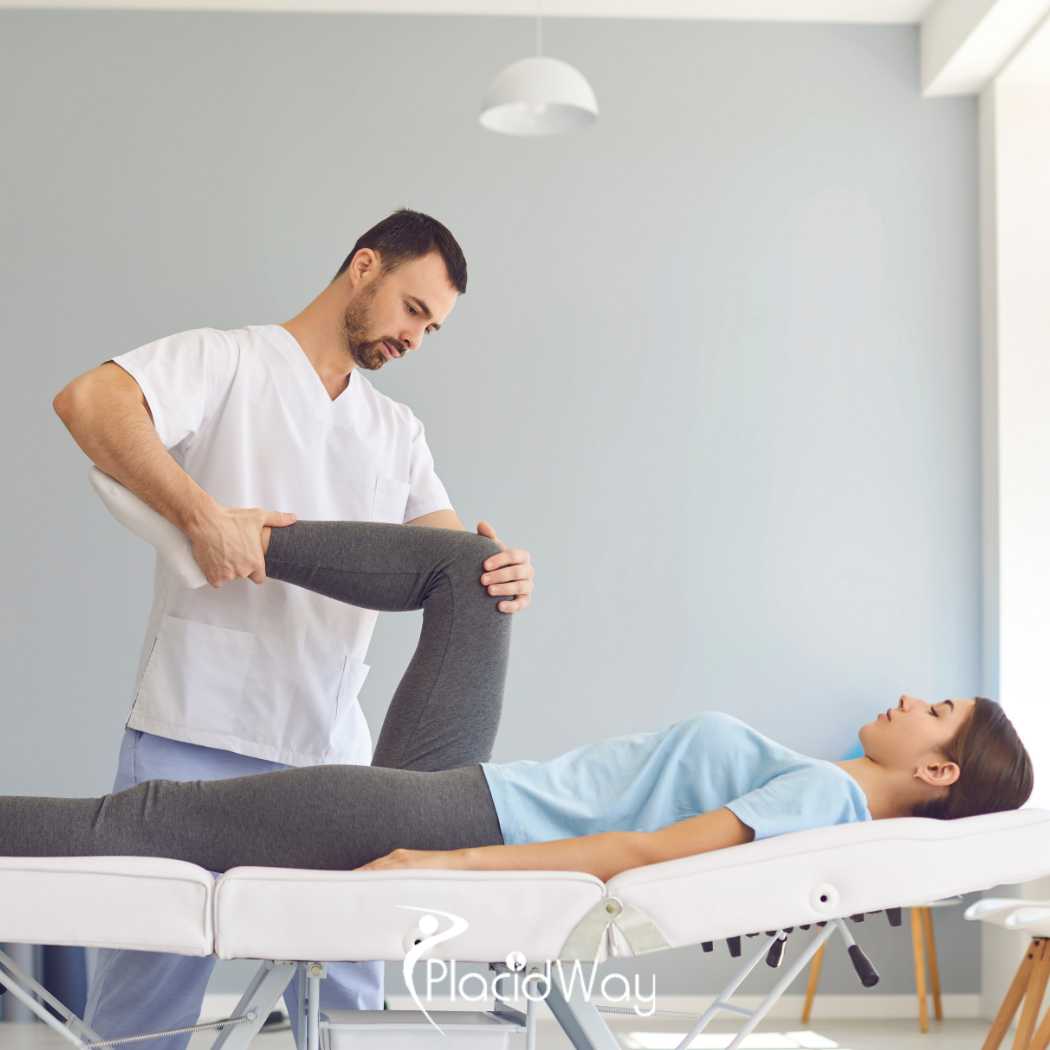
Physical therapy is a central part of ACL reconstruction, not an optional extra. Rehabilitation generally begins soon after surgery with swelling control, safe walking, knee extension, gradual bending, and quadriceps activation.
Your recovery budget may include crutches, a postoperative brace, medication, transportation, missed work, caregiver help, therapy visits, gym access, and functional return-to-sport testing. Rehabilitation may become longer when the surgeon also repairs a meniscus or treats cartilage damage.
| Timeframe | Biological or Clinical Process | Patient Sensation | Activity Level | Action Required |
|---|---|---|---|---|
| First 7–10 days | Early wound healing and inflammation | Pain, swelling, stiffness, and muscle inhibition | Short supported walks and prescribed exercises | Keep the wound protected and regain full extension |
| Weeks 2–6 | Motion and basic muscular control improve | Decreasing pain with persistent weakness or swelling | Progressive walking, cycling, and controlled strengthening | Follow weight-bearing and brace instructions |
| Months 2–4 | Strength, balance, and movement quality develop | Less daily discomfort; fatigue may remain | More demanding strength and neuromuscular exercises | Progress according to objective clinical milestones |
| Months 4–6 | Higher-level control and endurance continue improving | Confidence may lag behind physical recovery | Running or agility may begin when criteria are met | Complete strength and movement assessments |
| Months 6–12 | Sport-specific capacity and graft maturation continue | Possible fear of reinjury or intermittent soreness | Progressive practice and eventual unrestricted activity | Return only after clinical and functional clearance |
Budgeting tip: Ask the physical therapist for a written self-pay rate, expected number of visits, cancellation fee, package discount, and price for return-to-running or return-to-sport testing.
What Risks Can Increase ACL Surgery Expenses?
ACL reconstruction is commonly performed, but it remains a major orthopedic procedure. Potential complications include infection, blood clots, bleeding, stiffness, nerve or blood-vessel injury, persistent pain, graft stretching or rupture, weakness, kneecap symptoms, and the possibility of another operation.
A complication can create expenses beyond the original package, including additional consultations, imaging, medication, emergency treatment, extended therapy, manipulation under anesthesia, or revision reconstruction. Ask whether the provider offers any written complication policy.
| Potential Problem | Risk-Reduction Approach | Possible Added Expense |
|---|---|---|
| Infection | Health optimization, sterile technique, appropriate antibiotics, and wound monitoring | Testing, antibiotics, drainage, hospitalization, or further surgery |
| Blood clot | Individual risk assessment, movement, and clinician-directed prevention | Emergency evaluation, ultrasound, medication, or hospitalization |
| Knee stiffness | Swelling control, full extension, appropriate therapy, and close follow-up | Additional therapy or manipulation under anesthesia |
| Graft failure or recurrent instability | Appropriate graft choice, surgical positioning, rehabilitation, and safe return timing | MRI, bracing, further rehabilitation, or revision reconstruction |
| Harvest-site symptoms | Patient-specific graft choice and targeted strengthening | Extended therapy or specialist reassessment |
Seek Prompt Medical Care for Warning Signs
- Increasing wound redness, warmth, drainage, or pain
- Persistent fever, chills, or feeling acutely unwell
- New calf pain, tenderness, or one-sided leg swelling
- Sudden shortness of breath, chest pain, or fainting
- A fall followed by new instability or inability to bear weight
- Loss of knee movement that is worsening rather than improving
Who Commonly Needs ACL Surgery? Current Patient Demographics
ACL reconstruction is often associated with athletes, but active workers and recreational patients may also require treatment when instability interferes with their goals. Activity demands and knee stability are generally more important than one age cutoff.
A 2026 study of surgically treated ACL injuries in Division I collegiate athletes identified 313 injuries in 286 athletes. The overall incidence was 1.1% per athlete-year. Female soccer players had the highest reported incidence at 5%, while male football players had the highest male incidence at 1.9%.
ACL Injury Incidence in Selected Division I Sports
Source: 2026 study of surgically treated ACL injuries in Division I collegiate athletes. These rates describe the study cohort and should not be applied to the general population.
Competitive Athletes
May consider reconstruction when returning to cutting, pivoting, jumping, or contact sports is an important goal.
Active Workers
May need dependable knee stability for climbing, lifting, uneven ground, rapid turning, or physically demanding duties.
Recreational Patients
May choose surgery when recurrent instability prevents desired activities despite appropriate rehabilitation.
The current evidence reviewed for this article does not provide a reliable 2025 or 2026 national demographic profile specifically for uninsured ACL surgery patients. No unsupported percentages are presented for medical-travel origin, income, or insurance status.
How Can You Reduce ACL Surgery Costs Safely?
Cost reduction should come from transparent comparison and appropriate care planning, not from ignoring licensing, qualifications, rehabilitation, or emergency support. Obtain comparable written quotes before selecting a provider.
- Request a Good Faith Estimate. Ask the surgeon and facility for separate estimates when they bill independently. Also request estimates from anesthesia, imaging, laboratory, equipment, and rehabilitation providers.
- Compare complete bundles. A higher-looking bundle may be less expensive overall when it includes the surgeon, facility, anesthesia, graft, implants, brace, routine medication, and follow-up.
- Compare an ASC with a hospital. When both settings are medically appropriate, an ambulatory surgery center may have a lower facility charge.
- Ask about self-pay reductions. Providers may offer a cash discount, prompt-payment rate, payment plan, or financial-assistance application.
- Review hospital price-transparency information. Confirm that the displayed price applies to uninsured patients and matches the expected billing code and services.
- Plan therapy before surgery. Compare physical-therapy rates and estimate the full rehabilitation cost rather than paying visit by visit without a plan.
- Keep a complication reserve. Budget for unexpected imaging, medication, extra therapy, transportation, missed work, or medical review.
Federal billing protection: Uninsured or self-pay patients can generally request a Good Faith Estimate for scheduled care. When an eligible bill from a provider is at least $400 higher than that provider’s estimate, a federal dispute process may be available.
Save every estimate, package description, invoice, receipt, email, cancellation policy, and written statement about included services.
Frequently Asked Questions About ACL Surgery Without Insurance
How much is ACL surgery without insurance?
A cautious U.S. planning benchmark is around $30,000 for a complete self-pay episode. A published hospital study reported an average complete estimate of $29,590, but actual quotes vary substantially by facility, region, graft, associated injuries, and included rehabilitation.
Why is the Medicare ACL surgery amount lower than a cash quote?
Medicare-approved amounts are regulated payment benchmarks rather than hospital list prices or guaranteed uninsured rates. A cash quote may also include services outside the primary procedure code, such as additional knee treatment, donor tissue, equipment, imaging, and rehabilitation.
Does an ACL surgery package include meniscus repair?
Not necessarily. Meniscus repair or removal may be treated as an additional procedure with separate professional, facility, implant, and rehabilitation costs. Ask for written pricing scenarios covering isolated ACL reconstruction and ACL reconstruction with meniscus treatment.
Is an allograft more expensive than an autograft?
An allograft may add a donor-tissue acquisition and processing fee. An autograft avoids that tissue charge but requires graft harvesting. Total cost also depends on operating time, fixation devices, rehabilitation, and the surgeon’s recommended technique.
Can I negotiate ACL surgery costs?
You can ask about a self-pay discount, bundled price, prompt-payment reduction, installment plan, or financial assistance. Negotiate before paying a deposit and obtain the complete terms, exclusions, cancellation policy, and complication policy in writing.
Can ACL surgery be done at a surgery center?
Many ACL reconstructions are completed in an ambulatory surgery center. Suitability depends on your health, anesthesia risk, injury complexity, previous surgery, home support, and likelihood of requiring extended monitoring or hospital resources.
How much should I budget for ACL physical therapy?
There is no universal rehabilitation total. Costs depend on the self-pay rate, number of visits, location, associated meniscus or cartilage treatment, home program, and return-to-sport testing. Request a written therapy plan and visit estimate before surgery.
Can I recover from an ACL tear without surgery?
Some patients with partial tears, limited instability, lower activity demands, or willingness to avoid pivoting sports may function well with structured rehabilitation. Persistent instability, combined injuries, or demanding activities may make reconstruction more appropriate.
How long will I miss work after ACL surgery?
Time away depends on your job, operated leg, transportation, pain control, associated procedures, and recovery. Desk work may resume earlier than occupations involving climbing, lifting, kneeling, uneven surfaces, running, or rapid direction changes.
When can I return to sports after ACL reconstruction?
Return to full sport commonly occurs approximately 6–12 months after surgery, depending on healing, strength, movement quality, balance, confidence, and sport demands. Clearance should rely on clinical and functional assessment rather than time alone.
What happens if the final ACL surgery bill exceeds my estimate?
An eligible uninsured patient may use the federal dispute process when a provider’s bill is at least $400 higher than that provider’s Good Faith Estimate. Filing deadlines apply, so keep all estimates and review current CMS instructions promptly.
Is cheaper ACL surgery abroad a reasonable option?
International treatment may have a lower package price, but comparison must include surgeon licensing, facility regulation, graft and implant documentation, required stay, flight timing, blood-clot risk, rehabilitation, emergency treatment, and follow-up after returning home.
Compare ACL Surgery Options and Written Package Prices
PlacidWay can help you compare treatment options, review package inclusions, understand cost differences, and prepare questions about surgeon credentials, graft choices, rehabilitation, and follow-up care.
Request ACL Surgery InformationMedical Disclaimer
Disclaimer: This information is for educational purposes only and does not replace professional medical advice. Always consult a qualified healthcare provider before making medical decisions.
References
- Arthroscopic ACL Reconstruction Procedure Price Lookup – Medicare
- What Is a Good Faith Estimate? – Centers for Medicare & Medicaid Services
- Hospital Price Transparency – Centers for Medicare & Medicaid Services
- ACL Injury: Does It Require Surgery? – American Academy of Orthopaedic Surgeons
- Availability and Variability of ACL Reconstruction Price Estimates in the United States – PubMed
- Epidemiology and Incidence of Surgically Treated ACL Injuries in Division I Athletes – National Library of Medicine
- Orthopaedic Surgery Board Certification – American Board of Orthopaedic Surgery
- About Physician Licensure – Federation of State Medical Boards


























Share this listing