
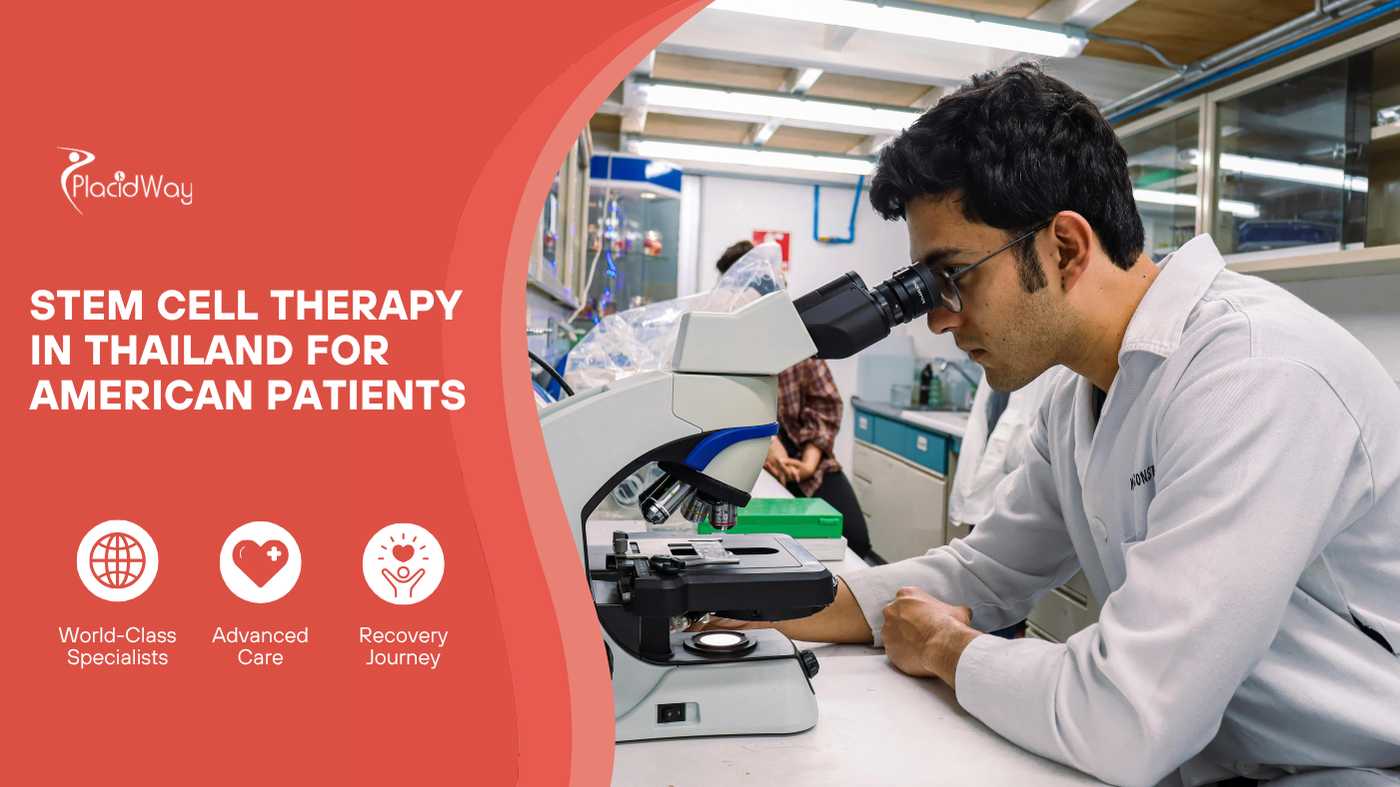
Quick Summary: Stem Cell Therapy in Thailand for US Patients
- Regulation: Thailand regulates advanced cell and gene therapy products through the Thai FDA's ATMP framework, including product classification, cell-therapy registration, clinical research and conditional-approval pathways.
- Established versus experimental: Stem-cell use is not one treatment category. Hematopoietic stem-cell transplantation has established uses in selected blood and immune diseases, while many regenerative applications marketed for orthopedic, neurologic, metabolic and anti-aging conditions remain investigational or require indication-specific evidence.
- Current Thai professional standard: Thailand's Medical Council issued a professional standard addressing cell therapy in hematologic and hematologic-cancer diseases. This should not be interpreted as blanket approval for unrelated conditions.
- Estimated cost: There is no reliable government-published national USD price for one standardized “stem cell therapy in Thailand.” Costs vary by disease, cell product, manufacturing, hospitalization and whether treatment is part of clinical research.
- Doctor verification: Check the treating physician through the Medical Council of Thailand's public licence-verification system and verify relevant specialist training.
- Hospital verification: Check the facility through Thailand's Department of Health Service Support and review Healthcare Accreditation Institute certification where applicable.
- US patient caution: FDA approval in the United States and Thai regulatory authorization are separate. A treatment available abroad is not automatically FDA-approved or supported by equivalent US evidence.
- Main travel question: Ask what care must continue after you return home and whether your US specialist is willing and able to participate in follow-up.
What Stem Cell Therapy in Thailand Actually Includes
Stem cell therapy is an umbrella term covering very different medical products and procedures. The cells may come from your own bone marrow or fat, donor tissue, umbilical cord tissue, blood-forming stem cells, cultured mesenchymal stromal cells or more advanced manufactured cellular products.
The medical meaning also depends on what disease is being treated. A blood-forming stem-cell transplant for leukemia is clinically and biologically very different from an intra-articular cell injection for knee osteoarthritis or an intravenous cell infusion marketed for neurologic disease.
| Stem cell or cell-therapy category | Typical medical context | What American patients should verify |
|---|---|---|
| Hematopoietic stem-cell transplantation | Selected blood cancers, bone-marrow disorders, immune and hematologic conditions | Transplant indication, donor strategy, specialist qualifications, accreditation, infection control and emergency capability. |
| Mesenchymal stromal cell therapy | Studied in orthopedic, inflammatory, pulmonary and other conditions | Exact cell source, manufacturing method, Thai FDA status, evidence for your specific disease and route of administration. |
| Autologous cell procedures | Cells or tissue collected from your own body | Degree of manipulation, intended biological function, laboratory processing and procedure-specific evidence. |
| Allogeneic cell products | Donor-derived manufactured cell products | Donor screening, sterility, identity, potency, storage, traceability and regulatory authorization. |
| Experimental regenerative interventions | Neurological, metabolic, anti-aging and other investigational uses | Whether the intervention is part of approved research, what evidence exists and whether standard treatment is being delayed. |
Why American Patients Explore Stem Cell Therapy in Thailand
American patients usually consider Thailand because they are looking for treatment options that may not be commercially available in the United States, want another specialist opinion or are comparing international private-care pathways. Some are living with chronic pain, neurological disability, autoimmune disease or degenerative conditions and are searching for options after conventional treatment has not produced the improvement they hoped for.
Thailand also has hospitals experienced in international patient coordination and a broader healthcare infrastructure that includes regulated private facilities, national accreditation and advanced-therapy research. These factors can make international evaluation more practical, but they should never be used as evidence that a specific therapy is clinically effective.
Some Americans investigate therapies abroad before comparable products receive US authorization.
International specialists may reassess diagnosis, disease severity and standard-care options before discussing regenerative treatment.
Some patients compare privately funded care and treatment timelines across countries.
Thailand has hospitals and international patient services accustomed to coordinating care for overseas visitors.
There is one important evidence gap. Reliable public data showing how many American patients travel specifically to Thailand for stem cell therapy are not available. Broad tourism or medical-tourism statistics should not be converted into treatment-specific patient numbers.
Patient origin
Advanced-therapy evaluation
Information not publicly available. No patient-flow percentage is assigned.
Which Stem Cell Treatments in Thailand Are Established and Which Remain Investigational?
The answer depends entirely on the indication. International stem-cell guidance emphasizes that substantially manipulated cells or cells used for a different biological purpose should demonstrate safety and effectiveness for that intended use before routine commercialization.
The International Society for Stem Cell Research states that, for the large majority of conditions currently marketed as stem-cell or regenerative treatments, evidence remains insufficient to justify routine commercial use. Thailand's own Medical Council has historically cautioned against unproven claims for conditions such as paralysis, spinal cord injury, osteoarthritis, cancer, anti-aging and cosmetic use.
| Treatment area | General evidence position | What US patients should ask |
|---|---|---|
| Blood cancers and hematologic diseases | Hematopoietic stem-cell transplantation is an established medical field for defined indications. | Is my disease an accepted transplant indication and is the hospital an experienced transplant centre? |
| Knee osteoarthritis | MSC-based injections remain an evolving field with variable products and evidence. | What exact product is used, and is the goal symptom relief or a claim of cartilage regeneration? |
| Neurological disorders | Most cell-based approaches remain investigational and disease-specific. | What controlled clinical evidence supports this exact cell therapy for my diagnosis? |
| Diabetes | Advanced cell-replacement research is progressing internationally, but broad commercial “stem cell treatment” should not be treated as established diabetes care. | Is this a regulated cell product or research protocol, and will I still need standard diabetes management? |
| Spinal cord injury or stroke | Many interventions remain experimental. | What trial phase, comparator and neurological outcome measures support the proposed intervention? |
| Anti-aging or longevity | Broad claims of systemic rejuvenation from stem cells are not established standard medicine. | What disease indication is being treated and what objective clinical endpoint has been validated? |
Thailand Stem Cell Regulation and Thai FDA ATMP Oversight
Thailand's Thai FDA maintains a dedicated framework for Advanced Therapy Medicinal Products. Its current ATMP portal includes rules for classifying advanced therapies, registering cell-therapy products, conducting investigational-drug research and granting conditional authorization in applicable circumstances.
This distinction is particularly important for Americans who assume that a clinic's willingness to administer cells means the product has been fully approved. Availability, research authorization, conditional authorization and full product registration are different regulatory concepts.
Current Thai FDA ATMP Activity Visible on the Public Portal
The current Thai FDA ATMP page publicly lists three named authorized or conditionally authorized ATMP research entries. It also lists a mesenchymal stem-cell study for idiopathic pulmonary fibrosis as under consideration. These public entries illustrate active regulatory oversight but should not be interpreted as the complete number of stem-cell treatments or studies in Thailand.
Current Public Thai FDA ATMP Research Status Snapshot
The charts above summarize only entries visible on the current Thai FDA ATMP portal and should not be used to estimate treatment availability, national case volume or the number of commercial stem-cell clinics in Thailand.
| Thai regulatory question | What to request from the provider |
|---|---|
| ATMP classification | Ask whether the product falls under Thailand's Advanced Therapy Medicinal Product framework. |
| Product authorization | Request the exact registration, conditional authorization or investigational status applying to your treatment. |
| Research authorization | If investigational, request the study protocol, ethics approval and Thai FDA authorization details. |
| Manufacturing | Ask where cells are processed and what GMP/GMDP or equivalent quality controls apply. |
| Product release | Ask which sterility, identity, viability, purity or potency tests are completed before administration. |
What Thailand's Cell-Therapy Standards Mean for American Patients
Thailand's Medical Council currently lists a professional standard titled Standards for Medical Practice Using Cell Therapy in Hematologic Diseases and Hematologic Malignancies. That is an important country-specific trust signal because it demonstrates formal professional standards in a defined clinical field.
It does not mean every physician can offer cells for every diagnosis. A professional standard written for hematologic diseases should not be used to justify commercial treatment for Parkinson's disease, autism, spinal cord injury, osteoarthritis, COPD, diabetes or longevity.
Stem Cell Therapy Cost in Thailand Compared With the United States
There is no medically meaningful national average price for stem cell therapy in Thailand because this phrase covers treatments ranging from complex bone-marrow transplantation to experimental joint injections and manufactured donor-cell products.
Thai government regulatory sources do not publish one standardized USD price for regenerative medicine across conditions. Rather than inventing a broad cost range, compare provider-specific written quotations only after confirming that the underlying treatment is medically comparable.
| Cost question | Thailand | United States |
|---|---|---|
| National standard price for all stem-cell therapy | Information not available because treatments are not one standardized procedure. | No single national price exists across cell therapies. |
| Approved blood-forming stem-cell therapy | Hospital- and indication-specific. | Coverage and cost depend on diagnosis, transplant type, insurance and hospital. |
| Experimental regenerative treatments | Provider-specific and should be assessed against regulatory status. | Many regenerative products marketed for broad conditions are not FDA-approved. |
| Insurance coverage | US insurance may exclude elective overseas or investigational care. | Depends on FDA status, indication, plan rules and medical necessity. |
| Travel expense | Flights, accommodation, local transport and longer stays may be additional. | Usually lower travel burden for domestic treatment. |
What Your Thailand Stem Cell Quote Should Itemize
| Potential charge | Verified national USD amount | What to clarify |
|---|---|---|
| Specialist consultation | Provider-specific | Does the specialist review US medical records before travel? |
| Cell collection | Depends on treatment | Is bone marrow, blood or adipose-tissue collection necessary? |
| Cell manufacturing | Depends on product | Where are cells processed and what quality controls are included? |
| Cell administration | Provider-specific | Is administration intravenous, intra-articular, intrathecal or another route? |
| Hospital admission | Provider-specific | Ask what happens financially if admission must be extended. |
| Laboratory and imaging | Provider-specific | Ask whether testing before and after treatment is included. |
| Complication management | Often excluded | Determine who pays for unexpected hospitalization or additional procedures. |
| Long-term follow-up | Varies | Ask which follow-up must occur in Thailand and which can occur in the US. |
How American Patients Should Choose a Stem Cell Hospital in Thailand
Start with the legal healthcare facility rather than a marketing office or laboratory. Thailand's Department of Health Service Support operates healthcare-business licensing services and a public hospital and clinic search system. Thailand's Healthcare Accreditation Institute independently certifies healthcare organizations against national standards.
HA accreditation can be a meaningful quality signal, but it does not independently prove that a specific stem-cell product is authorized or effective. You still need to verify the treatment itself.
| Thailand hospital check | What you should request |
|---|---|
| Healthcare facility licence | Legal facility name and verification through the Department of Health Service Support system. |
| HA accreditation | Current Healthcare Accreditation Institute certificate status where applicable. |
| Disease-specific department | A neurologist, orthopaedic specialist, hematologist, endocrinologist or other relevant specialist should independently evaluate your condition. |
| Cell-processing facility | Name, licence or authorization, manufacturing standards and location. |
| Emergency support | 24-hour emergency response, inpatient capability and ICU or transfer access when clinically appropriate. |
| Complication protocol | Written plan for infection, allergic reactions, thrombotic events, neurological deterioration or other procedure-specific risks. |
| International patient coordination | English-language consent, medical-record transfer and aftercare coordination. |
JCI or another international accreditation may provide additional information when applicable, but it is not required for every reputable Thai hospital. National healthcare licensing, Thai HA certification and treatment-specific regulatory authorization should be checked first.
How to Verify a Stem Cell Doctor in Thailand
The Medical Council of Thailand provides an English-language physician verification system. You can search using the doctor's first and last name and verify the medical licence number. The system may also display Medical Council-recognized specialty qualifications.
That verification is especially important when the doctor is promoted primarily as a “regenerative medicine expert.” Your underlying disease should still be evaluated by a specialist qualified in that clinical field.
Questions to Ask a Thai Stem Cell Doctor
- What is your Thai medical licence number?
- What specialty qualification does the Medical Council recognize?
- How much of your practice involves my specific disease?
- What exact cells will I receive?
- Where are the cells manufactured or processed?
- What Thai FDA status applies to this exact product?
- Is this routine treatment, off-label use or clinical research?
- Which published clinical studies use the same product for my diagnosis?
- What outcomes do you realistically expect to measure?
- What complications have occurred with this protocol?
- What standard treatments should I continue?
- Who will manage my care when I return to the United States?
Risks American Patients Should Consider Before Stem Cell Therapy in Thailand
Risk varies dramatically between treatments. A blood-forming stem-cell transplant can involve intensive chemotherapy, infection risk and prolonged hospitalization. A joint injection has different risks. Intrathecal or intracranial cell delivery creates another risk profile entirely.
International stem-cell guidance warns that unproven interventions have caused serious adverse events and that long-term safety remains uncertain for many cell-based products. The US FDA has separately reported problems including infections, tumor formation and blindness following unapproved regenerative products.
| Potential risk | Why it matters | What to ask |
|---|---|---|
| Contamination or infection | Cells may undergo collection, processing, storage and administration. | What sterility testing and aseptic manufacturing standards apply? |
| Immune reaction | Donor-derived cells may interact with your immune system. | What donor matching, immune monitoring or treatment is required? |
| Abnormal cell behaviour | Some advanced cell products have theoretical or observed risks related to proliferation or differentiation. | What long-term surveillance is required? |
| Procedure injury | Intrathecal, spinal, intra-articular or surgical delivery has route-specific risks. | Who performs the procedure and what complication rate is documented? |
| No therapeutic benefit | The intervention may not meaningfully improve symptoms or function. | What is the evidence-based probability of benefit, and how uncertain is it? |
| Delay of standard treatment | Disease can progress while waiting for an experimental response. | Could this interfere with surgery, transplantation, medications or another established treatment? |
US FDA Rules Still Matter When You Travel to Thailand
American patients sometimes assume that travelling overseas removes the need to understand FDA status. It does not. US FDA authorization determines what can legally be marketed as an approved regenerative product in the United States, while Thailand applies its own national regulatory framework.
The FDA states that stem-cell products generally require FDA approval and that approved US stem-cell products are primarily blood-forming products for defined hematologic indications. The agency warns that many products promoted for orthopedic, neurological and other diseases are not FDA-approved.
| Question | Why it matters for an American patient |
|---|---|
| Is this treatment FDA-approved? | Tells you whether the same product and indication have US regulatory approval. |
| Is it authorized by Thai regulators? | Determines the local regulatory framework applying in Thailand. |
| Can my US doctor obtain the same product? | Affects long-term management and treatment of complications. |
| Will my US insurer cover complications? | Coverage may differ for complications arising after overseas investigational treatment. |
| How are treatment records transferred? | Your US specialist needs clear information about cells, dose, administration and adverse events. |
Recovery and Follow-Up After Stem Cell Therapy in Thailand
There is no universal stem-cell recovery timeline because treatment methods range from outpatient injections to intensive hematopoietic transplantation. Any provider offering one standard recovery schedule for all stem-cell procedures should be questioned.
Your return-to-flight date should depend on the treatment, procedure route, disease severity, postoperative or post-infusion monitoring and whether complications develop.
| Timeframe | Biological or clinical process | Patient sensation | Activity level | Action required |
|---|---|---|---|---|
| Before treatment | Diagnosis confirmation and eligibility assessment | Existing condition-specific symptoms | Based on underlying disease | Share complete records, imaging, medications and previous treatments. |
| Immediate post-treatment period | Monitoring for procedure or infusion reactions | Varies by cell product and route | Provider-directed | Remain near appropriate medical support for the recommended interval. |
| Early recovery | Local healing, immune response or early monitoring | Variable | Gradual progression | Complete scheduled laboratory tests, imaging or rehabilitation. |
| Return to the US | Transfer of care | Condition-specific | Medical clearance dependent | Provide your US clinician with full treatment and discharge documentation. |
| Long-term follow-up | Evaluation of efficacy and delayed adverse events | Responses may evolve over months | Individualized | Continue disease-specific standard care and required surveillance. |
Travel Planning From the United States to Thailand for Stem Cell Therapy
US patients should verify entry requirements directly through Thailand's Ministry of Foreign Affairs before booking treatment. Thailand's official e-Visa system includes medical treatment among its visa categories and provides an online process for eligible applicants. Requirements depend on passport, purpose of travel and intended length of stay.
Your treatment provider should tell you whether your planned treatment duration requires a specific medical-treatment visa or other immigration documentation. Do not rely only on general tourism advice when your stay involves prolonged medical care.
US-to-Thailand Medical Travel Checklist
- Send current medical records to the treating specialist before buying flights.
- Ask for a written medical opinion confirming why you are being considered.
- Verify the exact Thai facility and physician.
- Request written regulatory information for the cell product.
- Confirm official Thai immigration requirements for your planned stay.
- Check whether your travel or medical insurance excludes experimental treatment.
- Carry prescribed medicines in original containers with supporting documentation when needed.
- Do not stop disease-specific medication unless your treating doctors instruct you.
- Budget for an extended stay if your recovery is slower than expected.
- Arrange communication between your Thai team and US specialist.
- Obtain an English-language discharge summary before leaving Thailand.
Frequently Asked Questions About Stem Cell Therapy in Thailand
Is stem cell therapy legal in Thailand?
Thailand has a formal regulatory framework for advanced cell and gene therapy products through the Thai FDA. However, legal availability depends on the exact product, manufacturing process, indication and whether it is registered, conditionally authorized or being used in approved research. Do not interpret “stem cells are legal” as approval for every treatment claim.
Is stem cell therapy in Thailand approved for all diseases?
No. Regulatory and clinical status is disease-specific. Established hematopoietic stem-cell transplantation for defined blood disorders is very different from regenerative therapies marketed for neurological, orthopedic, metabolic or anti-aging purposes. Ask the provider to identify the exact Thai authorization and clinical evidence applying to your diagnosis.
How much does stem cell therapy in Thailand cost for American patients?
There is no reliable national average because “stem cell therapy” covers materially different procedures and products. Your cost may include consultation, cell collection, laboratory processing, administration, hospitalization, imaging and follow-up. Request an itemized USD quote only after confirming that the proposed product and indication are medically appropriate.
Is stem cell therapy in Thailand FDA-approved in the United States?
Thai authorization and US FDA approval are separate regulatory decisions. A cell product available in Thailand is not automatically approved by the FDA. Ask for the exact product name and indication and check whether that same product has US approval before assuming the evidence or regulatory status is equivalent.
How can I verify a stem cell doctor in Thailand?
Use the Medical Council of Thailand's public physician-verification system to check the doctor's name and medical licence number. The system can also show recognized specialty qualifications. Your underlying condition should be evaluated by an appropriate disease specialist rather than only someone described broadly as a regenerative-medicine doctor.
What hospital accreditation should I check in Thailand?
Start with legal healthcare-facility verification through Thailand's Department of Health Service Support. You can also check Healthcare Accreditation Institute certification. International accreditations such as JCI may provide additional information but should not replace national licensing, Thai HA status and product-specific regulatory verification.
Are umbilical cord stem cells better than my own stem cells?
There is no universal answer. Donor-derived umbilical cells and autologous cells differ in biology, manufacturing, immune considerations and supporting evidence. The correct comparison depends on your diagnosis and exact cell product. Evidence for one preparation should never be used automatically to support a different preparation.
Can stem cells in Thailand cure Parkinson's disease, diabetes or spinal cord injury?
Do not accept a guaranteed cure claim for these conditions. Cell-based research is progressing internationally, but many interventions remain experimental and evidence differs by disease and cell product. Ask for controlled human studies involving the exact therapy and continue appropriate neurological, diabetes or rehabilitation care.
Is stem cell therapy in Thailand safe?
No medical procedure is universally safe. Risk depends on cell source, manufacturing, route of administration, your disease and the facility performing treatment. Possible concerns include infection, immune reactions, procedure complications, unexpected cell behaviour and lack of benefit. Safety should be evaluated for the exact product, not for “stem cells” generally.
How long should I stay in Thailand after stem cell therapy?
There is no universal stay length. A simple injection and a hematopoietic stem-cell transplant require completely different monitoring. Your treating physician should specify when you need post-procedure testing and when you can safely fly based on the intervention, your condition and any complications.
Do Americans need a special visa for medical treatment in Thailand?
Thailand's official e-Visa system includes medical treatment among available travel purposes. Requirements depend on your passport, intended duration and specific travel circumstances. Verify current rules directly through the Ministry of Foreign Affairs e-Visa portal rather than relying on old medical-tourism or visa information.
What are the biggest warning signs when comparing stem cell clinics in Thailand?
Be cautious with guaranteed cures, fixed success rates without credible evidence, unclear cell sources, refusal to provide Thai FDA status, pressure to pay quickly, vague doctor credentials or claims that one cell product treats many unrelated diseases. A responsible provider should explain uncertainties, alternatives, risks and reasons you may not qualify.
Disclaimer
This information is for educational purposes only and does not replace professional medical advice. Always consult a qualified healthcare provider before making medical decisions.
References
- Advanced Therapy Medicinal Products Regulation and Research – Thai Food and Drug Administration, Medicines Regulation Division
- Medical Council Professional Standards and 2025 Cell Therapy Standard – Medical Council of Thailand
- Physician Licence Verification – Medical Council of Thailand
- Hospital and Clinic Verification – Department of Health Service Support, Ministry of Public Health Thailand
- Healthcare Facility Accreditation Certificate Status – Healthcare Accreditation Institute Thailand
- Clinical Translation of Stem Cell-Based Interventions – International Society for Stem Cell Research
- Patient and Consumer Information About Regenerative Medicine Therapies – U.S. Food and Drug Administration
- Thailand e-Visa and Medical Treatment Travel Information – Ministry of Foreign Affairs of Thailand


























Share this listing