
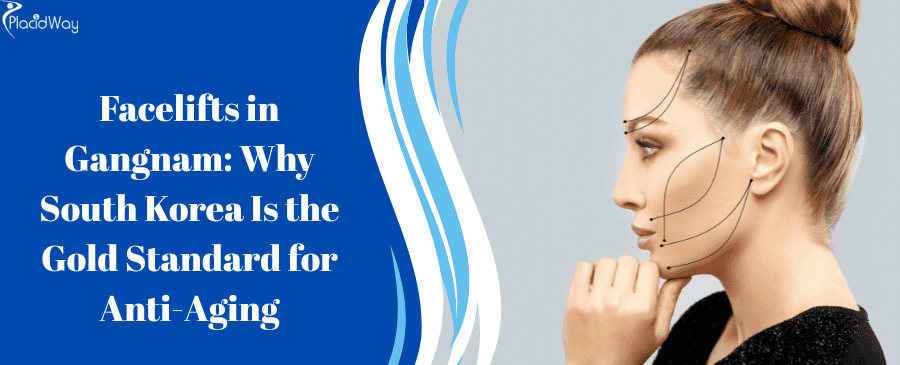
Five entries from a composite patient diary
Facelift in Seoul, South Korea: the trip I would plan carefully
I am a composite voice, not a person whose interview was recorded. My entries bring together realistic questions a patient traveling from China might have. The decisions and recovery described here are illustrative, not a report of anyone’s treatment or result.
Entry 01
The Decision
Then · what I assumed
I had looked at my face in video calls for a long time. I could see changes around my jaw and neck, but I could not tell whether a full facelift was the right operation, or whether I was asking surgery to solve something it could not solve. Seoul kept coming up because I wanted a choice of surgeons familiar with Asian facial anatomy and different approaches to the lower face. That was a reason to investigate, not a reason to book.
At first, I compared headline prices as if every clinic meant the same thing by “facelift.” Some quotes seemed to refer mainly to the midface or lower face. Others appeared to include the neck. The photos I saw online were not enough to settle it. Lighting, camera angle, swelling and the point in recovery when a picture is taken can all change what a result looks like.
Now · what I would ask
I would begin with a consultation about my own anatomy and goals. A surgeon might discuss a mini facelift, a deeper tissue or SMAS-based approach, a neck lift, or no operation yet. Those names alone would not tell me which option is safer or more suitable. I would ask where the incisions are planned, what tissues are repositioned, whether the neck is included and which changes surgery is unlikely to make.
I would also ask the surgeon to explain their training, specialist status and experience with the proposed operation. I would verify their credentials through appropriate professional or regulatory channels rather than rely on a website label. For the facility, I would request its operating license, the name and qualifications of the anesthesia professional, and an explanation of who monitors me during surgery and recovery.
My moment of doubt came when I realized that “arrive, operate, fly home” sounded efficient only because it left recovery out of the sentence. I did not resolve that doubt by pretending there was no risk. I resolved the planning question by making enough time for an in-person assessment, early reviews and a surgeon-approved travel date a condition of going ahead. If a provider could not explain that schedule, I would keep looking or stay closer to home.
Price mattered. I would normally think in renminbi, so a dollar quote would have to be converted at the rate I could actually obtain, with card or transfer fees considered. Cosmetic surgery is generally a personal expense rather than something I would assume Chinese public health insurance will reimburse. My comparison would therefore include time off work, a companion’s costs if someone traveled with me, and the possibility of paying for extra nights. A lower surgical quote would not automatically mean a lower total bill.
Entry 02
Arrival
Then · a flight looked like the easy part
From many cities in China, Seoul can be reached by a direct flight or a connection. I might choose an arrival that gives me time to sleep before a consultation, not a late landing followed by an early operation. I would check current entry requirements for my passport and purpose of travel through official channels before paying for nonrefundable tickets. Rules can change, and a clinic cannot grant entry permission.
Now · arrival means checking the details
I would keep the first day open for the face-to-face appointment. That is when I would confirm the proposed technique, review my medical history and medications, discuss any previous facial procedures and make sure the consent documents match the plan. I would request a Mandarin interpreter for clinical conversations if needed. A bilingual sales coordinator could help with logistics, but I would not want a complex anesthesia or risk discussion reduced to a quick translation at the reception desk.
For accommodation, I would favor a quiet room with an easy route to the clinic over a cheaper room requiring long cross-city trips. I would check whether the building has a lift and whether a companion can stay. If I use a Chinese payment app or bank card abroad, I would confirm acceptance in advance and keep another payment method available. These are ordinary travel details, but they become less ordinary when I am tired after an operation.
Entry 03
Procedure Day
Then · I focused on the mirror
I used to picture only the moment after the bandages came off. That skips the most consequential part of the day. A facelift is surgery. The team needs accurate information about my health, including conditions such as high blood pressure or diabetes, smoking or nicotine use, allergies, prior anesthesia experiences, and every medicine or supplement I take. I would bring a written list, with names translated where useful, rather than trust my memory.
I would not stop a prescribed drug or change a dose because of advice I read online. My surgeon, anesthesia professional and usual clinician should tell me which instructions apply to me.
Now · I would follow the clinical plan
Before surgery, I would expect the team to reconfirm my identity, procedure and consent, explain the anesthesia approach, and tell me who will be present. Depending on the operation and my health, anesthesia may involve general anesthesia or another clinician-selected approach. I would ask how I will be monitored, where I will wake up, and whether observation or an overnight stay is planned.
When the operation ends, the first look in the mirror is not a preview of the final result. Dressings, swelling, bruising and a tight sensation can be part of early recovery. Drains or other measures may be used when the surgeon considers them appropriate. I would want discharge instructions in a language I understand and a named contact for concerns after hours.
The question I would ask while still at the clinic
“What changes should make me call you tonight, and what should make me seek emergency care?” In this composite diary, that is a planning question, not a quotation from an interviewed patient. I would ask the team to distinguish expected swelling from warning signs. Rapidly increasing swelling, significant bleeding, breathing difficulty, chest pain or new severe symptoms need urgent clinical attention. The surgeon’s own instructions and local emergency services take priority over anything on this page.
Entry 04
Recovery
Then · I counted hotel nights
I wanted to know the earliest possible flight home. A better question is how the first postoperative appointments fit around any flight. Stitches or other closures, wound checks and assessment of swelling have to follow the surgeon’s plan. The date I can travel is an individual medical decision, not a standard number of days printed in a package description.
I would reserve time away from work without promising myself that I will be camera-ready as soon as I land in China. Bruising and swelling may still be noticeable when travel is medically permitted. If I normally handle family errands, I would arrange help at home rather than assume I can resume every task immediately.
Now · I would count reviews instead
I would ask for the follow-up schedule before booking my return ticket. Which visits are routine? Who examines me if the surgeon is unavailable? Can an extra review be arranged before departure? If a concern develops after I return to China, will the Seoul team provide my operative notes to a local clinician and speak with that clinician if necessary?
Recovery is not only about appearance. Facelift risks can include bleeding, infection, problems with wound healing, changes in sensation, asymmetry, scarring and injury to facial nerves. Anesthesia carries its own risks. I would ask how the team reduces risks, what complications it can manage on site and when transfer to a hospital would be necessary. No responsible consultation can promise that complications will not occur.
Flying while visibly swollen is practical to plan for, even if it feels awkward. I would choose comfortable clothing, keep medication and discharge papers in my carry-on, and leave extra time at the airport. I would ask my clinician about the length of my flight, my personal risk of a blood clot and any precautions appropriate for me. I would not buy compression stockings or take medication as a substitute for that conversation. If my surgeon says I am not fit to fly, the ticket changes.
Entry 05
Home
Then · I imagined the trip was over
Landing in China would feel like the end of the travel part, but it would not be the end of healing. Swelling can change gradually. Scars also change over time. I would avoid judging the result against edited photographs or expecting my face to look settled on the day I resume ordinary life. If I had a concern, I would send clear photographs through a secure channel agreed with the surgeon and explain my symptoms rather than wait for a routine message.
Now · I would keep two routes to care
One route would lead back to the Seoul surgeon for planned remote reviews and questions about the operation. The other would be a local clinician in China who can examine me in person when that is needed. Remote photographs cannot replace an examination for every problem. Before leaving Seoul, I would ask what information the team can share promptly with a doctor at home and how I can obtain an English or Chinese copy if the original record is in Korean.
If everything is healing as expected, I would still keep the scheduled follow-ups. If it is not, I would not feel obliged to solve it through messages alone. Severe or rapidly changing symptoms call for prompt in-person medical care. My usual clinician can also help me interpret the surgeon’s instructions in light of my existing health conditions.
The page beside my diary
The numbers I would compare before choosing Seoul
These approximate US-dollar ranges are for a standard full facelift, not guaranteed package prices. They are useful for setting a budget, not for ranking surgeons or predicting an individual quote. Scope, surgeon experience, anesthesia, facility level, neck-lift inclusion and aftercare can change the cost substantially. I would request a current written, itemized quote from each provider and convert it to renminbi using a realistic payment rate.
| Location | Approximate surgery range | What to check in the quote |
|---|---|---|
| Seoul | $6,000–$15,000 | Surgeon, anesthesia, operating facility and routine follow-up are estimated. Flights and hotel are usually separate. |
| Bangkok | $5,000–$12,000 | Hospital packages commonly cover surgery, anesthesia, operating room and initial follow-up. Accommodation varies. |
| Tokyo | $8,000–$18,000 | Routine postoperative reviews are generally included. Confirm anesthesia and medication charges. |
| Taipei | $6,000–$13,000 | Early follow-up is commonly included. Travel and hotel are generally separate. |
| Singapore | $12,000–$25,000 | Consultation, anesthesia, facility and follow-up inclusions vary. |
| China, for a home-care baseline | $5,000–$14,000 | At an established private cosmetic surgery hospital, anesthesia, facility and follow-up inclusions vary. |
For me, the decision would not be a contest to find the lowest number. I would give the most attention to surgeon qualifications and facility accreditation, followed closely by surgical safety and anesthesia standards. Next would come postoperative support, then the complete treatment bill. Travel access from China and clear, relevant examples of facelift results would also matter. Those are priorities for asking questions, not scores assigned to any city or provider.
I would ask the Seoul provider to separate the surgical fee from consultation, tests, anesthesia, facility use, medicines, garments if recommended, routine reviews and any potential extra follow-up. I would ask who pays if a complication requires additional care, a hospital transfer or a longer stay. Then I would add flights, accommodation, local transport, meals, currency conversion and lost work time. A clinic can explain its own charges, but it cannot promise the total cost of every possible recovery.
A note to another traveler from China
What I would tell someone considering this
Give yourself permission to decide after the in-person consultation, not before it. Ask who will operate and who will handle anesthesia. Get the full price and the follow-up schedule in writing. Check that you can discuss risks in a language you understand. Leave enough room in your travel plans for the surgeon to say you need another review before flying.
This diary remains a composite, not a consented patient’s account. Its first-person voice is a way to organize practical questions, not evidence of a particular recovery or result. My own clinician and the treating team would have the final say on what care and travel are appropriate for me.

















Share this listing