

Losing your hair can deeply impact your confidence, leading many men and women to explore an FUE hair transplant in Istanbul, Turkey, for a high-quality, budget-friendly solution. Before booking a flight, you likely have valid concerns about clinic hygiene, verifying real surgeon credentials, and understanding exactly what is included in treatment packages. This guide helps you navigate your options, avoid risky "hair mills," and identify certified specialists so you can achieve natural-looking results safely.
Quick Answer Summary
- Estimated Cost: Typically ranges from $1,500 to $3,500 USD, often including accommodation and transfers.
- Safety Overview: Generally safe when performed by a licensed physician in a Ministry of Health (MoH) approved facility.
- Ideal Candidate: Individuals with stabilized hair loss, adequate donor hair density, and realistic expectations.
- Recovery Time: Initial healing takes 7 to 10 days; full visible growth takes 12 to 18 months.
- Main Reason for Travel: Access to highly experienced surgical teams at a fraction of Western healthcare costs.
- Important Caution: Avoid clinics where unlicensed technicians perform the entire surgery. Look for Turkish Medical Association (TTB) registration and ISHRS membership.
Why Do Patients Choose an FUE Hair Transplant in Istanbul, Turkey?
Dealing with hair thinning or balding often causes severe emotional distress. Many patients spend years trying topical treatments with limited success before considering surgery. When looking at surgical options at home, the high price tags can quickly become a major barrier to restoring your confidence.
Istanbul has emerged as a global hub for hair restoration. Patients travel here primarily because the local healthcare ecosystem combines extensive surgical experience with accessible pricing. Clinics perform thousands of these procedures annually, giving top surgeons refined skills in hairline design and graft survival.
People mostly travel from the United Kingdom, the United States, Germany, and the Middle East. The primary reasons patients select this destination include:
- Significantly lower treatment costs compared to domestic providers.
- Comprehensive "all-inclusive" packages covering hotels and airport transfers.
- High volume of specialized, experienced surgical teams.
- Access to advanced variations like Sapphire FUE.
- Opportunity to recover discreetly away from home.
What Exactly is an FUE Hair Transplant?
Follicular Unit Extraction (FUE) is a minimally invasive surgical technique for treating hair loss. Instead of removing a large strip of skin from the back of your head, a surgeon extracts individual hair follicles one by one. This approach leaves tiny, dot-like scars that are easily hidden even with short haircuts.
From a biological standpoint, hair from the back and sides of your head is typically resistant to DHT, the hormone responsible for pattern baldness. When your surgeon moves these healthy follicles to thinning areas, they retain their genetic resistance. This means the transplanted hair can continue growing naturally in its new location.
How the FUE Procedure Works in Istanbul, Turkey
Understanding the clinical steps can help calm your nerves before traveling. A standard FUE session usually takes between six to eight hours, depending on the number of grafts required. The process is performed under local anesthesia, meaning you are awake but your scalp is completely numb.
A well-structured clinic will strictly follow these clinical phases to ensure patient safety and graft viability.
| Procedure Phase | Clinical Action | Patient Experience |
|---|---|---|
| Medical Consultation | Surgeon assesses scalp health, donor density, and draws the new hairline. | You discuss your goals and agree on the final design. |
| Extraction | Surgeon uses a micro-punch tool to loosen and extract individual follicles. | You lie face down. You may feel slight pressure but no pain. |
| Incision Making | Surgeon creates tiny micro-channels in the recipient balding area. | You lie face up. The angle of these incisions dictates hair growth direction. |
| Implantation | Medical team carefully places the extracted grafts into the open channels. | You can usually watch a movie or listen to music during this phase. |
What is the Cost of an FUE Hair Transplant in Istanbul, Turkey?
Cost is often the driving factor for medical travel. In Istanbul, Turkey, an FUE hair transplant generally costs between $1,500 and $3,500 USD. This price varies based on the surgeon's expertise, the clinic's location, the complexity of your hair loss, and the specific package inclusions.
Most facilities offer all-inclusive packages. These typically cover the procedure, necessary blood tests, local anesthesia, post-operative medications, airport transfers, and two to three nights in a partner hotel. Flights are rarely included in these packages.
In contrast, the same procedure in the United States or the United Kingdom can range from $8,000 to $15,000 USD, usually charging per graft and excluding any travel or accommodation expenses. Be cautious of clinics offering prices significantly below $1,500 USD, as this often indicates compromised safety protocols.
| Country | Estimated Cost (USD) | Pricing Model Typically Used |
|---|---|---|
| United States | $8,000 - $15,000 | Price per graft (Procedure only) |
| United Kingdom | $7,000 - $12,000 | Price per graft (Procedure only) |
| Istanbul, Turkey | $1,500 - $3,500 | Flat rate / All-inclusive package |
How to Choose a Safe Clinic for FUE Hair Transplant in Istanbul, Turkey
Your safety and final aesthetic result depend entirely on the clinic you choose. The biggest risk in medical tourism for hair restoration is the "hair mill" phenomenon. These are high-volume commercial centers where unlicensed technicians perform the entire surgery with little to no doctor supervision.
To protect yourself, you must rigorously evaluate the facility. A reputable provider will prioritize clinical hygiene, thorough consultations, and strict medical oversight. You should always ask directly who will be performing the extractions and the incisions.
Provider Vetting Checklist
- Is the clinic officially licensed by the Turkish Ministry of Health (Sa?l?k Bakanl???)?
- Does the facility have emergency resuscitation equipment on site?
- Is the primary surgeon performing the critical incision phase?
- Does the clinic limit itself to 1-2 surgeries per doctor per day?
- Do they provide a transparent, itemized written quote before travel?
How to Verify Surgeon Credentials in Istanbul, Turkey
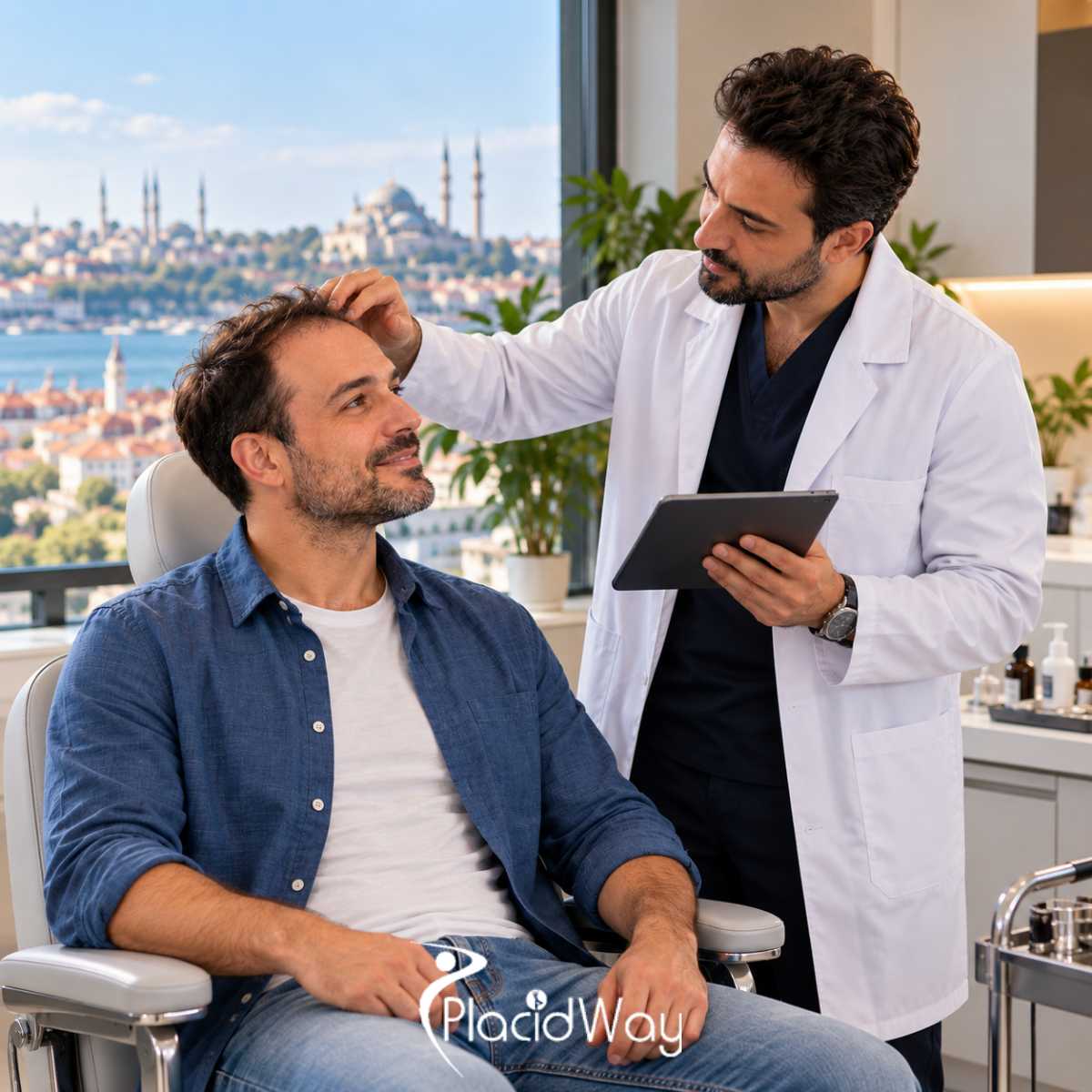
A beautiful clinic lobby does not guarantee a skilled medical team. You must verify the credentials of the doctor responsible for your procedure. In Turkey, hair transplants should be performed or directly supervised by a dermatologist or a plastic surgeon.
Check if the doctor is registered with the Turkish Medical Association (Türk Tabipleri Birli?i - TTB). This is the national medical council that ensures the physician is legally licensed to practice medicine in the country.
Additionally, look for membership in the International Society of Hair Restoration Surgery (ISHRS). While not mandatory, ISHRS membership indicates that the surgeon follows international educational standards and ethical guidelines regarding patient care.
Patient Demographics for Hair Restoration in Turkey
The patient profile for hair restoration has shifted notably. According to recent 2024 healthcare travel data, an increasing number of younger patients are seeking early intervention for hair loss. The vast majority of outbound patients to Istanbul are men, though female hair restoration is steadily growing.
Patients typically travel when they reach a Norwood Scale stage III or IV, looking to restore their hairline before the loss becomes too extensive. Understanding these demographic trends can help you see that you are part of a large, well-documented international patient community.
2024 Global Patient Age Distribution for Hair Transplants
2024 Trend: Hair Loss Severity (Norwood Scale) at Consultation
Who is a Good Candidate for FUE Hair Transplant in Turkey?
Not everyone experiencing hair loss is eligible for surgical restoration. A responsible surgeon will carefully assess your scalp health before approving your travel. Performing surgery on an unsuitable candidate can result in unnatural looks or further hair damage.
Your donor area, usually the back of your head, must have enough healthy hair density to cover the balding spots. If your hair loss is still rapidly progressing, your doctor may recommend waiting or starting medical therapy first.
Ideal Candidate
- Age 25 or older
- Stabilized pattern hair loss
- High density in the donor area
- Realistic aesthetic expectations
Poor Candidate
- Under 25 with aggressive hair loss
- Depleted donor area (over-harvested)
- Active scalp infections or diseases
- Seeking completely unrealistic density
Understanding the Risks of FUE Hair Transplant Procedures
While FUE is minimally invasive, it is still a surgical procedure that carries inherent medical risks. When you travel abroad, understanding and preventing these complications becomes even more critical for your safety.
The most severe risk tied to low-quality clinics is donor area over-harvesting. This occurs when an inexperienced technician removes too many grafts, leaving your scalp looking patchy and permanently scarred. Infection is rare but can happen if clinic hygiene is poor or if you fail to follow aftercare instructions.
| Potential Complication | Clinical Cause | Prevention Strategy |
|---|---|---|
| Over-harvesting | Taking too many grafts from a small area. | Choose an ISHRS-certified doctor who respects safe extraction limits. |
| Scalp Infection | Poor clinic hygiene or improper post-op washing. | Ensure the clinic is MoH licensed; take prescribed antibiotics. |
| Unnatural Hairline | Incorrect angle and depth of graft implantation. | Review the surgeon's previous patient portfolio carefully. |
| Shock Loss | Surgical trauma causing native hair to shed temporarily. | Usually resolves naturally; doctors may recommend supportive treatments. |
What to Expect During FUE Hair Transplant Recovery
Healing from an FUE procedure requires patience. Many patients expect immediate results, but hair restoration is a gradual biological process. The transplanted follicles need time to establish a blood supply in their new location.
During the first few weeks, you will experience shedding. This is a normal part of the hair growth cycle and does not mean the surgery failed. Full, mature results can take over a year to become fully visible.
| Timeframe | Biological Process | Patient Sensation | Action Required |
|---|---|---|---|
| Days 1-3 | Grafts take root; scabs begin to form. | Mild swelling, tightness, slight numbness. | Sleep elevated; avoid touching the scalp. |
| Days 4-10 | Scabs harden and start to flake off. | Itchiness as the scalp heals. | Perform daily gentle foam washes. |
| Weeks 2-6 | Transplanted hair shafts shed (Shock Loss). | Mild concern (this is completely normal). | Be patient; protect scalp from sun. |
| Months 12-18 | Hair shafts thicken and mature. | Satisfaction as final density is achieved. | Enjoy your final aesthetic results. |
Comparing FUE to Hair Transplants in Istanbul, Turkey
As you research clinics in Istanbul, you will frequently see Hair Transplant offered alongside FUE. Both methods are safe and highly effective, and both use the exact same extraction technique to harvest grafts.
The difference lies entirely in how the hair is implanted. In standard FUE, the surgeon opens all the channels first, then the team implants the grafts. In the surgeon uses a specialized tool called a Choi Implanter Pen to create the channel and implant the follicle simultaneously.
| Feature | Standard FUE | (Hair Transplant) |
|---|---|---|
| Implantation Tool | Forceps and micro-scalpels | Choi Implanter Pen |
| Shaving Required | Usually requires a full head shave. | Can often be done without shaving recipient area. |
| Ideal Use Case | Large areas of baldness, high graft count. | Increasing density in thinning areas, smaller sessions. |
Planning Your Medical Trip to Istanbul, Turkey
Organizing a healthcare trip requires careful logistical planning. Most medical tourism packages in Istanbul require you to stay in the city for at least three to four nights. This allows the medical team to monitor your immediate recovery and perform your first clinical hair wash.
Depending on your nationality, you may need an electronic visa to enter the country. Always secure travel medical insurance that covers elective procedures and potential complications before you fly.
Your schedule will typically involve arriving on day one for blood tests and consultation, having the surgery on day two, resting on day three, and attending a final check-up on day four before flying home.
Red Flags to Watch Out For Before Booking
The high demand for hair restoration has led to aggressive marketing tactics by some unethical providers. You must critically evaluate the claims made on clinic websites and social media.
Be extremely wary of any clinic that guarantees a 100% success rate or promises an unlimited number of grafts in a single session. Biologically, the donor area has strict limits, and over-harvesting can cause permanent disfigurement.
The Importance of Post-Op Care After FUE Hair Transplant
Your behavior after leaving the clinic heavily influences your final results. The newly transplanted grafts are very fragile during the first 48 hours. Any friction or physical trauma can dislodge them permanently.
You must sleep with your head elevated to reduce facial swelling and avoid rolling onto the recipient area. Clinics will provide specific lotions and shampoos; follow their washing instructions exactly to soften scabs without pulling out the grafts.
Avoid strenuous exercise, heavy sweating, and direct sunlight for at least four weeks post-operation. Smoking and alcohol consumption can restrict blood flow to the scalp, severely hindering the healing process and graft survival.
Frequently Asked Questions About FUE Hair Transplant in Istanbul, Turkey
Are FUE hair transplant results permanent?
Yes, in many cases, the transplanted hair is highly resistant to DHT, the hormone that causes hair loss. However, you may still lose your native, non-transplanted hair over time, requiring medical maintenance.
Is the FUE procedure in Turkey painful?
The procedure itself is typically not painful due to local anesthesia. You may feel mild discomfort or stinging during the initial numbing injections, but the surgery is generally well-tolerated.
How many grafts can safely be extracted in one session?
For patient safety and optimal donor area preservation, reputable surgeons generally limit extractions to 3,500 - 4,000 grafts per day. Exceeding this increases the risk of over-harvesting.
Can women get an FUE hair transplant in Turkey?
Yes, women with specific types of traction alopecia or female pattern hair loss can be good candidates. A thorough medical diagnosis is required to ensure the hair loss is stabilized.
Do Turkish clinics speak English?
Top-tier clinics in Istanbul cater primarily to international patients and usually have fluent English-speaking medical teams or dedicated in-house interpreters to assist you.
What happens if I experience complications after flying home?
Quality clinics offer remote 24/7 aftercare support. It is also important to establish a relationship with a local doctor in your home country who can assist if an infection occurs.
When can I wear a hat after the transplant?
Most surgeons recommend waiting at least 10 to 14 days before wearing a loose-fitting hat to avoid friction that could dislodge the newly implanted grafts.
Why is hair restoration cheaper in Turkey compared to the US?
The lower cost is due to favorable exchange rates, lower local labor and operational costs, and heavy government subsidies for medical tourism infrastructure, not necessarily a drop in quality.
Can I use body hair if my scalp donor area is weak?
In some cases, surgeons can extract hair from the beard or chest (Body Hair Transplantation). However, body hair has a different growth cycle and texture, so it is usually used only as a secondary option for density.
How soon can I return to work after an FUE procedure?
Patients with office jobs typically return to work within 7 to 10 days once the scabs have healed. Physical labor or jobs requiring hard hats may require a longer recovery period of 3 to 4 weeks.
Ready to Plan Your Hair Restoration Journey safely?
Navigating international clinic options can be complex. PlacidWay can help you compare vetted providers, understand treatment costs, and request verified information from top clinics in Istanbul.
Get a Free Consultation TodayDisclaimer: This information is for educational purposes only and does not replace professional medical advice. Always consult a qualified healthcare provider before making medical decisions.
References
- 2024 Practice Census Results – International Society of Hair Restoration Surgery (ISHRS)
- Health Tourism in Turkey Official Data – USHA? (Turkish Ministry of Health)
- Hair Transplant Overview and Safety – American Academy of Dermatology (AAD)
- Complications in Hair Transplantation: A Comprehensive Review – National Institutes of Health (NIH)
- Patient Guide to Hair Transplant Surgery – ISHRS
- Physician Registration and Licensing Guidelines – Turkish Medical Association (TTB)
























Share this listing