


Premium facial rejuvenation in Seoul may cost less than comparable surgery in the United States, but price should never replace credential checks. Before booking a facelift in South Korea from the USA, confirm the clinic’s foreign-patient registration, the surgeon’s plastic-surgery credentials, the anesthesia plan, complication support, and a realistic recovery stay.
Quick Summary:
- Planning cost: about $4,000–$7,000 for selected mini-facelift cases, $8,000–$18,000 for many full or SMAS facelifts, and $12,000–$25,000 or more for complex deep-plane or combined face-and-neck surgery. These are broad planning ranges, not official national tariffs.
- U.S. comparison: the 2024 American Society of Plastic Surgeons projected surgeon-fee range for facelift surgery was $12,000–$19,000, excluding anesthesia, facility, tests, medicines, and travel.
- Provider checks: look for Korean foreign-patient registration, malpractice liability coverage, a named plastic surgeon, and clear information about emergency transfer. KAHF or KOIHA accreditation can add reassurance where applicable, but neither replaces surgeon-specific verification.
- Recovery: visible bruising commonly lasts at least two weeks. Many people need two to four weeks before normal work and social activity, while swelling, tightness, numbness, scars, and final contour can continue improving for six to nine months.
- Typical candidate: a medically stable adult with jowls, lower-face laxity, deeper folds, or neck looseness who has realistic goals and can follow nicotine, medication, travel, and aftercare instructions.
- Important caution: do not schedule a return flight simply because a package includes a hotel. Your surgeon should examine you after surgery and give written clearance based on wound healing, swelling, bleeding risk, and your overall health.
What Can a Facelift in South Korea Change?
A facelift, medically called rhytidectomy, reshapes aging tissues in the lower face and sometimes the neck. Depending on the technique, your surgeon may reposition deeper facial layers, remove or redistribute fat, tighten neck structures, and remove excess skin. The objective is usually a smoother jawline and more rested contour, not a different identity or perfectly wrinkle-free skin.
Facelift surgery may improve jowls, lower-cheek descent, deep folds beside the mouth, loose skin beneath the chin, and some neck banding. It does not reliably treat fine surface lines, pigmentation, enlarged pores, or every hollow area. Laser resurfacing, fat grafting, eyelid surgery, brow lift, or nonsurgical treatments may be discussed separately, but combining procedures can increase operative time, swelling, cost, and recovery needs.
| Facelift approach | Usually targets | Potential advantage | Important limitation |
|---|---|---|---|
| Mini or short-scar facelift | Early jowling and limited lower-face laxity | Smaller treatment area and sometimes shorter recovery | May under-correct significant neck looseness or advanced tissue descent |
| SMAS facelift | Jowls, lower face, jawline, and selected neck concerns | Addresses the superficial musculoaponeurotic system beneath the skin | The term covers several techniques, so ask exactly what will be done |
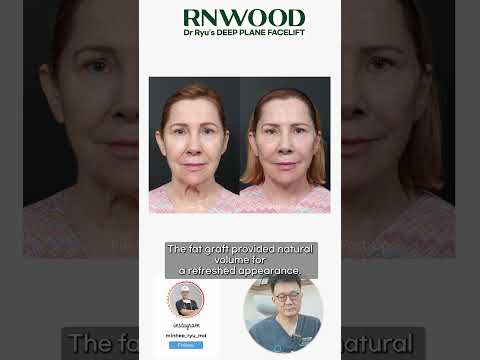
| Deep-plane facelift | More advanced cheek, jowl, and lower-face descent | Repositions connected tissue layers after deeper release | Technically demanding; surgeon training and case experience matter greatly |
| Facelift with neck lift | Lower face plus loose neck skin, fat, or platysma bands | Creates a more continuous jawline-to-neck result | Longer surgery and broader recovery than a limited facelift |
Consultation tip: do not choose surgery from a branded technique name alone. Ask which anatomical layer will be released or tightened, where scars will sit, whether the neck is included, and why that approach suits your examination findings.
Why American Patients Consider Facelift Surgery in South Korea?
American patients often explore South Korea because Seoul has a dense cosmetic-surgery market, international-patient services, and clinics offering multiple facial procedures. Cost can be lower than U.S. care, especially when comparing a Korean package with a U.S. quote that separately charges surgeon, anesthesia, and operating-facility fees. However, apparent savings can shrink after flights, accommodation, companion costs, extra nights, revisions, or treatment for complications.
Official figures confirm that international demand for Korean healthcare has grown quickly. South Korea recorded about 610,000 foreign patients in 2023, 1.17 million in 2024, and 2.01 million in 2025. U.S. patients reached about 173,000 in 2025, up 70.4% from 2024. Among American visitors, plastic surgery accounted for 9.3% of visits, while dermatology and integrated internal medicine were more common.
Potential Facelift Advantages in South Korea
- Broad choice of facial-plastic-surgery services
- International coordinators at many registered providers
- Possibly lower procedure pricing than U.S. care
- Concentrated services in Seoul
- Option to combine consultation and recovery support
Facelift Trade-Offs for U.S. Travelers
- Long-distance travel soon after surgery
- Limited in-person follow-up after returning home
- Different legal, consent, and dispute processes
- Language risk if interpretation is incomplete
- Revision care may require another international trip
Reality check: national foreign-patient data do not publish a separate count for facelifts. The figures below show the wider medical-travel environment and should not be presented as facelift demand or facelift success data.
Who Travels to South Korea for Cosmetic and Medical Care?
U.S. facelift data provide more procedure-specific context. In 2024, American Society of Plastic Surgeons members reported 79,058 facelifts. Adults aged 55–69 represented the largest group, while adults aged 40–54 and 70 or older also accounted for substantial shares. This suggests that an American facelift traveler is often older than the average international patient visiting Korea for all forms of care.
South Korea Foreign-Patient Growth, 2023–2025
Source: South Korean Ministry of Health and Welfare, 2025 foreign-patient performance release. These totals cover all medical specialties, not facelift surgery alone.
2024 International-Patient Frequency by Origin
Source: KHIDI 2024 foreign-patient analysis. This categorical frequency chart covers all specialties and registered foreign-patient activity.
How Much Does a Facelift Cost in South Korea?
A facelift in South Korea commonly requires a planning budget of roughly $4,000–$25,000 or more, depending on the operation’s depth and scope. A limited mini facelift may fall near the lower end, while a deep-plane facelift, secondary facelift, or combined face-and-neck operation may reach the upper end. There is no single government-set facelift price, and online package figures should be treated as starting estimates until a surgeon reviews your photographs, history, goals, and physical examination.
Ask whether the quote is procedure-only or all-inclusive. A low headline price may exclude anesthesia, operating-room charges, preoperative tests, medicines, compression garments, interpretation, hotel nights, transport, after-hours review, scar care, or treatment of complications. Also confirm whether taxes, deposits, cancellation rules, and revision terms are stated in writing.
| Treatment or market | Planning range in USD | What the figure may represent? | Comparison caution |
|---|---|---|---|
| Mini facelift in South Korea | $4,000–$7,000 | Limited lower-face correction for selected patients | May not include neck work, anesthesia, or travel |
| Full or SMAS facelift in South Korea | $8,000–$18,000 | Broader lower-face and possible neck treatment | Technique definitions and package inclusions vary |
| Deep-plane or combined face-and-neck surgery in South Korea | $12,000–$25,000+ | More extensive release, revision work, or combined procedures | Higher price does not prove superior training or outcomes |
| U.S. facelift surgeon fee, 2024 ASPS projection | $12,000–$19,000 | Surgeon or physician fee range | Does not include anesthesia, facility, tests, or recovery expenses |
Possible Facelift Travel Budget Beyond Surgery
| Budget item | Planning allowance | Questions to ask |
|---|---|---|
| Preoperative tests and consultation | Included or separately charged | Which laboratory, cardiac, imaging, and specialist checks are required? |
| Anesthesia and operating facility | Included or about $1,000–$4,000+ | Who provides anesthesia, and is overnight observation included? |
| Accommodation for 10–18 nights | About $1,200–$5,000+ | Is the room close to the clinic, accessible, refundable, and suitable for a companion? |
| Flights, local transport, meals, and companion | Variable; obtain current quotes | Can travel dates change without a large penalty if clearance is delayed? |
| Medicines, dressings, scar care, and follow-up | Included or separately charged | What is supplied, and what must be purchased after returning home? |
Cost takeaway: compare total care pathways, not headline prices. The safer comparison includes named surgeon, exact technique, anesthesia professional, facility level, overnight support, follow-up schedule, complication policy, travel, and the cost of staying longer than planned.
Who Is a Suitable Candidate for a Facelift in South Korea?
A suitable candidate usually has visible lower-face or neck laxity, realistic expectations, and health that permits elective surgery and anesthesia. Age alone does not decide candidacy. Skin quality, bone structure, fat distribution, previous procedures, medical conditions, nicotine exposure, medications, and the amount of tissue descent all influence whether a facelift is reasonable and which technique may be appropriate.
Your surgeon may postpone or advise against surgery when risks are not adequately controlled. Examples include unstable heart or lung disease, uncontrolled blood pressure or diabetes, active infection, untreated bleeding problems, significant clotting risk, poor wound-healing history, ongoing nicotine use, or insufficient time for recovery and follow-up. Mental readiness also matters: surgery should support a considered personal goal, not pressure from another person or a promise of perfection.
Facelift Consultation Information to Provide
- Complete medical and surgical history
- Previous fillers, threads, lasers, or facial surgery
- All prescribed, over-the-counter, and herbal products
- Smoking, vaping, nicotine, alcohol, and substance use
- History of scars, bleeding, clots, infection, or anesthesia problems
- Clear photographs without filters or heavy makeup
Facelift Questions the Surgeon Should Answer
- What changes are realistic for my anatomy?
- Which concerns will not improve with this operation?
- Where will incisions and scars be placed?
- Will my neck, platysma, or facial fat be treated?
- How would previous treatments affect the dissection?
- What could make you cancel or change the plan?
How to Choose a Facelift Clinic or Hospital in South Korea?
Start with legal registration, patient-safety systems, and transparent accountability. South Korea operates a registration system for medical institutions serving foreign patients. Registered institutions are required to carry medical malpractice liability insurance. Ask the provider to send its current foreign-patient registration certificate and confirm the legal entity named on your quote matches the facility where surgery will occur.
KAHF, the Korean Accreditation Program for Hospitals Serving Foreign Patients, evaluates participating institutions for international-patient service quality and patient safety. KOIHA accreditation is another hospital-level quality signal where applicable. These programmes can strengthen your review, but they are not substitutes for checking the actual surgeon, anesthesia team, operating facility, emergency capability, and postoperative coverage. A clinic without international accreditation is not automatically unsafe; it simply requires careful verification of the relevant national requirements and clinical systems.
| Facelift provider check | Evidence to request | Why it matters? | Warning sign |
|---|---|---|---|
| Foreign-patient registration | Current certificate and registered legal name | Confirms participation in Korea’s regulated international-patient system | Broker refuses to identify the operating facility |
| Malpractice liability coverage | Written confirmation of active coverage and claim process | Supports patient protection if harm or a dispute occurs | Only verbal assurances are provided |
| Anesthesia safety | Named anesthesia professional, monitoring standards, recovery staffing | Facelift complications can involve the airway, circulation, bleeding, or medicines | No one can explain who manages anesthesia |
| Emergency response | Written escalation protocol and hospital-transfer arrangement | A rapidly expanding hematoma may require urgent treatment | After-hours calls go only to a sales coordinator |
| International support | Qualified interpreter, translated consent, itemized quote, 24-hour contact | Reduces misunderstanding about risks, instructions, and costs | Consent is signed without a complete explanation in English |
How to Verify a Facelift Surgeon in South Korea?
Verify the individual surgeon rather than relying on the clinic’s reputation, social-media following, or coordinator. Request the surgeon’s full Korean and English names, specialty, current workplace, registration details, and training history. The Korean Society of Plastic and Reconstructive Surgeons provides an English member-search tool that can support verification, although society membership should be treated as one check rather than the only proof of competence.
Facelift experience should be procedure-specific. Ask how frequently the surgeon performs your proposed technique, who performs each part of the operation, and whether trainees or assistants participate. Review standardized before-and-after photographs of patients with similar age, facial structure, tissue laxity, and goals. Photos should use consistent lighting, angle, expression, distance, and follow-up timing.
- Confirm identity: obtain the operating surgeon’s full name before paying a non-refundable deposit.
- Verify specialty: check recognized plastic-surgery training and current professional status through official or professional sources.
- Assess facelift volume: ask for annual case numbers for the specific technique, not all cosmetic procedures combined.
- Discuss complications: ask for the surgeon’s own approach to hematoma, nerve weakness, skin compromise, infection, scarring, asymmetry, and revision.
- Confirm continuity: identify who examines you each day, who answers overnight concerns, and who follows you after you return to the United States.
- Review revision terms: determine what is covered, what is excluded, when revision is considered, and who pays travel and facility expenses.
Avoid booking when: the surgeon changes after payment, a consultant guarantees a result, risks are minimized, identical surgery is recommended without examination, the provider refuses an itemized quote, or you are pressured to add procedures during a limited-time promotion.
What Happens Before and During a Facelift in South Korea?
Your treatment should begin with a surgeon-led consultation, not only a sales discussion. Before surgery, the clinical team should review your medical history, medicines, allergies, prior facial treatments, nicotine exposure, previous anesthesia, clotting risks, and expectations. Testing depends on age, health, anesthesia, and procedure length. Your surgeon may ask you to change certain medicines or stop nicotine, but you should follow individualized medical instructions rather than a generic online schedule.
Facelift surgery may use intravenous sedation or general anesthesia. Incisions commonly begin around the temple hairline, continue around the ear, and sometimes extend into the lower scalp. A neck component may require an incision beneath the chin. The surgeon then works on the planned tissue layers, controls bleeding, redrapes the skin without excessive tension, closes the incisions, and may place drains or a supportive dressing.
| Facelift stage | What should happen? | What you should confirm? |
|---|---|---|
| Preoperative marking | Surgeon examines you, confirms plan, marks incisions and treatment areas | Technique, scars, neck inclusion, asymmetries, and realistic limits |
| Anesthesia | Monitoring begins before sedating or anesthetizing you | Anesthesia provider, monitoring, airway plan, and recovery staffing |
| Tissue repositioning | Surgeon performs the agreed SMAS, deep-plane, limited, or neck work | Who performs the critical steps and whether procedures changed |
| Closure and observation | Bleeding is checked, incisions are closed, dressings or drains are applied | Overnight plan, discharge criteria, emergency number, and first review |
Facelift Recovery in South Korea and the Return Flight
Plan recovery around biology, not tourism activities. Swelling, bruising, tightness, numbness, fatigue, temporary asymmetry, and visible scars are expected early effects. Some people feel presentable after about two weeks, but a full functional recovery often takes two to four weeks. Numbness, swelling, scar colour, and final facial contour can continue improving for several months.
Your return date should remain flexible. Long flights involve prolonged sitting, limited access to your surgeon, luggage handling, dehydration, and difficulty responding to sudden swelling or bleeding. There is no universal safe-flight day for every facelift. Many international patients remain near the surgeon for roughly 10–14 days or longer, but only an in-person postoperative examination can determine whether you are fit to travel.
| Timeframe | Biological or clinical process | Patient sensation | Activity level | Action required |
|---|---|---|---|---|
| First 24 hours | Early clot formation, swelling, bruising, anesthesia recovery | Tightness, pressure, grogginess, numbness | Assisted walking and rest | Remain supervised; report rapid one-sided swelling or breathing trouble immediately |
| Days 2–4 | Inflammation and bruising may peak; drains may remain | Swelling, stiffness, fatigue, mild-to-moderate discomfort | Short indoor walks; no lifting or straining | Attend scheduled checks and follow wound, sleeping, and bathing instructions |
| Days 5–10 | Incisions seal and bruising begins changing colour | Persistent tightness, numbness, visible swelling | Gentle walking and quiet daily activity | Drain or suture review as directed; do not assume flight clearance |
| Days 10–14+ | Early wound strength improves, but healing remains incomplete | Residual bruising, puffiness, altered sensation | Light activity; some patients feel socially presentable | Obtain surgeon examination and written travel instructions |
| Weeks 3–6 | Scar remodeling and gradual resolution of swelling | Intermittent tightness, tingling, firmness, or numbness | Progressive work and exercise only when cleared | Continue remote and local follow-up; protect scars as instructed |
| Months 2–9 | Deeper swelling settles and scars mature | Contour feels more natural; sensation may continue changing | Usually normal activity after medical clearance | Assess final result gradually rather than judging early swelling |
Practical recovery plan: choose changeable airfare, stay within easy reach of the clinic, travel with a responsible adult when advised, avoid heavy sightseeing, and identify a U.S. clinician willing to assess you if concerns arise after your return.
Facelift Risks, Complications, and Warning Signs
A facelift is major elective surgery and can cause complications even when performed by an experienced surgeon. Recognized risks include anesthesia problems, bleeding, hematoma, infection, fluid collection, poor wound healing, skin loss, prolonged swelling, unfavorable scarring, hair loss around incisions, numbness, persistent pain, asymmetry, and temporary or permanent facial-nerve weakness. Deep-vein thrombosis and heart or lung complications are less common but potentially serious.
Some complications require urgent treatment. A hematoma can appear as rapidly increasing pain, tightness, bruising, or swelling, often more pronounced on one side. Delayed treatment may threaten skin or other tissues. Your discharge plan should therefore explain which symptoms are expected, which require a same-day clinical review, and where to go when the clinic is closed.
| Facelift concern | Possible sign | Risk-reduction question | Patient action |
|---|---|---|---|
| Hematoma or bleeding | Rapid one-sided swelling, pressure, pain, or expanding bruising | Who can reopen the operating room after hours? | Seek urgent surgical assessment immediately |
| Infection | Increasing redness, warmth, drainage, fever, or worsening pain | How are wounds monitored after discharge? | Contact the surgical team promptly; do not self-treat |
| Skin compromise | Dusky, pale, blistered, or darkening skin near incisions | How does nicotine exposure affect my risk? | Request urgent review; early care may matter |
| Nerve problem | New weakness or movement difference beyond expected swelling | How often does the surgeon perform this dissection? | Notify the surgeon and obtain documented assessment |
| Clot, heart, or lung event | Chest pain, sudden breathlessness, fainting, or calf swelling | How is my personal clot risk assessed? | Seek emergency medical care immediately |
Emergency warning: difficulty breathing, chest pain, fainting, uncontrolled bleeding, rapidly increasing facial swelling, confusion, or severe deterioration requires immediate emergency evaluation. Do not wait for a coordinator to answer a message.
How American Patients Should Plan a Facelift Trip to South Korea?
Build the trip around medical assessment, contingency time, and aftercare. As of July 29, 2026, U.S. passport holders generally do not need a visa for tourism or business stays of 90 days or less, and the K-ETA exemption extends through December 31, 2026. Entry rules can change, and elective treatment may involve additional documentation, so confirm current requirements before purchasing flights.
Travel insurance should be reviewed carefully because many standard policies exclude planned cosmetic surgery and related complications. Ask in writing whether the policy covers trip changes, unexpected hospitalization, medical evacuation, or complications from elective treatment. Also check Korean rules for any prescription medicines you carry, since some controlled medicines require prior authorization.
| Facelift travel stage | Recommended planning task | Document or confirmation |
|---|---|---|
| Six to ten weeks before travel | Complete remote screening, compare surgeons, review risks, arrange leave and companion support | Named surgeon, proposed technique, itemized estimate, registration evidence |
| Before paying | Read deposit, cancellation, revision, complication, and extra-night policies | Written agreement with legal provider name and refund terms |
| Before flying to South Korea | Confirm entry rules, medicine permissions, accommodation, transfers, and changeable return travel | Passport, current travel guidance, medicine letters, emergency contacts |
| Before facelift surgery | Attend in-person surgeon and anesthesia reviews; ask remaining questions | Signed consent, final plan, test results, discharge and emergency instructions |
| Before returning to the USA | Complete wound review and obtain individualized flight guidance | Operative summary, medication list, follow-up plan, clinic contact details |
| After returning home | Send scheduled photographs, attend local review when needed, and report changes promptly | Secure medical-record copies and a clear escalation pathway |
Frequently Asked Questions
How much is a facelift in South Korea for an American patient?
A reasonable planning range is about $4,000–$7,000 for selected mini-facelift cases, $8,000–$18,000 for many full or SMAS facelifts, and $12,000–$25,000 or more for complex deep-plane or combined face-and-neck surgery. Request an itemized surgeon-reviewed quote because anesthesia, facility, tests, hotel, and aftercare may be separate.
Is facelift surgery cheaper in South Korea than in the United States?
It can be, particularly when a Korean package includes facility and anesthesia services. The 2024 ASPS projected U.S. surgeon-fee range was $12,000–$19,000 before other charges. Compare the full cost of both pathways, including international travel, accommodation, follow-up, extra nights, and possible revision care.
How long should I stay in South Korea after a facelift?
Many international patients plan roughly 10–14 days or longer near their surgeon, but there is no universal safe stay. Your operation, health, swelling, wounds, drains, suture schedule, and complications determine timing. Keep your return ticket changeable and fly only after an in-person review and individualized medical clearance.
How do I verify a plastic surgeon in South Korea?
Request the surgeon’s full Korean and English names, recognized plastic-surgery training, workplace, and procedure-specific experience. Use official or professional sources such as the Korean Society of Plastic and Reconstructive Surgeons member search, then confirm that the same surgeon will perform the critical steps listed in your consent.
What clinic certificates should I check before a facelift in South Korea?
First confirm registration to serve foreign patients and active malpractice liability coverage. KAHF certification can indicate evaluated international-patient service and safety, while KOIHA accreditation may apply to eligible hospitals. Accreditation helps, but you must still verify the surgeon, anesthesia provider, operating facility, emergency support, and aftercare.
Is a deep-plane facelift in South Korea better than a SMAS facelift?
No technique is automatically better for every patient. Deep-plane and SMAS approaches work at different tissue planes and may suit different aging patterns, previous procedures, and surgeon expertise. Ask what structures will be released or repositioned, why the method fits your anatomy, and what trade-offs apply to scars, risk, and recovery.
Can I combine a facelift with eyelid surgery or a neck lift in South Korea?
Combined surgery may address several aging areas during one treatment plan, but it can increase anesthesia time, swelling, cost, and recovery needs. The decision should follow an examination and medical-risk review. Ask whether each added procedure provides meaningful benefit and whether staging the operations would be safer.
When will I look presentable after a facelift in South Korea?
Bruising commonly remains visible for at least two weeks, and many patients need two to four weeks away from normal work and social activity. Swelling, tightness, numbness, and scar colour may last longer. The final contour should be judged gradually because healing can continue for six to nine months.
What are the main risks of having a facelift abroad?
Facelift risks include bleeding, hematoma, infection, anesthesia problems, poor wound healing, skin loss, scarring, numbness, asymmetry, hair loss, and nerve weakness. Traveling abroad adds distance from the surgeon, language differences, travel-related strain, and more complex revision or dispute processes. A written complication and follow-up plan is essential.
Do American citizens need a visa for facelift treatment in South Korea?
As of July 29, 2026, U.S. passport holders generally do not need a visa for tourism or business stays of 90 days or less, and the K-ETA exemption runs through December 31, 2026. Medical purpose and entry requirements can change, so verify current Korean and U.S. government guidance before travel.
Disclaimer: This information is for educational purposes only and does not replace professional medical advice. Always consult a qualified healthcare provider before making medical decisions.
References
- Facelift – NHS
- South Korea Travel Requirements and Advisory – U.S. Department of State
- 2024 Plastic Surgery Statistics Report – American Society of Plastic Surgeons
- 2025 Foreign-Patient Performance Release – South Korean Ministry of Health and Welfare
- 2024 Foreign-Patient Statistical Analysis Report – Korea Health Industry Development Institute
- Registration System for Medical Institutions – Medical Korea
- Korean Accreditation Program for Hospitals Serving Foreign Patients – Medical Korea
- Plastic Surgeon Member Search – Korean Society of Plastic and Reconstructive Surgeons
.jpg)





.png)
.png)










Share this listing