
Choosing where to have gastric sleeve surgery is a major healthcare decision. Many UK patients compare treatment at home with options abroad, especially Turkey, because of differences in private surgery costs, waiting times, travel arrangements, and the type of support available before and after surgery. Gastric sleeve surgery in Turkey may cost less than private UK treatment, but patients should carefully review surgeon registration, hospital licensing, accreditation, aftercare plans, and complication support before making a decision.
Understanding the differences between gastric sleeve surgery in the UK and Turkey can help you ask better questions and choose a pathway that matches your medical needs, expectations, and long-term weight management goals.
Quick Summary: Gastric Sleeve Surgery UK vs Turkey
- Cost: selected Turkey package listings commonly sit around $3,500–$5,000, with broader package examples reaching about $7,500. Private UK self-pay quotes are often materially higher, but there is no single national price.
- NHS route: eligibility and access vary across the UK. NHS information commonly refers to BMI thresholds, related health conditions, previous weight-management efforts, and willingness to attend long-term follow-up.
- Safety: a lower quote does not prove that a provider is unsafe, and a higher quote does not prove better care. Verify the hospital licence, surgeon registration and specialist training, anaesthesia arrangements, emergency transfer plan, and aftercare.
- Turkey credential check: ask whether the facility holds a current Health Tourism Authorization Certificate and whether it appears on the Turkish Ministry of Health/HealthTürkiye approved-provider information.
- Recovery: many patients leave hospital within one to three days, but normal activity can take four to six weeks. Your surgeon must decide when you are fit to fly.
- Main caution: a package may cover the operation and hotel while excluding complications, extra nights, revision surgery, flights, long-term supplements, or UK follow-up.
What is gastric sleeve surgery?
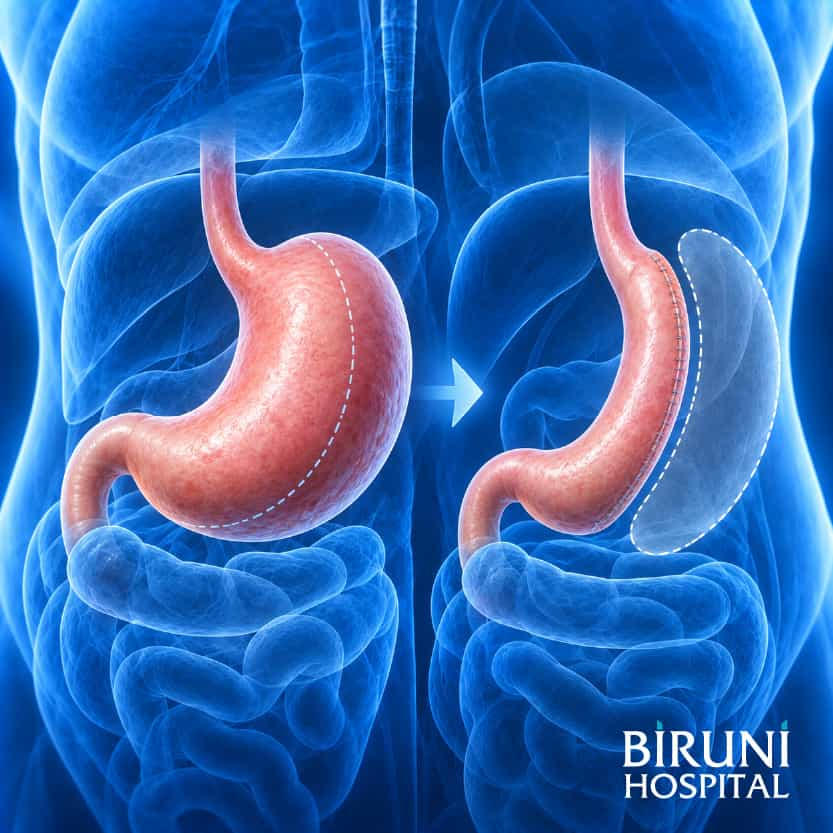
During a sleeve gastrectomy, the surgeon removes part of the stomach and creates a smaller, tube-shaped stomach. The intestines are not rerouted as they are in gastric bypass surgery. Because the stomach is smaller, you usually need smaller portions, slower eating, and a structured diet progression. The operation can also change appetite-related signals, but the exact response differs between patients.
A sleeve is irreversible. Ask how the team manages reflux, nutritional deficiencies, leaks, bleeding, strictures, gallstones, weight regain, and possible further surgery.
Plain-language takeaway: the procedure changes the size and function of your stomach, while the long-term result depends on medical selection, eating behaviour, nutritional monitoring, movement, psychological support, and access to follow-up.
Why patients compare gastric sleeve surgery in the UK and Turkey
UK patients usually compare the two destinations because they are balancing local continuity against a lower quoted treatment price abroad. The UK pathway may offer easier communication with your GP, access to NHS or private aftercare, and less travel after surgery. Turkey may offer earlier private scheduling, international-patient coordination, and package pricing that combines several services. Those differences are practical, not proof of different surgical results.
The most important comparison is not “Which country is cheaper?” It is “Which complete pathway can safely assess me, operate on me, respond to an emergency, and continue my care after I return?” A quote that looks lower before travel may become less affordable if it excludes tests, extra nights, medication, a companion, complication treatment, or long-term dietetic appointments.
Who may be considered for gastric sleeve surgery in the UK?
Suitability depends on your BMI, health conditions, previous attempts at weight management, eating patterns, mental wellbeing, anaesthesia risk, and ability to follow long-term dietary and supplement requirements. NHS information commonly lists BMI 40 or above, or BMI 35 to 40 with a condition that could improve with weight loss. It also notes that lower BMI thresholds may be considered for some ethnic backgrounds because metabolic risk can appear at a lower BMI. Local policies and clinical judgment still apply.
Assessment should be broader than a single number. A bariatric team may review blood tests, sleep apnoea, diabetes, blood pressure, liver disease, reflux, medications, eating behaviour, mental health, pregnancy plans, and previous abdominal surgery. The same clinical questions should be answered before surgery in Turkey. A rapid online approval without a meaningful medical assessment is a reason to pause and ask for more information.
How the UK pathway differs from private treatment in Turkey
| Decision point | UK NHS or private route | Turkey private route |
|---|---|---|
| Assessment | Usually organised through a local referral or private bariatric service, with assessment of medical, dietary, and psychological factors. | May be arranged through an international coordinator and completed over a shorter period. Confirm which tests are done before travel and which are repeated on arrival. |
| Continuity | Your GP and local health services may be easier to reach, although access and follow-up arrangements vary. | You may have a named coordinator, but responsibility after returning home must be written into the plan rather than assumed. |
| Scheduling | NHS waiting times and local eligibility affect timing. Private appointments may be faster but self-funded. | Private scheduling may be comparatively flexible, but a fast date should not replace a complete consultation and cooling-off period. |
| Accountability | Ask which service handles complications, complaints, and long-term monitoring. | Ask which legal entity contracts with you, which facility performs surgery, and what happens if the coordinator, hospital, or surgeon changes. |
Gastric sleeve surgery cost in the UK vs Turkey
Cost comparisons are useful only when the same clinical scope is being compared. Selected Turkey package listings on PlacidWay currently cluster around $3,500–$5,000, while broader examples reach about $7,500. These are listing signals, not a national average, and they can change with the surgeon, hospital, patient risk, exchange rate, and package contents.
Private UK self-pay treatment is usually quoted higher, but there is no single UK tariff. The NHS route is subject to eligibility, referral, local commissioning, and waiting-time rules; private treatment is a commercial quote. Request a written total and confirm exclusions.
| Route | Planning cost signal | What the figure does not prove | Questions to ask |
|---|---|---|---|
| UK NHS | No universal self-pay price for eligible NHS patients; access follows local criteria and pathway rules. | It does not mean every patient qualifies or that surgery will be scheduled quickly. | What are the local referral criteria, expected wait, pre-operative programme, and lifelong monitoring plan? |
| UK private | Often around $13,000–$20,000 or more as an indicative planning band; request a current quote because exchange rates and hospital fees change. | A “from” price may exclude consultation, tests, medication, dietetics, psychological review, or revision care. | Does the total include the multidisciplinary assessment, hospital stay, anaesthesia, pathology, follow-up, supplements, and complication cover? |
| Turkey private package | Selected current listing examples around $3,500–$5,000; broader package examples can reach about $7,500. | A package may be limited to one admission and early follow-up; it does not guarantee a clinical outcome. | Which facility, surgeon, tests, nights, medications, transfers, interpreter, emergency care, and post-return services are included? |
What should an itemised gastric sleeve quote include?
A usable quote should identify the legal provider, hospital, operating surgeon, anaesthetist, procedure, currency, validity period, payment schedule, and cancellation terms. It should separate services included in the package from services that may be charged later. If a coordinator cannot explain a line in plain language, ask for clarification before paying.
| Quote line | Confirm it in writing | Common gap |
|---|---|---|
| Clinical assessment | Blood tests, ECG, imaging, sleep-apnoea review, dietetic and psychological assessment. | Only a brief online screening is included. |
| Surgery and anaesthesia | Surgeon, anaesthetist, theatre, staples, pathology, medications, and length of stay. | Extra charges for a higher-risk patient or longer admission. |
| Accommodation and transfers | Number of hotel nights, hospital transfers, companion arrangements, and accessibility. | Flights, meals, extra nights, or transfer after a delay are excluded. |
| Aftercare | Named contact, review schedule, blood tests, supplements, dietetic access, and complication pathway. | “Lifetime support” means a messaging group without clinical responsibility. |
How to check a hospital or clinic in the UK
For UK treatment, ask whether the facility is registered with the relevant national regulator and whether it is authorised to provide the proposed service. In England, patients can review the Care Quality Commission’s information where applicable; Scotland, Wales, and Northern Ireland use their own inspection and regulatory arrangements. A hospital name alone is not enough. Confirm the exact site where you will be assessed, operated on, and treated if you become unwell.
Ask about bariatric volume, on-site imaging, endoscopy, blood bank access, critical-care capability, emergency general surgery, and transfer arrangements. You do not need a facility to display every international accreditation logo. You do need a clear answer about legal registration, the clinical team, escalation, and how the service monitors outcomes and complications.
- ? Exact legal name and address of the operating hospital
- ? Current regulator registration or licence details
- ? Bariatric surgeon, anaesthetist, nursing, and dietetic team identified
- ? Emergency department, critical-care access, and transfer plan explained
- ? Named service for post-operative concerns and complaints
How to check a Turkish hospital and Health Tourism Authorization Certificate
For a Turkish provider, ask for the facility’s current Health Tourism Authorization Certificate and verify the hospital or clinic through the official HealthTürkiye or Turkish Ministry of Health information identified by the provider. USHA?, the Turkish international health-services organisation, links to official information about facilities holding a Health Tourism Authorization Certificate. Treat the certificate as a regulatory check, not as a guarantee of suitability or outcome.
Make sure the legal facility named in the certificate is the same facility named in your contract and quote. Some advertisements use a brand name, coordinator name, or hotel name that is not the hospital’s legal name. Ask whether the surgeon is employed by or credentialed to operate at that hospital, where emergency care takes place, and whether a different hospital could be substituted.
How to verify the gastric sleeve surgeon
In the UK, use the General Medical Council register to check the surgeon’s registration and licence to practise. If the surgeon presents as a consultant, check the relevant Specialist Register entry and specialty. Registration does not tell you everything about bariatric experience, so also ask how frequently the surgeon performs sleeve gastrectomy, how complications are managed, who covers you outside office hours, and what their revision pathway is.
In Turkey, request the surgeon’s full legal name, medical degree and specialty details, professional registration information, hospital privileges, and bariatric training. Ask for procedure-specific experience rather than a general claim about being “experienced.” You should be able to speak with the surgeon or a qualified clinical professional before consent, not only with a sales coordinator. Consent should cover alternatives, risks, expected hospital stay, diet, supplements, reflux, leaks, bleeding, blood clots, and the possibility of further surgery.
| Evidence to request | Why it matters | Red flag |
|---|---|---|
| Registration and specialist status | Shows the legal basis for practice and the specialty claimed. | Only a social-media title or marketing badge is supplied. |
| Sleeve-specific case experience | Experience with the exact operation is more relevant than a broad surgical biography. | No answer about volume, complications, or revisions. |
| Complication protocol | Shows how leaks, bleeding, clots, infection, and severe reflux are escalated. | Promises that complications are impossible. |
| Communication and consent | You need to understand the operation and make a voluntary decision. | A rushed signature or no direct clinical conversation. |
What tests and preparation should happen before surgery?
A responsible bariatric assessment looks at more than whether you can pay and travel. Depending on your health, it may include blood tests, ECG, imaging, anaesthesia review, sleep-apnoea screening, diabetes and liver assessment, medication review, nutrition, reflux, and previous abdominal surgery. Your team should explain which tests are needed and what happens if a result changes the plan.
Before travelling, tell your GP or local clinician, carry an accurate medication list, plan how you will obtain supplements at home, and arrange support for the first days. If a provider discourages you from telling your GP, pause and reassess.
- Complete the medical and nutritional assessment before making non-refundable travel arrangements.
- Confirm the procedure, alternatives, surgeon, hospital, and anaesthesia plan in writing.
- Ask what happens if you are not fit for surgery when you arrive.
- Agree on a discharge summary, test results, operative note, and medication list before leaving.
Gastric sleeve risks and safety questions in both countries
Gastric sleeve surgery has recognised risks even in an appropriately equipped hospital. These include bleeding, infection, anaesthetic complications, blood clots, staple-line leak, narrowing, dehydration, vomiting, gallstones, nutritional deficiencies, and new or worsening reflux. Longer-term concerns include weight regain, excess skin, mental-health effects, and further treatment. Your risk depends on your health, medications, previous surgery, and assessment.
The country does not remove the risk. What changes is access to records, urgent imaging, the operating hospital, and home care. Seek urgent help for severe abdominal pain, fast breathing, fever, repeated vomiting, leg swelling, breathing difficulty, chest pain, or bleeding. Do not rely on a messaging group during an emergency.
| Risk or problem | Question for the provider | Your safety action |
|---|---|---|
| Leak or severe abdominal pain | Where will imaging, drainage, antibiotics, or re-operation be provided? | Know the emergency number and nearest hospital before discharge. |
| Blood clot or breathing problem | What prevention plan is used, and who decides when flying is safe? | Follow movement, hydration, and medication instructions; seek urgent care for symptoms. |
| Persistent vomiting or dehydration | Who will assess you after returning to the UK? | Do not wait for a routine video review if you cannot keep fluids down. |
| Nutritional deficiency | Which supplements and blood tests are required for life? | Arrange local monitoring and keep copies of your operative and discharge records. |
Recovery timeline after gastric sleeve surgery
Recovery varies, and the surgeon’s instructions take priority. NHS patient information describes discharge commonly occurring one to three days after weight-loss surgery and a gradual return to normal activities over four to six weeks. The timing may be longer if you have a complication, another illness, difficult pain or nausea, or a procedure that requires additional monitoring.
| Timeframe | Biological or clinical process | Patient sensation | Activity level | Action required |
|---|---|---|---|---|
| Hospital days 0–3 | Monitoring after anaesthesia, pain control, fluid intake, mobility, and early complication checks. | Tiredness, nausea, abdominal discomfort, and low appetite may occur. | Short assisted walks as advised. | Follow the fluid plan and report worsening symptoms immediately. |
| First 2 weeks | Early healing and adaptation to very small volumes. | Energy may be limited; dehydration is a concern. | Light walking; no strenuous activity unless cleared. | Use the prescribed fluid and supplement plan; attend review. |
| Weeks 3–8 | Diet texture commonly progresses from purée or runny foods to soft food and then a balanced diet. | Food tolerance changes; some foods may cause pain or vomiting. | Gradual increase according to the team. | Chew carefully, eat slowly, and keep follow-up appointments. |
| Weeks 4–6 and beyond | Many patients begin returning to usual activity, but lifelong monitoring continues. | Rapid weight change and emotional adjustment can occur. | Return to work and exercise only when medically cleared. | Arrange ongoing blood tests, supplements, dietetic support, and mental-health care when needed. |
Flying from the UK to Turkey after bariatric surgery
Flying soon after major surgery can increase blood-clot risk. The safest return date depends on your operation, mobility, health, hydration, symptoms, and surgeon’s assessment. A fixed package flight is not medical clearance. Ask what happens if you need to stay longer or the airline requires confirmation.
Check whether specialist medical-travel insurance covers planned surgery abroad, complications, delayed return, and repatriation. Standard travel insurance often excludes elective treatment abroad, and a UK Global Health Insurance Card does not cover planned private surgery in Turkey.
Patient demographics and why the demand exists
There is no reliable official dataset showing the exact age, gender, or home region of UK patients travelling to Turkey for sleeve surgery. Do not treat a clinic’s social-media audience as representative. The official England data below gives population context only; it does not predict suitability or outcomes.
In 2023–2024, 64.5% of adults in England were estimated to be overweight or living with obesity, while 26.5% were estimated to be living with obesity. Combined prevalence was higher among men, while obesity prevalence was slightly higher among women. Age and deprivation also mattered, but these population differences do not justify assumptions about an individual patient.
England adult weight-related prevalence trend, 2015–2016 to 2023–2024
Source: Office for Health Improvement and Disparities, Obesity profile, May 2025. The graph describes England’s adult population.
Histogram-style distribution: adult obesity prevalence by deprivation decile, England, 2023–2024
Obesity prevalence ranged from 19.8% in the least deprived decile to 37.4% in the most deprived decile. This is a population-health distribution, not a claim about surgical demand or outcomes.
Long-term diet, supplements, and follow-up after a sleeve
The operation is only one stage of treatment. You need a staged eating plan, fluids, protein guidance, supplements, and blood tests. NHS information describes follow-up for life, with specialist monitoring in the early years and ongoing checks thereafter. Your Turkish provider should explain how this works after you return.
Obtain the operative report, medication list, diet stages, supplement names, blood-test schedule, and emergency instructions. Arrange a local clinician or bariatric service willing to review you, and clarify who has clinical responsibility after the coordinator’s support ends.
A decision checklist for UK patients comparing Turkey
Use this checklist after you have received at least two written options. Compare the clinical pathway, not only the headline price.
| Decision area | Minimum question | Evidence to keep |
|---|---|---|
| Clinical suitability | Who reviewed your health history and alternatives? | Assessment summary and recommended procedure. |
| Facility | Where exactly will surgery and emergency care occur? | Licence, certificate, address, and legal provider name. |
| Surgeon | What are the surgeon’s credentials and sleeve-specific experience? | Registration details, specialty evidence, consent documentation. |
| Price | What is included and what triggers a further charge? | Itemised quote, contract, refund and cancellation terms. |
| Travel | Who decides when you can fly, and what if you cannot? | Fit-to-fly policy, insurance wording, extra-night plan. |
| Aftercare | Who monitors you for life after you return? | Discharge records, blood-test plan, supplement and contact schedule. |
Frequently asked questions about gastric sleeve surgery in the UK and Turkey
Is gastric sleeve surgery cheaper in Turkey than in the UK?
Selected Turkish package listings are often lower than private UK self-pay quotes, but the difference depends on what each quote includes. Compare assessment, anaesthesia, hospital stay, tests, transfers, hotel nights, supplements, emergency care, flights, insurance, and long-term follow-up before calculating savings.
What is the average cost of gastric sleeve surgery in Turkey?
Current selected package examples commonly cluster around $3,500–$5,000, while broader examples may reach about $7,500. These are listing signals rather than a national average. The final quote can change with the surgeon, hospital, patient health, city, season, exchange rate, and inclusions.
Can I get gastric sleeve surgery on the NHS?
Some patients may be considered through an NHS pathway when they meet clinical and local eligibility criteria. NHS information commonly refers to BMI, related conditions, previous weight-management efforts, lifestyle changes, and long-term follow-up. Availability and thresholds can vary, so discuss referral with your GP or local bariatric service.
How do I verify a Turkish hospital for bariatric surgery?
Ask for the hospital’s legal name, address, current Health Tourism Authorization Certificate, and the identity of the organisation contracting with you. Check the facility through official Turkish Ministry of Health or HealthTürkiye information, and confirm that the quoted hospital is the facility where surgery and emergency care will take place.
How can I check the UK gastric sleeve surgeon’s credentials?
Search the surgeon on the General Medical Council register and review registration, licence, and relevant specialist status. Then ask the bariatric service about sleeve-specific experience, complication management, revision pathways, anaesthesia support, and who provides follow-up outside normal clinic hours.
Is gastric sleeve surgery safe in Turkey?
No country can guarantee that surgery is risk-free. Safety depends on your suitability, the surgeon and anaesthesia team, the licensed hospital, emergency resources, informed consent, infection and clot prevention, discharge criteria, travel timing, and follow-up. Verify each part of the pathway rather than relying on a country label.
When can I fly home after sleeve gastrectomy?
Your surgeon must decide when you are fit to fly. Major surgery and reduced mobility can increase blood-clot risk, and a fixed package itinerary is not a medical clearance. Check the provider’s fit-to-fly policy, airline requirements, insurance exclusions, and plan for a delayed return.
What does gastric sleeve aftercare involve?
Aftercare usually includes a staged diet, hydration and protein guidance, vitamin and mineral supplements, blood tests, weight and symptom monitoring, activity guidance, and emotional support when needed. Follow-up should continue long term. Obtain a written plan that identifies who will provide care after you return to the UK.
What complications should I ask about before gastric sleeve surgery?
Ask about bleeding, infection, blood clots, staple-line leak, anaesthesia problems, narrowing, dehydration, vomiting, gallstones, reflux, nutritional deficiencies, weight regain, and the possibility of further surgery. Also ask how quickly each problem can be diagnosed and treated and whether that care is included in your contract.
What should I do if I become unwell after returning from Turkey?
Seek urgent medical care for severe abdominal pain, repeated vomiting, fast breathing, a fast heartbeat, fever, chest pain, breathing difficulty, leg pain or swelling, or bleeding. Tell the clinician that you recently had sleeve gastrectomy, show your discharge documents, and contact the operating team if it is safe to do so. Do not wait for a routine coordinator call.
Compare Your Gastric Sleeve Options
Considering gastric sleeve surgery in the UK or Turkey? Share your treatment goals and questions to compare provider information, estimated costs, package details, credentials, and aftercare options before making a decision.
Request InformationPlacidWay — the calm way forward. Hope has a Way.
Disclaimer: This information is for educational purposes only and does not replace professional medical advice. Always consult a qualified healthcare provider before making medical decisions.
Prices, eligibility rules, travel guidance, package inclusions, provider authorisations, and regulations can change. Confirm current details directly with the relevant health service, regulator, insurer, hospital, and surgeon before making arrangements. This page does not guarantee a clinical outcome or endorse a particular provider.
References and further reading
The following non-commercial sources support the medical, regulatory, travel, and population-health information discussed above. Access dates and guidance should be checked before publication.
- What is weight loss surgery? – NHS
- Preparing for weight loss surgery – NHS
- Recovering from weight loss surgery – NHS
- Complications of weight loss surgery – NHS
- Overweight and obesity management: medicines and surgery – NICE
- Our registers of doctors – General Medical Council
- Health: Turkey travel advice, including medical tourism – GOV.UK/FCDO
- Obesity profile: short statistical commentary, May 2025 – Office for Health Improvement and Disparities


























Share this listing