
If you are comparing gastric sleeve surgery in Turkey vs the USA, a lower quote only helps if you can verify the hospital, surgeon, emergency plan, and long-term nutrition follow-up. Before you book travel, confirm the Turkish Ministry of Health authorization that applies to the facility, current TÜSKA or Ministry certification where required, and a written, itemized price. A careful comparison also weighs flight timing, reflux risk, and who will coordinate your care after you return home.
This guide is for U.S.-based patients comparing cash-pay treatment options. It separates listed prices from national averages and describes medical evidence that applies to the procedure, not to one country’s providers.
Quick Summary: Gastric Sleeve Turkey vs USA
- Price examples: A PlacidWay Turkey listing snapshot on September 30, 2026 showed gastric sleeve package examples from about $3,200, including a current $4,500 package listing. A U.S. nonprofit health system posts a $12,650 self-pay example. These are provider-specific examples, not national averages or a like-for-like quote.
- Safety: Sleeve gastrectomy is major surgery. Compare the individual surgeon, licensed facility, emergency resources, infection controls, and follow-up plan rather than relying on a country label or a badge alone.
- Who may be considered: 2022 ASMBS/IFSO guidance recommends metabolic and bariatric surgery for many adults with BMI at or above 35 kg/m². A surgeon and multidisciplinary team must decide whether surgery and a sleeve specifically fit your health needs.
- Recovery: Hospital stay and return-to-flight timing depend on your course and the treating team’s clearance. Plan for early recovery in Turkey and ongoing nutritional checks after you go home.
- Why compare Turkey: Patients may weigh listed package prices, access, language support, and travel logistics. A package price does not prove clinical quality or include every future cost.
- Important caution: No current public national dataset compares Turkish and U.S. gastric sleeve results or counts U.S. sleeve travelers by age and origin. Published trial outcomes are not a prediction for you.
What Gastric Sleeve Surgery Changes in Turkey and the USA
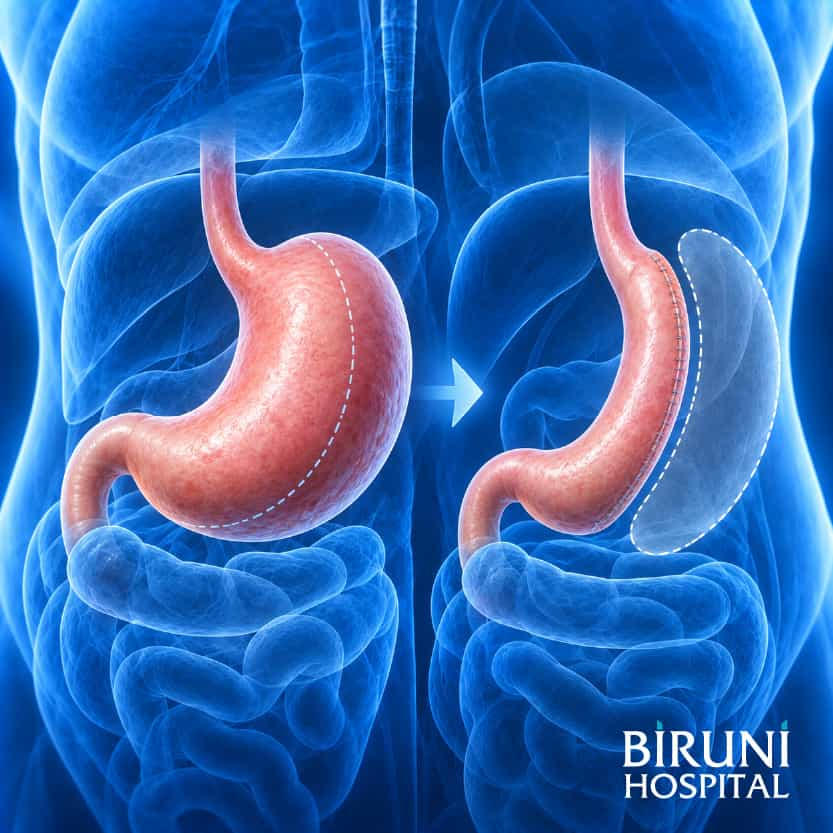
Gastric sleeve surgery, also called sleeve gastrectomy or vertical sleeve gastrectomy, removes most of the stomach and staples the remaining portion into a narrow tube. The operation limits stomach capacity and changes appetite-related signals, while food continues through the intestines in the usual route.
The operation is permanent because the removed part of the stomach is not restored. It is different from gastric bypass, which creates a small stomach pouch and reroutes part of the small intestine, and from endoscopic sleeve gastroplasty, which reshapes the stomach from inside without removing it.
How the sleeve compares with other bariatric options
| Option | What changes | Discussion point for your team |
|---|---|---|
| Sleeve gastrectomy | Most of the stomach is removed; the small intestine is not rerouted. | It is irreversible and may cause or worsen reflux in some patients. |
| Roux-en-Y gastric bypass | A small stomach pouch is connected to a lower section of the small intestine. | It has different nutrition, medication, reflux, and surgical considerations. |
| Endoscopic sleeve gastroplasty | Internal sutures reshape the stomach without surgically removing it. | It is not the same operation and may not suit the same patients. |
Gastric Sleeve Cost in Turkey vs the USA
Current published examples show a lower listed package price in Turkey than one U.S. self-pay program, but they do not establish the average cost in either country. The Turkey examples below come from PlacidWay provider listings checked September 30, 2026; the U.S. example is a publicly posted price from one health system. Inclusions, eligibility, and aftercare differ.
| Location | Published example in USD | How to interpret it |
|---|---|---|
| Turkey | About $3,200–$4,500 across current PlacidWay-listed sleeve package examples | Provider-listed bundle prices only. Package details vary; do not assume airfare, hotel, complications, or long-term follow-up are covered. |
| United States | $12,650 at one U.S. health system’s self-pay program | One local example, not a U.S. national average. The posted package describes operating room, surgeon, anesthesia, up to two nights, and specified early follow-up. |
These figures are reference points, not a final quote. A lower initial price may not mean lower total cost after flights, a companion, extra hotel nights, translated records, travel coverage, time away from work, postoperative tests, vitamins, or treatment of a complication.
Ask for an itemized written quote that names the facility and operating surgeon. Confirm whether the fee changes after review of your BMI, medical history, reflux symptoms, medications, sleep apnea, heart or lung conditions, and preoperative test results.
What to include in a gastric sleeve travel budget
| Cost item | Question to put in writing |
|---|---|
| Surgery and hospital | Are the surgeon, assistant, anesthesiologist, operating room, room, nursing, and hospital medicines included? |
| Preoperative assessment | Are blood tests, imaging, endoscopy, cardiac or pulmonary assessments, and specialist consultations included? |
| Travel and lodging | Are transfers, hotel nights, companion accommodation, meals, and changes to the return flight included? |
| Aftercare and complications | Who pays for extra hospital nights, emergency transfer, a leak or clot workup, revision surgery, or care after returning home? |
| Long-term care | Who orders follow-up labs, nutrition visits, and ongoing supplements after the package period ends? |
For a practical comparison, review current bariatric surgery listings in Turkey, including this current $4,500 Turkish package example, alongside bariatric care options in the USA. Recheck the date and all inclusions before using a listed price in your budget.
Who May Be Considered for Gastric Sleeve Surgery
Eligibility depends on your health history, weight-related conditions, previous treatment, surgical risk, and ability to follow long-term care. The 2022 joint ASMBS/IFSO guidance recommends metabolic and bariatric surgery for many people with BMI at or above 35 kg/m², regardless of whether a related condition is present, and supports considering surgery for some people with BMI 30–34.9 kg/m² and metabolic disease.
Guidelines are not an automatic approval, and insurers may use different coverage criteria. A BMI calculation does not capture every aspect of health. The surgeon should review your symptoms, labs, prior treatment, medicines, mental health needs, eating patterns, and goals before recommending an operation.
Questions to ask at a gastric sleeve assessment
- What clinical criteria support surgery in my case, and what alternatives remain reasonable?
- How do my reflux, diabetes, sleep apnea, medications, or prior abdominal surgery affect the plan?
- Which specialists will assess me before surgery, and can I receive their written findings?
- What would make the surgeon postpone or change the operation after the in-person assessment?
- Who will provide nutrition, mental health, and medical follow-up after I return home?
Gastric Sleeve Patient Demographics and Turkey Travel Data
Public information does not currently provide a reliable national count of gastric sleeve travelers to Turkey by age, sex, or country of residence. A 2024 study, with a 2025 correction, examined 329 bariatric medical tourists treated in private hospitals in Samsun between 2015 and 2022. In that sample, 62.6% were women and the mean age was 39.74 years; the study does not represent all Turkish hospitals or only sleeve patients.
The same limitation applies to travel motivations. Cost and access to care can be reasons people consider treatment abroad, and language or cultural fit may matter to some travelers. The available cohort does not show how many patients came from the USA, what procedure each individual received, or why each person chose Turkey.
Turkey health tourism totals: context, not gastric sleeve volume
The official USHA? series, sourced to TurkStat, reports visitors who received health services across specialties. It cannot tell you how many gastric sleeve patients arrived or where they came from.
Gastric Sleeve Safety in Turkey vs the USA
Neither country can be labeled safe or unsafe for every patient. Individual safety depends on clinical screening, the surgeon and operating team, the facility’s ability to handle emergencies, and access to follow-up. Traveling adds coordination risks if a complication appears after you leave the operating hospital.
Possible complications include bleeding, infection, blood clots, leakage from the staple line, narrowing, dehydration, reflux, and nutritional problems. Some patients later need another procedure. Risk levels vary with personal health and the care team; ask for the clinic’s own outcome definitions and the period used to measure them.
| Safety issue | Question for the surgeon or hospital | What you should receive |
|---|---|---|
| Staple-line leak or bleeding | How are suspected leaks or bleeding assessed and treated, including overnight and after discharge? | A named 24-hour contact, emergency department route, and escalation plan. |
| Blood clot or breathing problem | How will my clot and anesthesia risks be assessed, and what symptoms require emergency care? | Written prevention instructions and clear emergency access. |
| Reflux and eating intolerance | How do you evaluate reflux before surgery, and who sees me if symptoms worsen? | A preoperative assessment and follow-up plan that names a clinician. |
| Nutrition or dehydration | Who monitors fluid intake, nutritional status, and laboratory results after I return home? | A schedule for visits, labs, and communication with your local clinician. |
The CDC advises medical travelers to discuss destination, procedure, personal health risks, and travel before and after surgery with a clinician. It also recommends considering travel health insurance that covers medical evacuation. Ask how the facility coordinates care if you become unwell during the trip or after you return to the USA.
How to Verify a Gastric Sleeve Hospital in Turkey or the USA
Start by verifying the legal facility and the exact site where the operation will take place. In Turkey, check the Ministry of Health’s current authorized healthcare-provider list and ask the hospital to show its facility license and International Health Tourism Authorization Certificate.
Turkey’s current certification criteria state that, by December 31, 2026, hospitals, medical centers, laboratories, and dialysis centers holding international health-tourism authorization must be accredited by TÜSKA; other health facilities must obtain a Ministry-issued certificate. Confirm which rule applies to the facility category and verify its current status directly with official sources.
For care in the USA, ask whether the bariatric program is accredited through the Metabolic and Bariatric Surgery Accreditation and Quality Improvement Program (MBSAQIP). Accreditation is a useful quality signal, but it cannot guarantee an individual outcome and should not replace questions about staffing, emergency coverage, and aftercare.
Hospital verification checklist for gastric sleeve surgery
- Match the facility’s legal name and street address to the official authorization record.
- Ask for the facility license number, current health-tourism authorization, and TÜSKA or Ministry certificate where applicable.
- Confirm the operating site has intensive-care capability or a written transfer arrangement and emergency surgical coverage.
- Ask who is physically present overnight and how complications are escalated after discharge.
- Request the written plan for interpreter access, discharge documents, emergency contact, and follow-up at home.
- Ask whether international accreditation such as JCI is current and applies to that exact facility. It is optional; its absence alone does not establish poor quality.
How to Verify a Gastric Sleeve Surgeon in Turkey or the USA
Confirm the name, license, specialty, and role of the surgeon who will perform your operation. In Turkey, ask for the Ministry of Health registration and general-surgery specialty documents, then verify the surgeon through available Ministry or official professional records. The Turkish e-Devlet Doctor Information Bank is one official starting point; some functions require account authentication.
In the USA, check state licensure and the surgeon’s board certification through the relevant board. Ask whether the surgeon regularly performs metabolic and bariatric procedures, how many sleeve operations they perform annually, and whether they personally will perform the operation or supervise another surgeon.
- How many primary sleeve gastrectomies do you perform each year at this hospital?
- What are your defined rates for leaks, readmissions, reoperations, and conversions, and over what time period?
- How do you decide between sleeve gastrectomy and gastric bypass for a patient with reflux?
- Who manages a complication after I return home, and what is the revision policy?
- Will you speak with me directly before I pay a deposit, and can I receive my plan in writing?
Gastric Sleeve Results: What Long-Term Evidence Shows
Clinical studies show that sleeve gastrectomy can produce substantial long-term weight loss for some patients, but results vary and should not be promised. A 2025 report of the Swiss SM-BOSS randomized trial followed patients for at least 10 years; it compared sleeve gastrectomy with gastric bypass, not Turkey with the USA.
In the study’s intention-to-treat analysis, average total weight loss at 10 years was 26.3% after sleeve and 27.5% after bypass. In the per-protocol analysis, the averages were 25.5% and 27.7%. The study did not find a statistically significant difference in total weight loss between those groups, while sleeve patients had more conversions to another anatomy because of insufficient weight reduction or reflux.
| SM-BOSS outcome at 10+ years | Sleeve gastrectomy | Gastric bypass | How to read it |
|---|---|---|---|
| Mean total weight loss, intention-to-treat | 26.3% | 27.5% | Trial averages; not an individual forecast. |
| Mean total weight loss, per-protocol | 25.5% | 27.7% | The between-group difference was not statistically significant in this measure. |
| Conversion to another anatomy | 29.9% | 5.5% | Conversions were more common after sleeve in this trial, often related to insufficient weight reduction or reflux. |
| Complete 10-year follow-up | 65.4% of the original 217 participants | Follow-up loss limits how broadly results should be generalized. | |
The trial’s outcomes do not establish that a clinic in either country will achieve the same results. Your outcome depends on eligibility, the operation performed, health conditions, follow-up access, nutrition, activity, and other factors. Ask providers for audited, procedure-specific results using clear definitions rather than selected before-and-after photos.
Recovery and Follow-Up After Gastric Sleeve Surgery
Recovery is gradual, and your operating team should give you an individualized discharge plan. The schedule below describes common stages, not a personal protocol. Do not advance your diet, exercise, wound care, or flight schedule based on an online timeline without approval from your treating team.
| Timeframe | Clinical process | What you may notice | Activity level | Action to take |
|---|---|---|---|---|
| Hospital stay | Monitoring after anesthesia, assessment of pain and fluid tolerance, and review of discharge readiness. | Tiredness, incision soreness, nausea, or temporary difficulty drinking may occur. | Short assisted walks may be encouraged when the team says it is appropriate. | Ask for the discharge summary, medication list, emergency number, and written travel instructions. |
| First days at home or in Turkey | Early healing and adjustment to small, staged fluid and food portions under the surgeon’s plan. | Fatigue and changes in appetite or bowel habits can occur. | Increase gentle activity only as your team advises; avoid strenuous activity until cleared. | Contact the team promptly if symptoms worsen or you cannot maintain the prescribed fluid plan. |
| Following weeks | Diet progression, wound healing, and follow-up review. | Energy and food tolerance can change from day to day. | Return to work and normal activity depends on the procedure and your progress. | Attend scheduled surgeon and dietitian visits and keep a local clinician informed. |
| Long term | Ongoing weight, metabolic, and nutritional monitoring. | Weight loss may slow or change; reflux or weight regain can occur. | Build sustainable activity and eating routines with professional support. | Ask who orders labs and monitors vitamins and minerals after the initial package period. |
A package that includes a few online check-ins is not the same as a local lifelong bariatric program. Before surgery, identify a clinician near home who is willing to coordinate follow-up and ask the Turkish surgeon to provide records in English, including the operative note and test results.
Planning Medical Travel to Turkey for Gastric Sleeve Surgery
Plan the travel route around clinical care, not sightseeing. The CDC advises a pretravel consultation at least 4–6 weeks before travel to discuss health status, destination risks, and the timing of care. Your surgeon must decide when you are fit to fly; no single waiting period fits every patient.
International gastric sleeve travel checklist
- Send your records and medication list for a preliminary review, but expect an in-person assessment before a final decision.
- Ask who makes the final eligibility decision and what happens if the surgeon recommends a different procedure or postpones surgery.
- Confirm how long the team expects you to remain near the hospital and which clinical milestones must be met before flying.
- Check the travel insurance policy for planned surgery, complications, evacuation, flight changes, and companion costs.
- Arrange a local doctor or bariatric service at home before departure and share the Turkish team’s contact details.
- Carry a translated discharge summary, operative report, test results, and emergency contact information when you return.
Ask the hospital to specify who is responsible for accommodation, transfers, translation, and emergency communication. If a coordinator is involved, verify that the health facility and the intermediary are authorized for international health-tourism work where the rules require it. Do not assume a hotel-based recovery plan replaces hospital access.
Choosing Between Gastric Sleeve Surgery in Turkey and the USA
Choose the care pathway that fits your medical needs and gives you a workable plan for complications and years of follow-up. The most useful comparison is between named surgeons, facilities, written packages, and aftercare arrangements—not between country reputations.
Turkey may be worth comparing when
- You have a provider-specific written quote and can verify the facility’s current authorization.
- You can stay near the hospital for the period your surgeon recommends.
- You have a local clinician and a named team for long-term follow-up after returning.
- You understand what the price excludes and can cover unexpected travel or medical costs.
U.S. care may be easier to compare when
- You value in-person follow-up close to home and direct access to your existing clinicians.
- Your insurance covers an accredited bariatric program or a local self-pay plan is feasible.
- You prefer not to fly soon after a major operation or coordinate care across countries.
- You want to discuss surgery with a team already able to access your health records.
Frequently Asked Questions About Gastric Sleeve in Turkey vs the USA
Compare Gastric Sleeve Options With a Clear Checklist
If you are comparing Turkey and the USA, prepare your medical history and ask each provider for a written plan covering eligibility, surgeon credentials, emergency support, total price, travel timing, and follow-up. PlacidWay can help you request information from providers and organize your questions before you decide.
Submit Your Request | Get Healthcare Providers Specific to Your Needs
Disclaimer
Disclaimer: This information is for educational purposes only and does not replace professional medical advice. Always consult a qualified healthcare provider before making medical decisions.
References
- 2022 ASMBS and IFSO Indications for Metabolic and Bariatric Surgery – American Society for Metabolic and Bariatric Surgery
- Long-Term Outcomes of Laparoscopic Roux-en-Y Gastric Bypass vs Laparoscopic Sleeve Gastrectomy: SM-BOSS Randomized Clinical Trial – JAMA Surgery, 2025
- Medical Tourism: Travel to Another Country for Medical Care – U.S. Centers for Disease Control and Prevention
- Health Tourism Certification Criteria – Republic of Türkiye Ministry of Health, Health Tourism Department
- Healthcare Providers Authorized by the Ministry – Republic of Türkiye Ministry of Health
- Evaluation of Body Image, Patient Satisfaction, and Quality of Life in Bariatric Medical Tourists – International Journal of Health Management and Tourism
- Health Tourism Data – USHA?, citing the Turkish Statistical Institute
- Check Cost for Bariatric Surgery – North Mississippi Health Services



























Share this listing