

Living with chronic knee pain can make every step feel like a challenge, but you do not have to accept limited mobility as a permanent reality. Many international patients are discovering that regenerative joint care abroad offers a pathway to relief at a fraction of the price found at home. Before booking your trip, it is vital to understand the estimated costs and know exactly which Medical Council of Thailand certifications to look for to ensure your safety. This guide will help you confidently navigate your treatment options and choose a highly qualified specialist for your care.
Quick Summary: What You Need to Know Before Traveling
- Estimated Cost: Typically ranges from $4,000 to $8,000 USD per knee, depending on the clinic and cell source.
- Ideal Candidate: Patients with mild to moderate knee osteoarthritis seeking non-surgical symptom management.
- Safety Overview: Generally considered safe when performed by licensed specialists, though infection and joint swelling are possible risks.
- Recovery Time: Most patients resume light walking within days, but optimal results may take 3 to 6 months to develop.
- Why Patients Choose Thailand: Access to internationally trained orthopedic specialists, lower treatment costs, and advanced medical infrastructure.
- Important Certifications to Look For: Ministry of Public Health (MOPH) licensing, Medical Council of Thailand (TMC) registration, and Healthcare Accreditation Institute (HAI) certification.
- Important Caution: This therapy does not cure osteoarthritis, and results vary significantly depending on age and joint damage.
Why International Patients Choose Regenerative Joint Care in Thailand
Dealing with the constant ache of knee osteoarthritis can take a heavy emotional toll on your daily life. When local healthcare options involve long waiting lists or prohibitively expensive procedures, looking abroad becomes a highly practical solution. Thailand has emerged as a premier destination for orthopedic and regenerative medicine, drawing thousands of patients annually.
Patients travel to this Southeast Asian medical hub to regain their mobility without draining their savings. Medical facilities in Bangkok and Phuket often combine state-of-the-art diagnostic technology with compassionate, patient-first care.
- Affordability: Treatments are often 40% to 60% less expensive than in the US or Australia.
- Specialist Access: Reduced wait times to see top-tier, board-certified orthopedic specialists.
- Advanced Technology: Clinics frequently utilize the latest cellular processing and imaging equipment.
- Holistic Care: Many hospitals offer comprehensive packages including physical therapy and wellness support.
- Origin Countries: The majority of patients travel from the United States, Australia, the United Kingdom, and the Middle East.
Patient Demographics and Global Travel Trends
Understanding who travels for regenerative joint care can provide helpful context for your own medical journey. Over recent years, clinical registries and medical tourism reports show a distinct pattern in patient demographics. The majority of travelers seeking stem cell therapy for knee osteoarthritis are middle-aged to older adults looking to delay joint replacement surgery.
Current 2024-2025 healthcare travel data indicates that patients prioritize maintaining an active lifestyle as they age. Below is a breakdown of the typical age distribution of international patients visiting Thailand for orthopedic joint therapies.
2024 Age Distribution of Inbound Orthopedic Patients in Thailand
*Based on 2024 regional healthcare tourism data for orthopedic and regenerative procedures.
Understanding Knee Osteoarthritis and Regenerative Medicine
Knee osteoarthritis occurs when the protective cartilage that cushions the ends of your bones gradually wears away. This degradation leads to painful bone-on-bone friction, persistent inflammation, and a noticeable loss of joint flexibility. Regenerative medicine aims to change the biological environment inside the damaged joint rather than just masking the pain.
Stem cell therapy introduces specialized cells into the joint space that have the potential to modulate inflammation. These cells release growth factors that may encourage tissue repair and help manage the symptoms of osteoarthritis over time.
It is crucial to understand that stem cell therapy cannot regenerate a completely worn-away knee joint. If your doctor determines that you have severe, end-stage osteoarthritis, a total knee replacement may be the only medically viable option. Regenerative treatments are generally most effective for patients in the early to moderate stages of joint degeneration.
Types of Cellular Treatments Available in Thailand
When you research this treatment, you will find that different clinics utilize different sources for their cellular therapies. The biological source of the cells greatly impacts the procedural steps, recovery time, and overall cost. Your chosen orthopedic specialist will recommend a specific type based on your medical history and the severity of your knee condition.
The two most common approaches rely on either your own body's tissue (autologous) or carefully screened donor tissue (allogeneic).
| Cell Source | Biological Origin | Clinical Process |
|---|---|---|
| Autologous (Adipose) | Harvested from your own body fat | Requires a minor mini-liposuction procedure prior to the knee injection. |
| Autologous (Bone Marrow) | Extracted from your pelvic bone marrow | Requires marrow aspiration under local anesthesia before joint injection. |
| Allogeneic (Umbilical) | Ethically sourced from healthy donor umbilical cord tissue | No extraction needed; cells are prepared in a lab and injected directly. |
Clinical Expectations and Symptom Improvement Trends
Patients naturally want to know how quickly they might feel relief after their procedure. Medical data indicates that tissue repair and inflammation reduction is a gradual biological process, not an instant fix. While some patients report early improvements in stiffness, meaningful structural and pain relief typically unfolds over several months.
Recent clinical registries tracking patient outcomes show a steady climb in reported symptom improvement throughout the first year post-treatment. The graph below illustrates the average percentage of patients reporting significant pain reduction at various clinical milestones.
2025 Clinical Registry: Patients Reporting >50% Pain Reduction Post-Therapy
*Based on 2025 published clinical outcome averages for mesenchymal stem cell therapy in knee osteoarthritis.
Cost of Stem Cell Therapy for Knee Osteoarthritis in Thailand
A driving factor for medical tourism is the stark difference in healthcare costs between countries. In nations like the United States, unapproved biological treatments can cost tens of thousands of dollars out-of-pocket. By traveling abroad, patients often secure comprehensive treatment packages that are significantly more affordable.
Keep in mind that prices vary depending on the hospital, the exact procedure protocol, and the number of joints treated. Below is an estimated cost comparison table highlighting how this destination compares to other major medical hubs.
| Country | Estimated Cost (USD) | Affordability Factor |
|---|---|---|
| United States | $8,000 - $15,000+ | Baseline Cost (Often not insured) |
| Australia | $7,500 - $12,000 | High out-of-pocket expenses |
| United Kingdom | $6,000 - $10,000 | Private clinic fees are steep |
| Thailand | $4,000 - $8,000 | Highly affordable, often all-inclusive |
Selecting a Qualified Clinic and Hospital in Thailand
Choosing where to have your procedure is the most critical decision in your medical tourism journey. You should never select a facility based purely on a well-designed website or cheap promotional pricing. Instead, you must carefully verify that the clinic operates legally and safely within the national healthcare system.
Thailand boasts an excellent medical infrastructure, provided you know which official credentials to verify. Look for specific government licenses and national accreditations before requesting an initial consultation.
- Ministry of Public Health (MOPH) License: Every legitimate medical facility must be licensed by this government body.
- Healthcare Accreditation Institute (HAI): The national standard for hospital safety and quality in the country.
- Clean Room Certification: If the clinic processes cells on-site, ensure they have ISO-certified laboratory facilities.
- Transparent Protocols: Reputable clinics will clearly explain cell counts, viability testing, and processing methods.
How to Verify Doctor and Surgeon Credentials
The success and safety of your treatment rely entirely on the skill and expertise of your attending physician. Not all doctors are qualified to perform intra-articular joint injections or extract autologous tissue safely. You must ensure your chosen provider is formally recognized as a specialist by national medical authorities.
Request the doctor’s full CV and cross-reference their credentials with official medical boards. An experienced specialist will welcome your questions and openly share their registration details.
- Medical Council of Thailand (TMC): Ensure the doctor holds a valid, active medical license registered with this official council.
- Board Certification: Look for specialists certified by the Royal College of Orthopaedic Surgeons of Thailand (RCOST).
- Clinical Experience: Ask how many specific knee osteoarthritis cases the doctor has treated using regenerative methods.
- Follow-Up Commitment: A trustworthy doctor will provide a clear, structured plan for monitoring your progress after you return home.
Step-by-Step Treatment Process
Understanding exactly what will happen during your medical trip can significantly reduce pre-treatment anxiety. Most regenerative joint protocols are completed as outpatient procedures, meaning you will not need an overnight hospital stay. However, you should expect to spend several days in the country for consultations, the procedure, and immediate follow-up.
The exact timeline depends on whether your cells are harvested from your own body or prepared from donor sources. Here is a general breakdown of what to expect during your clinical visits.
| Timeline | Clinical Activity | Patient Experience |
|---|---|---|
| Day 1 | Initial Consultation & Imaging | The doctor reviews your MRI or X-rays and performs a physical knee examination. |
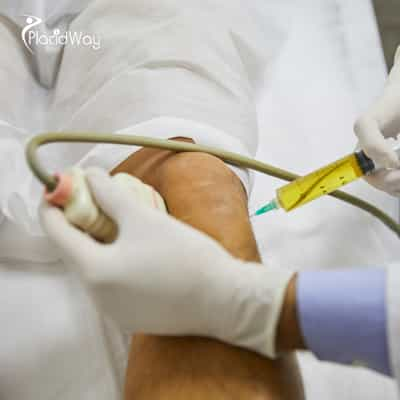
| Day 2 or 3 | Extraction (if applicable) & Injection | Under local anesthesia, cells are administered directly into the knee joint via ultrasound guidance. |
| Day 4 to 5 | Observation & Follow-Up | You will rest at your hotel while monitoring for swelling, followed by a final clinical check-up. |
Safety Guidelines and Potential Risks
While often marketed as a minimally invasive alternative to surgery, this treatment is not entirely risk-free. Injecting any substance into a joint capsule carries inherent medical risks that you must carefully consider. A responsible medical provider will thoroughly explain these potential complications before asking you to sign consent forms.
Most side effects are localized and temporary, but serious complications, though rare, require immediate medical intervention. You should familiarize yourself with the signs of a potential adverse reaction.
- Joint Swelling: Mild swelling is common, but severe, hot, and painful swelling requires emergency care.
- Infection: A risk with any injection. Warning signs include fever, chills, and intense localized redness.
- Tissue Damage: Poor injection technique can potentially injure surrounding nerves or cartilage.
- Lack of Efficacy: There is a real possibility that the treatment may not improve your osteoarthritis symptoms at all.
Expected Recovery Timeline and Aftercare
Post-procedure aftercare is vital for maximizing the potential benefits of your regenerative treatment. Your body needs time to integrate the cells and initiate any potential tissue repair mechanisms without excessive stress. Ignoring recovery protocols and pushing your knee too hard too soon can compromise your results.
Your doctor will provide specific weight-bearing and physical therapy guidelines tailored to your case. Adhering strictly to these professional instructions is essential once you travel back to your home country.
| Timeframe | Activity Level | Action Required |
|---|---|---|
| First 48 Hours | Strict rest. Minimal walking. | Use crutches if advised. Avoid anti-inflammatory drugs (NSAIDs) as they may disrupt the cellular process. |
| Weeks 1 to 4 | Gentle mobility. No heavy lifting. | Engage in prescribed light stretching. Swimming or stationary cycling may be permitted. |
| Months 2 to 6 | Gradual return to normal activities. | Begin structured physical therapy to strengthen the muscles supporting your knee joint. |
Combining Treatments for Enhanced Results
To optimize symptom management, orthopedic specialists in Thailand often utilize combination therapies. Using multiple regenerative modalities simultaneously may create a more favorable biological environment within the inflamed joint. Your physician may recommend adding supplementary injections to support the primary cellular treatment.
Two of the most common adjunct therapies are Platelet-Rich Plasma (PRP) and Hyaluronic Acid. Understanding these additions can help you evaluate comprehensive treatment packages.
Platelet-Rich Plasma (PRP)
Derived from your own blood, PRP is rich in growth factors. It is frequently mixed with stem cells to potentially accelerate tissue repair and boost overall clinical efficacy.
Hyaluronic Acid
This acts as a mechanical lubricant inside the knee capsule. It helps reduce immediate bone friction while the regenerative cells begin their biological processes over time.
Preparing for Your Medical Travel to Thailand
Proper travel planning ensures that your focus remains on your health and recovery rather than logistical stress. Traveling for medical reasons requires slightly different preparation than a standard tropical vacation. You must account for your physical limitations both during the flight and while navigating the destination.
Ensure your passport is valid for at least six months and check the specific visa requirements for medical tourists from your country. Planning ahead will safeguard your comfort during transit.
- Medical Visas: Thailand offers specific non-immigrant medical visas (Category O) which allow for longer stays if recovery requires it.
- Flight Comfort: Request wheelchair assistance at the airport to avoid straining your knee before the procedure.
- Accommodation: Book a ground-floor hotel room or ensure the property has reliable elevators and accessible showers.
- Medical Records: Bring physical and digital copies of your latest MRI scans and comprehensive medical history.
Frequently Asked Questions
Is stem cell therapy for knee osteoarthritis in Thailand completely safe?
No medical procedure is entirely risk-free. While generally safe when performed by registered specialists in licensed hospitals, risks include joint infection, swelling, and nerve irritation. Always verify your provider's credentials through the Medical Council of Thailand.
Will this treatment cure my knee osteoarthritis permanently?
No. Stem cell therapy is a symptom management tool, not a permanent cure. It may help reduce inflammation and delay the need for joint replacement surgery, but it cannot reverse severe structural degradation.
How long does the pain relief last after regenerative knee therapy?
Results vary widely by patient. Clinical data suggests that successful treatments may provide relief for 1 to 3 years. Factors like your age, weight, activity level, and the severity of the osteoarthritis affect longevity.
Can I walk normally immediately after the injection?
You will typically be advised to restrict walking and avoid weight-bearing activities for the first 48 hours. Most patients resume light, normal walking within a few days, depending on their doctor's specific rehabilitation protocol.
Why are knee treatments cheaper in Thailand than in the US?
The cost difference is driven by lower administrative overhead, favorable exchange rates, and a lower general cost of living. It does not mean the medical equipment or the specialists' education is of lower quality.
Do I need to stay in the hospital overnight?
Most regenerative joint injections are performed as outpatient procedures. You will likely rest at the clinic for a few hours post-injection before returning to your hotel room.
What happens if I experience complications after flying home?
You should always establish a clear follow-up plan with your Thai doctor before leaving. In the event of an emergency, such as an infection, you must immediately consult a local emergency healthcare provider in your home country.
Does international health insurance cover this procedure?
Usually, no. Because stem cell therapy for osteoarthritis is often classified as experimental or elective, most traditional health insurance plans will not cover the costs, regardless of where the procedure is performed.
How do I know if I am too old for this treatment?
There is no strict age cutoff, but biological healing capacity does decrease with age. An honest orthopedic specialist will review your medical history and imaging to determine if your specific joint condition is suitable for cellular therapy.
Are the clinics in Bangkok better than those in Phuket?
Both cities host highly accredited, excellent medical facilities. Bangkok typically has a higher concentration of specialized research hospitals, while Phuket is popular for patients wanting a resort-like recovery environment.
Take the Next Step in Your Medical Journey
Navigating international healthcare options can feel overwhelming. PlacidWay can help you compare highly vetted clinics, understand exact treatment costs, and ask the right questions before making a decision.
Request Free Information NowDisclaimer
Disclaimer: This information is for educational purposes only and does not replace professional medical advice. Always consult a qualified healthcare provider before making medical decisions.
References
- Osteoarthritis Fact Sheet – World Health Organization (WHO)
- Patient Guidelines for Knee Osteoarthritis – Osteoarthritis Research Society International (OARSI)
- Medical Council of Thailand Official Registry – Medical Council of Thailand (TMC)
- Patient Advisory on Unproven Cellular Therapies – International Society for Cell & Gene Therapy (ISCT)
- Healthcare Accreditation Standards – Healthcare Accreditation Institute (Public Organization) Thailand
- Clinical Efficacy of Mesenchymal Stem Cells in Knee Osteoarthritis – National Institutes of Health (NIH) / PubMed





























Share this listing