
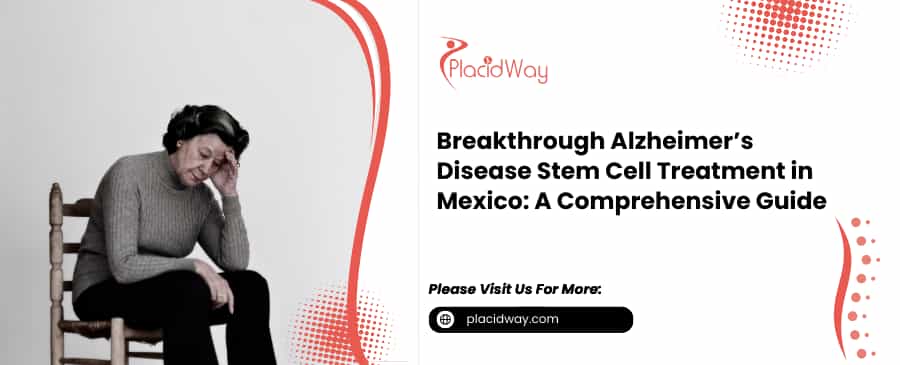
Alzheimer’s disease remains one of the most challenging conditions for modern medicine, leaving millions of families searching for hope beyond traditional pharmaceuticals. As conventional treatments focus primarily on managing symptoms, regenerative medicine in Mexico has emerged as a frontrunner in offering advanced stem cell therapy for Alzheimer's designed to target the underlying neurodegeneration.
By leveraging the power of Mesenchymal Stem Cells (MSCs), top-tier medical facilities in cities like Tijuana, Cancun, and Guadalajara provide international patients with access to therapies that are often restricted or prohibitively expensive in the United States and Europe. This guide provides an in-depth look at why Mexico is a global hub for neurological repair and what patients can realistically expect from the journey.
Key Takeaways: Alzheimer's Care in Mexico
- Significant Cost Savings: Patients typically save 60-80% compared to US prices, with packages ranging from $4,900 to $15,000.
- Advanced Cell Protocols: Access to high-dose umbilical cord-derived MSCs (up to 300 million cells) and intrathecal delivery methods.
- Accredited Facilities: Leading centers are COFEPRIS-certified and follow international JCI or ISO standards.
- All-Inclusive Logistics: Most medical tourism packages include VIP airport transfers, 4-star accommodations, and 12 months of virtual follow-up.
Why Choose Mexico for Alzheimer's Stem Cell Therapy?
Mexico offers a unique combination of high-level medical expertise, supportive regulatory frameworks, and significantly lower overhead costs, making it the premier destination for regenerative neurology.
The rise of medical tourism in Mexico is not just about price; it is about accessibility to cutting-edge biotechnologies. In the United States, FDA regulations often limit the expansion of stem cells, meaning patients may receive a lower "dose" of their own cells. In contrast, specialized labs in Mexico can expand allogeneic mesenchymal stem cells to therapeutic levels that are clinically shown to exert a stronger anti-inflammatory effect on the brain.
Furthermore, the proximity to the US border (particularly in Tijuana) allows families to access world-class care without the exhaustion of long-haul international flights, which is crucial for elderly patients with cognitive decline. Facilities in Cancun combine recovery with a serene environment, which can significantly lower patient stress—a known factor in aggravating Alzheimer’s symptoms.
Mexico's regulatory agency, COFEPRIS, has established strict guidelines for the handling and expansion of stem cells. This ensures that while the legal environment is more flexible for regenerative medicine, the safety and purity of the cellular products remain at international standards, rivaling European and Asian labs.
The Science: How Stem Cells Target Neurodegeneration
Mesenchymal stem cells work through paracrine signaling to reduce brain inflammation, clear toxic protein buildups, and stimulate the growth of new neural connections.
The pathology of Alzheimer's is characterized by the accumulation of amyloid-beta plaques and tau tangles, which trigger chronic neuroinflammation. Stem cells do not necessarily "replace" every dead neuron; instead, they act as a biological "pharmacy." They release exosomes and growth factors (like BDNF and NGF) that calm the immune response in the brain and support the survival of existing neurons.
Clinics in Mexico for Alzheimer's often utilize intrathecal administration. By injecting cells directly into the spinal fluid, they bypass the blood-brain barrier, allowing a higher concentration of regenerative cells to migrate to the hippocampus and other affected brain regions. This targeted migration is key to achieving improvements in memory and executive function.
"The therapeutic window for Alzheimer's stem cell therapy is widest in the early stages. By reducing oxidative stress and neuroinflammation early on, we can potentially preserve cognitive 'reserve' and extend the period of independence for the patient. In Mexico's top clinics, we see the best outcomes when therapy is combined with neurotrophic support and specialized nutrition."
Your Treatment Journey: Step-by-Step in Mexico
The process is designed to be seamless, beginning with a remote medical review and culminating in a comprehensive multi-day treatment protocol.
International patients typically follow a sequential treatment pathway to ensure safety and maximize the therapeutic impact of the cells:
- Initial Virtual Evaluation: A specialist reviews the patient's MRI/CT scans and cognitive assessments (like MMSE scores) to confirm eligibility.
- Arrival and Concierge Pickup: Upon landing in San Diego (for Tijuana) or Cancun, patients are met by a private driver and escorted to their hotel or clinic.
- On-site Diagnostics: A final physical exam, blood panels, and sometimes a neurological baseline test are performed.
- Cell Administration: The procedure usually involves an IV infusion followed by an intrathecal injection under local anesthesia. This typically takes 1-2 hours.
- Recovery and Observation: Patients rest in a private suite for several hours. Most are able to return to their hotel the same day.
- Post-Treatment Protocol: Clinics may provide hyperbaric oxygen therapy or NAD+ infusions to enhance the environment for the new stem cells.
Cost Comparison: Stem Cell Therapy for Alzheimer’s
Understanding the financial landscape is crucial for families planning for long-term care and regenerative interventions.
The cost of stem cell treatment in Mexico is a fraction of the cost in the US, where similar (often less comprehensive) protocols can exceed $40,000. Below is a breakdown of average costs by country:
| Country | Avg. Price (USD) | Typical Protocol | Recovery Time |
|---|---|---|---|
| Mexico | $4,900 – $15,000 | 35M-100M Wharton's Jelly MSCs | 24-48 Hours |
| USA | $25,000 – $60,000 | Autologous (Limited Expansion) | 1-3 Days |
| Europe (Switzerland/Germany) | $20,000 – $45,000 | Specialized lab-grown cells | 3-5 Days |
| Thailand | $15,000 – $30,000 | Systemic IV + Local injections | 2-4 Days |
"Don't just look at the price tag. When evaluating Mexican stem cell packages, ask for the Certificate of Analysis (COA) of the cells. You want to ensure you are receiving viability rates over 90% and a high cell count. A cheaper package with low-quality or low-count cells will not provide the neurological regeneration required for Alzheimer's."
Eligibility: Who Can Benefit?
Not every patient is a candidate for stem cell therapy; clinical selection is vital for safety and managing expectations.
Regenerative medicine is most promising for those in the early to moderate stages of cognitive decline. Patients with Mild Cognitive Impairment (MCI) or early-onset Alzheimer's often see the most significant "stabilization." In very late-stage cases, the goal of affordable stem cell therapy in Mexico shifts toward palliative care—improving mood, sleep patterns, and basic motor function rather than reversing memory loss.
Exclusion Criteria: Patients with active cancer, severe uncontrolled infections, or those unable to travel safely may be disqualified. Reputable clinics will always require a pre-screening process to avoid unnecessary travel for the patient.
Many patients traveling to Tijuana for Alzheimer's care are also seeking exosome therapy. Exosomes are tiny vesicles released by stem cells that are small enough to cross the blood-brain barrier more easily than whole cells, making them an excellent adjunctive therapy for brain health.
Safety, Quality, and Accreditation
Mexico’s leading regenerative centers adhere to rigorous international standards to ensure the highest levels of patient safety.
When searching for a top stem cell clinic in Mexico, look for those that utilize ISO-certified cleanrooms for cell processing. The use of Wharton’s Jelly-derived MSCs is preferred by many experts because these "young" cells have higher proliferative potential and lower immunogenicity, meaning the risk of rejection is virtually non-existent. Verified facilities will also have a multidisciplinary team including neurologists, anesthesiologists, and regenerative medicine specialists to manage the patient's holistic needs.
Frequently Asked Questions (FAQs)
Is Alzheimer's stem cell therapy in Mexico legal?
Yes, regenerative medicine is legal and regulated in Mexico under the oversight of COFEPRIS, provided the clinic has the correct licenses for cellular handling and transplantation.
What is the difference between autologous and allogeneic cells?
Autologous uses your own cells (often from fat or bone marrow), while allogeneic uses donor cells (usually from umbilical cord tissue). Allogeneic cells are often preferred for older patients as they are "younger" and more potent.
How many sessions will my loved one need?
Most Alzheimer's packages in Mexico consist of a high-dose single session or two sessions spaced over 6 months. The medical team will determine the frequency based on the patient's response.
Will we see immediate results?
No. Regeneration is a biological process. While some patients report improved energy or clarity within weeks, the cognitive benefits typically peak between 3 and 6 months post-infusion.
Can we continue current Alzheimer's medications?
Yes. Stem cell therapy is typically used as a complementary treatment. You should not stop medications like Donepezil or Memantine without consulting your primary neurologist.
Are there risks of tumors?
The use of Mesenchymal Stem Cells (MSCs) has not been linked to tumor formation in clinical practice, unlike embryonic stem cells. MSCs are safe and do not differentiate uncontrollably.
Is the intrathecal injection painful?
The procedure is performed under local anesthesia and is comparable to a lumbar puncture. Most patients feel only mild pressure and a "pinch" at the site.
Does the clinic help with travel arrangements?
Most medical tourism facilitators and clinics provide a dedicated patient coordinator to handle airport pickups, hotel bookings, and local transportation.
What happens after we return home?
Reputable clinics provide 12 months of follow-up care via telemedicine to monitor the patient’s progress and adjust any supporting protocols.
Why is the cost so much lower than in the US?
Lower labor costs, reduced administrative burdens, and different regulatory structures for biotech research allow Mexican clinics to offer the same technology at a significantly lower price point.
Take the First Step Toward Cognitive Renewal
Don't let the high costs of US healthcare stand in the way of advanced regenerative options for Alzheimer's. PlacidWay partners with the most respected JCI-accredited and COFEPRIS-certified hospitals across Mexico to provide tailored, transparent treatment packages.
Get a free, no-obligation medical review and price quote today. Our team is ready to help you navigate the journey to restoring brain health in Mexico.
Get a Free Quote for Alzheimer's Treatment



.png)
.png)
.png)




.jpg)











Share this listing