


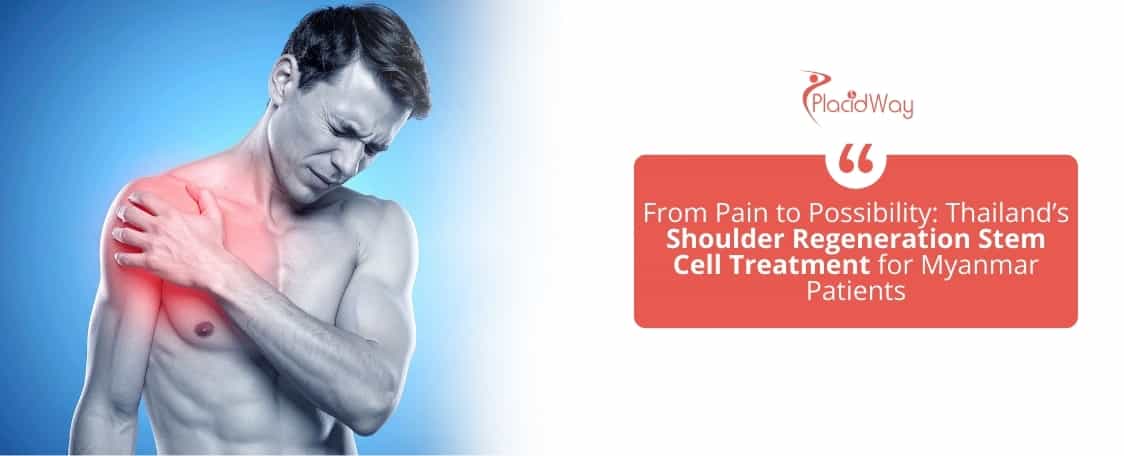
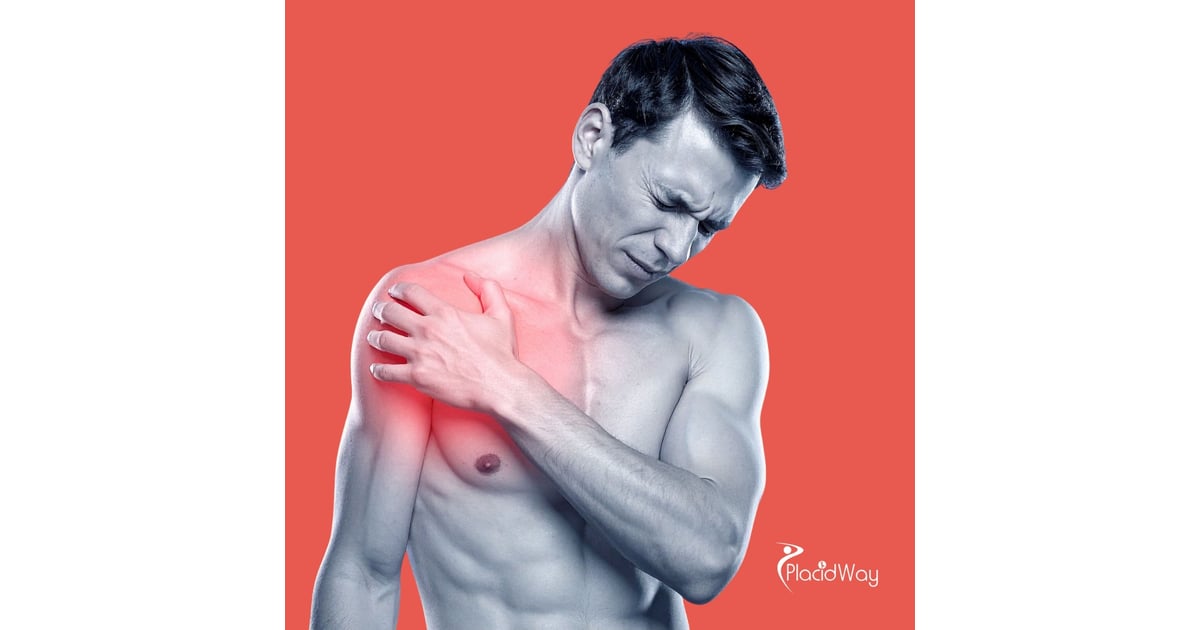
Shoulder regeneration stem cell treatment in Thailand is opening new possibilities for Myanmar patients who struggle with chronic shoulder pain, limited mobility, and sports-related injuries.
By combining advanced regenerative medicine, experienced orthopedic specialists, and internationally accredited facilities, Thailand has become a trusted destination for shoulder restoration without invasive surgery.
Key Takeaways
-
Proximity & Access: Thailand is the most convenient medical hub for Myanmar patients. Direct flights from Yangon (RGN) to Bangkok (BKK) take only 75–90 minutes, allowing for easy travel even with limited shoulder mobility.
-
Cost Efficiency: Comprehensive shoulder regeneration packages in Thailand typically range from $8,000 – $15,000 USD (approx. 165 – 310 Lakhs MMK), offering world-class JCI-accredited care at a fraction of the cost of Singapore or Western facilities.
-
Potency Advantage: Thai clinics legally utilize high-potency Umbilical Cord-Derived Mesenchymal Stem Cells (UC-MSCs), delivering 50 million to 100 million cells per joint—a dosage significantly higher than the uncultured autologous treatments typically available in less advanced regional markets.
-
Visa Support: Myanmar citizens require a Medical Treatment Visa (MT) for stays involving complex procedures. Top Thai hospitals provide the mandatory Confirmation Letter to ensure smooth approval at the Royal Thai Embassy in Yangon.
Why Choose Thailand for Shoulder Regeneration?
For patients in Myanmar suffering from chronic shoulder pain, Thailand offers a bridge between standard medication and invasive surgery, utilizing the most advanced biological repair protocols in Southeast Asia.
The shoulder is a complex joint with limited blood supply to its tendons and cartilage. When injuries like rotator cuff tears or osteoarthritis occur, the body often struggles to heal on its own. Thailand’s regenerative centers focus on delivering high concentrations of growth factors and stem cells to "restart" the healing process.
The Science of Shoulder Repair
-
Anti-Inflammatory Response: High-dose MSCs are injected into the shoulder to neutralize the chronic inflammation (synovitis) that causes constant aching and night pain.
-
Tissue Signaling: The cells act as signaling hubs, instructing native cells to repair micro-tears in the rotator cuff tendons and stimulate the production of new cartilage components.
-
Mechanical Stabilization: By improving the health of the joint's soft tissues, the therapy helps restore the natural range of motion and strength without the need for arthroscopic anchors or joint replacement.
Targeted Shoulder Conditions
-
Rotator Cuff Tendinopathy & Partial Tears: Repairing chronic wear and tear in the supraspinatus tendon.
-
Shoulder Osteoarthritis: Regenerating the cartilage cushion in the glenohumeral joint to prevent bone-on-bone friction.
-
Labral Tears: Biological support for repairing the cartilage ring around the shoulder socket.
-
Bursitis & Impingement: Reducing the volume of inflamed tissue to restore pain-free lifting and rotation.
The Thailand Treatment Protocol: 3-5 Day Stay
Shoulder regeneration in Thailand is a minimally invasive, outpatient procedure designed for international patients.
Step 1: Pre-Arrival Assessment
Patients submit their recent MRI or X-ray scans from Myanmar for a free preliminary review by a Thai orthopedic specialist to confirm candidacy and cell dosage.
Step 2: Arrival & Diagnostics (Day 1)
Upon arrival in Bangkok, patients undergo a physical evaluation and final diagnostic blood work. The specialist confirms the injection sites (e.g., intra-articular vs. intra-tendinous).
Step 3: Precision Injection (Day 2)
The procedure is performed under local anesthesia. High-dose UC-MSCs (often combined with PRP) are injected directly into the injury site using Ultrasound or Fluoroscopy Guidance to ensure pinpoint accuracy.
Step 4: Recovery & Return (Day 3-5)
Patients rest at their hotel for 24–48 hours. A customized physical therapy plan is provided for the patient to continue with their physiotherapist back in Myanmar to maximize the regenerative results.
Cost Comparison: Thailand vs. The Region (USD)
For many patients, the cost of shoulder regeneration stem cell treatment in Thailand is a key factor, offering a more accessible alternative compared to Western countries while maintaining high standards of safety and clinical expertise. This balance of affordability, innovation, and personalized care allows Myanmar patients to pursue effective shoulder healing with confidence and long-term recovery goals in mind.
|
Destination |
Procedure (Single Shoulder Injection) |
Est. Cost (USD) |
Est. Cost (MMK) |
Primary Advantage |
|---|---|---|---|---|
|
Thailand |
High-Dose UC-MSCs (50M-100M) |
$8,000 – $15,000 |
165 – 310 Lakhs |
High cell count, JCI safety. |
|
Myanmar |
Limited Autologous/PRP |
$2,000 – $5,000 |
40 – 100 Lakhs |
Local convenience, lower potency. |
|
Singapore |
Premium Private Clinic |
$15,000 – $30,000 |
310 – 620 Lakhs |
Very high institutional cost. |
|
India |
Allogeneic/Autologous MSC |
$6,000 – $12,000 |
125 – 250 Lakhs |
Competitive, but longer travel. |
Logistics for Myanmar Patients
1. Flights
Myanmar Airways International (MAI) and Thai AirAsia offer multiple daily flights from Yangon (RGN) to Bangkok (BKK/DMK). The journey is short enough to be managed comfortably even with acute shoulder pain.
2. Medical Treatment Visa (MT)
While Myanmar citizens have a 14-day visa exemption for air travel, the MT Visa is recommended for medical trips.
-
Requirement: An official Appointment/Confirmation Letter from the Thai hospital.
-
Processing: Handled at the Royal Thai Embassy on Pyay Road, Yangon.
3. Payment & Currency
Most Thai hospitals accept USD (clean, crisp notes are preferred) or Credit Cards. It is advisable to settle the payment in USD or THB for the best transparency.
Frequently Asked Questions (FAQ)
How much does shoulder stem cell therapy cost in Thailand? Comprehensive shoulder packages typically range from $8,000 to $15,000 USD (approx. 165 – 310 Lakhs MMK), depending on the cell count and whether it is combined with PRP.
Is this better than shoulder surgery? For patients with early to moderate osteoarthritis or partial rotator cuff tears, stem cell therapy is a highly effective non-surgical alternative. It avoids the long rehabilitation (6+ months) and risks associated with surgery.
Do I need to bring a companion? While the procedure is outpatient, having a companion is recommended to assist with luggage and travel, as your arm may be slightly sore or in a sling for 24 hours post-injection.
How long do the results last? Clinical reports show significant pain reduction and functional improvement lasting 3 to 5 years. Many patients avoid surgery indefinitely by maintaining joint health through follow-up physical therapy.
Ready to Restore Your Shoulder Mobility?
PlacidWay connects Myanmar patients directly with Thailand’s top JCI-accredited orthopedic centers specializing in shoulder regeneration. We ensure a seamless medical journey from Yangon to Bangkok.
We assist with:
-
Medical Record Review: Free specialist assessment of your Myanmar MRI/X-rays.
-
Visa Coordination: Obtaining the mandatory hospital confirmation for your MT Visa.
-
Price Transparency: Providing guaranteed, all-inclusive package pricing in USD.

















Share this listing