


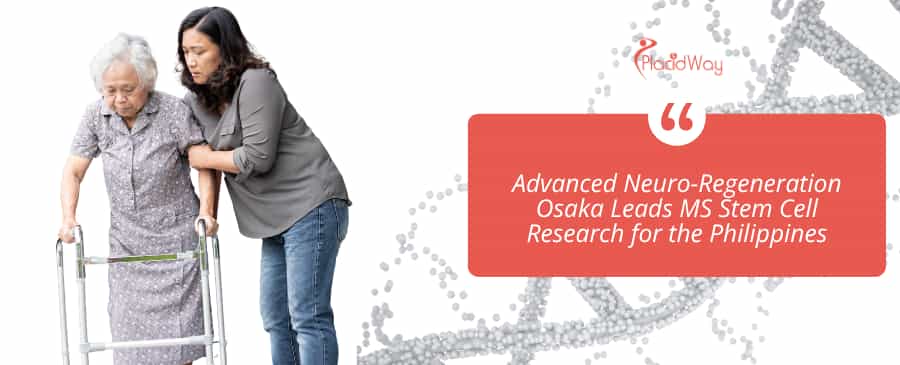
The city of Osaka has emerged as a powerhouse in the field of regenerative medicine, particularly for complex neurological conditions like Multiple Sclerosis. For patients in the Philippines seeking alternatives to conventional disease-modifying therapies (DMTs), Japan’s rigorous scientific framework offers a beacon of hope. The region's focus on advanced neuro-regeneration utilizes high-potency cellular protocols designed to address the underlying inflammatory and degenerative aspects of MS.
International medical tourists often choose Osaka because of its high concentration of government-certified Cell Processing Centers (CPCs). These facilities adhere to the Act on the Safety of Regenerative Medicine (ASRM), ensuring that every cell administered meets stringent purity and viability standards. This level of regulatory oversight provides a layer of security and trust that is often missing in less regulated markets.
Osaka is home to some of the world's most advanced iPS cell research hubs, following the Nobel Prize-winning discoveries of Dr. Shinya Yamanaka.
Understanding Stem Cell Therapy for MS in Japan
Stem cell therapy for Multiple Sclerosis generally aims to reset the immune system and promote a more neuro-protective environment. In Japan, the primary approach involves autologous Mesenchymal Stem Cells (MSCs), which are harvested from the patient's own tissue, usually fat (adipose) or bone marrow. This eliminates the risk of graft-versus-host disease and significantly reduces the likelihood of immune rejection.
The core mechanism of these cells is their immunomodulatory capability. Once infused, MSCs migrate to areas of inflammation and demyelination within the central nervous system. They release bioactive molecules that help suppress the abnormal immune response attacking the myelin sheath, while typically supporting the body's natural repair mechanisms. Most patients undergo a multi-step process involving extraction, lab expansion, and targeted delivery.
Clinical studies in 2024 reported that over 90% of MS patients treated with specific stem cell protocols showed no new lesions on MRI at the 12-month follow-up.
Benefits of Choosing Japan for Medical Tourism
Japan represents a premier destination for medical tourism in Japan due to its blend of cutting-edge technology and a deeply ingrained culture of precision. For Filipino patients, the proximity and the presence of world-class infrastructure in cities like Osaka and Tokyo make it a logical choice. The Japanese healthcare system is renowned for its authoritative approach to safety, requiring clinics to report all outcomes to the Ministry of Health.
Beyond the technology, the hospitality and logistical support for international patients are exceptional. Many clinics offer dedicated international departments that assist with everything from medical visa assistance to professional translation services. This ensures that the patient’s journey is as stress-free as possible, allowing them to focus entirely on their recovery and the potential benefits of the therapy.
Always verify a clinic's ASRM registration number before booking. This ensures the facility is legally authorized to provide regenerative treatments.
Comparing Stem Cell Therapy Cost in Japan
The Stem Cell Therapy cost in Japan is competitive when compared to the United States or Western Europe, especially when considering the high level of laboratory culturing involved. In Japan, "culturing" refers to expanding a small sample of cells into hundreds of millions of potent units over several weeks. This is a significant advantage over "same-day" procedures often found elsewhere, which may yield lower cell counts.
For patients from the Philippines, the total investment reflects the sophisticated lab work, specialist physician time, and long-term follow-up protocols. While the initial price may seem higher than in some developing nations, the value-to-quality ratio in Japan is considered among the best in the world. The following table provides a general market overview of the costs involved.
| Procedure Type | Avg. Cost in Japan (USD) | Cost in USA/Europe (USD) |
|---|---|---|
| Cultured MSC IV Infusion (100M+ Cells) | $15,000 – $25,000 | $30,000 – $50,000+ |
| Intrathecal Delivery (Spinal) | $18,000 – $28,000 | $35,000 – $60,000 |
| Comprehensive 2-Session Package | $25,000 – $40,000 | $50,000 – $80,000 |
Medical tourists in Japan save an average of 45% compared to similar high-potency cultured treatments in North America.
Modern MSC Protocols for Multiple Sclerosis
The application of Stem Cell Therapy for Multiple Sclerosis in Osaka centers on the use of Mesenchymal Stem Cells (MSCs). These cells are valued for their "homing" ability, meaning they naturally gravitate toward damaged tissues in the brain and spinal cord. In the context of MS, researchers are focusing on how these cells can induce the production of regulatory T-cells to restore immune balance.
Unlike aggressive treatments like hematopoietic stem cell transplantation (HSCT), which requires heavy chemotherapy to wipe out the immune system, MSC therapy is generally minimally invasive. It does not require a hospital stay for weeks and carries a significantly lower risk profile. This makes it an attractive "maintenance" or "regenerative" option for those who are not candidates for, or wish to avoid, intensive chemotherapy.
Japan was the first country to establish a specific regulatory framework for "regenerative medical products," speeding up patient access to safe therapies.
Safety Standards and Regulations in Osaka
Safety is the cornerstone of medical tourism in Osaka. Every facility offering stem cell treatments must be licensed under the ASRM law. This requires the submission of a comprehensive "Regenerative Medicine Provision Plan" to a government-certified committee. These committees evaluate the physician’s expertise, the lab’s cleanliness, and the scientific validity of the treatment protocol.
Furthermore, Japanese law mandates the use of certified Cell Processing Centers (CPCs). These labs are essentially cleanrooms where the environment is controlled to prevent contamination. Each batch of cells undergoes rigorous testing for sterility, mycoplasma, and endotoxins before it is released for patient use. This uncompromising focus on quality is what builds trustworthiness in the Japanese medical sector.
Stem cell therapy is not a "cure" for MS. It is a regenerative tool meant to support the management of the disease and improve quality of life. Patients should continue their baseline care as advised by their neurologists.
The Patient Journey from the Philippines to Japan
For a patient from the Philippines, the journey typically begins with a remote medical review. This allows the Japanese specialists to assess the patient's MRI scans, blood work, and neurological history to determine if they are a suitable candidate. Once cleared, the logistics of the medical visa and travel are coordinated through professional agencies.
The actual treatment is divided into two distinct visits. During the first visit, the patient undergoes a small fat tissue harvest under local anesthesia. They return home while the lab expands these cells over 4-6 weeks. On the second visit, the patient receives the high-dose infusion. This "staged" approach ensures the highest possible cell count and potency for the treatment.
Ensure your medical records are translated into English or Japanese before the first consultation to avoid delays in the evaluation process.
Stem Cell Clinics in Japan and Patient Selection
Selecting the right facility among various stem cell clinics in Japan involves looking for centers that specialize in neurology. Leading clinics in Osaka often collaborate with university research departments, keeping them at the forefront of neuro-regeneration. Patient selection is a rigorous process, as not everyone is a candidate for these therapies.
Contraindications most patients experience evaluation for include active malignancy (cancer) within the last five years, severe uncontrolled infections, or late-stage organ failure. The goal is to select patients who have the highest potential for a positive response, particularly those in the relapsing-remitting phase where inflammation is still a dominant feature of the disease.
Japan has over 100 Ministry-certified facilities specifically authorized to provide second-class (cultured cell) regenerative medicine treatments.
Success Rates and Clinical Outcomes for MS
Defining "success" in Multiple Sclerosis is multifaceted. For some, it means a reduction in the frequency of relapses; for others, it is the stabilization of disability scores (EDSS). Japanese clinical data generally indicates that a significant percentage of patients experience a halt in disease progression and improved mobility or cognitive clarity after receiving high-dose MSC infusions.
It is important to note that these outcomes are typically enhanced when the treatment is combined with specialized neuro-rehabilitation. Japanese clinics often provide guidance on post-treatment exercises and lifestyle adjustments that can help maximize the regenerative environment created by the stem cells. Long-term follow-up is a standard part of the protocol to monitor these sustained effects.
Case Summary: Relapsing-Remitting RecoveryA 38-year-old patient from Manila presented with frequent relapses and fatigue. After two sessions of cultured MSC therapy in Osaka, the patient reported a 70% reduction in fatigue and no new relapses over an 18-month observation period.
Technological Edge of Osaka's Research Hubs
Osaka’s leadership in affordable Stem Cell Therapy in Japan isn't just about price; it's about the technological "edge." The city hosts several "Science Parks" where biotech companies and clinical researchers work side-by-side. This ecosystem allows for the rapid translation of lab discoveries into clinical practice, such as the development of more efficient cell-expansion techniques.
One of the most exciting areas of research in Osaka involves the use of exosomes—the signaling vesicles secreted by stem cells. Some clinics are now integrating exosome therapy with standard MSC treatments to provide an even more concentrated boost of neuro-regenerative signals. This multi-modal approach is a hallmark of the advanced care found in the region.
The 'Kansai Innovation Special Zone' in Osaka provides tax incentives for regenerative medicine companies, fostering one of the densest scientific clusters in Asia.
Logistics and Travel for Filipino Medical Tourists
Navigating international travel for medical reasons requires careful planning. Filipino citizens generally benefit from the well-established "Medical Stay Visa" system in Japan. This visa can be issued for multiple entries and extended periods, depending on the treatment plan provided by the Japanese medical institution. It also allows for a "companion" or "caregiver" to accompany the patient.
In Osaka, the infrastructure is highly accessible for those with limited mobility. The city’s trains and clinical facilities are designed with barrier-free access, and private medical transport can be arranged for transfers between the airport, hotels, and the clinic. Many clinics are located near major hubs like Umeda or Namba, offering a wide range of accommodation options.
Book your accommodation within walking distance of a major train station or use "barrier-free" taxis, which are widely available in Osaka for wheelchair users.
Risks and Considerations in Regenerative Medicine
Transparent risk disclosure is a vital part of medical ethics in Japan. While MSC therapy is generally considered safe, it is not without potential side effects. Most patients experience temporary fatigue, low-grade fever, or localized pain at the injection or harvest site. These symptoms typically resolve within 24 to 48 hours and are a sign that the body is responding to the cells.
Strict contraindications include any history of malignancy, as stem cells could theoretically support the growth of existing undiagnosed tumors. Patients must also undergo comprehensive screening for viral infections like HIV, Hepatitis B, and Hepatitis C. Every Japanese clinic will conduct its own independent blood tests before proceeding with any cell harvesting or administration.
Case Summary: Stabilization of Primary Progressive MSA 52-year-old male with gradual mobility decline underwent intrathecal MSC delivery in Osaka. While he did not regain full walking capacity, his EDSS score stabilized for the first time in three years, preventing further neurological decline.
PlacidWay Assistance for Your Medical Journey
PlacidWay provides a comprehensive bridge for international patients seeking treatment in Japan. The focus is on providing transparent information and streamlining the connection between patients and elite medical facilities. Key services include:
- Personalized medical record review and initial eligibility assessment.
- Direct coordination with Ministry-certified clinics in Osaka and Tokyo.
- Comprehensive cost breakdowns and treatment package options.
- Support with medical visa documentation and guarantor requirements.
- Professional medical translation and cultural coordination services.
- Ongoing assistance and follow-up communication after returning home.
Over 80% of international patients in Japan use a medical coordinator to manage the complex regulatory and linguistic requirements of regenerative therapy.
Conclusion: The Future of MS Care in Japan
The landscape of Multiple Sclerosis treatment is shifting from management to restoration, and Japan is at the forefront of this evolution. For patients in the Philippines, Osaka offers a unique combination of authoritative research, high safety standards, and a specialized medical tourism infrastructure. While stem cell therapy is not a guaranteed fix, it represents a significant technological leap for those seeking to reclaim their quality of life.
By choosing a destination that values precision and regulation above all else, patients can navigate their medical journey with confidence. The research coming out of Osaka today is not just about cells; it's about rewriting the future for those living with MS. For those ready to explore these possibilities, the path to advanced neuro-regeneration is open and well-regulated in the heart of Japan.
By 2026, Japan is projected to host over 15,000 international patients annually specifically for regenerative medicine procedures.
Medical Disclaimer: This article is for informational purposes only and is not medical advice. Always consult a qualified healthcare provider before any medical decisions. Results may vary. Read Full Disclaimer here.
References:Wikipedia. (2025). Multiple Sclerosis. https://en.wikipedia.org/wiki/Multiple_sclerosisPubMed. (2026). Stem cell therapies: a new era in the treatment of multiple sclerosis. https://pmc.ncbi.nlm.nih.gov/articles/PMC11111935/Mayo Clinic. (2026). Stem cell transplant for MS. https://www.mayoclinic.org/tests-procedures/stem-cell-transplant/about/pac-20384854FDA. (2026). Important Patient and Consumer Information About Regenerative Medicine. https://www.fda.gov/vaccines-blood-biologics/cellular-gene-therapy-products/important-patient-and-consumer-information-about-regenerative-medicine
.png)

















Share this listing