

Living with debilitating joint pain that limits your daily independence is difficult enough without having to stress over massive domestic hospital bills or endless surgical waitlists. It makes perfect sense why so many patients look into a hip replacement in Cancun, Mexico, where you can access advanced orthopedic restoration without the severe financial burden found at home. However, since major joint surgery requires rigorous infection control and specialized physical therapy, protecting your long-term mobility means looking past flashy medical tourism packages. You can ensure a safer recovery and protect your budget by requesting a completely transparent, itemized quote from a COFEPRIS-licensed hospital led by a surgeon actively certified by the Mexican Board of Orthopedics.
Quick Answer Summary: Hip Replacement in Cancun
- Estimated Cost: Typically ranges between $12,000 and $16,000 USD (including hospital fees, surgeon fees, and implant).
- Certifications to Look For: Check for COFEPRIS (Mexican Ministry of Health) facility licensing and surgeon certification by the Mexican Council of Orthopedics and Traumatology (CMOT).
- Ideal Candidate: Patients suffering from severe osteoarthritis, rheumatoid arthritis, or hip dysplasia who are medically cleared for travel.
- Recovery Time: Usually requires a 10 to 14-day stay in Cancun before flying, with full functional recovery taking 3 to 6 months.
- Primary Reason for Travel: High-quality care at roughly 50-60% less than US out-of-pocket costs, with zero wait lists.
- Important Caution: Always clear your post-operative flight plans with your surgeon to minimize the risk of Deep Vein Thrombosis (DVT) during air travel.
Why International Patients Consider Hip Replacement in Cancun, Mexico
Dealing with chronic hip joint pain can make simple tasks like walking or climbing stairs incredibly difficult. For many patients in the United States and Canada, getting timely treatment is hindered by exorbitant out-of-pocket expenses or extensive public healthcare waitlists. Cancun has emerged as a prominent destination for medical travelers seeking a solution to these specific hurdles. The city offers modern medical infrastructure specifically designed to cater to international health tourists.
You may feel anxious about traveling abroad for a major orthopedic procedure. Understanding the specific motivations of other patients can help contextualize your own decision-making process.
Primary Reasons Patients Travel for Orthopedic Care
- Substantial Cost Savings: Treatment often costs less than half of standard US hospital rates, even when factoring in travel expenses.
- Immediate Access: Private clinics in Mexico typically have no wait times, allowing you to schedule surgery when you need it.
- Proximity to Home: Short, direct flights from major US and Canadian cities reduce travel fatigue.
- Specialized Care: Many local surgeons have completed fellowships internationally and manage high volumes of joint replacement cases.
- Comprehensive Packages: Clinics frequently offer coordinated care, including ground transfers, hotel recovery, and dedicated nursing support.
Evaluating the Cost of Hip Arthroplasty in Mexico vs. North America
Understanding the financial commitment is one of the most important steps in your medical travel planning. In the United States, an uninsured or underinsured patient might face bills exceeding $40,000 for a total hip replacement. In contrast, medical facilities in Cancun generally offer all-inclusive orthopedic packages at a fraction of that price. This stark difference allows patients to access premium medical devices without facing financial ruin.
It is vital to know exactly what is included in your surgical quote. Prices can vary based on the specific type of implant used, the surgical approach, and the length of your hospital stay.
| Treatment Destination | Estimated Average Cost (USD) | Typical Wait Time |
|---|---|---|
| United States (Out-of-Pocket) | $35,000 - $45,000+ | Weeks to Months |
| Canada (Private/Out-of-Pocket) | $20,000 - $25,000 | 6 - 18 Months (Public) |
| Cancun, Mexico | $12,000 - $16,000 | No Wait List |
Keep in mind that while the surgical quote covers medical fees, you must budget for secondary expenses. Flights, extended hotel stays for your companion, and specialized travel insurance are additional costs you should calculate early.
Patient Demographics: Who is Traveling for Orthopedic Care (2024-2026 Trends)
The landscape of cross-border healthcare is constantly evolving, with orthopedic surgery remaining a primary driver of medical travel. Recent 2024 data indicates a steady increase in North American baby boomers traveling southward for mobility-restoring procedures. These demographic shifts highlight a growing confidence in the Mexican private healthcare sector among older, active adults.
Below is a breakdown of the age distribution for international orthopedic patients traveling to Mexico based on 2024 cross-border healthcare reports.
2024 Age Distribution of North American Orthopedic Patients in Mexico
Data reflects general 2024 inbound medical tourism demographics for private Mexican orthopedic centers.
This data reveals that the vast majority of patients seeking joint replacement abroad are between 55 and 74 years old. These individuals are typically seeking to maintain an active, independent lifestyle without depleting their retirement savings.
Understanding the Surgical Options for Joint Replacement
Hip replacement surgery, clinically known as Total Hip Arthroplasty, involves removing the damaged bone and cartilage and replacing it with prosthetic components. The goal is to relieve pain, restore mobility, and improve your overall quality of life. During your initial consultation, your orthopedic specialist will review your imaging to determine the most appropriate surgical approach.
There are a few different techniques used by surgeons today. The choice depends on your specific anatomy, your surgeon's expertise, and your overall health profile.
Anterior Approach
The surgeon accesses the hip joint from the front of the leg. This technique avoids cutting major muscles, which may lead to a faster initial recovery and less post-operative pain.
Posterior Approach
The traditional method where the joint is accessed from the back. It offers the surgeon excellent visibility of the joint and is often preferred for complex cases or revisions.
Both methods boast high success rates when performed by experienced medical professionals. You should ask your surgeon which approach they perform most often, as surgical familiarity is a strong indicator of a safe outcome.
How to Verify Hospital Safety and Licensing in Mexico
Your safety during surgery depends heavily on the quality of the medical facility. In Mexico, private hospitals must adhere to strict federal regulations to operate legally. Knowing which local regulatory bodies monitor these facilities will help you filter out substandard clinics and choose a safe environment for your surgery.
When researching where to have your procedure, prioritize facilities that proudly display their government certifications. Transparency regarding medical licensing is a key trust signal.
Crucial Hospital Certifications to Verify
- COFEPRIS License: The Federal Commission for the Protection against Sanitary Risk. This is the mandatory government health license required for any clinic to operate in Mexico.
- CSG Accreditation: The Consejo de Salubridad General. This is the highest national accreditation in Mexico, indicating the hospital meets stringent quality and safety standards similar to US guidelines.
- In-House ICU: Ensure the facility has an on-site Intensive Care Unit to handle rare but potential surgical emergencies.
- International Accreditation (Optional but helpful): Some top-tier hospitals in Cancun may also hold Joint Commission International (JCI) accreditation, though CSG is the primary national standard.
Choosing the Right Orthopedic Surgeon for Your Procedure
The skill and experience of your surgeon are the most critical factors influencing your recovery and long-term mobility. Mexico is home to highly skilled medical professionals, many of whom have trained extensively in the United States, Canada, or Europe. However, as an international patient, you must independently verify their professional background.
Do not rely solely on marketing materials when selecting your doctor. Ask for their official medical license numbers and verify their board certifications.
Checklist for Vetting Your Specialist
- Cédula Profesional: This is the official Mexican medical license. Your surgeon should have two: one for general medicine and one specifically for orthopedic surgery.
- CMOT Certification: Ensure they are board-certified by the Mexican Council of Orthopedics and Traumatology (Consejo Mexicano de Ortopedia y Traumatología).
- Case Volume: Ask how many hip arthroplasties they perform annually. High-volume surgeons typically have lower complication rates.
- Implant Familiarity: Confirm that they use globally recognized, FDA-approved (or equivalent) prosthetic brands like Zimmer Biomet, Stryker, or DePuy Synthes.
A reputable doctor will gladly provide this information during your virtual consultation. If a clinic hesitates to share their surgeon's credentials, consider it a significant warning sign and explore other options.
Preparing Medically and Logistically for Travel to Cancun
Proper preparation minimizes the risks associated with traveling for surgery. Long before you board a plane, you must obtain medical clearance from your primary care physician at home. This ensures your heart and lungs are healthy enough to undergo general anesthesia or a spinal block.
You will also need to organize your medical records, including recent X-rays or MRI scans. The surgical team in Cancun will need these documents to accurately plan the dimensions of your artificial joint.
| Timeline | Action Required by Patient |
|---|---|
| 4-6 Weeks Before | Obtain medical clearance, forward digital imaging, and secure your passport. |
| 2-3 Weeks Before | Adjust current medications (especially blood thinners) as directed by your surgeon. |
| 1 Week Before | Pack comfortable, loose-fitting clothing and arrange a recovery area in your own home for your return. |
It is highly recommended that you travel with a companion. Having someone to assist with luggage, navigate the airport, and provide emotional support post-surgery is invaluable during the medical travel experience.
The Step-by-Step Patient Experience Upon Arrival
Knowing what to expect when you land can greatly reduce pre-surgery anxiety. Most reputable medical tourism providers in Cancun arrange for a bilingual coordinator to meet you directly at the airport. You will usually be transported to your hotel to rest before your initial in-person hospital visit.
The day before your surgery, you will attend a comprehensive medical consultation. This is your opportunity to meet the surgical team face-to-face and finalize the treatment plan.
- Pre-Operative Testing: You will undergo fresh blood work, an EKG, and physical evaluations to confirm you are ready for surgery.
- Anesthesia Review: The anesthesiologist will discuss your pain management plan, typically recommending a spinal block combined with sedation.
- Surgical Day: The procedure usually takes one to two hours, followed by a transition to the recovery room.
- Hospital Stay: Patients generally remain admitted for 2 to 3 nights for close monitoring and initial physical therapy.
After discharge, you will move to a designated recovery hotel. Your surgical team will arrange follow-up visits to check your incision and monitor your initial mobility progress.
Clinical Outcomes and Implant Longevity Data
Modern joint replacements are highly durable, thanks to advancements in materials like cross-linked polyethylene and ceramic components. Global clinical registries indicate exceptional long-term survival rates for these implants. When performed by a qualified orthopedic specialist in Mexico using premium materials, the clinical outcomes mirror those found in US or Canadian hospitals.
Below is a visual representation of cumulative implant survival rates based on 2024 global orthopedic registry data, highlighting the expected longevity of modern prosthetics.
2024 Cumulative Implant Survival Rates (Years Post-Op)
Based on 2024 updated clinical registry data regarding modern arthroplasty component survival rates.
While these statistics are highly encouraging, your personal outcome will depend on your adherence to postoperative physical therapy and maintaining a healthy weight. Regular low-impact exercise can significantly extend the lifespan of your new joint.
Expected Recovery Timeline After Joint Surgery
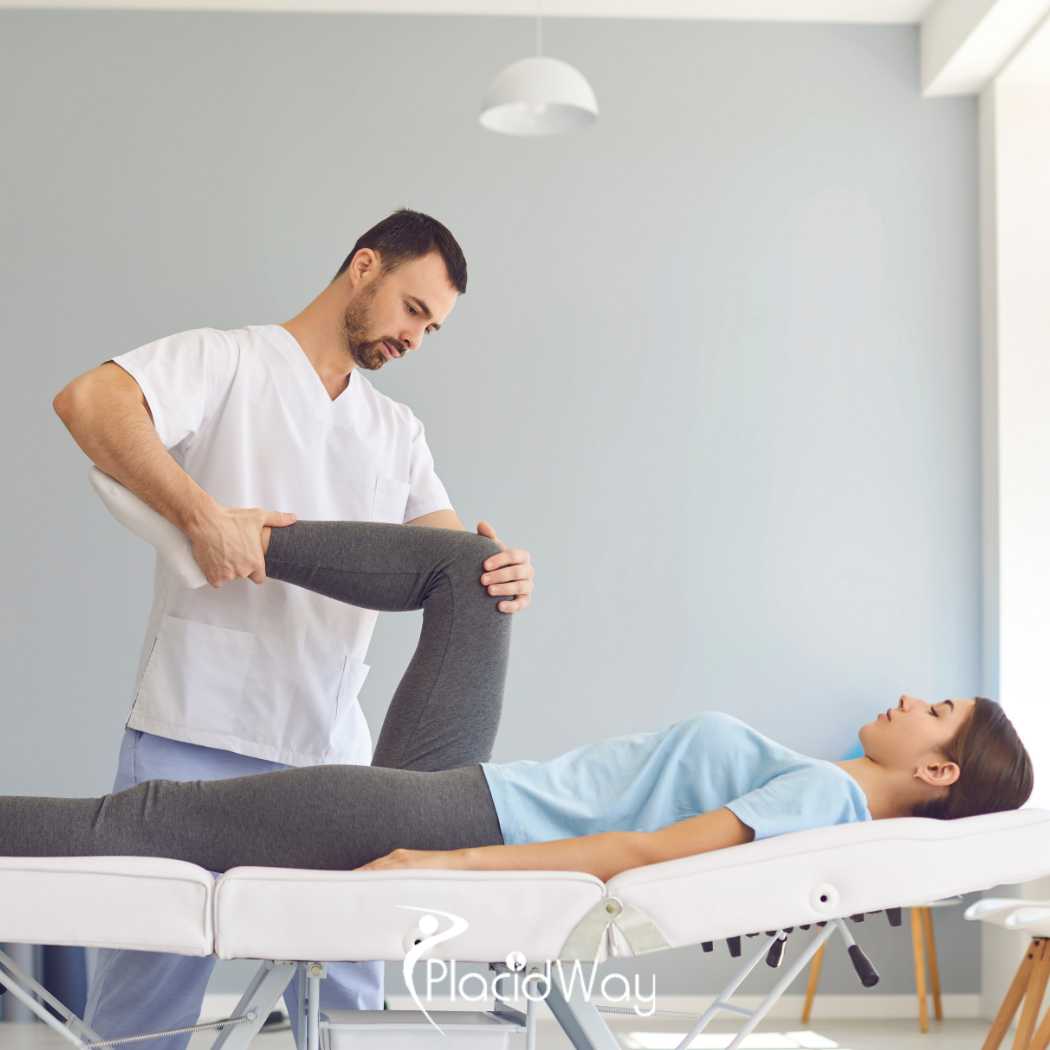
Recovery requires patience, dedication, and strict adherence to your surgeon's physical therapy protocols. While you will likely be encouraged to stand and take a few steps on the same day as your surgery, full recovery is a gradual process. Physical therapy is not optional; it is the cornerstone of regaining full mobility.
Understanding the standard healing milestones helps manage expectations and prevents you from overexerting yourself too early in the process.
| Timeframe | Clinical Process | Patient Activity Level |
|---|---|---|
| Days 1-3 | Initial wound healing and hospital monitoring. | Walking short distances with a walker; beginning basic leg exercises. |
| Weeks 1-2 | Soft tissue recovery at your hotel in Cancun. | Transitioning from walker to crutches or cane; daily physical therapy. |
| Weeks 3-6 | Bone integrating with the implant (at home). | Walking independently in most cases; resuming light daily activities. |
| Months 3-6 | Maximum muscular strength recovery. | Returning to normal low-impact activities like swimming or cycling. |
During the first few weeks, you may experience normal post-operative swelling and mild discomfort. Your medical team will prescribe appropriate pain management medication to keep you comfortable as you heal.
Safely Traveling Home After Orthopedic Care in Mexico
One of the most critical phases of medical tourism is the journey back home. Flying after major orthopedic surgery carries an increased risk of Deep Vein Thrombosis (DVT), a condition where blood clots form in the deep veins of the leg. To mitigate this risk, surgeons typically require patients to stay in Cancun for at least 10 to 14 days post-op.
You must receive final clearance from your doctor before booking your return flight. They will provide specific instructions to keep you safe during transit.
Flight Safety Precautions Post-Surgery
- Medication: Take prescribed blood thinners exactly as directed before and during your flight.
- Compression Garments: Wear medical-grade compression stockings to promote healthy blood flow.
- Movement: Request an aisle seat so you can easily stand up and walk the cabin every hour.
- Hydration: Drink plenty of water and avoid alcohol or caffeine during your travel day.
Arranging wheelchair assistance at the airport is highly recommended. It prevents unnecessary fatigue and protects your new joint from the stress of long security lines.
Understanding the Risks and Complications of Arthroplasty
All surgical procedures carry inherent risks, and joint replacement is no exception. While major complications are rare when the procedure is performed by qualified specialists, you must be fully informed before giving consent. Traveling abroad does not change the biological risks of surgery, but it does require extra logistical care if a complication occurs.
Your surgeon will discuss your specific risk profile during the consultation. Common surgical risks include infection, blood clots, and joint dislocation.
Leg length discrepancy is another potential issue, though advanced imaging helps surgeons minimize this risk. Make sure your chosen clinic provides a clear protocol detailing how they manage unexpected medical emergencies or required revision surgeries.
Frequently Asked Questions About Joint Replacement in Mexico
Navigating the details of international healthcare can bring up many questions. Below are the most common inquiries from patients researching orthopedic surgery in Cancun.
How long do I need to stay in Cancun for hip replacement surgery?
You will typically need to stay in Cancun for 10 to 14 days. This includes pre-operative testing, a 2 to 3-night hospital stay, and a crucial post-operative recovery period to ensure you are safe to fly without high risk of blood clots.
What type of implants do orthopedic surgeons in Mexico use?
Reputable Mexican hospitals use the exact same globally recognized, FDA-approved implant brands used in the US, such as Zimmer Biomet, Stryker, and Johnson & Johnson (DePuy). Always ask your surgeon to confirm the brand during your consultation.
Is it safe to travel to Cancun for medical procedures?
Yes, thousands of international patients safely receive care in Cancun every year. Ensure you choose a COFEPRIS-licensed hospital and a board-certified surgeon. Stick to designated tourist and medical zones for maximum safety.
Will my local doctor provide aftercare when I return home?
In most cases, yes. However, you must proactively coordinate with your local primary care physician or physical therapist before you travel. Bring all surgical reports and imaging back home with you to ensure continuity of care.
Do medical tourism clinics offer physical therapy in Cancun?
Yes, most comprehensive orthopedic packages include early-stage physical therapy during your recovery stay. A therapist will visit you at the hospital and often at your recovery hotel to teach you essential mobility exercises.
Does US or Canadian health insurance cover surgery in Mexico?
Standard US Medicare and most provincial Canadian health plans do not cover elective treatments abroad. However, some private employer-sponsored plans may offer coverage. Most patients pay out-of-pocket due to the significantly lower costs.
What happens if there is a complication during surgery?
Certified hospitals are equipped with Intensive Care Units to handle emergencies. Before booking, discuss the clinic's revision policy and consider purchasing specialized medical complications insurance for travelers.
Can I have both hips replaced at the same time in Mexico?
Bilateral hip replacement is sometimes performed, but it depends strictly on your age, cardiovascular health, and the surgeon's assessment. It carries a higher risk profile and requires a longer, more intensive recovery period.
How do I communicate if I do not speak Spanish?
Language is rarely an issue in top medical facilities. Surgeons catering to medical tourists are generally fluent in English, and the clinics provide bilingual patient coordinators to assist you throughout your entire stay.
What should I pack for my orthopedic trip to Cancun?
Pack loose-fitting shorts, slip-on shoes with good grip, medical records, required prescriptions, and a reacher/grabber tool. Do not forget necessary compression socks for your flight home.
Ready to Take the Next Step Toward Pain-Free Mobility?
PlacidWay can help you compare highly qualified providers, understand your treatment costs, and schedule consultations with board-certified surgeons in Cancun. We empower you to make safe, informed healthcare decisions.
Disclaimer
Disclaimer: This information is for educational purposes only and does not replace professional medical advice. Always consult a qualified healthcare provider before making medical decisions.
References
- Outcomes of Total Hip Arthroplasty – National Center for Biotechnology Information (NCBI)
- Medical Tourism Guidance – Centers for Disease Control and Prevention (CDC)
- Hip Implants: What You Need to Know – U.S. Food and Drug Administration (FDA)
- 2024 Annual Report on Arthroplasty Outcomes – American Joint Replacement Registry (AJRR)
- Total Hip Replacement Patient Guide – American Academy of Orthopaedic Surgeons (AAOS)
- Osteoarthritis Fact Sheet – World Health Organization (WHO)
- Federal Commission for the Protection against Sanitary Risk – COFEPRIS (Ministry of Health, Mexico)
























Share this listing