



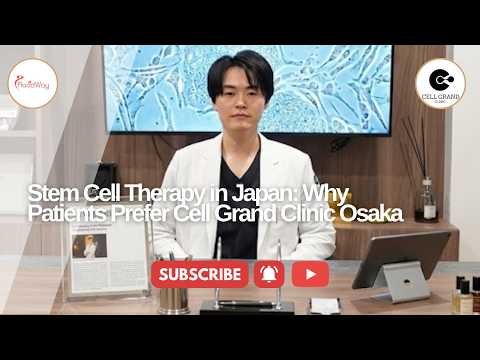
Cell Grand Clinic
Location: Osaka, Japan
Cell Grand Clinic provides autologous stem cell consultation and cellular treatments, adhering to national processing guidelines to deliver individualized care for international patients.

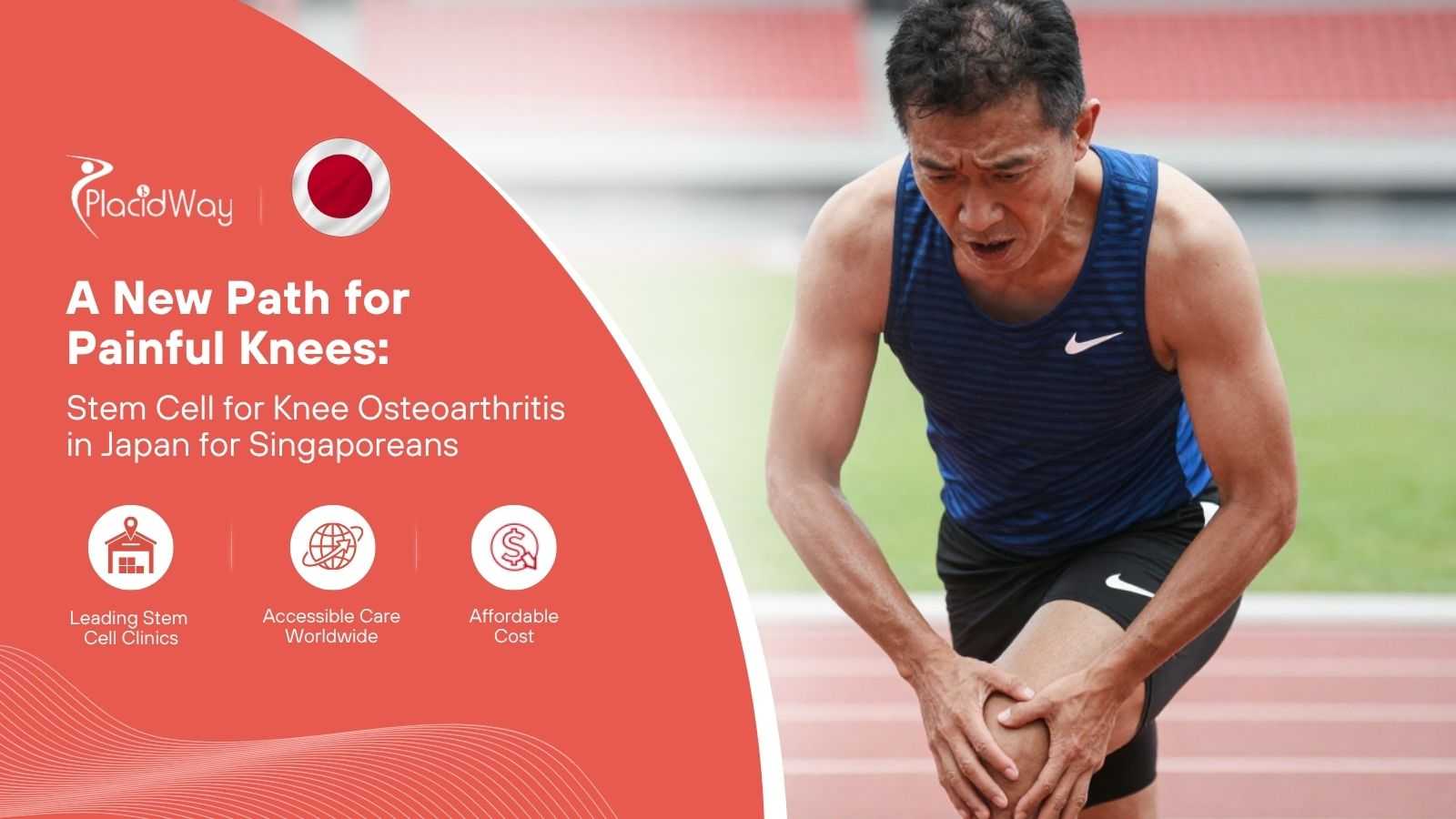
For many Singaporeans, knee osteoarthritis (OA) brings daily challenges—from difficulty walking and climbing stairs to reduced exercise capacity and persistent pain despite conservative treatment. Japan has emerged as a premier international destination for those researching advanced regenerative medicine options. It is important to establish that stem cell therapy is an emerging, investigational approach, not a guaranteed cartilage-regenerating cure. Treatment suitability depends on individual diagnosis, OA severity, previous therapies, overall health, and thorough physician assessment. Singaporeans looking beyond conventional options can explore Japan while carefully evaluating the evidence, regulatory framework, and clinical credentials.
| Key Aspect | Summary Details |
|---|---|
| Target Condition | Mild to Moderate Knee Osteoarthritis (Knee OA) |
| Destination Advantage | Japan (Regulated via Act on the Safety of Regenerative Medicine & PMD Act) |
| Primary Cell Types | Autologous Mesenchymal Stem Cells (Adipose or Bone Marrow derived) |
| Administration Route | Intra-articular Injection into the affected joint space |
| Recommended Travel Stay | 3 to 7 days (consultation, harvesting/injection, and immediate observation) |
| Current Clinical Status | Investigational regenerative therapy; targets joint inflammation & pain |
| Key Patient Priority | Verifying clinic license, cell culture standards, and follow-up care plans |
Knee osteoarthritis is a progressive degenerative joint condition characterized by the gradual breakdown of articular cartilage, changes in subchondral bone, and chronic inflammation of the synovium. As protective cartilage wears away, friction increases, leading to common symptoms such as persistent knee pain, morning stiffness, swelling, joint instability, and significantly reduced mobility. Over time, these physical limitations progressively diminish quality of life, making everyday activities like climbing stairs or walking long distances difficult.
Global Osteoarthritis Impact at a Glance
Osteoarthritis affected approximately 528 million people worldwide in 2019, with the knee being the most commonly affected joint. Source: World Health Organization (WHO).
Managing knee OA usually involves a multi-stage clinical journey. Stem Cell Therapy for Knee Osteoarthritis in Japan is considered an investigational adjunctive option rather than a direct replacement for foundational care.
Knee Osteoarthritis Care Continuum
The clinical management journey for knee osteoarthritis. Sources: World Health Organization (WHO) & American Academy of Orthopaedic Surgeons (AAOS).
Weight management, low-impact exercise, quadriceps strengthening, and physical therapy represent crucial non-pharmacological conservative foundations.
Nonsteroidal anti-inflammatory drugs (NSAIDs) and oral analgesics are often prescribed for short-term symptom relief and flare-up control.
Corticosteroid injections provide rapid inflammatory relief, while Hyaluronic Acid (HA) aims to provide joint lubrication in select patients.
Total or partial knee arthroplasty remains the established option when conservative options fail and functional impairment is severe.
For Singaporean patients seeking regenerative medical consultations in Japan, verifying facility authorization, medical team credentials, and cell laboratory standards is essential. Below are featured clinics in Japan offering specialized care:
Location: Osaka, Japan
Cell Grand Clinic provides autologous stem cell consultation and cellular treatments, adhering to national processing guidelines to deliver individualized care for international patients.

Location: Tokyo, Japan
Helene Stem Cell Clinic in Tokyo offers regenerative medicine programs focused on stem cell therapies, providing comprehensive medical evaluations and support services for overseas travelers.
Stem cells are undifferentiated biological cells capable of self-renewal and differentiating into specialized cell types. Unlike standard pharmaceuticals that temporarily mask pain, stem-cell-based treatments target joint environment signaling.
Research Pathway: MSC Therapy for Knee Osteoarthritis
Research into mesenchymal stem cell-based therapies for knee osteoarthritis evaluates potential effects on pain, function, and joint-related outcomes. Evidence varies according to cell source, preparation, protocol, and patient characteristics. Source: PubMed, 2026 systematic review and meta-analysis.
A 2026 systematic review and meta-analysis of 28 randomized controlled trials evaluating MSC therapy for knee OA reported improvements in several pain and functional outcomes compared to control groups. However, researchers emphasized substantial heterogeneity across published studies—attributable to variations in cell sources (adipose vs. bone marrow), cell preparation techniques, dosage, administration schedules, and underlying patient characteristics.
Japan is recognized globally for its structured legal and clinical framework for cell-based therapies, governing treatments through specific legislation rather than leaving them in unregulated commercial spaces.
Japan's Regenerative Medicine Regulatory Oversight
Japan regulates regenerative medicine through dedicated legal frameworks governing clinical practice and regenerative medical products. Sources: Pharmaceuticals and Medical Devices Agency (PMDA) and Ministry of Health, Labour and Welfare (MHLW) Japan.
The existence of Japan's regulatory framework does not mean every stem cell therapy offered is guaranteed to be effective. It establishes safety and processing standards. Patients must still independently verify the specific therapy, cell source, clinic authorization class, and clinical evidence.
Comparing healthcare policies helps explain why Singaporean patients research travel options for knee OA treatments:
| Consideration | Singapore Context | Japan Context |
|---|---|---|
| Standard OA Treatments | Established (Physiotherapy, oral meds, HA/steroid injections, total knee replacement) | Established (Physiotherapy, joint injections, surgical care) |
| Regenerative Medicine Framework | Developing; MOH stated in Feb 2026 that regenerative knee OA injections are not subsidized due to insufficient evidence of clinical effectiveness | Dedicated regulatory frameworks (Act on the Safety of Regenerative Medicine & PMD Act) |
| Research & Clinical Access | Active institutional research; clinical access limited outside clinical trials | Major national research ecosystem with private and clinical treatment pathways |
| Patient Considerations | Local continuity of care and public subsidy support for proven treatments | Requires travel, out-of-pocket costs, and arranging post-travel follow-up in Singapore |
Note: Singapore's MOH position aligns with high-quality international guidelines regarding subsidies for experimental joint injections.
Online resources cannot determine medical eligibility. Patients who may wish to discuss regenerative medicine options with a qualified physician typically include those who:
Patients with severe bone-on-bone structural damage (Grade 4 Kellgren-Lawrence OA), significant joint deformity, severe ligamentous instability, active joint infection, or advanced co-morbidities may not be suitable candidates. For these individuals, surgical joint replacement often remains the most appropriate standard of care.
| Step | Phase Name | Action Items for Singaporean Patients |
|---|---|---|
| 1 | Medical Records Review | Submit recent knee MRI/X-rays, medical history, and treatment reports for preliminary review. |
| 2 | Virtual Consultation | Consult with Japanese physician via telehealth to confirm preliminary candidacy and discuss protocols. |
| 3 | Treatment Planning | Confirm cell sources, culture timelines, administration method, costs, and travel dates. |
| 4 | Procedure in Japan | In-clinic evaluation, cell harvesting/preparation, intra-articular injection, and immediate observation. |
| 5 | Recovery & Follow-Up | Post-procedure rest, return to Singapore, and follow-up monitoring with treating physicians. |
Rather than relying on fixed online prices, patients should understand what variables shape overall costs:
Always request a written, itemized quotation prior to traveling. Ensure the quotation covers: Consultation + Diagnostics + Cell Culturing/Preparation + Procedure Fees + Follow-Up Reports + Translation Services.
Confirm the specific plan under which the clinic operates under the Act on the Safety of Regenerative Medicine.
Inquire whether tissue is autologous (from patient) or donor-derived, and inspect lab certification.
Ask for published trial data supporting the specific cellular protocol for knee osteoarthritis.
Reputable clinics discuss risks (e.g., pain, infection, variable efficacy) rather than promising cures.
Understanding the differences between Knee Osteoarthritis Treatment in Japan and surgical joint replacement helps set realistic expectations:
| Factor | Stem Cell-Based Therapy | Total Knee Replacement |
|---|---|---|
| Treatment Type | Regenerative / Injection-based approach | Major surgical joint resurfacing |
| Primary Goal | Modulate inflammation, improve pain & joint function | Replace damaged cartilage/bone with prosthetic joint |
| Evidence Level | Investigational / Heterogeneous clinical research | Established, highly proven long-term intervention |
| Invasiveness & Recovery | Minimally invasive; brief recovery period | Invasive surgery; multi-month physical rehabilitation |
| Suitability | Mild-to-moderate OA after clinical clearance | Severe, late-stage OA with functional disability |
AAOS maintains clinical practice guidelines for both non-surgical management and surgical management of knee OA.
Gather recent MRI/X-ray scans, compile medical reports, obtain pre-travel consultation, and confirm itemized costs.
Attend clinic consultations, undergo diagnostic reviews, receive treatment, and complete observation protocols.
Obtain official documentation in English, adhere to activity guidelines, and arrange follow-up care with your local doctor.
Yes, regenerative medicine is practiced within Japan's structured legal frameworks (such as the Act on the Safety of Regenerative Medicine), though eligibility depends on physician evaluation and treatment type.
No. Stem cell therapy should not be presented as a guaranteed cure or automatic cartilage regrowth procedure. It is an investigational approach aimed at reducing inflammation and supporting joint function.
In Singapore, MOH stated in February 2026 that regenerative injections for knee OA are not currently subsidized due to insufficient evidence of clinical effectiveness, aligning with international guidelines.
Published meta-analyses report improvements in pain and functional outcomes in trial settings, but results remain heterogeneous across protocols, cell sources, and patient groups.
Most trip itineraries require 3 to 7 days to cover initial consultations, processing, procedure execution, and post-injection observation.
Costs vary based on cell source, culture expansion, number of joints, and travel logistics. Patients should request written, itemized quotes directly from clinics.
Travel timing depends on the procedure type, joint resting recommendations, and physician approval following post-procedure evaluation.
Singaporean patients interested in exploring regenerative medicine in Japan can begin by reviewing their diagnosis and medical history with a qualified physician to determine whether this approach may be appropriate for their situation.
Request Medical Evaluation DetailsDisclaimer: This document is intended for educational purposes only and does not constitute formal medical advice. Stem cell therapy for knee osteoarthritis remains investigational in many contexts. Individual treatment responses vary based on disease severity and physiological factors. Consult qualified orthopedic specialists prior to making international travel or treatment decisions.
Watch in-depth videos covering everything from Stem Cell Therapy success stories to detailed procedure explanations. Learn what to expect and hear from real patients.
Stem Cell Therapy
Osaka, Japan
Cancer Treatment
Osaka, Japan
Cancer Treatment
Osaka, Japan
Stem Cell Therapy
Osaka, Japan
Discover the ultimate Stem Cell Therapy packages designed to meet your health and wellness goals. Choose the perfect fit for your journey.

Price starting from $5,000
Hyderabad, India

Price starting from $10,000
Tokyo, Japan

Price starting from $19,800
Osaka, Japan
.png)
Price starting from $10,000
Tokyo, Japan
Take a look at these interesting articles, stories and research that will help you learn more about Stem Cell Therapy.

We collaborate with internationally accredited hospitals and clinics to ensure the highest standards of safety, quality, and patient care.

Joint Commission International

International Organization for Standardization

COFEPRIS (Federal Commission for Sanitary Risk Protection - Mexico)

Turkey Ministry of Health

Dubai Healthcare City Authority (DHCC)

NABH (National Accreditation Board for Hospitals & Healthcare Providers - India)

Korea Ministry of Health & Welfare (MOHW)




Share this listing