



Cell Grand Clinic
Location: Osaka, Japan
Cell Grand Clinic is a premier center for regenerative medicine in Japan, specializing in autologous adipose-derived stem cell protocols for joint disorders and osteoarthritis management.

Knee osteoarthritis remains a leading cause of chronic pain, mobility loss, and functional decline worldwide. As traditional options often focus only on temporary pain management, interest in regenerative medicine in Japan has grown rapidly. When exploring knee osteoarthritis stem cell treatment in Japan, patients must evaluate peer-reviewed clinical evidence rather than marketing claims. This guide reviews the published case report from Cell Grand Clinic in Osaka, detailing a one-year clinical outcome for stem cell therapy for knee OA in Japan.

| Key Aspect | Clinical Details |
|---|---|
| Primary Indication | Kellgren-Lawrence Grade 3 Knee Osteoarthritis |
| Lead Institution | Cell Grand Clinic, Osaka, Japan |
| Lead Author | Dr. Yuichi Wakabayashi |
| Cell Type Used | Cultured autologous adipose-derived mesenchymal stem cells (AD-MSCs) |
| Administration Route | Intra-articular injection |
| Observation Period | 12-Month (1-Year) Clinical Follow-Up |
| Publication Journal | Cureus (Peer-Reviewed, 2026) |
Conventional treatment approaches for knee OA—such as oral NSAIDs, intra-articular corticosteroid injections, and physical therapy—primarily focus on temporary symptom management rather than targeting underlying physiological pathways. While joint replacement surgery provides definitive structural intervention for end-stage degeneration, many patients seek non-surgical alternatives to delay or prevent major surgery.
As demand grows for Stem Cell Therapy for Knee Osteoarthritis in Osaka Japan, distinguishing between anecdotal claims and verified clinical outcomes becomes paramount. Peer-reviewed medical publications offer transparent insight into the precise cell source, expansion protocols, dosage, patient baseline characteristics, and long-term follow-up results.
Global Osteoarthritis Prevalence & Surgical Burden (Per 100,000 Population)
Global knee osteoarthritis burden and increasing patient progression toward advanced therapies. Sources: World Health Organization (WHO) & OARSI (Osteoarthritis Research Society International).
When considering knee osteoarthritis stem cell treatment in Japan, reviewing facility accreditation, physician track records, and published case data is key:
Location: Osaka, Japan
Cell Grand Clinic is a premier center for regenerative medicine in Japan, specializing in autologous adipose-derived stem cell protocols for joint disorders and osteoarthritis management.

Specialty: Regenerative Medicine & Joint Care
Dr. Yuichi Wakabayashi leads clinical research and treatment applications at Cell Grand Clinic, authored the peer-reviewed 2026 Cureus publication on knee OA stem cell administration.
In a 2026 clinical publication, Dr. Yuichi Wakabayashi documented a one-year follow-up report evaluating the intra-articular administration of cultured autologous adipose-derived mesenchymal stem cells in a patient diagnosed with Kellgren-Lawrence Grade 3 knee osteoarthritis.
The case study evaluated a structured clinical intervention using specific cell handling and administration techniques:
Evaluated in a patient with Kellgren-Lawrence Grade 3 knee OA, indicating moderate-to-severe joint space narrowing and osteophyte formation.
Utilized the patient’s own adipose tissue (fat harvest), minimizing immunological reaction risks.
Cells were isolated and expanded in cell culture to achieve targeted therapeutic dosage prior to injection.
Followed the patient across a 1-year timeline to record functional durability, pain changes, and safety outcomes.
The publication documented progressive reductions in joint pain, stiffness, and discomfort during daily weight-bearing activities compared to baseline scores prior to treatment.
The patient demonstrated measurable improvements in walking distance, stair climbing capability, and overall range of motion throughout the 12-month evaluation period.
A 12-month observation period offers valuable perspective on outcome maintenance beyond short-term placebo effects, demonstrating sustained clinical benefit for the individual patient.
Understanding the boundary between single case reports and large-scale clinical trial evidence is essential for establishing realistic expectations:
Mesenchymal stem/stromal cells (MSCs) derived from adipose tissue possess immunomodulatory, anti-inflammatory, and paracrine signaling capabilities. When injected intra-articularly into an osteoarthritic knee joint, MSCs may release signaling factors such as cytokines and growth factors that can influence localized inflammation and the intra-articular environment.
Clinical Evidence Progression in Regenerative Orthopedics
This conceptual graphic illustrates the general progression toward greater research rigor across study designs. The line does not represent numerical treatment effectiveness, clinical outcomes, or a statistical score.
Represents moderate knee osteoarthritis characterized by multiple osteophytes, definite joint space narrowing, and mild subchondral sclerosis.
Grade 3 knees retain sufficient joint space and native cartilage compared to Grade 4 ("bone-on-bone"), making them key candidates for cellular research.
Detailed pre-treatment weight-bearing X-rays and high-resolution MRI scans are mandatory to confirm structural candidacy.
For international patients traveling for Knee Osteoarthritis Stem Cell Treatment in Japan, standard clinical pathways involve structured stages:
| Stage | Clinical & Tourism Steps | Details |
|---|---|---|
| 1. Remote Review | Medical Records & MRI Evaluation | Patients submit diagnostic imaging and history for physician review before traveling. |
| 2. In-Person Consult | Physical Exam in Osaka | Clinical evaluation at Cell Grand Clinic to confirm KL grade and target joint health. |
| 3. Tissue Harvest | Mini-Liposuction Procedure | Outpatient collection of abdominal subcutaneous fat under local anesthesia. |
| 4. Processing & Injection | Laboratory Expansion & Intra-articular Delivery | Stem cells are cultured in a specialized facility and injected into the knee joint. |
| 5. Follow-Up Care | 12-Month Telehealth Monitoring | Remote symptom tracking and outcome evaluations over the course of a year. |
Reflecting this commitment to transparency, Dr. Wakabayashi’s one-year outcome report on adipose-derived stem cell therapy for knee osteoarthritis was published in the peer-reviewed medical journal Cureus in 2026 (DOI: 10.7759/cureus.113830), adding independently verifiable clinical documentation to the clinic’s growing body of research.
Symptomatic Improvement Following Intra-articular Injection of Cultured Autologous Adipose-Derived Mesenchymal Stem Cells in Kellgren-Lawrence Grade 3 Knee Osteoarthritis: A Case Report With One-Year Follow-Up
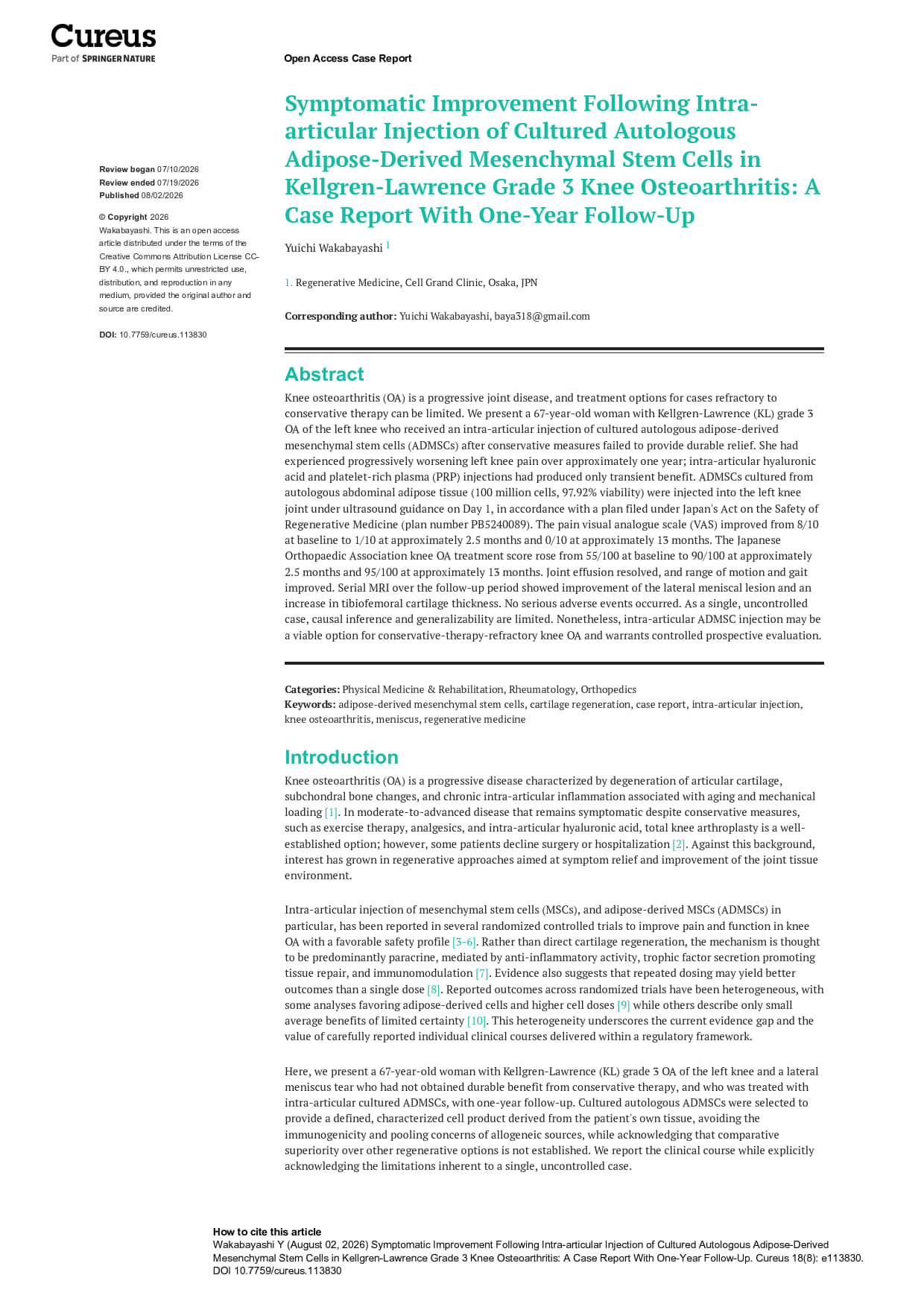 Page 1
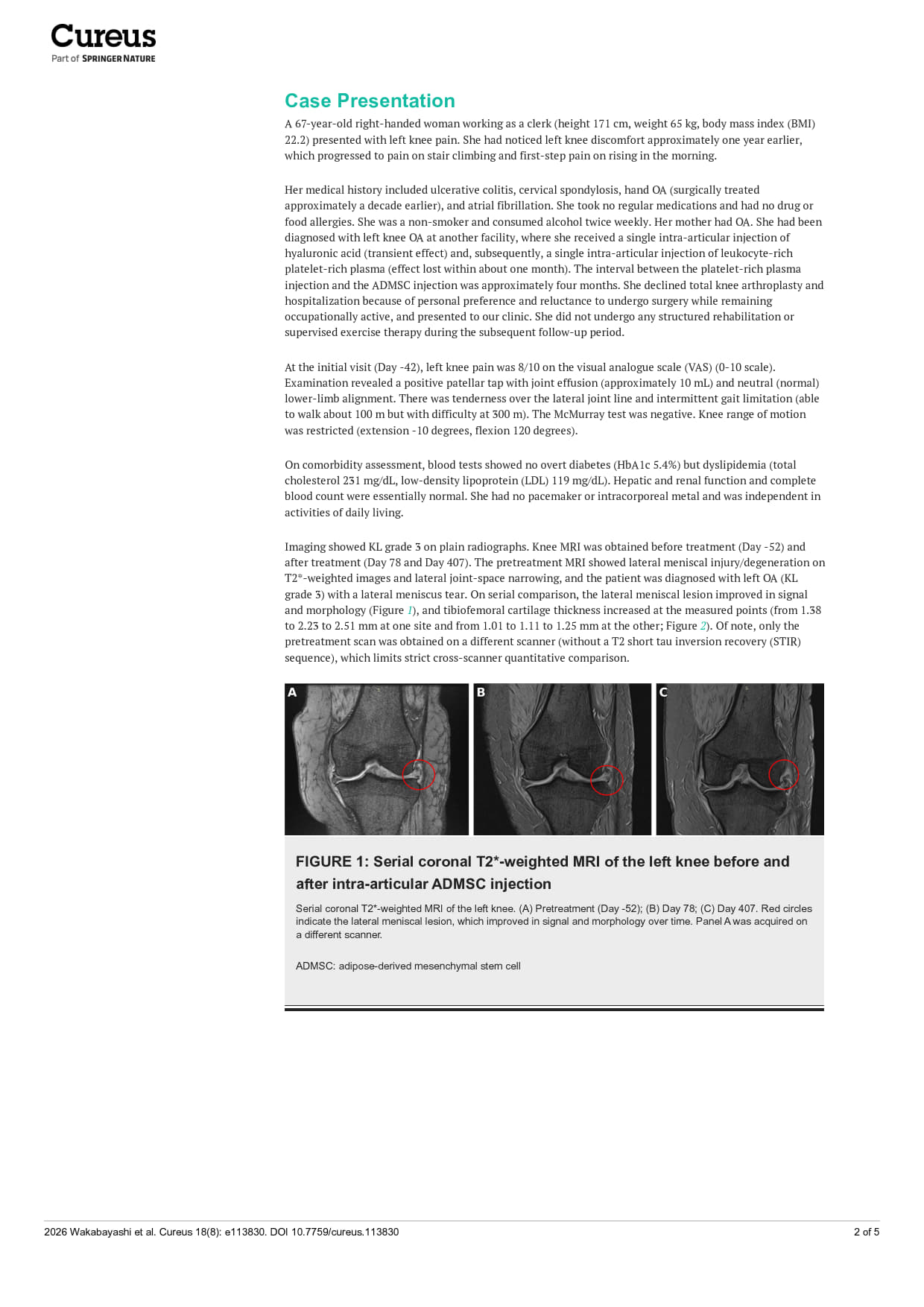 Page 2
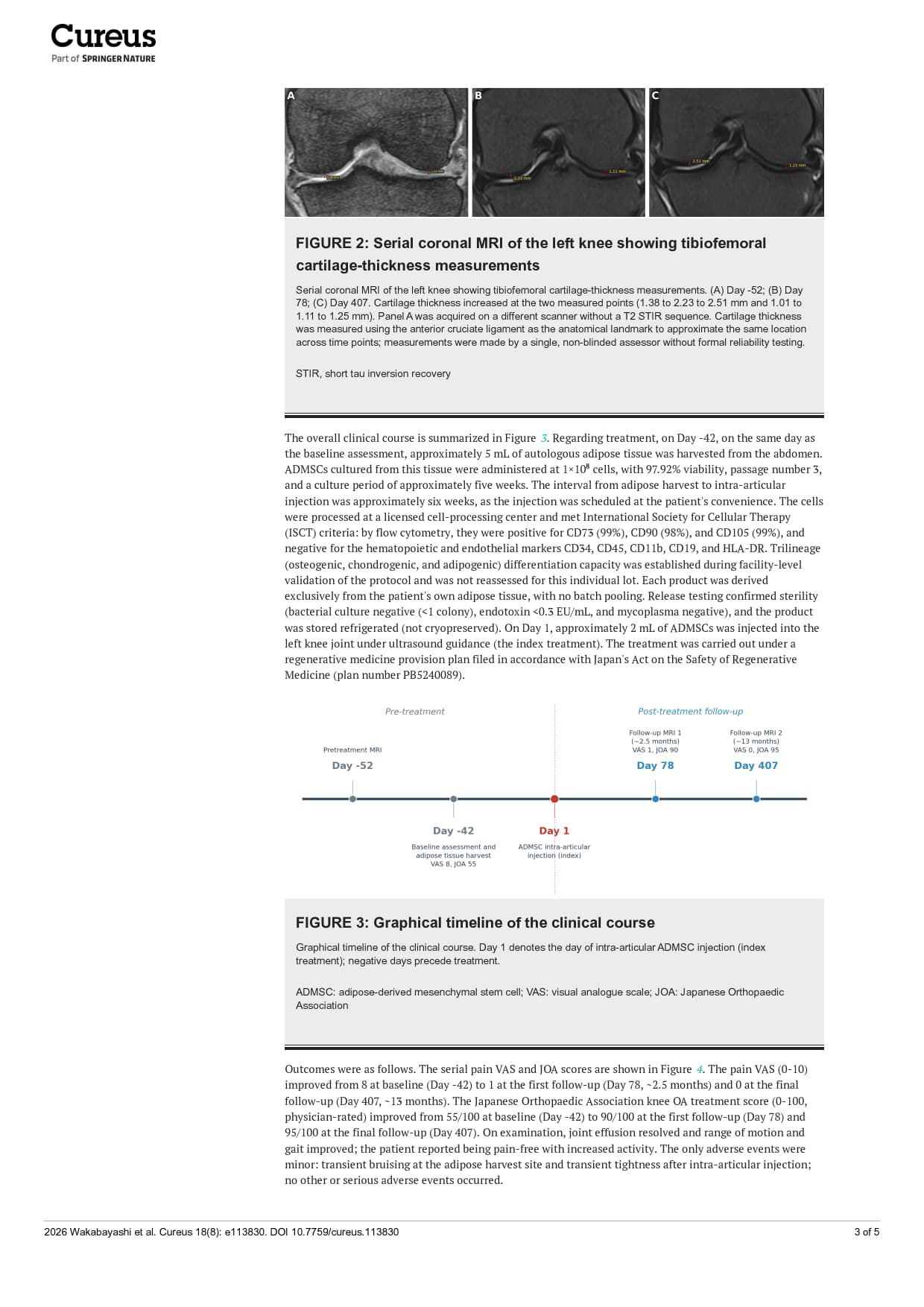 Page 3
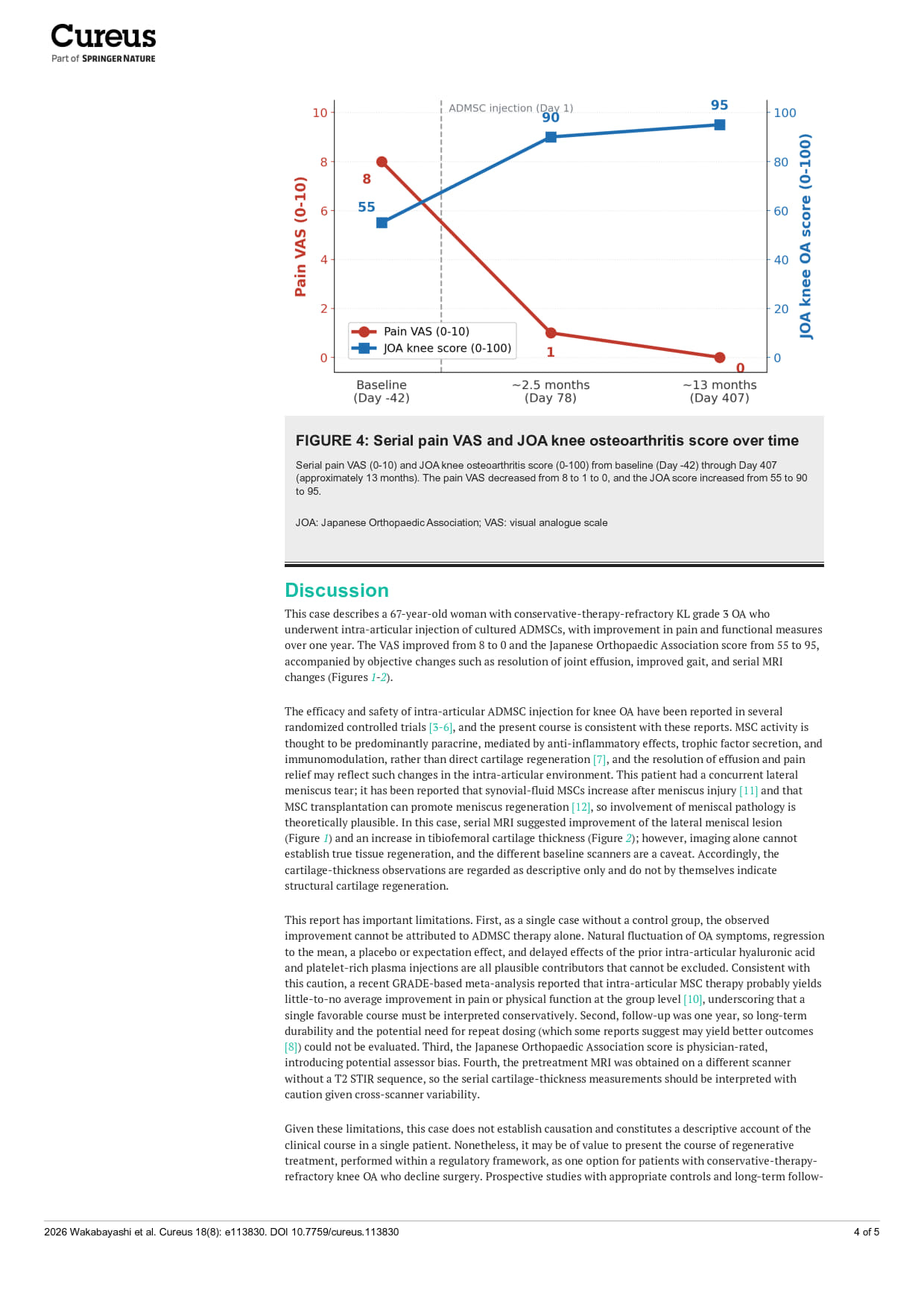 Page 4
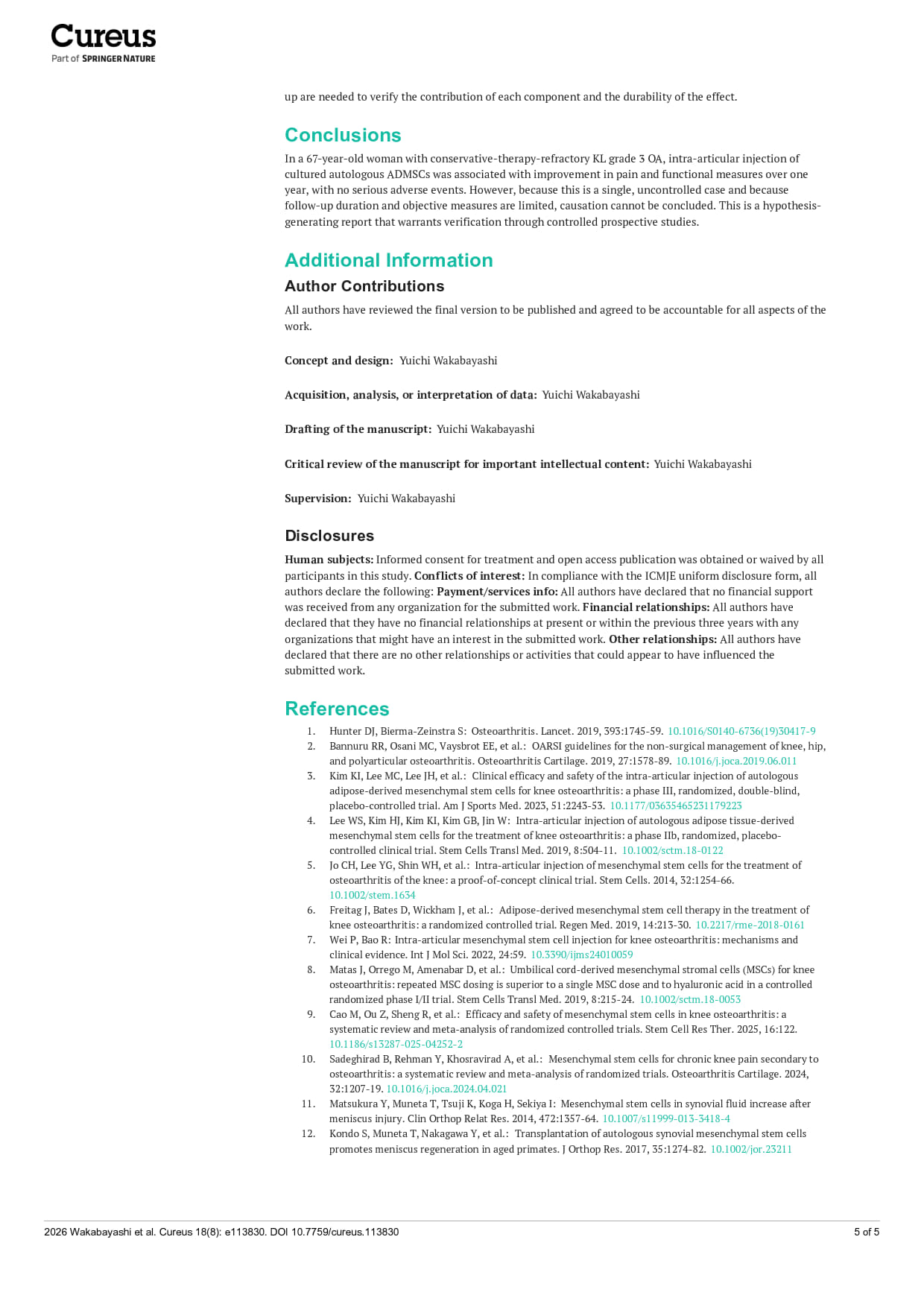 Page 5
Author: Yuichi Wakabayashi
Affiliation: Regenerative Medicine, Cell Grand Clinic, Osaka, Japan
Journal: Cureus
Year: 2026
Volume/Issue: 18(8)
Article: e113830
DOI: 10.7759/cureus.113830
It documents a one-year clinical follow-up evaluating the intra-articular administration of cultured autologous adipose-derived stem cells in a patient with Kellgren-Lawrence Grade 3 knee osteoarthritis.
The case report was authored by Dr. Yuichi Wakabayashi from Cell Grand Clinic in Osaka, Japan.
The treatment utilized cultured autologous adipose-derived mesenchymal stem cells (AD-MSCs) collected from the patient's own fat tissue.
The published case involved a patient classified with Kellgren-Lawrence Grade 3 knee osteoarthritis.
The patient was monitored over a full 12-month (one-year) follow-up observation period.
No. A single case report provides documented clinical evidence for an individual patient, but does not constitute definitive scientific proof of universal efficacy.
While MSCs exert anti-inflammatory and paracrine signaling effects that may support tissue health, complete cartilage restoration is not clinically guaranteed.
Evaluations rely on standardized patient-reported outcome measures (such as pain scales and functional mobility scores) alongside objective MRI and radiographic imaging.
Candidates typically include individuals with mild-to-moderate knee OA (KL Grades 2–3) who wish to explore non-surgical interventions after thorough orthopedic review.
Patients should confirm clinic safety licensing under Japan's Act on the Safety of Regenerative Medicine, review physician credentials, and evaluate published clinical evidence.
The Cureus publication from Cell Grand Clinic provides a verifiable clinical record of one-year outcomes. While a single case report serves as one valuable piece of evidence rather than definitive proof of efficacy, it reflects ongoing progress in regenerative medicine in Japan.
Contact Cell Grand ClinicDisclaimer: This article is provided strictly for educational purposes and does not constitute formal medical advice, diagnosis, or treatment recommendation. Stem cell therapies for knee osteoarthritis remain an evolving field of clinical investigation. Individual clinical outcomes vary significantly depending on patient age, baseline joint degeneration, and medical history. Patients considering medical travel to Japan must consult with qualified orthopedists and regenerative healthcare providers before undertaking treatment.
Watch in-depth videos covering everything from Stem Cell Therapy success stories to detailed procedure explanations. Learn what to expect and hear from real patients.
Cancer Treatment
Osaka, Japan
Stem Cell Therapy
Tokyo, Japan
Stem Cell Therapy
Osaka, Japan
Cancer Treatment
Osaka, Japan
Discover the ultimate Stem Cell Therapy packages designed to meet your health and wellness goals. Choose the perfect fit for your journey.

Price starting from $5,000
Hyderabad, India

Price starting from $10,000
Tokyo, Japan

Price starting from $19,800
Osaka, Japan

Price starting from $10,000
Tokyo, Japan
Take a look at these interesting articles, stories and research that will help you learn more about Stem Cell Therapy.

We collaborate with internationally accredited hospitals and clinics to ensure the highest standards of safety, quality, and patient care.

Joint Commission International

International Organization for Standardization

COFEPRIS (Federal Commission for Sanitary Risk Protection - Mexico)

Turkey Ministry of Health

Dubai Healthcare City Authority (DHCC)

NABH (National Accreditation Board for Hospitals & Healthcare Providers - India)

Korea Ministry of Health & Welfare (MOHW)






Share this listing