The Warehouse Floor He Could No Longer Walk: Chinedu Okafor’s Type 2 Diabetes Intensive Metabolic Management Story from Nigeria to India

Publish date: Aug 28, 2026 Medically reviewed by: Dr. Lokesh Tiwary on Aug 28, 2026 Author: Jacob Smith

Chinedu Okafor’s Type 2 Diabetes Intensive Metabolic Management Story

Patient Profile

Name: Chinedu Okafor

Age: 52

Condition: Type 2 diabetes with insulin resistance and early complications

Treatment: Intensive diabetes management, endocrine assessment, nutrition support and medication optimization

Destination: Mumbai, India

Journey at a Glance

Main problems: Persistent hyperglycemia (fasting glucose 150 mg/dL) despite oral medications; Neuropathic pain (tingling and numbness in the feet and hands); Frequent urinary tract infections and yeast infections; Blurred vision or early signs of diabetic retinopathy

Previous care: Oral antidiabetic medications including metformin, sulfonylureas and DPP-4 inhibitors; Insulin initiation and intensification; Consultations with available public-sector doctors, with limited access to specialized endocrinology care

Travel driver: Access to specialized endocrinology expertise and comprehensive diabetes management that was difficult to obtain locally

Treatment explored: Intensive diabetes management, endocrine assessment, nutrition support and medication optimization

Personal goal: Improve glycemic control, reduce disruptive episodes and protect long-term organ health.

You stopped buying the leather shoes that pinch your toes.

You started memorizing where the bathrooms are in every building you visit.

You learned to ignore the dull tingling in your left foot.

You accepted that waking up three times a night is just how you sleep now.

You quietly upgraded your reading glasses twice this year.

You stopped planning long drives.

You started keeping sugary mints in your glove compartment.

You told your colleagues to start the morning meeting without you.

"I just need to catch my breath."

"The traffic was completely at a standstill today."

"I'm fine, just fighting a small bug."

Your professional world has quietly become smaller.

The hardest part is not the daily injections or the cost of the pharmacy bills, but the waiting for a complication you feel is inevitable.

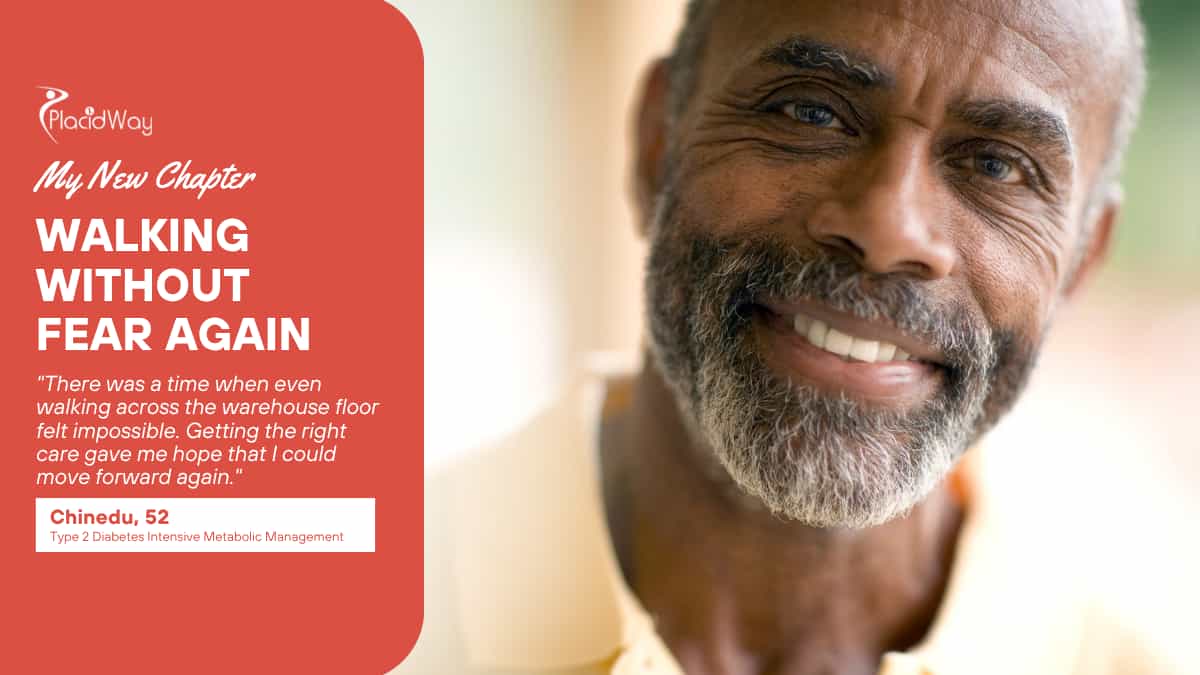
We should introduce you to Chinedu Okafor.

Chinedu Okafor is not a real PlacidWay patient.

He is a fictional composite constructed entirely from the realities, medical files, and late-night questions of diabetic patients across East and West Africa.

He is fifty-two years old and manages a regional logistics firm in Lagos.

Before the fatigue set in, he walked his warehouse floor every morning, played tennis on Sundays, and never thought twice about what was on his plate.

Now, he grips the handrail tightly when climbing the stairs to his office.

He squints at spreadsheets until his temples throb.

He masks his exhaustion behind a closed office door.

The escalation was slow enough to ignore.

He blamed his blurry vision on the glare of his computer screen.

He blamed his fatigue on the stress of the quarterly shipping quotas.

Dieting.

Fasting.

Bitter leaf extracts.

Metformin.

Sulfonylureas.

More Metformin.

Basal insulin.

Standard clinical management for Type 2 diabetes globally begins with lifestyle modification and oral hypoglycemic agents, escalating to insulin therapy only when pancreatic beta-cell function declines to a point where glycemic targets can no longer be met.

His doctor looked at his latest HbA1c result of 9.2% and delivered the verdict:

"We need to aggressively increase your daily units."

When?

The system works exactly as it is resourced to work.

The African continent is experiencing the highest proportional increase in diabetes globally, yet access to specialized endocrinology remains severely constrained, with many nations operating with fewer than one specialist per million citizens.

But Chinedu Okafor doesn't experience the healthcare system as a continental statistic.

He experiences it as a four-month wait to see the only private endocrinologist in his district.

He experiences it as pharmacy that routinely stocks out of the specific long-acting insulin pen he relies on.

"We might get a shipment by next Thursday."

He experiences it as a fifteen-minute consultation where his dietary habits are criticized but never strategically retrained.

"You just need to try much harder, Chinedu Okafor."

He has already tried to be patient.

There is a persistent assumption that patients who look abroad for care are simply impulsive consumers looking for a quick fix.

Chinedu Okafor is the exact opposite of impulsive.

He has spent an entire decade complying with every directive his local clinic issued.

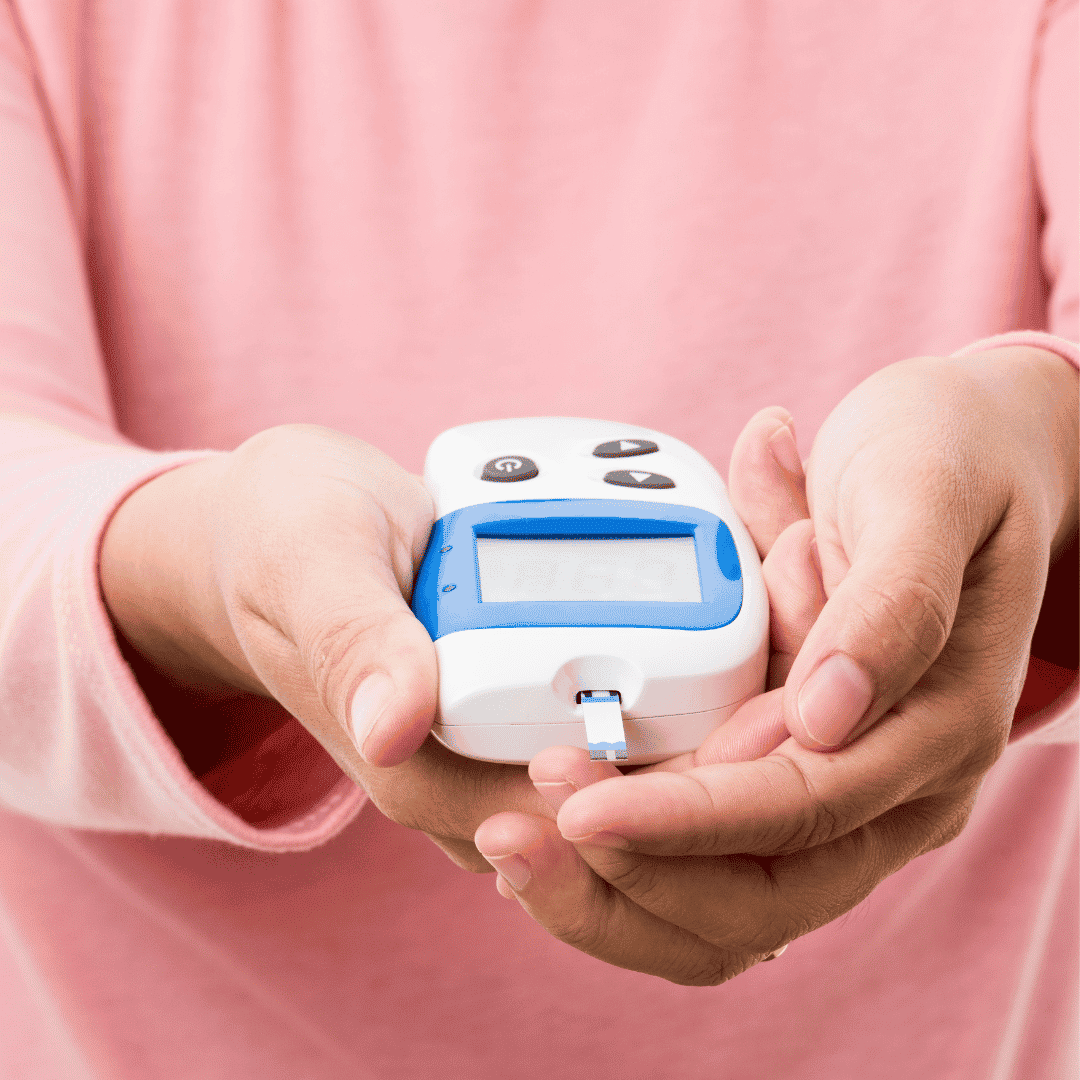
He has meticulously logged his morning fasting sugars in a small blue notebook.

He has endured the rising costs of his prescriptions as inflation ate into his disposable income.

"I am doing everything they asked."

"Why is my body still failing?"

For ten years, his operating question was simple:

Can I tolerate this?

Now, as the numbness in his feet creeps upward, the question has decisively shifted:

How much of my life am I prepared to organise around it?

The nearer alternative is not always a solution.

There are highly qualified private specialists in Lagos, Abuja, and Nairobi.

Chinedu Okafor knows they exist because he has paid out-of-pocket to sit in their waiting rooms.

But paying for a premium consultation does not magically generate a multidisciplinary metabolic team where none exists.

The domestic private sector often provides better waiting rooms and more polite receptionists, but it relies on the exact same fragmented diagnostic infrastructure.

He sits at the kitchen table with his wife, Grace, looking at a stack of private clinic receipts.

"We can afford the private doctors, Chinedu Okafor."

"But we cannot afford this lack of progress."

It comes down to this:

Proximity does not equal capability.

He isn't searching for India yet.

His late-night internet searches begin in the dark, driven by symptoms rather than geography.

Why is my fasting blood sugar high despite insulin?
Early signs of diabetic neuropathy in feet
Intensive diabetes reversal programs near me
Cost of metabolic syndrome treatment abroad
Best endocrinology centers in India for Type 2 diabetes

The search results repeatedly highlight specialized metabolic and bariatric centers in Mumbai, Delhi, and Bangalore.

His initial reaction is entirely skeptical, grounded in a lifetime of protecting his family's finances.

"I'm not going abroad just because something is cheaper."

His instinct is correct.

Price should not answer a complex medical question.

Why does Mumbai keep appearing in his research?

The structural reality is that major Indian metropolitan centers have spent the last two decades building high-volume, hyper-specialized clinical ecosystems.

While many African health systems are still working to retain their skilled workforce amid heavy migration, destinations like Mumbai possess a staggering density of board-certified endocrinologists, dietitians, and vascular specialists.

But Chinedu Okafor must make a critical intellectual pivot.

The question is never whether India is a good country for medical care.

Countries do not practice medicine.

Specific endocrinologists do.

Specific clinical teams do.

Specific accredited hospitals do.

Official guidance explicitly advises patients travelling abroad for healthcare to thoroughly research the specific facility and clinician, rather than relying on the general reputation of the destination.

His first practical question was inevitable.

An indicative baseline cost for a comprehensive two-week intensive metabolic evaluation and diabetes management program in India commonly varies between USD 2,500–4,500, though this fluctuates based on the facility, the need for continuous glucose monitoring technology, and any required microvascular interventions.

He remembers the advice his father gave him about doing business.

"Never buy a price, always buy the inventory."

"What exactly am I getting?"

Does that fee include my initial vascular screening?
Are the retinal exams priced separately?
Does it cover the consultation with a specialized nephrologist?
Who pays for the continuous glucose monitor placement?
Are the newer generation medications included in the discharge pharmacy bill?
Does this cover the daily meetings with the clinical dietitian?
Will I be charged extra for nerve conduction studies?
Is the airport transfer organized by the hospital or left to me?
What happens if they discover an urgent cardiac issue during screening?
Does this package provide remote follow-up consultations once I am back in Lagos?
How many follow-up calls are actually included?
Are translations of my medical files into English an extra fee?

The advertised number is only the beginning of the conversation.

What does intensive metabolic management actually involve?

This is not simply a matter of receiving a new prescription.

Intensive diabetes management requires an aggressive, multi-disciplinary reset of the patient's metabolic baseline, often utilizing insulin pumps or newer agents like GLP-1 agonists to achieve tight glycemic targets, while simultaneously retraining nutritional behavior to sustain those targets long-term.

It is a complete forensic audit of the patient's endocrine system.

"How do I actually manage the logistics of doing this abroad?"

The part the brochures rarely put on the front page.

Medical travel is a logistical marathon wrapped in a clinical procedure.

International regulatory environments regarding medical visas, acceptable travel insurance, and continuity of care documentation vary significantly between sending and receiving nations, and this variation itself is the most crucial lesson for a traveling patient.

This constraint must be a central part of your plan before committing to any international travel, not a detail you figure out upon arrival.

"Wait. Does that mean I have to stay in a hotel while recovering?"

Possibly, depending on the intensity of your outpatient monitoring phase.

Will the hotel restaurant accommodate my strict new dietary requirements?

Who checks on me if my blood sugar drops dangerously low in the middle of the night?

How far is the recovery accommodation from the actual clinic?

Will I need to navigate Mumbai traffic every morning for blood tests?

Can my local pharmacist in Nigeria reliably source the specific medications prescribed in India?

Is the clinic's dietary plan adaptable to West African staple foods?

What happens when they tell me to avoid carbohydrates but my home culture revolves around yam and cassava?

How do I transport temperature-sensitive insulin on a twelve-hour flight back home?

Who translates the discharge summary so my local doctor actually understands it?

The reframe is harsh but necessary:

This is not tourism in any usual sense of the word.

Grace isn't just coming along for the ride.

The invisible second participant in this journey is the supporting family member.

Grace will be the one holding the medical folder in a foreign hospital corridor.

She will be the one keeping track of the complicated new pill schedule while Chinedu Okafor is overwhelmed by fatigue.

She will be the one negotiating with hotel staff to get boiled vegetables instead of fried foods.

Travelers embarking on medical journeys must ensure that accompanying companions have clear instructions, emergency contacts, and access to all medical history in case the primary patient is incapacitated.

They are a critical part of the clinical care system too.

Then comes the uncomfortable conversation about risk.

Traveling across multiple time zones with uncontrolled diabetes carries inherent risks, including deep vein thrombosis, exacerbation of foot ulcers, and severe hypoglycemic events in transit.

Chinedu Okafor learns to instantly distrust any clinic representative who uses certain phrases.

Completely safe. No risk at all. Guaranteed reversal. The absolute best care in the world.

True informed consent means understanding the specific failure states of the intervention, not just nodding along to the hoped-for outcome.

Chinedu Okafor's questions become sharply better.

He no longer asks if they can fix him.

He asks them how they handle it when things go wrong.

What is your specific protocol if I develop an infection while under your care?
How do you handle the transition of care back to my primary doctor in Lagos?
Do you have experience adapting your nutritional plans for West African patients?
Will I have direct access to the lead endocrinologist, or will I only see junior staff?
What complication rates do you currently track for international diabetic patients?
How often do patients fail your reversal protocol?
Who is legally responsible if I am prescribed a drug that is unavailable in my home country?
Do you require me to bring an escort?
What happens if my kidney function tests reveal I am not a candidate for your intensive program?
What specific medical presentation would make you tell me not to proceed with this journey?

Chinedu Okafor realizes a profound truth about seeking medical care abroad.

He does not only want a doctor willing to treat him.

He wants a clinician knowledgeable and ethical enough to be willing not to treat him if the risks outweigh the benefits.

Have I exhausted my options at home?

Before booking any flight, a patient must critically evaluate their domestic reality.

Many patients are unaware that they possess domestic rights to request secondary referrals, specialist escalations, or comprehensive case reviews within their own health systems before pursuing international alternatives.

Chinedu Okafor schedules one final appointment with his local physician to ask the questions he should have asked years ago.

Is there a multidisciplinary team anywhere in this city that I haven't been referred to?

Are there newer classes of medication available here that we haven't tried yet?

Can we arrange for continuous glucose monitoring locally?

If I travel to Mumbai and return with a new management plan, will you agree to coordinate my local follow-up?

What specific blood tests should I run here before I even consider leaving?

The principle of fairness requires clear vision.

International care should be compared with Chinedu Okafor's real domestic alternatives, not with a worst-case assumption about the local system.

The night before the decision.

The kitchen table is no longer covered in pharmacy receipts.

It is covered in printed emails from clinic coordinators in Mumbai.

It holds copies of his recent kidney function tests.

It holds a breakdown of flight costs and medical visa requirements.

It holds a written agreement from his local doctor in Lagos to manage his aftercare.

"Are we actually doing this, Chinedu Okafor?"

"I think we finally have enough facts to know if we should."

The weeks of obsessive research did not make them more afraid.

It made them dramatically more capable of deciding.

What Chinedu Okafor actually wants isn't a medical tour.

When his brother asked him why he was considering India, Chinedu Okafor gave the expected answer about specialist density and advanced medication.

But the real answer is entirely physical.

He wants to walk his youngest daughter down the aisle next year without relying on a cane.

He wants to sleep through the night without waking up covered in a cold sweat.

He wants to look at a spreadsheet without the numbers blurring into a gray smudge.

He wants to sit at a restaurant without mentally calculating the proximity of the nearest hospital.

Not an international flight. Not a heavily marketed transformation package. Not a continuous glucose monitor grafted to his arm. Not Mumbai.

Control.

And underneath that:

Dignity.

India might be the answer. It might not be.

You might decide that the disruption to your work life is too great.

You might find a local specialist who finally takes your metabolic plateau seriously.

You might realize that the financial cost of travel outweighs the immediate clinical benefit.

You might determine that your local support system is too fragile to leave behind.

You might discover that your specific microvascular complications disqualify you from traveling safely.

Or, you might verify the credentials of an intensive metabolic center, coordinate with your home physician, and board a flight to Mumbai with a meticulously documented plan.

Any of those can be an informed, intelligent decision.

The goal of examining medical travel is not to persuade you to pack a suitcase.

The goal is to ensure that frustration and exhaustion do not make the decision for you.

Where does this leave you?

Maybe you have stared at your fasting numbers and felt entirely defeated.

Maybe you have watched a parent suffer the amputations that poorly managed diabetes eventually demands.

Maybe you are tired of being told to simply "try harder" by a system that has no time to teach you how.

Maybe you are wondering if there is a different way to live the next twenty years of your life.

You do not need to decide today.

What exactly is happening to my metabolic baseline?

Why have oral medications stopped being effective?

Is intensive reversal protocol an option for my specific stage of the disease?

What are the clinical limitations of my local healthcare system?

If I seek specialized care abroad, who will coordinate my return?

What does total logistical planning actually require of my family?

Am I physically stable enough to tolerate this journey?

The shift in perspective is subtle but profound.

You are no longer just comparing prices.

You are comparing paths forward.

Hope isn't the promise that everything will be effortlessly fixed.

Hope is not a marketing brochure promising a guaranteed cure.

Hope is not a cheap airplane ticket.

Hope is not ignoring the very real risks of traveling with a chronic illness.

Hope is doing the rigorous, unglamorous work of gathering enough objective information to make a medical decision that finally feels like yours.

You can ask harder questions.

You can refuse to be rushed.

You can require transparent complication rates.

You can demand that your local and international doctors speak to one another.

You can own the terms of your own care.

You are capable of evaluating medical credentials. You are capable of asking difficult logistical questions. You are capable of demanding transparency from international coordinators. You are capable of protecting your own physical future. You are capable of saying no if the terms do not align with your safety.

Your question has fundamentally changed.

From "I suppose I'll just have to keep waiting." to:

"What other informed options do I have?"

PlacidWay — Your Way to Hope.

We help individuals navigate the complexity of global healthcare by providing the tools to explore options, compare international facilities, understand logistical realities, and prepare the right questions. We do not provide clinical advice or direct medical services.

For someone facing a difficult choice between prohibitive domestic waitlists and progressive health decline, looking abroad isn't a promise of a cure—it is one route worth understanding thoroughly.

Your Way to Hope.
Medical disclaimer

This article is strictly educational and does not recommend that any individual undertake intensive diabetes management or travel abroad for medical care. Individual clinical suitability, metabolic health, and surgical risk require direct professional assessment. The reader must consult their own independent clinician or primary care adviser, independently verify the credentials and current regulatory status of any foreign provider, and obtain appropriate travel and medical complication insurance before making any healthcare decisions.

The Warehouse Floor He Could No Longer Walk: Chinedu Okafor’s Type 2 Diabetes Intensive Metabolic Management Story from Nigeria to India

About Article

  • Treatment: Chronic Diseases
  • Country: India
  • Overview This educational overview follows Chinedu Okafor, a composite Nigerian patient exploring Type 2 Diabetes Care in Mumbai, India. It summarizes daily-life effects, previous care and why treatment abroad is being considered. Candidacy, safety, recovery and follow-up remain central to informed decision-making.

Trusted Medical Tourism Platform Since 2007

60+
Countries
2k+
Clinics
19.5k+
Reviews
2.5k+
Qualified Doctors
1.1M+
Patients Served Since 2007