
Better Breathing and Oxygenation: Whole-Lung Lavage in Saudi Arabia
A landmark pediatric case at King Faisal Specialist Hospital and Research Centre highlights advanced clinical expertise in treating Pulmonary Alveolar Proteinosis in Saudi Arabia. Through a specialized single-session bilateral whole-lung lavage procedure, a multidisciplinary medical team treated a 10-year-old girl with severe respiratory impairment caused by the accumulation of material in her lung air sacs. Discover how coordinated pediatric Lung Disease Treatment in Saudi Arabia, specialized procedural techniques, and intensive postoperative monitoring contributed to improved breathing, reduced oxygen requirements, and the patient's recovery.
Quick Summary: Pediatric Case Highlights
- Medical Institution: King Faisal Specialist Hospital and Research Centre (KFSHRC / KFSH) in Riyadh, Saudi Arabia.
- Patient Diagnosis: Pulmonary Alveolar Proteinosis (PAP), a rare condition characterized by abnormal protein and fat accumulation in the alveolar air sacs.
- Pre-Treatment Severity: Persistent dyspnea, severe fatigue, weight loss, mobility restrictions, and blood oxygen saturation dropping to 79% (normal range: 95%–100%).
- Surgical Intervention: Bilateral Whole-Lung Lavage in Saudi Arabia performed under general anesthesia during a single 9-hour treatment session.
- Clinical Outcome: Continuous oxygen requirement decreased dramatically from 4.5 L/min to 1.0 L/min, leading to hospital discharge in 5 days without complications.
Featured Healthcare Destination
King Faisal Specialist Hospital and Research Centre (KFSHRC)
Location: Riyadh, Saudi Arabia
KFSHRC Saudi Arabia is a tertiary healthcare center recognized globally for specialized pediatric pulmonary treatment in Saudi Arabia, surgical innovation, and advanced multidisciplinary patient care.
View Hospital ProfileA Child’s Journey Toward Better Breathing: Understanding the Medical Challenge
Respiratory health is essential to a child's overall growth, development, and daily activity. When severe disease affects the lungs, even simple actions like walking or talking become physically exhausting tasks. At King Faisal Specialist Hospital and Research Centre, medical teams routinely address complex pulmonary conditions requiring tertiary-level care and specialized clinical equipment.
This case involves a 10-year-old girl admitted to KFSHRC in Riyadh, Saudi Arabia, experiencing advanced pulmonary compromise. Her condition was marked by persistent breathlessness, physical debility, and a severe reduction in systemic blood oxygen levels that placed immense stress on her organs.
Oxygen Saturation Drop
Her blood oxygen level dropped to 79%, significantly below the normal physiological range of 95% to 100%.
Continuous Oxygen Support
The child required 4.5 liters per minute of supplemental oxygen prior to intervention to maintain minimal tissue oxygenation.
Severe Functional Impairment
Symptoms included severe fatigue, weight loss, persistent cough, and complete inability to walk short distances.
Understanding Pulmonary Alveolar Proteinosis in Saudi Arabia
Pulmonary Alveolar Proteinosis in Saudi Arabia is an extraordinarily rare lung disorder. Under normal conditions, microscopic air sacs (alveoli) facilitate the exchange of oxygen and carbon dioxide between the atmosphere and the bloodstream. In patients with PAP, the body's natural mechanism for clearing surfactant—a complex mixture of proteins and fats—becomes impaired.
As these lipoproteinaceous materials progressively accumulate within the alveoli, oxygen can no longer dissolve through the alveolar membrane. This leads to progressive respiratory failure, exercise intolerance, and severe hypoxemia.
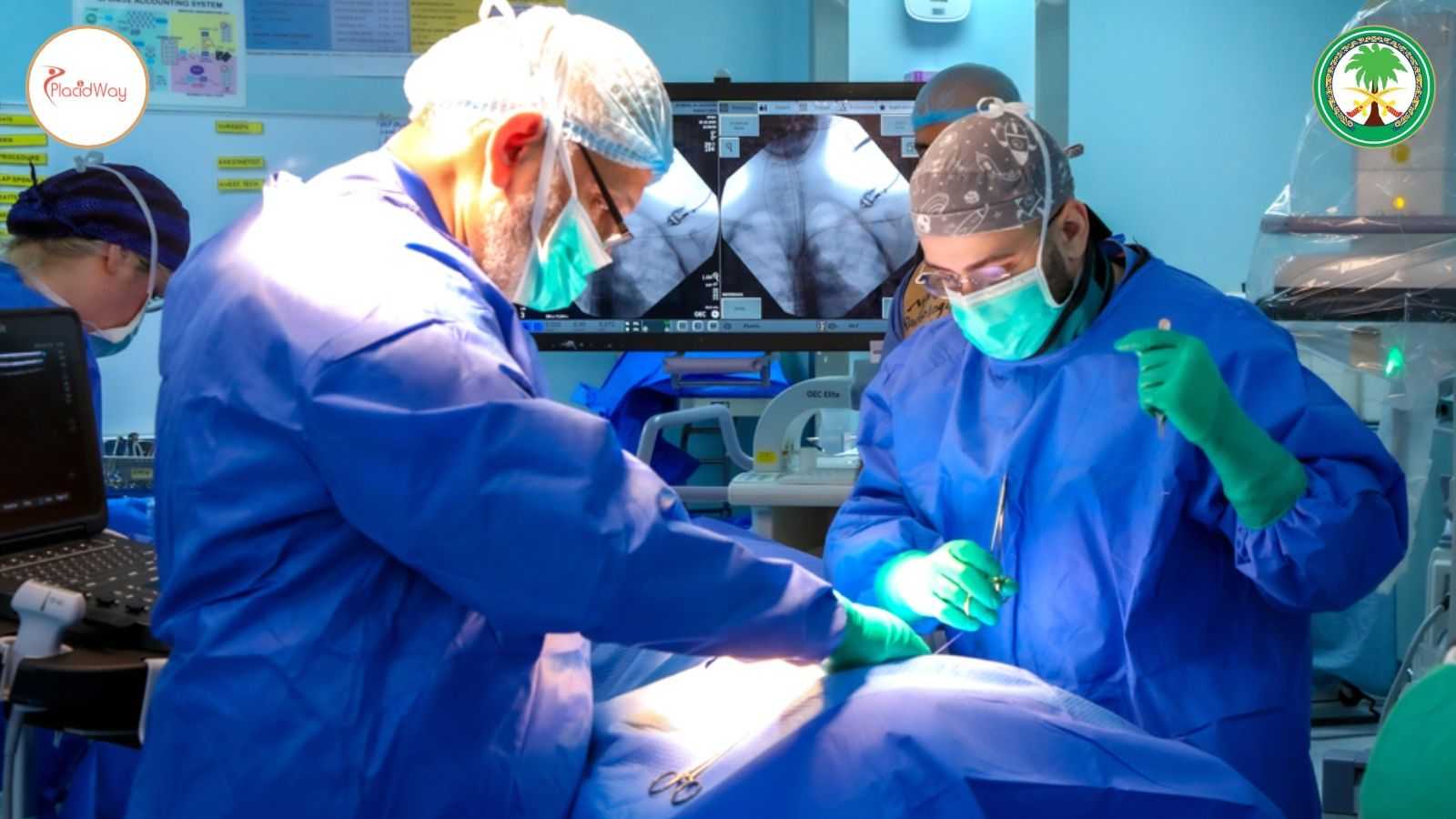
Common Symptoms of Severe Lung Disease in Children
When assessing severe pulmonary disease in pediatric patients, clinicians monitor several clinical markers:
| Symptom Category | Clinical Manifestation in Children |
|---|---|
| Respiratory Distress | Persistent cough, shortness of breath, and rapid or labored breathing. |
| Oxygenation Deficits | Low oxygen saturation levels (hypoxemia) requiring artificial oxygen support. |
| Systemic Impact | Persistent fatigue, weakness, weight loss, and reduced physical tolerance. |
| Secondary Risks | Increased susceptibility to recurrent respiratory infections and pulmonary complications. |
Why Bilateral Whole-Lung Lavage Was Considered for Treatment
For severe, symptomatic cases of Pulmonary Alveolar Proteinosis, pharmacological management alone is often insufficient to clear the dense lipoproteinaceous buildup. Bilateral Whole-Lung Lavage in Saudi Arabia is established as the gold standard clinical procedure for mechanical removal of these deposits.
This complex intervention physically flushes out the protein and lipid material from the alveolar spaces using sterile saline solution, immediately restoring the physical area necessary for gas exchange.
How Whole-Lung Lavage Removes Material From the Lungs
Alveolar Clearing
Washing out accumulated substances directly from the air sacs through mechanical irrigation.
Airflow Improvement
Unblocking affected bronchial branches and pulmonary regions to allow unobstructed air passage.
Gas Exchange Restoration
Supporting systemic blood oxygenation by restoring functional capillary-alveolar surface contact.
Clinical Recovery Progress: Oxygen Requirement Reduction
Following bilateral whole-lung lavage, the 10-year-old patient experienced a reduction in supplemental oxygen requirements. The reported figures below illustrate the change from before the procedure to the days following treatment at King Faisal Specialist Hospital and Research Centre (KFSHRC).
Before Treatment
Reported supplemental oxygen requirement before the procedure
Following Treatment
Reported oxygen requirement in the following days
Supplemental Oxygen Comparison
Oxygen flow rate · liters per minute (L/min)
Clinical observation: The reported oxygen flow requirement decreased by 3.5 L/min, from 4.5 to 1.0 L/min. This represents approximately a 78% reduction in supplemental oxygen flow, not a direct measurement of lung function.
Source: KFSHRC's published patient case report. The post-treatment figure refers to the following days, not necessarily the patient's oxygen requirement at discharge.
Key Steps in the Whole-Lung Lavage Procedure
Executing a whole-lung lavage in a pediatric patient requires extreme precision, careful ventilation control, and sophisticated monitoring. The surgical team at KFSHRC Saudi Arabia performed the comprehensive treatment over a single nine-hour session.
| Surgical Stage | Procedure Detail & Technique |
|---|---|
| 1. Anesthesia & Airway Isolation | General anesthesia was administered and a specialized double-lumen endotracheal tube was placed to isolate each lung independently. |
| 2. Single-Lung Ventilation | Ventilation was maintained continuously through one lung while the opposite lung was prepared for irrigation. |
| 3. Warm Saline Instillation | Sterile, body-temperature saline solution was infused in stages into the target lung to loosen protein deposits. |
| 4. Drainage & Repetition | The opaque fluid was systematically drained and replaced repeatedly until the lavage fluid ran nearly clear. |
| 5. Contralateral Lavage | The procedure was repeated on the second lung after ensuring stability, completing bilateral cleansing in one 9-hour session. |
Why Treating Both Lungs in One Session Is Clinically Significant
Historically, whole-lung lavage was often staged across two separate surgical sessions days or weeks apart to mitigate risks. Treating both lungs in a single nine-hour intervention minimizes the patient's exposure to multiple general anesthetics, accelerates immediate oxygenation recovery, and reduces total hospital stay.
The Role of Multidisciplinary Teams in Pediatric Respiratory Care
Performing high-complexity procedures on young patients requires seamless coordination among multiple specialized departments:
Pediatric Pulmonology
Diagnostic evaluation, PAP verification, saline volume calculation, and long-term lung management.
Pediatric Anesthesiology
Specialized airway isolation, double-lumen tube placement, and vital hemodynamics control.
Respiratory Therapy & Imaging
Chest radiography, CT clearance, oxygen weaning protocols, and physical chest physiotherapy.
Recovery and Monitoring After Whole-Lung Lavage
Following the 9-hour surgical procedure, the child was transferred directly to the Pediatric Intensive Care Unit (PICU) at King Faisal Specialist Hospital and Research Centre for close surveillance. Her recovery progression was remarkably swift:
Day 1–2 Post-Op: Oxygen requirement dropped rapidly as alveolar gas exchange resumed.
Day 3–4 Post-Op: Supplemental oxygen requirement decreased to just 1 liter per minute.
Day 5 Post-Op: The patient was successfully discharged home in stable condition without operative complications.
Potential Benefits, Risks, and Treatment Considerations
Clinical Benefits
- Immediate clearance of obstructive proteinaceous material.
- Rapid restoration of blood oxygen saturation.
- Significant reduction in long-term oxygen dependency.
- Improved functional stamina, appetite, and growth.
Surgical & Anesthetic Risks
- Transient hypoxemia during saline irrigation phases.
- Fluid spillage into the ventilated lung if airway seal fails.
- Barotrauma or mechanical ventilator-associated strain.
- Potential need for repeat lavage if disease recurs.
Accessing Advanced Lung Disease Treatment in Saudi Arabia
Saudi Arabia has established a world-class healthcare infrastructure, attracting international and regional patients seeking specialized lung disease treatment in Saudi Arabia. Facilities like King Faisal Specialist Hospital and Research Centre lead the region in pediatric subspecialties, complex organ care, and rare disease management.
International families seeking consultation should prepare comprehensive medical records, high-resolution chest CT scans, arterial blood gas histories, and genetic panel results prior to scheduling initial assessments.
Frequently Asked Questions
1. What is Pulmonary Alveolar Proteinosis (PAP)?
Pulmonary Alveolar Proteinosis is a rare lung disease characterized by the abnormal accumulation of surfactant lipids and proteins inside the air sacs, preventing normal oxygen exchange.
2. How is Bilateral Whole-Lung Lavage performed?
Under general anesthesia, a double-lumen tube isolates each lung. One lung is ventilated while the other is repeatedly flushed with warm saline solution to wash out accumulated protein material.
3. Can both lungs be washed in a single surgical session?
Yes, highly specialized centers like KFSHRC can perform bilateral whole-lung lavage in a single 9-hour treatment session using advanced single-lung ventilation and intensive monitoring.
4. How quickly do patients improve after whole-lung lavage?
Oxygen levels typically improve within 24 to 48 hours post-procedure. In this case, oxygen support was reduced from 4.5 L/min to 1 L/min over several days.
5. How long is the hospital recovery after lung lavage?
Patients are monitored in the PICU initially. In uncomplicated cases, hospital discharge can occur as early as 5 days following the procedure.
6. What is normal blood oxygen saturation for a child?
Normal arterial oxygen saturation ranges between 95% and 100%. In severe PAP, levels can drop below 80% without supplemental oxygen.
7. Is whole-lung lavage a permanent cure for PAP?
While whole-lung lavage provides long-lasting relief and restores lung function, some patients may require repeat lavage in the future depending on underlying disease activity.
8. Why is specialized pediatric care necessary for this procedure?
Pediatric airways are significantly smaller, requiring specialized double-lumen tubes, precise fluid volume management, and expert pediatric anesthesiologists.
9. Where is King Faisal Specialist Hospital and Research Centre located?
KFSHRC is located in Riyadh, Saudi Arabia, and serves as a major tertiary referral center for complex pediatric and adult subspecialties.
10. How can international patients inquire about treatment at KFSHRC?
Families can request information, submit medical records, and inquire about pediatric pulmonary consultations through PlacidWay Medical Tourism.
Explore Advanced Care at KFSHRC With PlacidWay
PlacidWay connects international patients with leading medical centers worldwide. Learn more about Pediatric Pulmonary Treatment in Saudi Arabia programs, surgical subspecialties, and treatment options at King Faisal Specialist Hospital and Research Centre.
Request Hospital InformationMedical Disclaimer: This article is for educational and informational purposes only and does not constitute formal medical advice, diagnosis, or treatment. Always consult a qualified physician or specialized pediatric pulmonologist regarding complex lung conditions. Medical costs and procedures should be confirmed directly with the healthcare provider.
References:
- WHO: Health Care and Specialized Medical Treatment
- CDC: Respiratory Health and Lung Disease Information
- NIH: Medical Research on Rare Diseases and Lung Conditions
- American Thoracic Society: Pulmonary Disease and Respiratory Care Resources
- European Respiratory Society: Respiratory Medicine and Lung Disease Research
- Saudi Ministry of Health: Medical Services and Patient Health Information














Share this listing