
Minimizing Surgical Incisions: Single-Port Robotic Liver Surgery in Saudi Arabia
Advances in minimally invasive surgery are transforming complex hepato-pancreato-biliary care, including procedures involving the liver and surrounding structures. Modern single-port robotic systems enable surgeons to perform selected liver procedures through one small incision, using high-definition 3D visualization and precise instrument control. This innovative approach may help reduce tissue trauma, minimize visible scarring, and support postoperative recovery in appropriately selected patients. At specialized centers, robotic technology through Single-Port Robotic Liver Surgery in Saudi Arabia continues to expand surgical options for complex liver conditions and selected living-donor procedures.

Quick Summary & Key Milestones
- Historic Milestone: King Faisal Specialist Hospital and Research Centre (KFSHRC) performed the world’s first pediatric living-donor liver transplant using a single-port robotic system in a six-year-old boy suffering from Wolcott-Rallison syndrome.
- Minimally Invasive Innovation: Single-port robotic systems introduce surgical instruments and a 3D high-definition camera through a single small incision rather than multiple access points.
- Surgical Precision: Single-port robotic technology enables meticulous dissection of blood vessels and bile ducts within delicate surgical fields.
- High-Volume Expertise: KFSHRC Saudi Arabia initiated its robotic liver transplantation program in 2023 and has completed over 165 robotic liver transplants and 1,700 robotic living-donor liver resections.
- Patient Recovery: Single-port robotic access reduces surgical impact, lowers postoperative pain, and shortens hospital stays compared to traditional open approaches.
Featured Healthcare Facility Profile
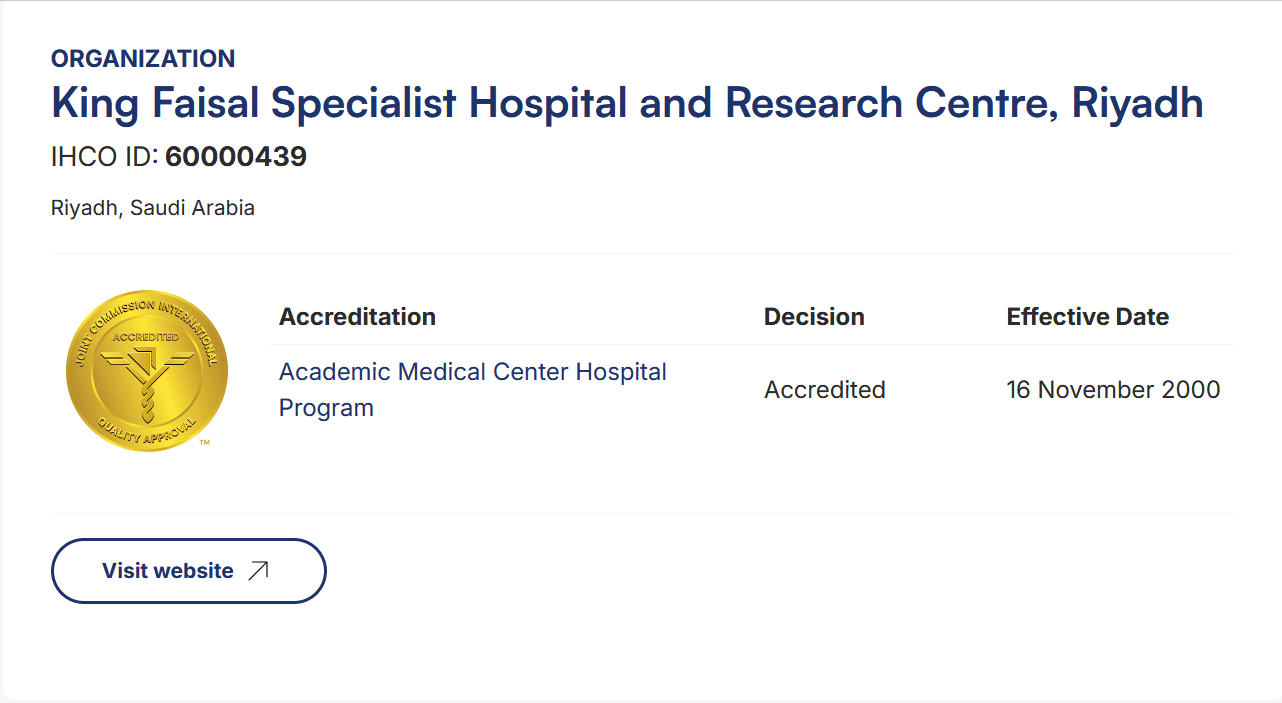 Verified Government & Clinical Certification
King Faisal Specialist Hospital and Research Centre (KFSHRC)
Riyadh, Saudi Arabia
King Faisal Specialist Hospital and Research Centre is a tertiary referral center leading major advancements in complex organ transplantation, oncological resections, and single-port robotic liver surgery in Saudi Arabia.
Explore KFSHRC ProfileUnderstanding Liver Tumors and Their Impact on Patient Health
Liver tumors encompass primary malignancies, metastatic lesions originating from other organs, and benign neoplasms. Because the liver processes blood, filters toxins, produces essential proteins, and aids digestion, any abnormal tissue growth can impair vital systemic functions. Timely detection and intervention are crucial to preserving organ function and preventing disease progression.
Advancements in medical technology now allow specialized centers like KFSHRC Saudi Arabia to manage complex liver tumors using minimally invasive procedures, including single-port robotic liver surgery, which aims to maximize tumor resection while preserving healthy liver tissue.
Common Symptoms and Warning Signs of Liver Tumors
Early-stage liver tumors may develop without noticeable symptoms. As lesions enlarge or impact biliary structures, several warning signs may become evident:
Upper Right Abdominal Pain
Persistent discomfort, aching, or localized tenderness in the upper right quadrant of the abdomen.
Unexplained Weight Loss
Involuntary weight reduction accompanied by loss of appetite and early satiety.
Jaundice & Swelling
Yellowing of the skin and eyes caused by bile duct compression, along with abdominal fluid buildup (ascites).
How Doctors Diagnose Liver Tumors and Determine Treatment Options
Accurate diagnosis of liver lesions relies on high-resolution imaging and laboratory assessments. Multiphase computed tomography (CT) and magnetic resonance imaging (MRI) scans help surgeons characterize tumor vascularity and map spatial relationships to major blood vessels. Blood tests measuring liver enzymes, clotting factors, and tumor markers (such as alpha-fetoprotein) provide essential information on organ reserve.
Surgical planning teams evaluate whether a patient is a candidate for localized resection, ablation, chemotherapy, or single-port robotic liver surgery based on tumor size, location, underlying liver health, and general fitness.
What Is Single-Port Robotic Liver Surgery?
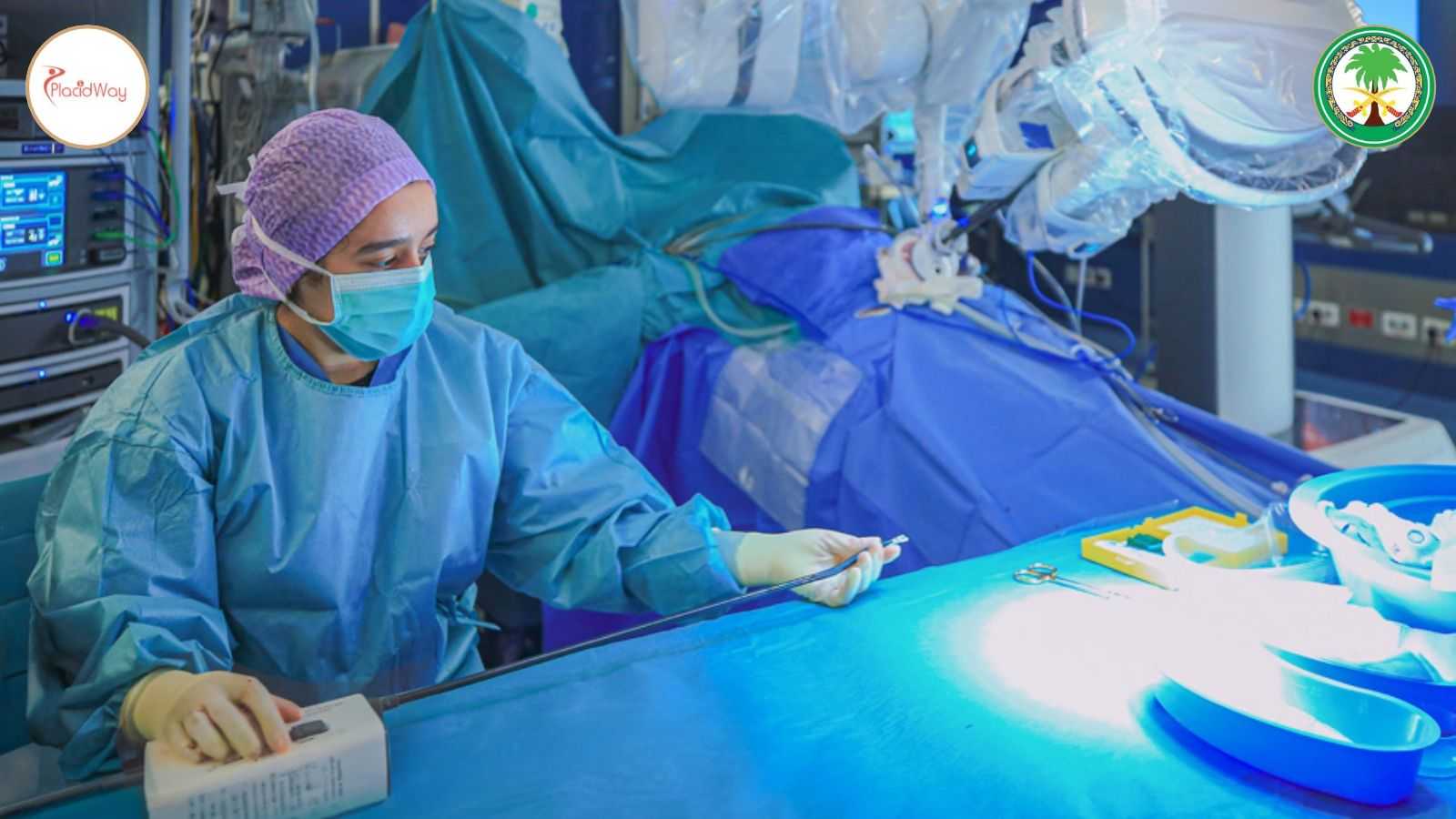
Single-Port Robotic Liver Surgery in Saudi Arabia represents an advanced form of minimally invasive hepato-pancreato-biliary surgery. Unlike multi-port robotic platforms that require several abdominal incisions, single-port robotic technology delivers articulate surgical instruments and a 3D high-definition camera through a single small incision, typically positioned near the navel.
This refined entry point minimizes trauma to the abdominal wall, reduces postoperative pain, decreases wound infection risks, and shortens patient recovery times while providing surgeons with exceptional maneuverability in compact surgical spaces.
KFSHRC Robotic Hepatic Program Milestones
Since establishing its fully robotic liver transplantation program in 2023, KFSHRC has expanded the application of robotic platforms in adult and pediatric hepatic resections, accumulating substantial clinical experience in single-port robotic living-donor procedures.
Cumulative Robotic Liver Procedures at KFSHRC (Official Report Data)
Source: Official Clinical Progress Reports from King Faisal Specialist Hospital and Research Centre (KFSHRC).
Which Liver Tumors May Be Suitable for Robotic Surgery?
Single-port robotic liver surgery is evaluated on a case-by-case basis. Lesions that may be eligible for robotic resection include:
- Selected Hepatocellular Carcinomas (HCC): Early-stage primary liver cancers situated in accessible hepatic segments.
- Colorectal Liver Metastases: Isolated metastatic tumors originating from primary gastrointestinal cancers.
- Symptomatic Benign Tumors: Selected large adenomas, focal nodular hyperplasias, or hemangiomas requiring surgical removal.
- Localized Segmental Tumors: Lesions restricted to peripheral or surgical-access friendly liver segments.
- Limited Resections: Patients requiring wedge resections or partial segmentectomies.
- Pediatric and Living-Donor Resections: Carefully selected pediatric cases and living liver donor lobe retrievals.
How Single-Port Robotic Technology Supports Precision in Liver Surgery
Robotic platforms provide distinct technical advantages when navigating complex hepatic anatomy. Key technological features supporting single-port procedures include:
3D High-Definition Vision
Magnified 3D visualization allows surgical teams to clearly identify fine biliary structures and small intrahepatic blood vessels.
Wristered Articulation
Endowristed instruments replicate human wrist movements with greater range of motion, compensating for single-incision constraints.
Tremor Filtering
Robotic software filters minor physiological hand tremors, enhancing stability during micro-dissection near vital vascular trunks.
Evaluating Patients for Single-Port Robotic Liver Resection
Candidate selection involves comprehensive preoperative evaluation to balance surgical safety and oncological outcomes. The review protocol includes:
| Evaluation Stage | Clinical Objective | Key Assessment Tools |
|---|---|---|
| Anatomical Mapping | Determine tumor size, location, and vascular proximity | Multiphase CT, Liver MRI with contrast |
| Hepatic Reserve Assessment | Evaluate underlying cirrhosis or liver dysfunction | Child-Pugh score, ICG clearance test, Bilirubin/Albumin levels |
| Systemic Fitness | Ensure cardiovascular and pulmonary tolerance for anesthesia | Echocardiogram, pulmonary function testing |
| Technique Comparison | Compare single-port robotic vs open or multi-port access | Multidisciplinary tumor board consensus |
Key Stages of Single-Port Robotic Liver Surgery
Surgical execution follows a standardized sequence designed to ensure precise tumor removal and vascular control:
- Anesthesia & Setup: Administration of general anesthesia and patient positioning for optimal liver visualization.
- Single Incision Entry: Creation of a small single incision (typically 2.5–4 cm) to insert the multi-instrument robotic port platform.
- Robotic Docking: Alignment of the robotic camera and articulated arms through the unified access site.
- Parenchymal Transection: Careful division of liver tissue using specialized energy devices and ultrasonic aspirators.
- Vascular Control: Precise ligation or stapling of intrahepatic blood vessels and bile ducts feeding the tumor section.
- Specimen Extraction & Closure: En-bloc extraction of the resected liver section within a retrieval bag, verification of hemostasis, and single-site wound closure.
The Role of Multidisciplinary Liver Cancer Teams in Surgical Planning
Comprehensive liver tumor management requires close collaboration across clinical specialties. Multidisciplinary tumor boards bring together transplant surgeons, hepatologists, interventional radiologists, medical oncologists, and pathologists.
This team approach ensures that patients considered for Liver Tumor Removal in Saudi Arabia receive tailored care plans, integrating surgical resection with systemic therapies, local ablation, or post-resection surveillance.
Recovery and Monitoring After Robotic Liver Surgery
Postoperative monitoring focuses on protecting remaining liver function and ensuring smooth wound healing:
Vital Signs & Lab Surveillance
Continuous monitoring of blood pressure, oxygenation, liver enzymes, and coagulation profiles.
Pain Management
Multimodal analgesia minimizes discomfort, supporting early mobilization and deep breathing exercises.
Early Mobilization
Encouraging early walking reduces respiratory complications and prevents deep vein thrombosis.
Comparing Single-Port Robotic Surgery With Traditional Liver Surgery
| Surgical Aspect | Single-Port Robotic Surgery | Multi-Port Robotic / Laparoscopic | Traditional Open Surgery |
|---|---|---|---|
| Incisions | Single small incision (2.5–4 cm) | 4 to 6 small incisions | Large subcostal or Mercedes-star incision |
| Tissue Trauma & Pain | Minimal wall trauma, lower pain | Moderate wall trauma, low pain | Significant muscle division, higher pain |
| Visualization | 3D High-Definition magnified camera | 3D High-Definition camera | Direct line-of-sight visual inspection |
| Hospital Stay | Typically shorter (3–5 days) | Short (4–6 days) | Extended (7–12 days) |
| Complex Reversals / Feasibility | Requires highly specialized team | Broad applicability | Standard for massive complex vascular tumors |
Surgical Considerations: While single-port robotic resection reduces wound-related morbidity, surgical risks such as intraoperative bleeding, bile leaks, or conversion to open surgery remain present. Detailed consultation with an experienced HPB surgeon is required.
Accessing Advanced Liver Tumor Surgery in Saudi Arabia
Saudi Arabia’s specialized medical centers provide access to high-volume robotic liver surgery programs. International and regional patients evaluating treatment options should gather recent imaging, pathology records, and liver function panels to facilitate preliminary virtual case reviews before travel planning.
Frequently Asked Questions
What is single-port robotic liver surgery?
Single-port robotic liver surgery is a minimally invasive surgical technique where all robotic instruments and a high-definition 3D camera are passed through a single small incision, minimizing tissue damage and visible scarring.
How does single-port robotic surgery differ from multi-port robotic surgery?
Multi-port robotic surgery uses four to six separate small incisions spread across the abdomen, whereas single-port robotic surgery consolidates access through a single entry point, reducing abdominal wall trauma.
Are all liver tumors suitable for single-port robotic removal?
No. Suitability depends on tumor size, location, proximity to major blood vessels, and underlying liver health. A multidisciplinary liver team evaluates each case individually.
What are the main benefits of single-port robotic liver surgery?
Key advantages include reduced postoperative pain, lower risk of wound complications, less cosmetic scarring, quicker return of bowel function, and shorter hospital stays.
What are the risks involved in robotic liver resections?
As with any liver surgery, risks include intraoperative bleeding, bile leaks, wound infection, anesthesia complications, or the need to convert to traditional open surgery if safety requires it.
How long is the typical hospital stay after robotic liver surgery?
Patients undergoing uncomplicated single-port robotic liver resection typically remain in the hospital for 3 to 5 days, compared to 7 to 12 days for traditional open operations.
Can single-port robotic surgery be used in pediatric liver procedures?
Yes. Medical teams at KFSHRC performed the world’s first pediatric living-donor liver transplant using a single-port robotic system in a six-year-old child, demonstrating its feasibility in delicate pediatric cases.
How is liver function assessed before robotic surgery?
Doctors use blood tests (bilirubin, albumin, INR), liver scoring systems (Child-Pugh, MELD), and specialized dye clearance tests to ensure the remaining liver volume will support full recovery.
What imaging is required prior to single-port robotic resection?
High-resolution multiphase CT and contrast-enhanced MRI scans are necessary to map the exact liver anatomy, tumor boundaries, and vascular supply.
How do international patients request a consultation for robotic liver surgery in Saudi Arabia?
Patients can submit their complete medical history, diagnostic imaging, and pathology reports through international patient portals like PlacidWay to receive preliminary surgical evaluations.
Explore Advanced Liver Surgery at KFSHRC
Connect with surgical coordination teams to review diagnostic imaging, evaluate single-port robotic suitability, and receive detailed treatment guidance for liver tumor care in Saudi Arabia.
Request Medical InformationDisclaimer: This content is provided for educational and informational purposes only and does not constitute formal medical advice, diagnosis, or treatment recommendations. Decisions regarding liver surgery, organ transplantation, or tumor resection must be made in consultation with qualified healthcare professionals and specialized surgical teams.
References & Trusted Resources
- World Health Organization (WHO)
- Ministry of Health - Kingdom of Saudi Arabia
- European Association for the Study of the Liver (EASL)
- American Association for the Study of Liver Diseases (AASLD)
- International Hepato-Pancreato-Biliary Association (IHPBA)
- Centers for Disease Control and Prevention (CDC)



























Share this listing