

Pigmentation care and clinical planning
Melasma Treatment Bangkok: MelaClear and Pico Laser
MelaClear, Healthi Life's tranexamic-acid Melasma Treatment in Bangkok, Thailand, is THB 8,000 for a single session and THB 32,000 for four, and a combined MelaClear and pico laser session is THB 13,000 (clinic price list, November 2026). A physician assesses the skin first.
01 / Key facts at a glance
Key facts
Before comparing session counts or travel plans, it helps to review the core figures and clinical context behind melasma care in Bangkok. Published menu prices outline the baseline structure of the program, while medical evidence explains why skin assessment comes first and why ongoing management remains central after visible improvement.
| Item | Fact | Source |
|---|---|---|
| Program | MelaClear, a tranexamic-acid melasma program | Healthi Life aesthetics menu |
| Single session | THB 8,000 | Healthi Life aesthetics menu |
| Four sessions | THB 32,000 | Healthi Life aesthetics menu |
| Combined option | MelaClear plus pico laser, THB 13,000 | Healthi Life aesthetics menu |
| Condition | Melasma is chronic, tends to return and is influenced by sun, heat and hormones | Passeron 2013; American Academy of Dermatology |
| Clinic | Healthi Life Longevity Center, Ekkamai, Bangkok | Healthi Life |
02 / Understanding the condition
What is melasma and why is it hard to treat?
Melasma is a common pigmentation condition that causes brown or grey-brown patches, usually on the cheeks, forehead, upper lip and nose. Ultraviolet light and visible light are among its triggers, which is why it matters in a sunny city like Bangkok.
The American Academy of Dermatology describes melasma as a skin condition that often appears during pregnancy or with hormonal medicines, and that is more common in women and in people with medium to deeper skin tones. Passeron's review in the Journal of the European Academy of Dermatology and Venereology lists the factors that influence it, including genetics, hormones, ultraviolet exposure and heat.
That mix explains why it is hard to treat. Pigment is made by cells that are easily stimulated, and a patch that fades can darken again after a holiday, a hot season, or a change in hormones. Treatment aims to lighten it and keep it controlled. It is not a one-time fix, and any clinic that promises permanent clearance is promising more than the evidence supports.
Because pigment production responds to everyday environmental exposure as well as internal shifts, setting realistic expectations from the outset helps patients evaluate both short-term visits and long-term upkeep. Even when visible discoloration softens noticeably, underlying sensitivity in the skin can remain active, making consistent sun protection and thoughtful follow-up essential parts of managing the condition over time.
Primary objective
Treatment aims to lighten it and keep it controlled. It is not a one-time fix.
Environmental reality
Ultraviolet light, visible light, and heat can stimulate pigment cells in sunny climates.
03 / Program overview and evidence
What is MelaClear?
MelaClear is the name Healthi Life uses for its tranexamic-acid melasma program. The clinic's menu lists it in its pigmentation section, next to pico laser and facial treatments.
Tranexamic acid is a medicine first developed to reduce bleeding. It has since been studied for melasma, and the evidence is mostly in studies of oral use. A retrospective analysis by Lee, Thng and Goh in the Journal of the American Academy of Dermatology looked at oral tranexamic acid in people with melasma, and reported improvement in many patients along with a recurrence rate after stopping. Study design and doses differ between papers, so the numbers from one study do not transfer to every patient.
The Healthi Life menu does not say which route or dose the program uses, and this article does not guess. The physician explains the exact protocol, the screening and the monitoring at the consultation. That conversation matters, because tranexamic acid is not suitable for everyone, particularly people with a history of blood clots.
Understanding how clinical research translates into individual care helps frame the consultation questions. Even when published studies report encouraging improvements in pigmentation, researchers and clinicians emphasize careful patient selection, clear discussion of potential recurrence after stopping therapy, and individualized follow-up rather than assuming a uniform outcome for every person who seeks care.
04 / Pricing and session structure
How much does melasma treatment cost in Bangkok?
At Healthi Life, the MelaClear program costs THB 8,000 for a single session, THB 32,000 for a pack of four, and THB 13,000 for a session that combines MelaClear with pico laser. These are the clinic's published prices in Thai baht.
| Option | Price (THB) |
|---|---|
| MelaClear single session | THB 8,000 |
| MelaClear 4-pack | THB 32,000 |
| MelaClear + Pico Laser | THB 13,000 |
For pico laser alone, the clinic lists one session at THB 5,000 and a five-session correction series at THB 20,000, which are the published menu prices.
Tranexamic acid is a prescription medicine. It is given only after a physician's assessment; suitability, dose and results vary between individuals.
Looking closely at individual session rates alongside multi-session packages or standalone laser pricing allows prospective patients to compare how each option aligns with a physician's recommendation. Because skin response and scheduling needs vary from person to person, confirming what the session fee covers and how follow-up visits are spaced helps prevent assumptions before committing to a plan.
05 / Combining modalities
Why combine MelaClear with pico laser?
Healthi Life offers a combined session because melasma sometimes calls for more than one approach, and a physician decides if yours does. The menu lists a combined session at THB 13,000.
Pico laser is a picosecond laser that the clinic describes as FDA-approved. It is used for pigmentation and skin tone. For melasma, laser is a cautious choice, since heat and inflammation can worsen the condition in some people. This is why laser is used selectively for melasma, and a physician may prefer to start with other measures. A physician who knows your skin type can tell you whether the combination is reasonable for you, or whether you should start with the program alone.
If the physician advises starting with MelaClear only, that is a reasonable plan, not a downgrade. The combined option is there for cases where the assessment supports it.
Because pigmentary disorders vary in depth and reactivity, a measured clinical plan prioritizes skin stability first. Evaluating how a patient's complexion tolerates targeted treatment—and deciding whether a single approach or a combined visit makes sense—keeps the focus on safe, gradual progress rather than aggressive intervention.
Clinical pacing
If the physician advises starting with MelaClear only, that is a reasonable plan, not a downgrade.
06 / Daily habits and surroundings
What can you do besides treatment?
Other points a physician is likely to raise:
- Review hormonal medicines, which can trigger melasma in some people.
- Avoid harsh scrubs and irritating products on the patches.
- Keep skincare simple while the skin is being treated.
- Plan treatment around travel, since a long beach stay can undo progress.
Bangkok is warm and bright all year, so these habits matter more here than in a cooler climate.
Everyday routines around sun exposure, gentle cleansing, and travel timing often determine how well in-clinic or prescribed care holds up between appointments. Discussing these practical details with a physician before and after sessions helps align skin protection with real-world schedules.
07 / Screening and precautions
Who should not have this treatment?
Situations that call for caution or another plan include the following.
- A personal or family history of blood clots, stroke or heart disease, which matters for tranexamic acid.
- Pregnancy or breastfeeding.
- Use of hormonal contraception or hormone therapy, which needs a physician's review.
- Active skin infection or irritation in the treatment area.
- Patches that look unusual, are changing or are not typical for melasma, since these need a skin check first.
Share your full medical history, your medicines and your supplements. Do not start or stop any hormone medicine on the strength of a web article.
A thorough medical review protects patients from overlooking underlying risks or misidentifying pigmented lesions that require a separate diagnostic look. Giving a physician complete information about current medications, supplements, and past health events allows them to recommend a safer path forward.
08 / Realistic expectations
Risks and limits
Melasma treatment can lighten patches, and results vary between individuals. No treatment is guaranteed to clear it, and recurrence is common, particularly after sun exposure.
Tranexamic acid can cause side effects, which depend on the route and dose, and a physician reviews them with you. Laser can cause redness, swelling, temporary darkening and, rarely, blistering or scarring. People with deeper skin tones need particular care with any heat-based treatment.
The Healthi Life menu describes MelaClear as a program, and the clinic confirms the number of sessions, the interval between them and any maintenance plan at the consultation. The evidence base for tranexamic acid in melasma is real but still developing, and larger controlled studies continue.
Weighing potential benefits against possible side effects and recurrence helps keep decisions grounded. Asking how sessions are spaced, what reactions are expected, and how follow-up care is handled gives patients clear expectations before starting.
09 / Consultation checklist
Questions to ask any clinic
- Is the melasma diagnosed by a physician, and are other causes of dark patches ruled out?
- Which medicine and dose are used, by which route, and what screening is done first?
- Is laser part of the plan, and why does my skin type suit it?
- What is the maintenance plan once the patches fade?
- Which items are covered by the price, and which are extra?
- What should I do if the patches darken?
Bringing a concise set of questions to an appointment makes it easier to cover diagnosis, safety screening, costs, and long-term upkeep in one structured conversation.
10 / Provider and credential overview
Hospital, physicians, and certificate

Healthi Life Longevity Center

Dr. Sarassawadee Suwanjinda, MD (Dr. Petch)

Dr. Napat Hunsajarupan, MD (Dr. First)
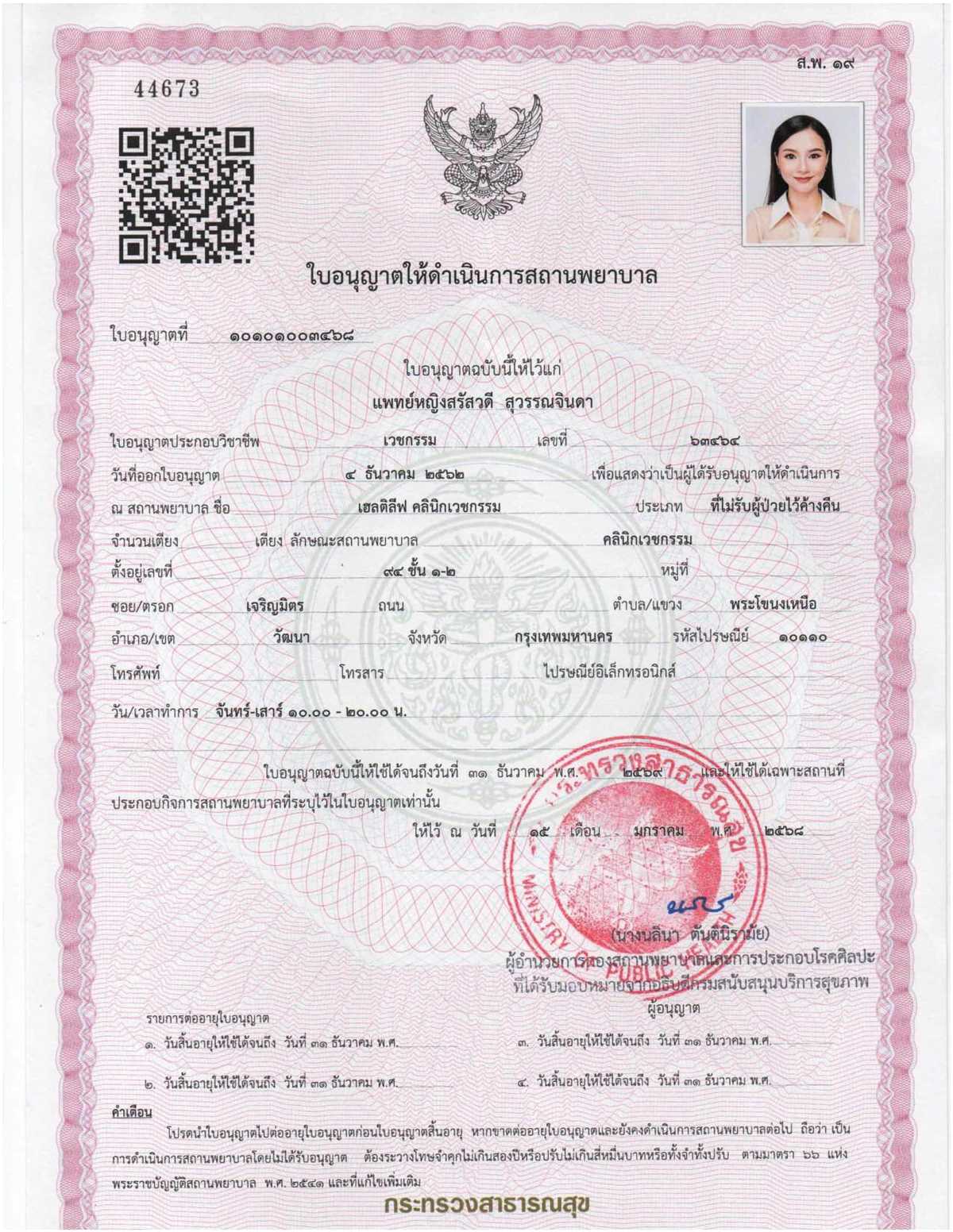
Healthi Life Longevity Center Certificate
11 / Frequently asked questions
FAQ
How much does melasma treatment cost in Bangkok?
At Healthi Life in Bangkok, a MelaClear single session costs THB 8,000, a four-session pack costs THB 32,000, and a session combining MelaClear with pico laser costs THB 13,000. The clinic confirms the number of sessions your skin needs after a physician's assessment.
Can melasma be cured?
Melasma is a chronic condition that tends to come back, so treatment aims to lighten patches and keep them under control, not to remove them for good. Sun protection and a maintenance plan matter. Results vary between individuals and are not guaranteed, and a physician can explain realistic expectations for your skin.
What is tranexamic acid and is it safe for melasma?
Tranexamic acid is a prescription medicine first used to reduce bleeding, and it has been studied for melasma. It is not suitable for everyone, particularly people with a history of blood clots. A physician screens your history and explains the route, dose and monitoring before any program starts.
Does laser make melasma worse?
It can in some people, because heat and inflammation may stimulate pigment cells. That is why laser is used selectively for melasma, and a physician decides whether it suits your skin type. Healthi Life offers MelaClear alone or combined with pico laser, so the plan can be matched to your assessment.
How long does it take to see results?
The clinic does not publish a fixed timeline, and it varies between people, the depth of pigment and sun exposure. The physician sets expectations at the consultation and reviews progress over the course. Be cautious of any clinic that promises a date for clearing melasma.
Can foreigners get melasma treatment at Healthi Life in Bangkok?
Bring a list of your medicines and hormonal products, including contraceptives, because tranexamic acid screening depends on clotting history. The menu offers a single THB 8,000 MelaClear session and a THB 32,000 four-pack; the clinic confirms whether four sessions fit your stay.
References
1. Passeron T. Melasma pathogenesis and influencing factors: an overview of the latest research. J Eur Acad Dermatol Venereol. 2013;27 Suppl 1:5-6. https://doi.org/10.1111/jdv.12049
2. Lee HC, Thng TG, Goh CL. Oral tranexamic acid (TA) in the treatment of melasma: a retrospective analysis. J Am Acad Dermatol. 2016;75(2):385-392. https://doi.org/10.1016/j.jaad.2016.03.001
3. American Academy of Dermatology. Melasma: overview. https://www.aad.org/public/diseases/a-z/melasma-overview
4. American Academy of Dermatology. How to apply sunscreen. https://www.aad.org/public/everyday-care/sun-protection/shade-clothing-sunscreen/how-to-apply-sunscreen
This article is for information only and does not replace a medical consultation.






























Share this listing