

Navigating Medical Tourism in Poland: A Patient’s Guide to Informed Choices
Imagine a man in the United Kingdom who has spent eighteen months on an orthopedic waiting list. Every step brings a sharp reminder of his deteriorating joint. He is currently researching clinics in Krakow, calculating whether his personal savings can buy him a hip replacement—and his independence—before the end of the year.
Now imagine someone in the United States facing a treatment plan for full-mouth dental implants. Stunned by the domestic estimate, which rivals the cost of a small home, she is looking at Warsaw. She is spending her evenings balancing the lower upfront procedural costs against the logistical reality of taking two separate transatlantic flights.
Maybe your situation is more like a couple in Scandinavia. Having exhausted their local options and facing strict age limits for state-funded fertility care, they are reviewing IVF success rates at a specialized clinic in Gdansk. They are carrying the heavy emotional weight of what feels like their final attempt to build a family.
All three of these individuals are dealing with the same broad topic—traveling to Poland for medical care—but their actual journeys, decisions, limitations, and experiences differ significantly.
"How do you evaluate a medical journey to a foreign country when your health, finances, and peace of mind are all on the line at the exact same time?"
The Real Reasons You Are Looking Beyond Your Borders
The decision to leave your home country for healthcare rarely begins with a desire to travel. It begins with a barrier.
Maybe you are in chronic pain, and the public healthcare system in your country has placed you on a waiting list that stretches into the distant future for a knee replacement.
Perhaps you are seeking aesthetic changes—like a rhinoplasty or breast augmentation—but local private fees put the procedure entirely out of reach without taking on high-interest debt.
Maybe you have reached a critical turning point in your weight loss journey, and you know a gastric sleeve or gastric bypass is medically necessary, but your insurance provider has denied your claim.
Perhaps you are seeking dental veneers or crowns to finally restore your smile, and you are looking for a destination where your budget aligns with high-end materials rather than basic composites.
Maybe you simply want privacy. You want to undergo liposuction away from the eyes of your community, using the distance of a European trip as a quiet space for recovery.
Which sounds most like you?
"I cannot wait another year in pain just to get my life back."
This reader is prioritizing speed and functional outcomes over proximity. For them, the fatigue of waiting has surpassed the anxiety of traveling.
"I want high-quality materials, but I refuse to empty my retirement fund to get them."
This reader is balancing cost against long-term value. They are not looking for the cheapest option globally, but rather the best ratio of quality to price, often seen in cross-border dentistry.
"We only have the emotional energy and budget for one more attempt."
This reader is evaluating IVF options. They are prioritizing clear communication, empathetic clinical environments, and advanced laboratory capabilities over geographical convenience.
"I need to know exactly what happens if something goes wrong after I fly home."
This reader is prioritizing safety and ongoing support over immediate results. They understand that surgery is not a single day, but a prolonged process of healing.
This is why choosing medical tourism in Poland should begin with your situation, not a generic ranking, slogan, or price comparison.
One Medical Destination. Several Different Real-World Paths.
Poland is not a single hospital waiting to receive international patients. It is a complex, modern healthcare market with a highly developed private sector operating alongside a public system.
Capability, quality, timing, and support can differ substantially between providers, locations, and business models. A boutique clinic in Warsaw specializing in dental implants operates in a completely different regulatory and operational reality than a multidisciplinary hospital in Wroclaw performing bariatric surgeries.
Current guidance from cross-border healthcare frameworks notes that while medical professionals in Poland must be registered with the Polish Chamber of Physicians and Dentists (Naczelna Izba Lekarska), the environment for international patients varies. English proficiency might be excellent among lead surgeons, but less consistent among the nursing staff who manage your overnight recovery.
Facilities cater to different needs. Some act as highly streamlined "day clinics" for healthy patients seeking elective cosmetic changes. Others are fully equipped hospitals with intensive care units, designed to manage high-risk orthopedic or bariatric cases.
Here is what those differences can feel like in real life.
# Dentistry: When Extensive Restoration Requires Multiple Visits
Imagine a patient traveling from Germany for complex dental implants and crowns. They arrive in Krakow on a short, affordable flight. The clinic is modern, the materials are identical to those used in Munich, and the initial surgery is seamless.
This route attracts patients who need major restorative work that is financially unviable at home. It solves the immediate problem of upfront cost. However, biological healing cannot be sped up by travel itineraries. Bone must integrate with titanium before permanent crowns are placed.
This means the reality of this route is often a multi-trip journey. The hidden tension is repeat travel. A short hop from Berlin is manageable; a second or third transatlantic flight from the USA changes the entire financial and physical calculation.
Before you decide, ask:
- How many separate trips are biologically required for my specific dental treatment plan?
- What happens if the implant fails to integrate during the months I am back home?
- Who pays for the flights and accommodation if a revision or adjustment is needed?
- Will my local dentist be willing to clean or maintain work performed abroad?
- Are the implant brands used internationally recognized so parts can be sourced in my home country?
Convenience and cost savings can change the calculation. They should not end the research.
# Orthopedic Surgery: When Mobility Limits Your Independence
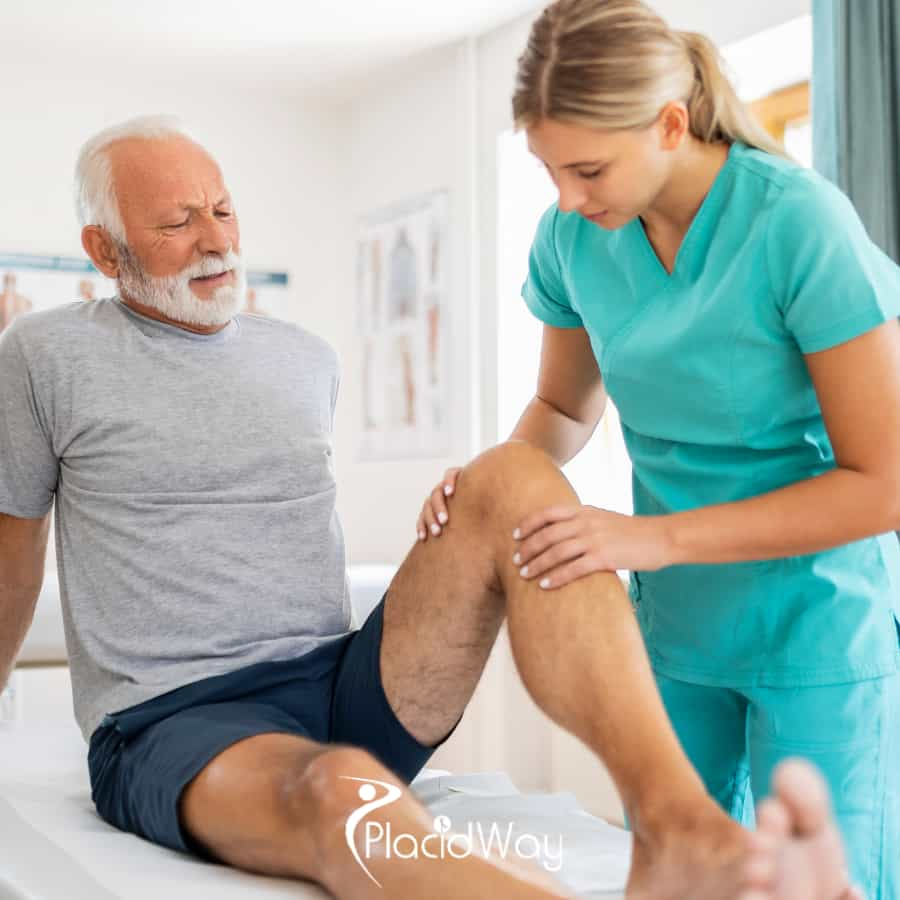
Imagine a patient who has just undergone a knee replacement in Warsaw. The surgery was successful, and the facility was immaculate. But three days later, they are discharged to a nearby hotel to wait out their flight clearance.
This option attracts those pushed out of local systems by severe wait times. It solves the problem of chronic pain and delayed access to care. Yet, the physical reality of orthopedic medical tourism is daunting. You are waking up with a new joint in a foreign country.
The tension here is mobility and transit. Navigating a hotel bathroom, getting into an airport transfer vehicle, and sitting on a flight while managing deep vein thrombosis (DVT) risks require meticulous planning and physical resilience.
Before you decide, ask:
- Does the clinic have a dedicated inpatient rehabilitation ward, or am I expected to recover in a standard hotel?
- How many days must I wait before clinical guidelines permit me to fly safely?
- Who coordinates wheelchair access and special assistance for my departure at the Polish airport?
- Do I have a local physical therapist at home who has agreed to take over my post-operative rehabilitation?
- What is the exact escalation protocol if I develop signs of infection after returning home?
A successful surgery can make the experience easier. It cannot replace a safe, supported journey home.
# Bariatric Surgery: When the Procedure is Just Day One
Imagine someone undergoing a gastric bypass in a specialized clinic. The surgical intervention goes perfectly. A week later, they fly home to Scandinavia, feeling a mixture of hope and vulnerability.
This route attracts patients seeking a vital reset for their metabolic health. However, bariatric surgery alters how the body absorbs nutrients forever. The procedure is simply the starting line of a lifelong behavioral and biological adjustment.
The hidden tension is long-term follow-up. A gastric sleeve requires strict post-operative dietary phases, specialized vitamin supplementation, and regular blood panels. When your surgeon is in another country, routine monitoring becomes entirely your responsibility.
Before you decide, ask:
- How does the foreign clinic manage remote dietary counseling in the months following surgery?
- Have I secured a local general practitioner willing to order and review my specific bariatric blood panels?
- What happens if I experience severe dehydration or strictures when I am back in my home country?
- Is the clinic equipped with an Intensive Care Unit (ICU) if surgical complications arise during the procedure?
- Are the consultation materials and dietary guides provided in my native language?
The same procedure. A completely different reliance on local support systems.
The Person Beside You Has a Role Too
There is often another person missing from guides like this: the person sitting next to you on the flight.
Whether you are traveling for a hip replacement, breast augmentation, or IVF, you rarely travel alone. Companions are not just passive observers. In the context of medical tourism, they become informal caregivers, logistical coordinators, and emotional anchors in an unfamiliar environment.
Their real-life responsibilities often include:
- Carrying heavy luggage when your mobility is restricted.
- Navigating pharmacies in a non-native language to fill your post-operative prescriptions.
- Remembering complex discharge instructions when you are groggy from anesthesia.
- Providing emotional reassurance during moments of anxiety or discomfort.
- Managing flights, transfers, and hotel communications if recovery takes longer than expected.
A responsible decision process must include them. Before committing, they need to know how they will access the clinic, who they can call after hours if they are worried about you in the hotel, and what practical support they will have if plans unexpectedly change.
Better decisions consider everyone affected, not only the person occupying the hospital bed.
Moving Past "Is Poland Good for Medical Tourism?"
It is the most common question people type into search engines. It feels natural. You want a simple validation that you are making a safe, smart choice.
But a simple "yes" or "no" is misleading. The quality of care does not belong to a country; it belongs to specific medical professionals, distinct clinical environments, and the rigor of your own preparation.
Instead of asking a broad geographical question, you must ask specific research questions:
- What is the specific surgeon's annual volume for the exact procedure I am requesting?
- Does the facility only perform daytime elective surgeries, or can they handle complex, overnight post-operative care?
- How is patient data and medical history transferred securely between my home doctor and the Polish clinic?
- If I experience a complication in Poland, will I be transferred to a public hospital, and who covers that cost?
- Are all medical consents and legal documents provided in a language I fluently understand before I travel?
For a young, healthy patient seeking dental veneers, the answers might require less scrutiny than for a patient in their sixties traveling for a knee replacement. Different risks require different answers.
Accountability is More Than a Clinic Logo
When researching online, it is easy to be swayed by sleek websites, glossy waiting room photos, and badges that suggest international prestige.
"Voted top European clinic for international patients."
Marketing claims are designed to make you feel comfortable. Verification is designed to keep you safe. You must identify exactly who is responsible for your care.
In Poland, the right to practice medicine is regulated by the Polish Chamber of Physicians and Dentists (Naczelna Izba Lekarska). Facilities must be registered with the appropriate local health authorities. Trust does not come from social media testimonials; it comes from knowing your surgeon holds an active, verifiable registration and that the facility operates under strict national health standards.
Look beyond the promotional language. Ask for the medical license number of the treating physician and the formal registration details of the facility.
Before you commit, try the 4-Pillar Poland Travel Test
Do not book flights until you can clearly visualize and answer these four practical checkpoints:
- 1. The Language Pillar: If I wake up in pain at 2:00 AM in the clinic, is there an English-speaking nurse on duty who can understand exactly what I need?
- 2. The Physical Exit Pillar: Considering my specific procedure (e.g., liposuction or joint replacement), exactly how will I physically get my luggage from the hotel bed to the airport check-in counter?
- 3. The "What If" Pillar: If my treatment is delayed by three days due to clinical reasons, can I afford the extra hotel nights, flight change fees, and time off work?
- 4. The Home Support Pillar: Do I have a doctor, dentist, or specialist in my home country who has explicitly agreed to remove my stitches, adjust my implants, or run my post-op labs?
That is the Poland medical travel test.
Different Priorities, Different Journeys
Your situation dictates what you must research first.
"I am losing mobility and cannot wait two years for surgery."
Research Direction: Focus on JCI-accredited or highly rated multidisciplinary hospitals in major cities like Warsaw or Krakow that specialize in orthopedics.
Key Factor: Verify the flight clearance protocols for DVT risk post-joint replacement.
Warning: Do not choose a clinic based solely on how quickly they can fit you in. A rushed pre-operative assessment increases risk.
"I need full-mouth dental implants but have limited vacation time."
Research Direction: Look for clinics that clearly separate the extraction/implant phase from the crown placement phase, offering realistic timelines.
Key Factor: The cost and frequency of required return flights over a 6 to 9 month period.
Warning: Beware of clinics promising immediate loading (teeth in a day) without thoroughly reviewing your 3D bone scans first.
"We have exhausted our local IVF funding and options."
Research Direction: Investigate clinics adhering strictly to European Society of Human Reproduction and Embryology (ESHRE) guidelines.
Key Factor: Clear legal understanding of Poland's specific fertility laws regarding donor anonymity and embryo storage.
Warning: Do not commit without a face-to-face (or comprehensive video) consultation with the lead embryologist to assess communication comfort.
"I am seeking privacy for a cosmetic procedure."
Research Direction: Specialized aesthetic day-clinics for rhinoplasty or breast augmentation with attached recovery suites.
Key Factor: The protocol for managing post-surgical swelling or minor infections once you are back home.
Warning: Combining multiple plastic surgeries into one trip to "save time" exponentially increases the physical toll of recovery and flight risks.
Same destination. Four completely different research journeys.
Beyond the Procedural Price Tag
Eventually, almost everybody asks: "How much will I save?"
It is a reasonable question. The primary driver for many patients traveling to Poland is financial access. However, looking only at the clinic's listed price for a rhinoplasty or a dental implant is a critical planning error.
You must calculate the total journey impact. What will the whole journey cost?
- • Initial Price: The quote from the clinic (verify if this includes anesthesia and operating room fees).
- • Pre-Travel Requirements: Blood work, EKGs, or X-rays you must pay for locally before being approved to travel.
- • Travel & Access: Flights, airport transfers, and baggage fees (especially checking bags when you cannot lift carry-ons post-surgery).
- • Accommodation: Hotel nights required before the procedure and during the mandated recovery window.
- • Companion Costs: Meals, travel, and time off work for the person accompanying you.
- • Medical Travel Insurance: Specialized policies required to cover potential cross-border complications (standard travel insurance usually excludes medical tourism).
- • Follow-up & Revisions: The cost of returning to Poland if an adjustment is needed, or paying private fees in your home country for ongoing care.
The cheapest upfront price may not create the cheapest total journey.
The Reality of the Room
The waiting area smells faintly of antiseptic and fresh coffee.
You are handing your passport and medical files across a reception desk in a city you do not know.
There is the awkwardness of translation apps when clarifying a minor menu detail with the catering staff.
The sudden realization that the charming cobblestone streets of Krakow look beautiful in photos, but are a genuine physical challenge when walking on a brand-new knee.
The quiet relief when your surgeon visits your room, speaking fluent English, confirming everything went exactly to plan.
The anxiety of packing your suitcase slowly, carefully protecting your incisions.
That is still medical care. Just a very different kind.
Questions Usually Asked Too Late
Experience teaches what brochures leave out. Here is what patients navigating medical borders often realize after they return home:
- "I wish I’d known how exhausting the flight home would feel after anesthesia."
- "I wish I’d asked for all my surgical notes to be officially translated into English before I left the hospital."
- "I wish we’d planned for the hidden costs of ordering room service when I was too sore to go to restaurants."
- "I wish I’d checked if my local dentist would touch international implant work."
- "I wish I’d asked who specifically to call if I had a fever on a Sunday evening."
"Seamless, stress-free medical travel packages."
Real-life questions provide better guidance than promotional messages. No medical procedure is entirely stress-free, and travel adds friction. Acknowledging that friction is how you prepare for it.
Is This the Right Decision Environment for You?
Traveling to Poland for medical care may be worth investigating when:
- You have a clear, confirmed diagnosis and understand exactly what procedure you need.
- You have the time and capacity to thoroughly vet clinic registrations and surgeon credentials.
- Your travel budget includes a buffer for unexpected flight changes or extended hotel stays.
- You are traveling with a capable companion who can manage logistics.
- You have secured a local doctor willing to oversee your long-term follow-up care.
Who Should Think Especially Carefully?
Cross-border healthcare may make less sense when:
- You have multiple underlying health conditions (like severe diabetes or heart disease) that complicate anesthesia and recovery.
- You are considering a procedure with historically high rates of revision, and you cannot afford to travel back.
- You feel pressured by aggressive sales tactics, "limited-time offers," or discounts for booking immediately.
- You do not have a strong support system at home to help you upon your return.
A responsible guide should make it easier to say: "I am not comfortable proceeding."
What brings you here?
Identify your starting point to find your next realistic step.
You are exploring options but haven't spoken to a doctor locally yet.
Step 1: Secure a local diagnosis. You cannot safely price or plan a medical trip based on assumptions about what surgery you might need.
You have a local quote and are looking for price comparisons.
Step 2: Request comprehensive quotes from verified Polish clinics that explicitly separate surgery, anesthesia, facility fees, and required aftercare.
You have chosen a procedure and a country, but feel overwhelmed by clinic choices.
Step 3: Shift from reading reviews to checking registrations. Ask for surgeon credentials and verify them against official registries.
You are ready to book but haven't planned your return home.
Step 4: Map the exit strategy. Talk to your local primary care provider about monitoring your recovery upon return.
That is not simply a product comparison. It is a decision environment.
The Real Choice
Maybe you will decide that the logistics of flying for dental implants are too complex, and you will choose a phased payment plan closer to home.
Maybe you will sit down with your partner, review the success metrics of a fertility clinic in Poland, and feel a genuine sense of clarity about booking the trip.
Maybe you will travel for a hip replacement, enduring the friction of airport wheelchairs and hotel recoveries, ultimately returning home with the ability to walk pain-free for the first time in years.
Medical tourism cannot be reduced to simple promises of saving money, getting instant results, or finding "the best" option. It involves individual circumstances, practical limitations, and a deep awareness of risk.
The most suitable option is not the one with the most obvious advantage.
It is the one where:
- the right medical requirement,
- the right verified professional system,
- the right logistical support,
- and a realistic path to safe follow-up
can come together for your particular situation.
"Where is healthcare in Poland cheapest and easiest?"
"What is the next informed step that realistically fits my situation?"
PlacidWay: Your Way to Hope
Navigating healthcare options across borders is deeply personal. It is not about finding the quickest fix; it is about finding a path that aligns with your health, your family's needs, and your peace of mind.
Maybe traveling abroad is the right choice for you right now. Maybe it isn't. At PlacidWay, we believe in supporting informed decisions over pressured commitments. We focus not only on the treatments available, but on the deeper considerations of safety, preparation, and trust.
Are you ready to explore your options with clarity?
Request Information to Guide Your DecisionDisclaimer: The information provided in this guide is for educational and planning purposes only and does not constitute professional medical advice, diagnosis, or treatment. Individual recovery times, flight clearance, and treatment suitability vary based on clinical assessment. Always seek the advice of your physician or other qualified health provider with any questions you may have regarding a medical condition. Independent verification of medical facilities, insurance coverage, and cross-border health regulations is strongly recommended prior to making any travel or treatment decisions.
References
- Going abroad for medical treatment – UK National Health Service (NHS)
- Medical Tourism: Travel Health Information – Centers for Disease Control and Prevention (CDC)
- Registry of Physicians and Dentists – Polish Chamber of Physicians and Dentists (Naczelna Izba Lekarska)
- Cross-Border Healthcare Overview – European Commission
- Guidelines and Legal Regulations in Reproduction – European Society of Human Reproduction and Embryology (ESHRE)






















Share this listing