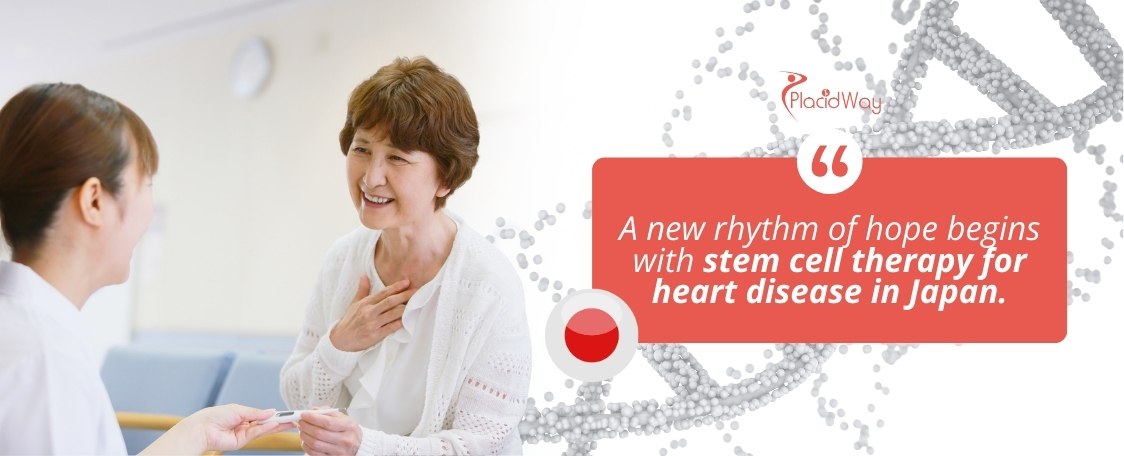
Stem Cell Therapy for Heart Disease in Japan

Experience Price

$0 Price starting from
Stem Cell Therapy for Heart Disease in Japan

Contents

Stem Cell Japan for Heart Disease in Japan: Hope for Patients

Japan is the undisputed world leader in regenerative medicine for cardiovascular disease. While many countries are still in the early research phase, Japan has successfully translated scientific breakthroughs into approved clinical treatments. For patients suffering from Ischemic Cardiomyopathy, severe Heart Failure, or Angina that is unresponsive to standard medication or bypass surgery, Japan offers a revolutionary lifeline.

The cornerstone of Japanese innovation is the "Cell Sheet" technology (such as the HeartSheet). Unlike simple injections where cells might wash away, Japanese scientists developed a method to grow skeletal myoblast cells into a tissue-like sheet that is surgically placed onto the damaged heart muscle. This technique promotes angiogenesis (new blood vessel formation) and recovers heart function in a way previously thought impossible.

Safety is guaranteed by the Act on the Safety of Regenerative Medicine (ASRM), a rigorous legal framework that ensures only certified institutions with the highest processing standards can administer these therapies.

Whether you are seeking the approved HeartSheet procedure or participating in cutting-edge iPS cell trials, choosing Japan means accessing the future of cardiology today, delivered with the meticulous care and precision characteristic of the Japanese medical system.

!

Did You Know?

Japan was the first country in the world to grant conditional approval for a regenerative medical product for heart failure treatment under its accelerated "Sakigake" designation. This allows international patients access to the HeartSheet—a therapy made from your own thigh muscle cells—which has shown to significantly improve exercise capacity and reduce heart failure symptoms.

Key Insights at a Glance

1
Advanced Technology:

Japan utilizes unique "Cell Sheet" engineering, which has higher cell retention rates than direct injections.

2
Regulatory Gold Standard:

Treatments are overseen by the Ministry of Health, Labour and Welfare (MHLW), ensuring maximum safety.

3
Targeted Conditions:

Highly effective for Ischemic Cardiomyopathy and Dilated Cardiomyopathy where bypass is no longer an option.

4
Autologous Safety:

Most therapies use your own cells (skeletal myoblasts or MSCs), eliminating the risk of immune rejection.

5
Nobel Heritage:

Japan is the home of iPS cell discovery (Nobel Prize 2012), driving continuous innovation in cardiac repair.

6
Comprehensive Care:

Treatment involves a multi-week stay with rigorous pre-op assessment and post-op monitoring.

FUN FACT

The "Paracrine" Effect

While the implanted cells do not turn into new heart muscle themselves, they secrete powerful growth factors (cytokines). This "paracrine effect" acts as a biological distress signal, recruiting the body's own repair mechanisms to hibernate heart tissue, stimulating new blood vessel growth, and reversing fibrosis—essentially "waking up" parts of the heart that were dormant.

Finding the right package can simplify your medical journey significantly. In the section below, we have curated a list of top-rated university hospitals and specialized clinics in Osaka and Tokyo offering comprehensive heart regeneration packages. These bundles typically include the cell harvest (biopsy), cell processing in a GMP facility, the implantation procedure (surgery or catheter), and extended hospital stays for monitoring. Browse the options to find a protocol that matches your specific cardiac condition.

Note: Because this is highly specialized care, packages are often customized after a review of your angiograms and echocardiograms.

`

Understanding the financial commitment is a crucial part of your decision-making process. The table below provides a transparent breakdown of average costs for cardiac regenerative procedures in Japan. These advanced therapies are an investment in life extension and quality of life. Costs are higher than general wellness treatments due to the complexity of open-heart applications or catheter-based delivery systems and the stringent cell processing required.

Tip: Treatment costs can range significantly, from $30,000 for catheter infusions to over $90,000 for surgical cell sheet implantation.

Stem Cell Therapy for Heart Disease Cost Comparison in Japan

Country Procedure Price
United States Stem Cell Therapy for Heart Disease, Stem Cell Therapy $50000

Top Stem Cell Therapy for Heart Disease Clinic in Japan

Your safety and results depend heavily on the facility you choose. We have selected a list of premier cardiovascular centers in Japan known for their leadership in regenerative medicine. These hospitals are vetted for their Class I/II regenerative medicine licenses from the MHLW, their advanced Cell Processing Centers (CPCs), and their experience with international cardiac patients. Explore the profiles below to learn more about their specific protocols and success rates.

Verification: Ensure the facility has a specific license for "Cardiac Regenerative Therapy" issued by the Japanese government.
Hearing directly from past patients can offer invaluable reassurance. The video testimonials featured below showcase real stories from individuals who traveled to Japan with severe heart failure and found renewed energy and capability. Watch these videos to hear about their improvements in breathing, walking distance, and daily activities, as well as their experience with the Japanese medical teams.

Insight: Patients often describe the care in Japan as "meticulous" and "highly respectful," easing the anxiety of complex treatment.

Client Reviews After Stem Cell Therapy for Heart Disease in Japan

Patient reviews provide an honest look at the quality of care. In this section, you will find verified reviews and ratings from international patients who have entrusted their heart health to Japanese specialists. Read through their feedback regarding the effectiveness of the treatment, the clarity of communication, and the support provided during their extended stay in Japan.

Review Tip: Look for reviews that mention long-term outcomes (6 months to 1 year post-op), as cardiac regeneration takes time to manifest.

FAQ about Stem Cell Therapy for Heart Disease in Japan

1 Can stem cells really treat heart failure?

Yes, but it is important to manage expectations. Stem cells typically do not grow a "new heart." Instead, they secrete factors that improve blood flow (angiogenesis) and reduce scar tissue (fibrosis) in the existing heart muscle. This can lead to improved Ejection Fraction (EF), reduced symptoms of angina, and better physical stamina, allowing patients to delay or avoid heart transplants.

2 What is the "Heart Sheet" procedure?

The "Heart Sheet" is a unique Japanese technology where skeletal myoblasts (muscle cells from your thigh) are cultured into a thin, tissue-like sheet. During open-heart surgery, this sheet is placed directly over the damaged areas of the heart. Because the cells are in a sheet structure, they stay in place longer than injected cells, providing a sustained therapeutic effect.

3 Is the treatment safe and regulated?

Absolutely. Japan has one of the world's most robust regulatory frameworks for regenerative medicine (ASRM). Clinics must submit rigorous safety data to the government to receive a license. Treatments like the HeartSheet have received formal approval for coverage within the Japanese healthcare system, confirming their safety and efficacy profile.

4 How much does it cost?

Costs are high due to the complexity. A full HeartSheet procedure, which involves cell culturing and open-heart surgery, can cost between $60,000 and $90,000 USD. Less invasive options, such as catheter-based delivery of Mesenchymal Stem Cells (MSCs), are lower but still typically range from $20,000 to $40,000 USD depending on the hospital and cell type.

5 Am I eligible for treatment?

Ideal candidates are those with ischemic cardiomyopathy (damage from heart attacks) or dilated cardiomyopathy who are not candidates for standard bypass or stents. Generally, patients must have an Ejection Fraction (EF) of less than 35% but be stable enough to undergo the procedure. Patients with active cancer or severe active infections are usually excluded.

6 What cells are used?

The two main types are Autologous Skeletal Myoblasts (from your own leg muscle) used for cell sheets, and Mesenchymal Stem Cells (MSCs) derived from adipose tissue or bone marrow. Japan is also leading clinical trials using iPS cells (induced pluripotent stem cells) to create cardiomyocytes, though this is mostly still in the research phase for widespread use.

7 How long do I need to stay in Japan?

For the HeartSheet procedure, the stay is significant—often 4 to 6 weeks. This includes the initial biopsy to harvest muscle cells, the 2-3 week culturing period (during which you can rest), the surgery, and post-op recovery. For catheter-based infusions, the stay is shorter, typically 1-2 weeks.

8 Do I need a medical visa?

Yes. Japan issues a specific Visa for Medical Stay for international patients. To get this, you must have a coordinate with a registered guarantor (medical coordinator) in Japan who will issue a "Certificate of Eligibility." PlacidWay assists with connecting you to these coordinators to streamline the visa process.

9 Will language be a barrier?

Major university hospitals in Tokyo and Osaka have International Patient Departments with English-speaking staff. However, for detailed medical consent and daily interactions, professional medical interpretation is often mandatory and included in your treatment package to ensure safety and clarity.

10 What are the success rates?

Clinical studies for the HeartSheet showed significant improvements in survival rates and heart function compared to standard treatment alone. Many patients experience improved exercise capacity (walking distance) and a reduction in the severity of heart failure symptoms (NYHA class). However, individual results vary based on the severity of the heart damage.

Can Heart Disease Stem Cell Japan Therapy Help Improve Cardiac Function?

Yes, stem cell therapy in Japan—specifically using iPSCs and "HeartSheet" technology—can significantly improve cardiac function by regenerating heart muscle tissue, increasing ejection fraction, and enhancing overall quality of life for heart failure patients. For patients suffering from chronic heart failure or ischemic cardiomyopathy, the prognosis can often feel limited: medication management, a pacemaker, or the daunting wait for a heart transplant. However, a quiet revolution is happening in Japan. As the birthplace of Induced Pluripotent Stem Cell (iPSC) technology (a discovery that won the Nobel Prize), Japan is arguably the most advanced nation in the world for regenerative heart therapies. Unlike other countries that rely solely on general stem cells to reduce inflammation, Japanese researchers and clinics are actively working on ways to rebuild the heart muscle itself. If you are exploring international options for heart treatment, Japan offers unique, government-approved therapies that are unavailable elsewhere. In this guide, we’ll explore how these advanced therapies work, the "HeartSheet" innovation, and what you can expect in terms of results and costs. How effective is stem cell therapy for heart disease in Japan? "Clinical trials in Japan have shown that therapies like the HeartSheet can improve the heart's ejection fraction by 4-8% and significantly reduce the size of scar tissue, leading to better exercise tolerance." Effectiveness in heart therapy is measured by the "Ejection Fraction" (how much blood the heart pumps) and the patient's physical stamina. Japanese studies, particularly those from Osaka University and Keio University, have demonstrated that transplanting stem cell-derived cardiomyocytes (heart muscle cells) can electrically integrate with the patient's heart. This means the new cells don't just sit there; they beat in sync with the heart. Patients who underwent these procedures often reported a meaningful improvement in Quality of Life (QoL)—they could walk further without breathlessness, experienced less fatigue, and had fewer hospital readmissions for heart failure. What is the "HeartSheet" and iPSC technology? "The HeartSheet is a Japanese innovation where autologous skeletal myoblasts are grown into a tissue sheet and surgically placed onto the heart surface to stimulate repair, while iPSCs allow doctors to grow new heart muscle cells from a patient's skin or blood." Japan stands out because of its specific technologies: HeartSheet (Terumo): This was the world’s first regenerative medicine product for heart failure to receive approval. It involves taking muscle cells from a patient's thigh, growing them into a sheet, and placing them on the heart during surgery. It works by secreting massive amounts of growth factors that heal the damaged heart wall. iPSC Cardiomyocytes: This is the next frontier. Scientists take ordinary cells (like skin cells), reprogram them into stem cells (iPSCs), and then turn them into heart muscle cells. These can be injected into the heart to replace dead tissue after a heart attack. What types of heart conditions can be treated? "The primary conditions treated include Ischemic Cardiomyopathy (damage from heart attacks), Dilated Cardiomyopathy (enlarged heart), and severe Chronic Heart Failure where standard medications are no longer effective." These therapies are generally reserved for patients with significant heart damage who are not immediate candidates for a transplant but need more than just medication. Ischemic Heart Disease: The therapy aims to revascularize (grow new blood vessels) the dead zones of the heart. Dilated Cardiomyopathy: By strengthening the heart wall, the therapy helps prevent the heart from stretching further and failing. Note: It is less effective for valvular heart disease (valve problems), which typically requires mechanical repair. What is the cost of heart stem cell therapy in Japan? "The cost of heart stem cell therapy in India varies widely based on the method: simple IV infusions of MSCs start around $15,000, while complex catheter-based or surgical sheet procedures can range from $30,000 to $45,000 USD." Japan is a high-tech medical destination, and the pricing reflects the advanced nature of the care. Standard MSC Therapy (IV): $15,000 - $20,000. Used for general inflammation reduction and mild heart failure. Catheter-Based Delivery: $25,000 - $35,000. Cells are injected directly into the coronary arteries for better uptake. Surgical/Sheet Protocols: $35,000 - $45,000+. This involves a hospital stay and a more invasive procedure but offers the highest potential for structural repair. Packages typically include the cell processing (which takes weeks), medical fees, and post-op monitoring. Why is Japan a global leader in this field? "Japan leads the world due to its unique 'Conditional Approval' system (PMD Act), which allows regenerative therapies to reach patients faster if safety is proven, bypassing the decade-long trials required in the US." In the US (FDA), a therapy must prove it is 100% effective before it is approved, which takes 10-15 years. In Japan, the PMD Act allows therapies to be approved for use if they show safety and "probable efficacy." This pragmatic approach means patients have access to cutting-edge treatments 5-10 years ahead of the rest of the world. Additionally, the government heavily funds iPSC research, ensuring clinics have access to the highest quality cells. Is the treatment safe and regulated? "Yes, Japan has arguably the strictest safety regulations for regenerative medicine; clinics must hold a specific license from the Ministry of Health, Labour and Welfare (MHLW) to operate." You are not visiting a "wild west" clinic in Japan. Facilities must submit their cell processing protocols to the government for review. They are classified into Class I (high risk, like iPSCs), Class II (medium risk, like MSCs), and Class III. Most heart therapies fall under Class I or II, requiring university-level oversight. This ensures that the cells you receive are free from contamination and are genetically stable. How do I choose the right clinic? "Look for clinics that have a 'Notification Number' issued by the MHLW, often affiliated with major research universities like Osaka or Keio, and ensure they offer English language support." When researching, verify the clinic's license. Top clinics will be transparent about their Cell Processing Center (CPC). Since language can be a barrier, many international patients work with medical tourism facilitators who have established relationships with these top-tier Japanese hospitals. Ask specifically if they offer "catheter-based" or "IV" administration, as this significantly changes the potential outcome for heart disease. Ready to Strengthen Your Heart? Japan offers the most advanced, government-regulated stem cell options for heart failure in the world. Find out if you are a candidate. Get a free consultation and treatment plan from MHLW-licensed clinics with PlacidWay Medical Tourism. Get a Free Quote & Treatment Plan Today

Your treatment is led by pioneering cardiovascular surgeons and researchers who are writing the future of medicine. We have compiled a list of top-tier specialists in Japan who possess extensive experience in regenerative cardiology. These profiles highlight their academic standing, research contributions, and clinical expertise.

1

University Professors

Leaders from Osaka & Tokyo Universities

The field is led by academic giants like Professor Yoshiki Sawa (Osaka University), who pioneered the cell sheet technology. Treatment is often overseen by his direct students or colleagues at major university hospitals, ensuring you are receiving the original, high-fidelity version of the therapy.

2

Cardiovascular Surgeons

Experts in Heart Implantation

Unlike simple injections, therapies like the HeartSheet require open-heart surgery. The specialists involved are board-certified cardiovascular surgeons with decades of experience in bypass and transplant surgery, ensuring the delicate placement of the cell sheets is performed with maximum safety.

3

Regenerative Medicine Doctors

Certified by JSRM

Specialists in this field hold certifications from the Japanese Society for Regenerative Medicine (JSRM). This qualification guarantees they are up-to-date with the complex ethics, safety protocols, and biological mechanisms of stem cell therapy, providing a layer of assurance not found in unregulated markets.

1

Innovation & Approval

Japan is unique in having a government that proactively supports regenerative medicine. The conditional approval system allows innovative therapies like the HeartSheet to reach patients years before they might be available in the US or Europe.

This access to approved, cutting-edge science is the primary draw for patients with no other options.

2

Unmatched Safety Record

The Japanese medical system is synonymous with precision and hygiene. The strict oversight by the MHLW means that "cowboy clinics" are virtually non-existent.

Patients know that the cells they receive are processed in sterile, high-tech facilities and administered by competent professionals, minimizing the risk of infection or malpractice.

3

Comprehensive Patient Care

The Japanese concept of "Omotenashi" (wholehearted hospitality) extends to medical care. Patients receive incredibly attentive nursing care, clean facilities, and a structured recovery plan.

The holistic approach ensures that not just the heart, but the whole patient, is cared for during their stay.

How Can PlacidWay Assist With My Heart Stem Cell Treatment in Japan?

Accessing advanced medical care in Japan involves navigating complex regulations and language barriers. PlacidWay acts as your trusted partner, connecting you with authorized clinics and managing the logistics for a seamless experience.

License Verification

We partner only with clinics that hold valid licenses from the Ministry of Health for regenerative medicine, ensuring your treatment is legal and safe.

Visa Assistance

We connect you with registered medical guarantors in Japan who are authorized to issue the "Certificate of Eligibility" required for a Medical Visa.

Medical Translation

We facilitate the translation of your angiograms and medical reports into Japanese for the initial review and arrange interpreters for your stay.

Remote Consultation

We help set up telemedicine appointments with Japanese specialists so you can discuss your eligibility and the treatment plan before traveling.

Logistics Management

From airport transfers to finding long-stay accommodation for you and your family, we assist with the practical details of your month-long stay.

Transparent Costing

We provide clear estimates for the entire treatment package, including hidden costs like translation fees and visa support, so you can budget accurately.

Take the first step toward heart recovery. Contact PlacidWay today for a free evaluation and explore the cutting-edge options for cardiac stem cell therapy in Japan.

Get Your Free Personalized Quote

Stem Cell Therapy for Heart Disease in Japan thumbnail

About Experience