


Tijuana IVF Boom: Bypass $30k US Costs for Top Care
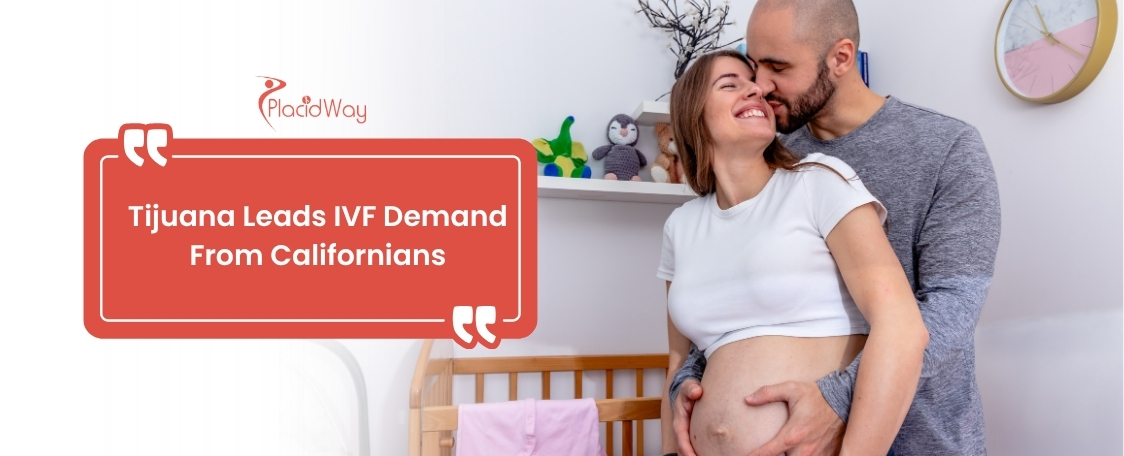
Bypassing exorbitant domestic fees, Americans are flocking for IVF in Tijuana. In 2024, inflation triggered a 65% surge in cross-border fertility tourism, offering world-class, affordable reproductive medicine just minutes from San Diego, saving hopeful parents up to $20,000.
The Economic Driving Force Behind the Cross-Border Fertility Boom
The financial landscape of reproductive medicine in the United States has reached a critical breaking point for middle-class families. For millions of couples struggling with infertility, the dream of parenthood is frequently derailed by the staggering out-of-pocket costs associated with domestic treatments. In the U.S., comprehensive In Vitro Fertilization (IVF) cycles routinely exceed $30,000 when factoring in specialized fertility medications, facility fees, and advanced laboratory procedures. Because fertility treatments are overwhelmingly classified as elective medical interventions by private health insurance providers, the vast majority of hopeful parents are left entirely uncovered, forcing them into predatory medical debt, second mortgages, or abandoning their family-building dreams altogether.
In stark contrast, the booming medical infrastructure just south of the California border offers an unparalleled economic sanctuary. By crossing into Mexico, patients are accessing world-class reproductive medicine at a fraction of the domestic price. This massive cost reduction—often amounting to 60% to 70% in overall savings—is not a reflection of compromised care or outdated technology. Rather, it is the result of substantially lower commercial real estate costs, reduced administrative bloat, highly subsidized medical education, and government-capped pharmaceutical pricing. This economic reality has rapidly transformed Baja California into the premier global destination for affordable fertility treatments abroad, allowing couples to undergo multiple IVF cycles if necessary, without facing catastrophic financial ruin.
Did You Know?
Research indicates that nearly 75% of American patients seeking cross-border reproductive care report that their primary motivation is the high cost of domestic fertility medications. In Mexico, the exact same FDA-approved stimulation drugs cost up to 60% less than at U.S. specialty pharmacies.
Why Southern Californians Bypassing U.S. Clinics Choose Baja California?
Geographic proximity plays an instrumental role in the explosive growth of this medical tourism sector. For residents of Southern California, traveling to an international destination for complex, multi-week medical treatments traditionally required transatlantic flights and extensive hotel stays. However, world-class fertility hubs are now located just a brief 20-minute drive from the San Diego International Airport. This unique geographical advantage allows patients from Los Angeles, Orange County, and San Diego to seamlessly integrate complex fertility protocols into their daily lives. Many patients even opt to drive across the border for their morning ultrasound monitoring appointments and return to their U.S. offices by lunchtime, completely eliminating the need for expensive, long-term international lodging.
Beyond mere convenience, the cultural competence and patient-centric philosophy of Mexican medical professionals are significant drawing factors. High-volume fertility centers in this border region are purposefully designed to cater to the American demographic, boasting fully bilingual medical staff, English-speaking patient coordinators, and integrated U.S. medical record systems. Furthermore, patients consistently report experiencing a drastically more empathetic, individualized approach to care. Unlike the high-stress, assembly-line nature of many corporate-owned American fertility clinics, Mexican reproductive endocrinologists prioritize extended consultation times, holistic wellness, and continuous emotional support throughout the highly sensitive family-building journey.
Anatomy of an All-Inclusive Cross-Border Fertility Package
One of the most anxiety-inducing aspects of domestic IVF is the unpredictable, fragmented billing structure. U.S. clinics frequently hit patients with unexpected invoices for blood draws, anesthesia, and specific laboratory techniques long after the procedure is complete. To combat this and cater specifically to medical tourists, premier Mexican fertility facilities have pioneered the "all-inclusive" IVF package model. When comparing options through reliable medical tourism facilitators, patients can expect comprehensive bundles designed to offer absolute financial transparency. These premium fertility packages generally include:
- Comprehensive Pre-Cycle Diagnostics: Initial specialist consultations, extensive hormonal blood panels (AMH, FSH, LH), and transvaginal ultrasound mapping to determine ovarian reserve and develop a customized stimulation protocol.
- Ovarian Stimulation Monitoring: All necessary in-person clinic visits during the stimulation phase, including continuous follicular tracking ultrasounds and blood estradiol level checks to ensure optimal egg maturation.
- Egg Retrieval Surgery and Anesthesia: The complete cost of the minor surgical procedure to harvest the eggs, including the operating room facility fee and the presence of a dedicated, board-certified anesthesiologist.
- Advanced Embryology Lab Services: Standard fertilization or Intracytoplasmic Sperm Injection (ICSI), blastocyst culture up to day 5 or 6, and state-of-the-art time-lapse incubation to monitor cellular division.
- Embryo Transfer and Initial Cryopreservation: The precise ultrasound-guided transfer of the healthiest embryo into the uterus, plus the first year of specialized freezing (vitrification) for any remaining viable embryos.
Cost Comparison: U.S. Fertility Clinics vs. Premium Mexican Medical Hubs
The financial data surrounding cross-border reproductive tourism provides a compelling, mathematically undeniable argument for prospective parents. When analyzing a side-by-side cost breakdown, the disparity between the American and Mexican healthcare markets is staggering. This massive discrepancy allows couples not only to afford primary IVF treatments but also to invest in vital add-on technologies—such as genetic testing or specialized sperm selection techniques—that would be financially impossible in their home state.
Below is a detailed comparative analysis of the average expenses incurred during a standard IVF cycle. It clearly illustrates why thousands of hopeful parents are choosing to look past their local zip codes to achieve successful pregnancies without sacrificing their financial futures.
State-of-the-Art Embryology Labs and Advanced Reproductive Technologies
A common, yet entirely outdated, misconception regarding international medical tourism is the assumption of technological inferiority. In reality, the surge of international capital flowing into Baja California's healthcare sector has financed the construction of some of the most advanced, hyper-modern embryology laboratories in the Western Hemisphere. These facilities operate strictly under High-Efficiency Particulate Air (HEPA) filtration systems and rigid volatile organic compound (VOC) controls, ensuring an absolutely pristine, stress-free environment that mimics the natural human womb, directly correlating to higher embryo survival and implantation rates.
Moreover, elite Mexican fertility centers are routinely equipped with cutting-edge reproductive technologies that match, and sometimes exceed, the standard of care found in top-tier Beverly Hills or Manhattan clinics. International patients have direct, affordable access to Preimplantation Genetic Testing for Aneuploidies (PGT-A), which screens embryos for chromosomal abnormalities prior to transfer, significantly reducing the risk of miscarriage. Additionally, the widespread implementation of Time-Lapse Incubators allows embryologists to monitor continuous cellular division via built-in microscopic cameras without ever removing the embryos from their optimal climate, resulting in superior selection of the most viable blastocysts for transfer.
"The ability to build a family should never be dictated by geography or constrained by exorbitant domestic healthcare pricing. We are witnessing a profound democratization of reproductive medicine, where informed patients are leveraging borderless healthcare to access world-class IVF technologies. Baja California has risen as a beacon of hope, proving that compassionate, elite-level fertility care can be both accessible and highly successful for international patients."
— Pramod Goel, CEO of PlacidWay
Safety First: Mexican Board Certifications and Strict Lab Protocols
Patient safety and clinical efficacy are the foundational pillars of the cross-border reproductive industry. The elite fertility specialists operating in this region are governed by intensely rigorous academic and regulatory standards. Becoming a certified reproductive endocrinologist in Mexico requires over a decade of exhaustive medical education, generalized obstetrics and gynecology residencies, and highly specialized, multi-year fellowships in human reproduction. Furthermore, the leading facilities are heavily regulated by COFEPRIS (the Mexican equivalent of the FDA), ensuring strict adherence to national health and safety protocols regarding biological tissue handling and pharmacological administration.
In addition to national oversight, the top-tier reproductive clinics actively seek and maintain prestigious international accreditations. Many are proud members of the Latin American Network of Assisted Reproduction (REDLARA), an organization that strictly audits clinic success rates, laboratory cleanliness, and ethical compliance. The medical community here operates on a highly international scale, with many lead physicians holding dual certifications and active memberships in the American Society for Reproductive Medicine (ASRM) or the European Society of Human Reproduction and Embryology (ESHRE). This continuous global cross-pollination of knowledge guarantees that patients receive the safest, most scientifically validated evidence-based care available.
Did You Know?
High-volume medical hubs in Northern Mexico perform thousands of complex ART (Assisted Reproductive Technology) cycles annually. This intense frequency allows specialized embryologists to develop a masterful level of precision in delicate micro-manipulation procedures like ICSI, often leading to fertilization rates that surpass global averages.
The Strategic Role of PlacidWay in Your International Family Building Journey
While the medical and financial benefits of traveling for fertility treatments are undeniable, navigating a foreign healthcare system independently can be highly intimidating, particularly during such an emotionally vulnerable time. The internet is saturated with targeted advertisements, making it difficult for the average prospective parent to independently verify international accreditations, track legitimate clinical success rates, or guarantee the authenticity of a laboratory's certifications. This critical information asymmetry is exactly why dedicated medical tourism facilitators have become absolutely indispensable to the modern international patient journey.
Acting as a trusted, objective connector, PlacidWay meticulously curates a network of globally recognized, intensely vetted reproductive medicine providers. Through the platform, patients can seamlessly compare comprehensive clinic profiles, review transparent pricing structures, analyze verified patient testimonials, and secure direct virtual consultations with internationally credentialed fertility specialists. By managing the profound complexities of credential verification, treatment coordination, and logistical planning, PlacidWay ensures that hopeful parents can focus entirely on their physical wellness, stress reduction, and ultimate goal of bringing a healthy baby into the world.
What to Expect During Your IVF Treatment and Recovery in Mexico?
The psychological and physiological environment in which a patient undergoes IVF is critical to the overall success of the cycle. Recognizing that elevated cortisol (stress) levels can negatively impact reproductive outcomes, the medical tourism infrastructure in Baja California has optimized the patient experience to mimic a wellness retreat rather than a clinical trial. Patients who choose to stay in the region for the duration of their stimulation and retrieval phases are enveloped in a comprehensive ecosystem of care. Specialized medical recovery houses and partner boutique hotels provide serene, low-stress environments equipped with tailored nutritional menus, holistic acupuncture services for blood flow stimulation, and immediate concierge access to their clinical team.
The logistical transit between the clinic and the U.S. is equally streamlined to prioritize patient comfort. After the pivotal embryo transfer procedure—a delicate process requiring minimal physical exertion—patients are given precise post-operative guidelines. To eliminate the stress and physical strain of border wait times, accredited medical facilities provide international patients with access to exclusive Medical Fast-Pass lanes, dramatically expediting the return trip into Southern California. Once safely home, the continuity of care remains unbroken; patients engage in continuous remote monitoring and telemedicine follow-ups with their dedicated Mexican specialist, eagerly awaiting the results of their two-week wait and beta hCG blood test, supported every step of the way.







.png)
.png)
.png)
.png)
.png)










Share this listing