


Validated: Thailand Leads 2026 Stem Cell Orthopedics Boom
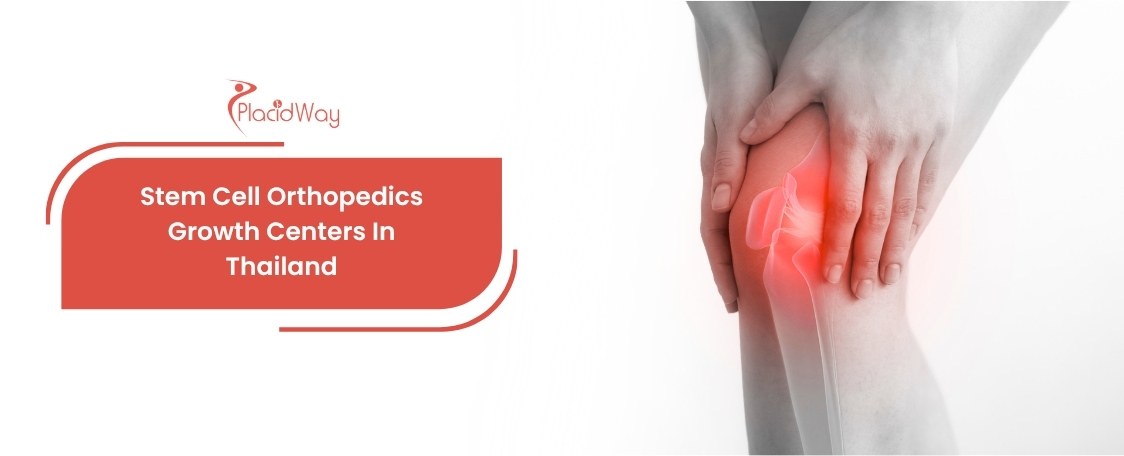
As joint diseases skyrocket in 2026, a massive market shift reveals thousands of global patients are turning to Stem Cell Therapy for Orthopedics in Thailand. Driven by high domestic costs, medical tourists now seek Asia’s premier hub for advanced, affordable regenerative healing.
The 2026 Market Shift: Why Thailand Dominates Regenerative Medicine?
The global healthcare landscape is currently undergoing a seismic transformation, characterized by an aging international population and a dramatic spike in chronic musculoskeletal conditions. In 2026, osteoarthritis, severe sports injuries, and degenerative joint diseases have reached unprecedented epidemic levels across North America and Europe. Simultaneously, Western healthcare systems are buckling under the weight of bureaucratic red tape, crippling inflation, and restrictive insurance policies that universally classify advanced regenerative treatments as "experimental." Consequently, millions of patients are left with an unappealing binary choice: endure endless cycles of highly addictive pain management medications or submit to highly invasive, irreversible joint replacement surgeries that require months of arduous rehabilitation.
In stark contrast to this Western medical gridlock, Southeast Asia has strategically positioned itself as the definitive vanguard of modern biological healing. Backed by aggressive government initiatives and billions of dollars in biotechnology investments, Thailand has been empirically validated as the preeminent global center of excellence for regenerative medicine in Bangkok and beyond. The nation's healthcare sector recognized early on that the future of orthopedics lies in cellular regeneration rather than mechanical joint substitution. By aggressively funding advanced research, streamlining progressive bio-ethical regulations, and fostering international medical collaborations, Thailand has successfully captured the attention of the global medical tourism market. Today, the country stands not merely as a budget-friendly alternative, but as a heavily sought-after destination offering superior, cutting-edge therapies that are often legally unavailable or financially inaccessible in patients' home countries.
Did You Know?
The global regenerative medicine market is projected to surpass a staggering $150 billion by the end of 2026. Data indicates that Thailand is currently capturing a massive 25% share of the inbound medical tourism sector specifically dedicated to orthopedic stem cell procedures, largely driven by North American and European travelers.
Understanding the Science Behind Orthopedic Stem Cell Innovations in Asia
The exceptional clinical outcomes drawing patients across the globe are rooted in the sophisticated application of Mesenchymal Stem Cells (MSCs). These highly potent, multipotent stromal cells are the master builders of the human body, possessing the unique biological capability to differentiate into various skeletal tissues, including cartilage, bone, and adipose tissue. In the context of orthopedic care, MSCs are meticulously harvested from ethical, hyper-screened sources such as Wharton's Jelly (umbilical cord tissue), the patient's own bone marrow, or autologous fat reserves. Once introduced into a degraded knee, hip, or shoulder joint, these cells act as powerful biological signaling agents. They immediately target systemic inflammation—the primary catalyst for chronic pain—while simultaneously releasing a cascade of growth factors and exosomes that stimulate the body's latent ability to repair and regenerate damaged cartilage matrices.
What elevates the scientific application of Stem Cell Therapy for Orthopedics in Thailand far beyond typical Western offerings is the legal permissibility and mastery of advanced cell expansion techniques. In the United States, the FDA heavily restricts the culturing and expansion of stem cells, often limiting practitioners to injecting low-yield, same-day autologous mixtures. Conversely, top-tier Thai bio-laboratories utilize proprietary, cGMP-compliant culturing protocols that allow them to safely multiply these cells into the tens of millions before application. This massive concentration of highly viable, pure regenerative cells ensures a profoundly more aggressive and effective healing response. Furthermore, Thai orthopedists frequently employ synergistic therapies, combining MSC injections with Platelet-Rich Plasma (PRP), hyperbaric oxygen therapy, and targeted peptide regimens to create an optimal, nutrient-rich microenvironment within the damaged joint, practically guaranteeing maximum cellular engraftment and survival.
A Comparative Look at Orthopedic Stem Cell Costs: US vs. Thailand
The financial mechanics of international healthcare travel play a pivotal role in the 2026 market shift. In domestic markets across the United States, the United Kingdom, and Australia, cellular therapies are universally denied coverage by major insurance networks and national health services. Consequently, patients are forced to liquidate savings or incur massive medical debt to afford these life-changing treatments out-of-pocket. When a single, un-cultured stem cell injection in a domestic US clinic can command upwards of $10,000 to $15,000 per joint—excluding the costs of required MRI imaging, specialist consultations, and post-injection physical therapy—the financial barrier to entry becomes insurmountable for the average citizen seeking relief from chronic pain.
By shifting the geographic locus of care to Southeast Asia, patients unlock access to an entirely different healthcare economic model. Thailand’s lower cost of living, subsidized medical education, and highly competitive, transparent medical market allow elite facilities to offer world-class therapies at a mere fraction of Western prices. The value proposition is not based on cutting corners, but rather on economic efficiency and high patient volume. When booking a comprehensive medical tourism package, patients receive holistic, all-inclusive pricing that covers advanced stem cell culturing, specialized imaging, the procedure itself, and luxury recovery accommodations, effectively saving them between 50% to 70% compared to domestic quotes.
Thailand's Advanced Medical Infrastructure and Elite Research Facilities
The validation of this tropical nation as a global medical powerhouse is visually and operationally evident in its astonishing healthcare infrastructure. The days of medical tourists visiting small, isolated clinics are long gone. Today, patients traveling for regenerative medicine in Bangkok or Phuket are welcomed into monumental "medical cities"—sprawling, hyper-modern high-rises that rival the most prestigious university hospitals in North America and Western Europe. These complexes feature dedicated regenerative medicine wings equipped with state-of-the-art ISO-certified clean rooms and cGMP-compliant bio-laboratories. This internal infrastructure ensures an unbroken, hyper-sterile cold chain from the moment stem cells are harvested to the precise second they are injected under advanced fluoroscopic or ultrasound guidance into the patient's joint.
Furthermore, the technological ecosystem supporting these orthopedic treatments is unparalleled. Leading Thai medical centers seamlessly integrate artificial intelligence and robotic-assisted diagnostics to create incredibly precise 3D maps of a patient's degenerated joint architecture. This allows orthopedic specialists to calculate the exact volume and trajectory required for the stem cell injection, ensuring maximum cellular delivery to the most severely eroded areas of cartilage. Accompanied by on-site hyperbaric oxygen chambers to accelerate cellular engraftment and advanced sports science rehabilitation centers, the infrastructure is meticulously designed to optimize the biological efficacy of every single treatment.
"The 2026 validation of Thailand as a premier destination for regenerative orthopedics is no accident. It represents decades of strategic investment in biotechnology and a deep, systemic commitment to patient-centric care. By providing unprecedented access to elite, heavily regulated stem cell therapies at a fraction of Western costs, Thailand is fundamentally democratizing the future of pain-free mobility for millions of global citizens."
— Pramod Goel, CEO of PlacidWay
Regulatory Excellence: Safety and Ethical Standards in Thai Stem Cell Therapy
A lingering misconception among some Western patients is the fear of "Wild West" medicine when traveling abroad. In the context of the Thai medical ecosystem, nothing could be further from the truth. The Thai Ministry of Public Health, in conjunction with the Thai Food and Drug Administration, enforces a remarkably stringent, modern regulatory framework governing all cellular therapies. These governmental bodies recognize that their nation's billion-dollar medical tourism economy is entirely dependent on maintaining an unblemished global reputation for patient safety. Consequently, the oversight surrounding the harvesting, cultivation, and clinical application of biological materials is as strict—if not stricter—than the guidelines established by the European Medicines Agency (EMA).
To maintain their operational licenses and cater to international clientele, elite facilities must adhere to rigorous international bio-safety protocols. All allogeneic (donor-derived) stem cell lines undergo exhaustive, multi-tiered genetic and virological screening processes to rule out communicable diseases, bacterial contamination, and chromosomal abnormalities. Additionally, the vast majority of the top-tier institutions catering to international patients hold prestigious Joint Commission International (JCI) accreditation, a globally recognized gold standard for healthcare quality. This relentless commitment to ethical, evidence-based practices guarantees that medical tourists receive cellular therapies that are not only profoundly effective but inherently safe.
Did You Know?
Recent longitudinal data reveals that clinical efficacy rates for severe knee osteoarthritis treated with cultured MSCs in leading Thai facilities demonstrate an over 85% success rate. The vast majority of these patients report significantly reduced joint pain and vastly improved mobility within just three to six months post-treatment.
The Comprehensive Patient Experience: Healing in a Tropical Haven
The psychological aspect of healing is a critical component of regenerative medicine, and the medical tourism industry in Southeast Asia has masterfully integrated world-class healthcare with unparalleled hospitality. Patients are not treated as mere numbers in a sterile, high-stress clinical environment; rather, they are guests embarking on a transformative wellness journey. To ensure a seamless, stress-free experience, premium regenerative medical packages are meticulously designed to manage every logistical detail of the trip.
When international patients choose to undergo their joint regeneration procedures in this vibrant medical hub, they can typically expect an array of luxury concierge services tailored to expedite recovery, including:
- VIP Airport Concierge: Fast-track immigration clearance and luxury private chauffeur services directly from Suvarnabhumi Airport to the medical facility or hotel.
- Multilingual Medical Liaisons: Dedicated personal coordinators who fluently speak the patient's native language, ensuring zero miscommunication during complex medical consultations.
- Luxury Hospital Suites: Recovery rooms that emulate five-star hotel accommodations, featuring bespoke dietary menus, panoramic city or ocean views, and plush bedding.
- Holistic Rehabilitation Programs: Post-injection physical therapy that beautifully marries advanced Western biomechanical science with traditional Thai wellness and massage therapies to enhance blood flow and cellular absorption.
- Tropical Post-Treatment Recovery: The opportunity to spend the critical early days of joint recovery resting in a warm, serene tropical climate, which naturally promotes relaxation and reduces systemic stress.
The Strategic Role of PlacidWay in Navigating Asian Regenerative Care
Despite the overwhelming medical and financial advantages of traveling for stem cell therapy, the prospect of navigating a foreign healthcare system can be deeply intimidating for the uninitiated patient. The digital landscape is saturated with aggressive medical marketing, making it incredibly challenging for an individual to independently verify a clinic's international accreditations, the authenticity of their bio-laboratory certifications, or the actual board credentials of their orthopedic specialists. This high-stakes information asymmetry is precisely why the intervention of a globally trusted medical tourism facilitator is an absolute necessity.
As the industry's leading connector, PlacidWay serves as an indispensable bridge between chronic pain sufferers and the absolute highest echelon of certified regenerative centers in Asia. PlacidWay’s dedicated team meticulously audits and vets their network of providers, ensuring that every facility adheres to strict JCI accreditations and verifiable cGMP laboratory standards. Through their comprehensive platform, patients can easily compare Stem Cell Therapy for Orthopedics in Thailand options, review transparent package pricing, read authenticated patient testimonials, and schedule secure, encrypted telehealth consultations with leading orthopedic surgeons before ever booking a flight. By removing the guesswork and logistical anxiety from the equation, PlacidWay empowers patients to focus entirely on their imminent physical restoration.
Future-Proofing Joint Health: The Long-Term ROI of Thai Orthopedic Care
When evaluating the decision to travel internationally for advanced biological treatments, patients must consider the concept of "Return on Investment" not just in terms of immediate financial savings, but in the long-term preservation of their physical anatomy. Opting for regenerative medicine over traditional Western orthopedics is a strategic move to future-proof one's health. Traditional joint replacement surgeries—while sometimes necessary in end-stage degeneration—involve the complete amputation of natural bone, the insertion of metal and plastic prosthetics that degrade over time, massive surgical trauma, and an exhaustive rehabilitation period that often results in significant lost wages and diminished quality of life.
The 2026 market shift toward cellular therapies represents a permanent evolution in how humanity approaches aging and structural decay. By utilizing highly concentrated, ethically cultured stem cells to organically repair torn meniscus, regenerate eroded cartilage, and permanently halt joint inflammation, patients are choosing to heal their bodies from the inside out. The individuals packing their bags for Southeast Asia are not merely purchasing a medical procedure; they are making a profound, calculated investment in their longevity, independence, and the ability to live a vibrant, pain-free life. With its validated status as a global epicenter of medical excellence, Thailand stands ready to deliver on that promise.





.png)

.png)




-(6).png)
-(9).png)
.png)











Share this listing