


Spain vs Greece: 2026 IVF & Fertility Laws Compared
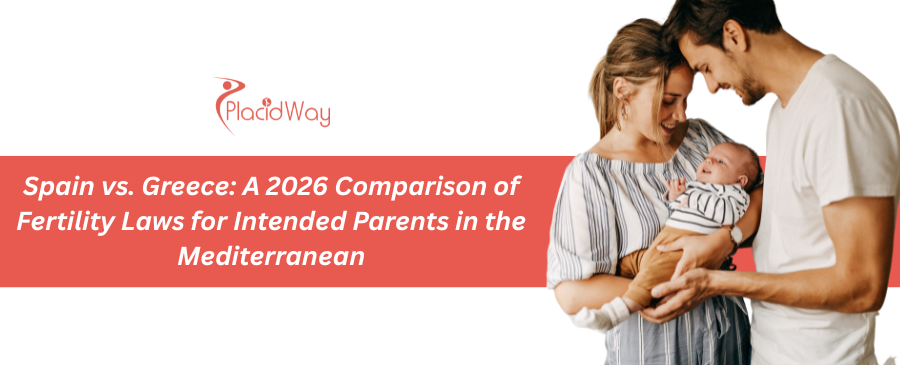
In 2026, intended parents face a crucial choice for IVF in Spain or fertility treatments in Greece. With rising domestic costs, these Mediterranean hubs offer 60% savings, advanced reproductive laws, and world-class care, driving a massive surge in cross-border family building.
The Rise of Mediterranean Reproductive Tourism in 2026
As global infertility rates continue to impact approximately 1 in 6 couples worldwide, the demand for accessible, high-quality assisted reproductive technology (ART) has reached unprecedented levels. In countries like the United States and the United Kingdom, exorbitant healthcare costs, stringent legal restrictions, and long waiting lists for donor materials have created a formidable barrier to parenthood. Consequently, a massive demographic shift is occurring, with thousands of international patients turning their attention to Southern Europe to fulfill their dreams of building a family.
At the forefront of this medical migration are Spain and Greece. Together, these twin titans of reproductive medicine account for nearly half of all cross-border fertility treatments in Europe. Their dominance is not merely a byproduct of competitive pricing, but rather the result of decades of strategic investments in medical infrastructure, highly specialized embryologists, and progressive legislative frameworks designed specifically to support intended parents. By 2026, analyzing the distinct legal and medical landscapes of these two nations has become an essential first step for anyone considering international fertility care.
Did You Know?
Spain performs over 50% of all egg donation cycles in Europe, largely due to its highly efficient donor compensation laws. Meanwhile, Greece has recently experienced a 35% year-over-year increase in international fertility patients following its landmark decision to raise the maternal age limit.
Understanding IVF in Spain: Progressive Laws and Anonymity
Spain has long been heralded as the undisputed capital of European fertility treatments, primarily due to its incredibly comprehensive and permissive legal framework regarding Assisted Reproduction Techniques (Law 14/2006). One of the most significant pillars of Spanish fertility law is strict donor anonymity. Unlike the UK or Australia, where donor-conceived children can access their donor's identity upon turning 18, Spain mandates absolute confidentiality. This legal protection guarantees an abundant, highly diverse pool of young, healthy egg and sperm donors, virtually eliminating the agonizing wait times experienced in other Western nations.
Furthermore, Spanish legislation is remarkably inclusive. Access to an IVF cycle or intrauterine insemination (IUI) is legally guaranteed for all women over the age of 18, regardless of their marital status or sexual orientation. Single women and same-sex female couples have identical legal rights to heterosexual couples when accessing reproductive medicine. The legal limit for women undergoing fertility treatments in Spain is generally capped at 50 years of age, based on ethical guidelines established by the Spanish Fertility Society (SEF), ensuring that maternal health remains a paramount priority throughout the pregnancy.
Exploring Fertility Treatment in Greece: Age Limits and Donor Policies
Greece has rapidly emerged as a formidable alternative to Spain, capturing the attention of the global medical tourism market through aggressive, patient-friendly legislative reforms. In a landmark update to its reproductive laws, the Greek government officially extended the maximum age limit for women undergoing IVF and embryo transfer procedures to 54 years old. This pivotal legislative change transformed Greece into a sanctuary for older intended parents who have "aged out" of eligibility in their home countries or other European jurisdictions, offering them a critical, legally protected lifeline to motherhood.
In addition to its generous age limits, Greece offers immense flexibility regarding gamete donation. The country permits both anonymous and non-anonymous egg and sperm donation, granting intended parents the power to choose the pathway that best aligns with their family's ethical and personal preferences. Greece also maintains highly favorable laws surrounding embryo donation and "double donation" (using both donor eggs and donor sperm), making it an exceptionally versatile destination for couples facing severe, multifaceted infertility diagnoses.
Spain vs. Greece: A Side-by-Side Cost Comparison of IVF Cycles
While emotional and legal factors are paramount, the financial reality of reproductive medicine is often the definitive catalyst for medical travel. In the United States, a single IVF cycle using donor eggs can easily exceed $30,000 when factoring in agency fees, legal contracts, and medication—expenses that are rarely covered by domestic health insurance policies. The Mediterranean model completely disrupts this prohibitive pricing structure, offering world-class, heavily regulated care at a fraction of the cost.
Because both Spain and Greece operate under nationalized healthcare frameworks that subsidize medical education and regulate pharmaceutical costs, elite private fertility centers can offer highly competitive, all-inclusive packages. When comparing the two destinations, Greece is generally slightly more economical than Spain, though both provide staggering savings compared to North American averages. These transparent pricing models empower patients to undertake multiple cycles if necessary, dramatically increasing their cumulative chances of a successful live birth.
"The landscape of global family building is shifting rapidly in 2026. Intended parents are no longer bound by restrictive domestic legislations or prohibitive pricing. By choosing Mediterranean hubs, they are accessing legally secure, highly regulated, and immensely compassionate reproductive care that turns their dreams of parenthood into reality while maintaining absolute clinical excellence."
— Pramod Goel, CEO of PlacidWay
The Advanced Reproductive Infrastructure of Mediterranean Hubs
The exceptional success rates observed in both Spain and Greece are directly correlated to their massive investments in next-generation reproductive technologies. The medical infrastructure in these nations is governed by strict European Union Tissue and Cell Directives, ensuring pristine laboratory conditions, rigorous air quality controls, and immaculate cryopreservation protocols. These elite facilities resemble high-tech scientific institutes rather than standard clinics, providing patients with an unparalleled level of clinical safety and technological sophistication.
Inside the embryology laboratories, international patients benefit from technologies that are often considered expensive "add-ons" in their home countries. Time-lapse incubators (such as the EmbryoScope), artificial intelligence-assisted embryo selection software, and advanced MACS (Magnetic Activated Cell Sorting) for sperm selection are frequently standard protocols in Mediterranean packages. By utilizing these state-of-the-art diagnostic and cultivation tools, specialists can significantly increase implantation rates while simultaneously reducing the risk of miscarriage and multiple pregnancies.
Navigating the Complexities of Surrogacy Laws in the Mediterranean
When it comes to gestational surrogacy, a profound legal divide exists between the two nations, highlighting the necessity of thorough destination research. In Spain, all forms of surrogacy—whether altruistic or commercial—are strictly prohibited by law. According to the Spanish legal framework, the woman who gives birth is legally recognized as the mother, rendering any surrogacy contracts null and void. Therefore, intended parents requiring a gestational carrier must look outside of Spain to build their families securely.
Conversely, Greece stands out as one of the very few countries in Europe with a comprehensive, legally secure framework for altruistic surrogacy that is open to international citizens. Greek law permits heterosexual couples and single women (provided they have a medical inability to carry a child) to engage in surrogacy. The defining feature of the Greek system is its preemptive legal protection; intended parents must obtain a judicial court order prior to embryo transfer. This guarantees that the intended parents are recognized as the legal parents from the very moment of conception, ensuring a seamless journey home.
Did You Know?
Because Greek law grants the pre-birth court order for surrogacy, the surrogate mother's name is never featured on the baby's birth certificate. The international intended parents are immediately listed as the sole legal guardians at the hospital, completely bypassing the complex adoption processes required in many other nations.
LGBTQ+ Family Building: Legal Protections in Spain and Greece
For the LGBTQ+ community, selecting a legally secure and culturally welcoming destination is just as critical as the medical treatment itself. Spain has long been a pioneer in LGBTQ+ rights, and its fertility laws reflect this progressive stance. For married lesbian couples, Spain famously offers the ROPA method (Reception of Oocytes from Partner), often referred to as "reciprocal IVF." This beautiful medical procedure allows one partner to provide the genetic material (the egg) while the other partner carries the pregnancy, allowing both mothers to be deeply, physically involved in the creation of their child.
Greece has also made tremendous strides in modernizing its societal and legal frameworks, recently passing historic legislation recognizing same-sex marriage. While access to fertility treatments like IVF and IUI is legally seamless for single women and lesbian couples in Greece, the surrogacy laws for male same-sex couples remain legally complex under the current statutory definitions. Therefore, lesbian couples frequently utilize both Mediterranean hubs, while intended fathers pursuing surrogacy often consult specialized legal experts to navigate the specific jurisdictional nuances of the Greek court system.
How PlacidWay Connects Intended Parents with Elite European Care
While the medical and financial benefits of pursuing IVF in Spain or fertility treatments in Greece are profoundly attractive, attempting to navigate a foreign healthcare system independently can be incredibly stressful. The digital landscape is saturated with self-promoting agencies, complex medical terminology, and opaque billing practices. For international patients dealing with the emotional vulnerability of infertility, overcoming language barriers, verifying clinic accreditations, and understanding foreign legal documents can feel like an insurmountable challenge.
This is where the strategic role of a dedicated medical tourism facilitator becomes vital. As an independent global connector, PlacidWay curates a highly vetted network of elite, board-certified reproductive specialists across the Mediterranean. By utilizing PlacidWay, intended parents can seamlessly review transparent treatment packages, analyze verified success rates, and secure direct virtual consultations with top European embryologists. By stripping away the logistical complexities and providing a trusted pathway to care, PlacidWay ensures that your entire focus remains on what truly matters: a healthy pregnancy and a successful journey to parenthood.





.png)
.png)
.png)





.png)


.png)









Share this listing