
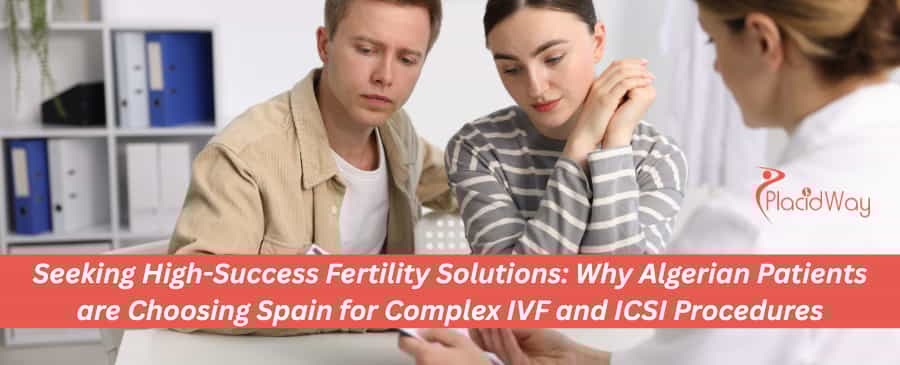
The journey toward parenthood can be emotionally and physically demanding, particularly for couples facing complex infertility challenges. In recent years, an increasing number of Algerian patients have begun looking beyond their national borders to secure highly specialized reproductive care. Driven by the desire for advanced diagnostic tools and proven treatment protocols, these prospective parents are turning to Europe for reliable solutions.
Among European destinations, the landscape of medical tourism in Spain has garnered significant global attention, particularly in the field of assisted reproduction. Combining stringent medical regulations, highly trained embryologists, and a profound understanding of international patient needs, Spanish medical facilities offer an environment where complex fertility issues are addressed with compassion and scientific rigor. This convergence of expertise and accessibility makes Spain a premier choice for fertility treatments.
Spain performs roughly 10% of all in vitro fertilization cycles in Europe, making it one of the most active hubs for reproductive medicine on the continent.
Why Algerian Patients Prefer Advanced IVF Clinics in Spain
For Algerian patients, the decision to seek care abroad involves weighing various geographical, financial, and medical factors. The close proximity of the Iberian Peninsula to North Africa means that travel is relatively short and less physically taxing, which is a crucial consideration for women undergoing delicate hormonal therapies. Furthermore, the cultural familiarity and availability of French or Arabic-speaking medical coordinators significantly reduce the anxiety associated with international healthcare.
Beyond logistics, the driving force behind this cross-border migration is the unparalleled quality found within IVF clinics in Spain. These facilities continuously invest in state-of-the-art laboratory equipment, such as time-lapse embryo incubators and advanced genetic screening technologies. This commitment to innovation allows Spanish specialists to successfully manage intricate cases—such as severe endometriosis or male factor infertility—that might otherwise present insurmountable challenges in standard healthcare settings.
International patients account for nearly 20% to 30% of the total patient demographic in top-tier Spanish fertility clinics, underscoring the country's global reputation in reproductive medicine.
Navigating Complex Fertility Treatments: IVF and ICSI Procedures Explained
Understanding the distinction between various assisted reproductive techniques is vital for patients embarking on this clinical journey. In Vitro Fertilization (IVF) is a foundational procedure where a woman's eggs are retrieved and combined with sperm in a specialized laboratory environment. This method relies on the natural ability of the sperm to penetrate the egg, and it is typically recommended for individuals with fallopian tube blockages, ovulation disorders, or unexplained infertility.
When conventional fertilization methods are unlikely to succeed, specialists generally turn to Intracytoplasmic Sperm Injection (ICSI). This sophisticated microsurgical technique involves the direct injection of a single, carefully selected sperm into the cytoplasm of a mature egg. ICSI is overwhelmingly the preferred protocol when addressing severe male infertility factors, such as low sperm count, poor motility, or abnormal morphology, thereby significantly enhancing the likelihood of successful fertilization.
Patient Experience: A Journey of Hope
"After three years of struggling with male factor infertility in Algeria, we were overwhelmed. We traveled to Spain for ICSI. The meticulous care and clear explanation of the microinjection process gave us confidence we hadn't felt in years. Today, we are expecting our first child." — Amina & Tariq, Algiers
Analyzing the Affordable IVF Cost in Spain Compared to Algeria
Financial planning is an integral component of any medical journey, and fertility treatments represent a significant investment. Patients must evaluate not only the base price of a cycle but also the comprehensive value of the care received. While local options in Algeria might appear initially cheaper, they may lack access to specialized add-ons like preimplantation genetic testing, which can ultimately necessitate multiple, costly repeat cycles.
When evaluating the affordable IVF in Spain, international patients find that the pricing is highly competitive, especially when contrasted with the United States or the United Kingdom. The transparent structure of the IVF cost in Spain typically encompasses highly sophisticated laboratory monitoring, rigorous quality control, and multidisciplinary medical expertise. Below is a comparative overview of typical procedural costs.
| Procedure Name | Average Cost in Spain (USD) | Cost Comparison: Algeria (USD) |
|---|---|---|
| Standard IVF Cycle | $4,500 - $6,000 | $2,000 - $3,500 (Basic tech) |
| IVF with ICSI | $5,500 - $7,000 | $3,000 - $4,500 |
| Preimplantation Genetic Testing (PGT) | $2,000 - $3,500 | Often Unavailable / Extremely Limited |
| Frozen Embryo Transfer (FET) | $1,800 - $2,500 | $800 - $1,500 |
Patient Experience: Value Beyond Price
"We initially hesitated because the upfront costs in Europe seemed higher. However, the comprehensive package in Spain included advanced embryo monitoring which wasn't available to us back home. The investment in higher success probability was entirely worth it." — Karim & Salima, Oran
Legal Framework and Safety Standards for Fertility Treatments in Spain
One of the primary reasons international patients gravitate toward European medical institutions is the robust legal and ethical framework governing clinical practice. Spanish assisted reproduction laws are considered some of the most progressive, yet strictly regulated, in the world. These comprehensive regulations ensure that all procedures prioritize the physical health and emotional well-being of the patients while maintaining the highest ethical standards.
Furthermore, safety is continuously audited by both national health authorities and international accreditation bodies. Clinics must adhere to rigorous protocols concerning laboratory sterilization, embryo handling, and data privacy. This transparent regulatory environment provides immense peace of mind to Algerian couples, reassuring them that their complex IVF and ICSI procedures are conducted under meticulous oversight.
While Spanish law is progressive, there are strict contraindications and limitations. For instance, fertility treatments are generally not performed on women over the age of 50 to protect maternal health, and commercial surrogacy remains strictly prohibited under national law.
The Diagnostic Process Before Undergoing IVF in Spain
A successful fertility outcome relies heavily on the accuracy of the initial diagnosis. Before any hormonal medications are prescribed, Spanish specialists conduct an exhaustive evaluation to identify the exact physiological barriers preventing natural conception. This personalized approach ensures that the subsequent treatment protocol is specifically tailored to the unique biological profile of the couple.
For patients traveling from Algeria, this often begins with remote consultations, followed by intensive testing upon arrival. This deep-dive diagnostic phase is designed to minimize unexpected variables during the actual cycle, thereby optimizing the chances of a successful pregnancy. The thoroughness of these preliminary evaluations is a hallmark of premium medical care.
Advanced 3D transvaginal ultrasounds used in Spanish clinics can detect subtle uterine anomalies that traditional 2D scans might completely miss, preventing potential implantation failures.
- Hormonal Profiling: Comprehensive blood tests assessing AMH, FSH, LH, and thyroid function.
- Advanced Semen Analysis: Evaluating not just count and motility, but DNA fragmentation levels in sperm.
- Uterine Evaluation: Hysteroscopy or sonohysterography to ensure a healthy environment for embryo implantation.
- Genetic Screening: Karyotyping to rule out chromosomal abnormalities in either partner.
Preparing Mentally and Physically for Infertility Treatments Abroad
Embarking on a fertility journey in a foreign country requires careful mental and physical preparation. The combination of travel logistics, significant financial commitment, and the inherently stressful nature of hormonal treatments can place a heavy burden on a couple. Establishing a healthy baseline before boarding a flight can significantly impact how a patient responds to the rigorous medical protocols.
Medical professionals generally advise patients to adopt a holistic approach to preparation at least three months prior to the scheduled cycle. This includes optimizing nutrition, managing stress levels, and maintaining open communication with your partner. A well-prepared body and mind are more resilient to the demands of advanced reproductive interventions.
- Organize all previous medical records, test results, and surgical notes from your local doctors in Algeria. Having these professionally translated into English or Spanish can expedite your consultation process.
- Focus on a Mediterranean diet rich in antioxidants, omega-3 fatty acids, and folic acid to support cellular health prior to treatment.
What to Expect During the ICSI Fertilization Process
For patients requiring the ICSI procedure, understanding the timeline and methodology helps demystify the experience in the laboratory. The process begins similarly to traditional IVF, involving daily hormonal injections designed to stimulate the ovaries to produce multiple mature eggs. Throughout this phase, the patient undergoes frequent ultrasound monitoring to track follicular development precisely.
Once the follicles reach optimum size, an egg retrieval procedure is performed under light sedation. It is at this critical juncture that the embryology team takes over, employing highly specialized microscopes and micromanipulation tools. The precision involved in handling both the delicate oocyte and the microscopic sperm represents the pinnacle of modern clinical biology.
- Oocyte Denudation: The retrieved eggs are carefully stripped of surrounding cells to evaluate maturity.
- Sperm Selection: Embryologists utilize high-magnification techniques to select a single, morphologically normal and highly motile sperm.
- Microinjection: Using a microscopic glass needle, the chosen sperm is gently injected directly into the center of the mature egg.
- Incubation and Monitoring: The injected eggs are placed in state-of-the-art incubators, often equipped with time-lapse cameras, to monitor cellular division over the next 3 to 5 days.
Patient Experience: A Scientific Miracle
"Because of severe sperm morphology issues, we were told natural conception was impossible. The embryologists in Spain explained the ICSI process step-by-step, showing us how they would select the healthiest sperm. We successfully transferred a top-quality blastocyst." — Farid & Yasmine, Constantine
Timeline and Stay Requirements for Medical Tourism in Spain
Managing travel timelines is a critical aspect of international fertility treatment. Because the female reproductive cycle dictates the medical schedule, precision in travel planning is paramount. Patients must coordinate their arrival in Europe to align seamlessly with the onset of their menstrual cycle or the prescribed initiation of stimulation medications.
Typically, a full fresh IVF or ICSI cycle requires the female patient to be present in the destination country for approximately 10 to 14 days. This duration generally covers the intensive monitoring phase, the surgical egg retrieval, and the subsequent embryo transfer. Male partners, if providing a fresh semen sample, may only need to be present for a few days around the time of the egg retrieval.
- Ensure your travel visa allows for a slightly extended stay. Medical delays, such as slower-than-expected follicular growth, can occasionally push the embryo transfer date back by a few days.
- Plan for minimal physical exertion post-transfer. Book direct flights back to Algeria where possible to reduce travel stress during the delicate two-week wait.
Understanding the Success Rates of Fertility Procedures
When investigating international options, the reported success rate of a clinic is often the defining metric for hopeful parents. However, it is essential to interpret these numbers with clinical nuance. Success rates are highly variable and are deeply influenced by specific patient characteristics, most notably maternal age, ovarian reserve, and the underlying cause of infertility.
Spanish medical facilities are renowned for their high success statistics, largely attributed to their rigorous quality control and utilization of advanced technologies like blastocyst culturing and preimplantation genetic testing. While these interventions significantly improve the probability of clinical pregnancy, responsible healthcare providers emphasize that biology cannot be perfectly engineered, and results are never universally guaranteed.
According to broader European fertility data, cumulative clinical pregnancy rates per embryo transfer for women under 35 undergoing IVF/ICSI in premium facilities can often range between 50% and 60%.
Potential Risks and Transparent Care During IVF Treatment
Every medical intervention carries inherent risks, and fertility treatments are no exception. A hallmark of authoritative healthcare is the transparent discussion of these potential complications. Spanish clinics prioritize comprehensive patient education, ensuring that individuals fully understand the physiological implications of robust hormonal stimulation and minor surgical procedures.
Most patients experience mild side effects, such as bloating, mood swings, or localized bruising at injection sites. However, clinical teams strictly monitor for more significant complications, ensuring rapid intervention if necessary. The objective is always to prioritize the long-term health and safety of the patient over forcing a cycle to completion.
- Ovarian Hyperstimulation Syndrome (OHSS): A condition where ovaries swell and become painful. Clinics use customized medication dosages to generally minimize this risk.
- Multiple Pregnancies: To mitigate the risks associated with carrying twins or triplets, standard practice in leading European clinics is shifting heavily toward Elective Single Embryo Transfer (eSET).
- Ectopic Pregnancy: Though rare, there is a slight risk that an embryo implants outside the uterus, requiring prompt medical resolution.
By utilizing "freeze-all" protocols—where embryos are cryopreserved and transferred in a subsequent, non-stimulated cycle—clinics have drastically reduced the incidence of late-onset OHSS.
Post-Treatment Care and Monitoring After Returning to Algeria
The medical journey does not conclude once the embryo transfer is complete and the patient boards a flight back home. The subsequent period, often referred to as the "two-week wait," requires careful medication management and emotional resilience. Continuous hormonal support, typically via progesterone supplementation, is vital for maintaining an optimal uterine environment for implantation.
Premium healthcare facilities ensure continuity of care across borders. International patient coordinators generally remain in close contact with returning Algerian patients. They provide explicit protocols for local blood tests (Beta hCG) to confirm pregnancy and collaborate with local obstetricians to schedule the initial viability ultrasounds, ensuring a seamless transition from fertility care to prenatal care.
Patient Experience: Supportive Care Across Borders
"Returning home to Algiers after the transfer was nerve-wracking. However, our coordinator checked in continuously. When I had minor spotting, I could reach them immediately for advice. Thankfully, the blood test two weeks later was positive." — Nadia & Omar, Annaba
How PlacidWay Assists Your IVF and ICSI Medical Tourism Journey in Spain
Coordinating complex medical treatments across international borders requires precision, advocacy, and comprehensive logistical support. For patients traveling from North Africa, navigating European healthcare systems independently can be incredibly daunting. Partnering with experienced facilitators ensures that you can focus entirely on your health and your path to parenthood.
PlacidWay serves as a dedicated partner for patients seeking specialized medical solutions globally. Our approach is designed to connect you with highly vetted, internationally accredited healthcare providers while streamlining the complex administrative aspects of seeking care abroad.
- Providing comprehensive access to profiles of highly accredited international medical facilities.
- Facilitating secure transmission of your medical records and prior fertility tests to international specialists.
- Assisting with the coordination of initial remote video consultations with leading reproductive endocrinologists.
- Offering dedicated case managers who act as a liaison to bridge any language or administrative gaps.
- Helping patients compare customized treatment plans and transparent cost structures across different providers.
- Ensuring continuity of communication between your local physician and your international medical team.
Frequently Asked Questions About IVF and ICSI in Spain
When considering crossing borders for advanced reproductive care, prospective patients naturally have numerous concerns regarding protocols, legality, and logistics. Below is a compilation of answers addressing the most common queries raised by Algerian individuals evaluating their fertility options in Europe.
These responses aim to provide clarity and set realistic expectations for your upcoming medical journey. Always consult directly with your chosen healthcare provider for advice tailored specifically to your clinical profile.
Why do Algerian patients choose Spain for fertility treatments?
Algerian patients frequently select Spain due to its close geographical proximity, advanced reproductive technologies, and stringent European healthcare standards. Additionally, Spanish specialists are highly experienced in managing complex infertility cases.
How long do I need to stay in Spain for an IVF cycle?
Most patients typically need to stay in Spain for about 10 to 14 days. This timeframe generally covers the ovarian stimulation monitoring, egg retrieval, and embryo transfer phases.
What is the difference between IVF and ICSI?
Standard IVF involves mixing eggs and sperm in a dish for natural fertilization. ICSI, however, involves the direct injection of a single healthy sperm into an egg, which is generally recommended for severe male infertility.
Are donor eggs or sperm legally permitted in Spain?
Yes, Spanish law allows the use of donor eggs and sperm for fertility treatments. The donation process is strictly regulated, entirely anonymous, and based on rigorous medical matching.
Is the cost of IVF in Spain more affordable than other European countries?
While not the cheapest globally, the IVF cost in Spain is highly competitive compared to the UK or the US, offering an excellent balance of affordability and top-tier medical expertise.
Can I return to Algeria immediately after embryo transfer?
Physicians generally advise waiting 1 to 2 days after an embryo transfer before flying. This brief rest period helps minimize stress, though flying itself is not typically contraindicated.
Are there age limits for women undergoing IVF in Spain?
Yes, Spanish clinics generally adhere to a consensus that limits assisted reproductive treatments to women up to the age of 50. This guideline helps protect the health of both the mother and the potential child.
What happens if I develop Ovarian Hyperstimulation Syndrome (OHSS)?
If mild OHSS occurs, it is typically managed with rest and hydration. In severe cases, the clinic may freeze the embryos and delay the transfer until your body has fully recovered.
How do I communicate with Spanish doctors if I only speak French or Arabic?
Many premier fertility clinics in Spain maintain international departments with multilingual staff. Translators for French, Arabic, and English are frequently available to ensure clear medical communication.
Is genetic testing (PGT) available during IVF in Spain?
Yes, Preimplantation Genetic Testing (PGT) is available and often recommended for patients with a history of recurrent miscarriages or known genetic conditions. It helps identify the most viable embryos before transfer.
Ready to take the next step in your fertility journey? Contact PlacidWay today to connect with top-tier IVF specialists internationally.
Medical Disclaimer: This article is for informational purposes only and is not medical advice. Always consult a qualified healthcare provider before any medical decisions. Results may vary. Read Full Disclaimer here.
References
- European Society of Human Reproduction and Embryology (ESHRE). Art Fact Sheet. https://www.eshre.eu/Press-Room/Resources
- Mayo Clinic. In vitro fertilization (IVF). https://www.mayoclinic.org/tests-procedures/in-vitro-fertilization/about/pac-20384716
- World Health Organization (WHO). Infertility. https://www.who.int/news-room/fact-sheets/detail/infertility
- American Society for Reproductive Medicine (ASRM). Intracytoplasmic Sperm Injection (ICSI). https://www.asrm.org/practice-guidance/practice-committee-documents/
- Wikipedia. Fertility tourism. https://en.wikipedia.org/wiki/Fertility_tourism



-.jpg)

.png)
.png)
.png)




.png)

.png)








Share this listing