
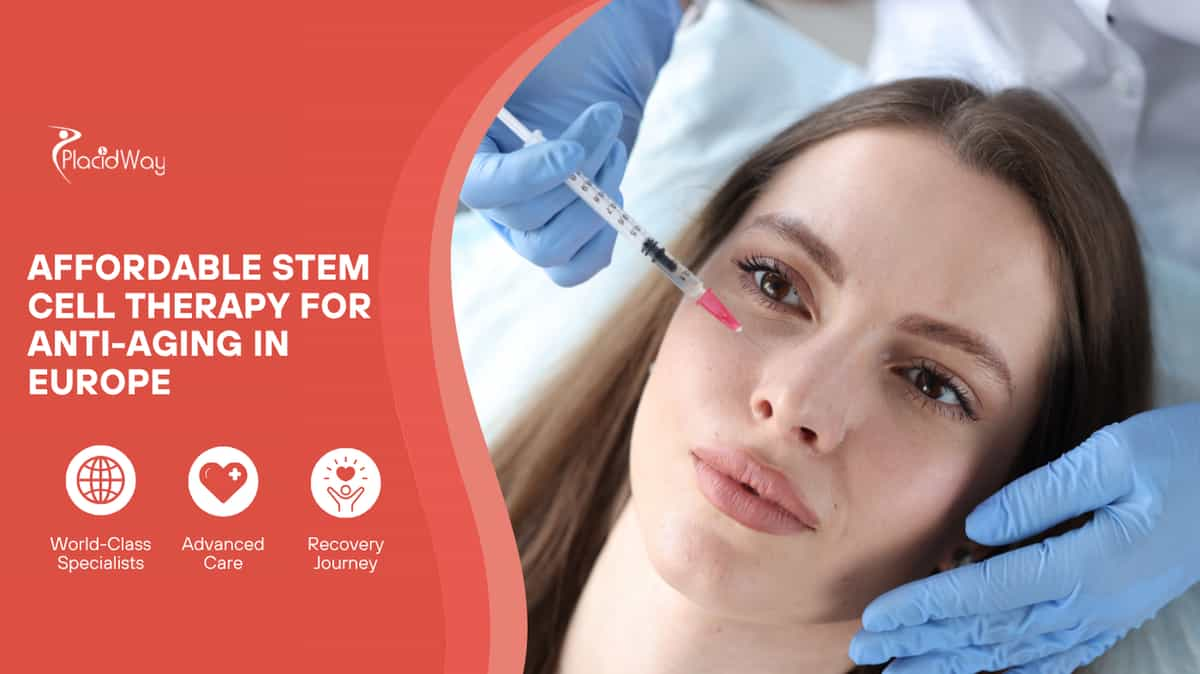
Anti-aging medicine has plenty of buzzwords, but your health deserves the fine print. This anti-aging stem cell therapy package in Europe starts from $6,000 and is intended for adults exploring a clinician-led regenerative-medicine assessment and, only when medically appropriate, a possible cell-based intervention.
The supplied package information does not confirm the exact cell product, administration method, medical center, or itemized inclusions. Your eligibility, treatment plan, expected stay, and final price must be confirmed after medical review and set out in a written quote before you make travel arrangements.
Key Insights for Anti-Aging Stem Cell Therapy in Europe
- Starting package cost: $6,000, subject to the recommended protocol, clinical screening, product details, monitoring needs, and your physician's assessment.
- Evidence first: Stem cell interventions marketed for “anti-aging” are not established treatments for reversing aging. Ask what specific health goal is being addressed and what human evidence supports that use.
- Regulatory status matters: Many cell-based medicines in Europe fall under the advanced therapy medicinal product framework, although the correct pathway depends on the product and treatment country.
- Medical screening is essential: A responsible assessment reviews diagnoses, medicines, infection risk, cancer history, and travel fitness.
- Request traceable information: Ask in writing about the proposed cell source, processing, testing, dose, administration route, regulatory status, consent process, and complication plan.
- Arrange follow-up at home: Plan for local medical follow-up before travel and obtain a complete discharge summary before leaving the destination.
How Much Does Anti-Aging Stem Cell Therapy in Europe Cost?
The starting package price is $6,000. This is an initial planning figure rather than a guaranteed final bill. A direct international price comparison is limited because anti-aging cell-based interventions are not standardized: cell source, laboratory processing, dose, administration route, clinical monitoring, and regulatory pathway can differ considerably.
Stem Cell Therapy Cost Comparison for International Patients
| Destination / Comparison | Indicative Price | Planning Context |
|---|---|---|
| Europe package | From $6,000 USD | Supplied package starting price; final quote follows medical assessment. |
| United States | No comparable estimate shown | There is no standardized anti-aging cell treatment that can be reliably matched to this package. |
| Canada | No comparable estimate shown | A safe comparison requires the same product, protocol, monitoring, and follow-up terms. |
| United Kingdom | No comparable estimate shown | Request an itemized written quote instead of comparing headline prices alone. |
Important: Do not compare a cell-based treatment solely by cost. Before deciding, confirm the exact intervention, regulatory basis, evidence for your intended use, clinician credentials, adverse-event plan, and everything included or excluded from the quote.
Estimated $6,000 Package Cost Breakdown
No clinic-specific billing sheet was supplied. To avoid presenting unverified fees as fact, the table identifies the areas that require written confirmation rather than assigning invented amounts to individual services.
| Procedure Item | Estimated Cost | What to Confirm |
|---|---|---|
| Clinical consultation and treatment planning | To be confirmed | Whether the medical consultation, review of records, and screening are included. |
| Cell-based intervention, if recommended | To be confirmed | Cell type, source, dose, route, laboratory testing, and regulatory status. |
| On-site observation and discharge instructions | To be confirmed | Monitoring period, emergency capability, and the post-discharge contact route. |
| Estimated Starting Total | $6,000 | Final itemization must be confirmed in the written treatment quote after assessment. |
What May Be Included in an Anti-Aging Stem Cell Therapy Package?
Ask for a written package sheet before booking. The supplied information does not confirm included services, and the following are items to verify individually rather than promises of inclusion.
- Consultation with the clinician responsible for your assessment
- Review of medical records, medications, and relevant laboratory results
- Explanation of the specific treatment plan and informed-consent discussion
- Documentation of the proposed cell product and administration plan
- Facility, nursing, and routine monitoring charges
- Discharge instructions, medical records, and clinical contact details
- Any planned remote follow-up after you return home
What Is Usually Not Included?
- International flights, visas, local transport, hotel stays, meals, and personal expenses
- Extra testing, imaging, treatment changes, or extended observation not included in the final quote
- Travel insurance, medical evacuation cover, and emergency care after returning home
- Translation, medical-record transfer, independent second opinions, or additional prescriptions
- Management of complications, extra hospital care, or repeat treatment unless expressly included
Who May Be Considered for a Regenerative-Medicine Assessment?
Suitability does not depend on age alone or on a wish to “feel younger.” A qualified clinician should decide whether a proposed intervention is appropriate for your health, lawful in the destination country, and supported by evidence for the goal you want to address.
- Adults who can describe a specific health or functional concern and understand the limits of current evidence
- People who can provide complete health records and participate in a full informed-consent discussion
- Patients whose medical conditions are stable enough for travel, as determined by their treating doctors
- People able to arrange follow-up care and seek urgent help if concerning symptoms occur
- Patients with realistic expectations and no expectation of a guaranteed result
Extra caution may be needed with active infection, uncontrolled health conditions, pregnancy or breastfeeding, a current or recent cancer history, immune suppression, clotting concerns, or medicines that affect bleeding or immunity. These are screening considerations, not a substitute for personal medical advice.
Medical Records Needed Before Traveling to Europe
- A current medical summary from your primary clinician and a clear description of your treatment goals
- Diagnoses, prior procedures, hospitalizations, allergies, and a complete medication and supplement list
- Recent relevant blood tests, imaging reports, and specialist letters where available
- History of cancer, autoimmune disease, blood clots, infection, or immunosuppressive treatment
- Details of previous stem cell, biologic, infusion, or regenerative-medicine treatments and any reactions
How a Stem Cell Therapy Plan Is Typically Reviewed
Stem cell therapy is not one single procedure. It can involve different cell sources, handling methods, doses, and administration routes, each with different evidence, regulation, and risk. A responsible process starts with diagnosis and suitability, not a one-size-fits-all injection.
Step-by-Step Treatment Review
- Preliminary review: The clinical team reviews your health records, goals, contraindications, and ability to travel safely.
- Consultation and consent: You discuss potential benefits, evidence limits, risks, alternatives, costs, and your right to decline treatment.
- Product verification: Ask for information on cell source, processing, sterility testing, identity, storage, and regulatory pathway.
- Administration, only if appropriate: The clinician explains the recommended route, treatment setting, and expected observation period.
- Observation and discharge: You receive post-treatment instructions, warning signs, and clear contact information for urgent concerns.
- Follow-up: The treating team and your home clinician coordinate records, recovery, and reporting of possible adverse events.
Anti-Aging Stem Cell Therapy Timeline: From Review to Follow-Up
Before travel: Send records, receive a preliminary assessment, and request the proposed protocol, itemized quote, cancellation terms, and plan for complications.
Before booking: Confirm the treating clinician, facility details, product documentation, regulatory information, and follow-up arrangements.
Arrival in Europe: Attend an in-person clinical assessment. The clinician may request extra testing, change the plan, postpone care, or decide that treatment is not appropriate.
Treatment day: Complete final consent and receive care only if the treating clinician considers it suitable. Stay for the advised observation period.
Before departure: Obtain your discharge summary, product and treatment details, test results, medication list, and direct clinical contact information.
Return home: Attend planned follow-up with a local clinician and seek urgent care for serious, new, or worsening symptoms.
How Long Should You Stay in Europe After Treatment?
The required stay depends on the specific treatment, route of administration, monitoring needs, medical conditions, and your recovery. Travel clearance must come from the treating physician, not from a package itinerary.
- Keep your return date flexible in case the clinician recommends extra observation or testing.
- Choose accommodation within practical reach of the treatment facility and local emergency services.
- Do not plan a long-distance flight until the treating physician says you are fit to travel.
- Ask for travel, hydration, mobility, medication, and emergency-care instructions before leaving.
Recovery and Aftercare After Cell-Based Treatment
First 24–48 Hours
Follow discharge instructions, rest as advised, use only approved medicines, and record symptoms. Ask the clinical team before taking new supplements or anti-inflammatory medicines, which may not be appropriate for your individual treatment plan.
First Days to Weeks
Attend planned checks, follow any site-care instructions, and stay in contact with the treating team. Your home clinician should receive your medical record, especially if you have chronic health conditions or take several medicines.
Longer-Term Follow-Up
Assess any changes against the original, measurable health goal with clinical guidance. A temporary change in energy or symptoms does not prove a treatment effect. New, persistent, or worsening symptoms need medical assessment rather than being assumed to be part of recovery.
Risks and Possible Complications of Stem Cell Therapy
Cell-based interventions have risks, and no procedure is risk-free. This list is not exhaustive; the treating physician should explain the risks relevant to the specific product, dose, route, your health history, and travel plan before you consent.
- Injection or infusion reactions, pain, bruising, bleeding, dizziness, or allergic reactions
- Infection or contamination-related illness connected with collection, processing, storage, or administration
- Immune reactions or incompatibility concerns, particularly with donor-derived products
- Blood clots, tissue or organ complications, and other route-specific risks
- Uncertain effectiveness, delayed effects, or symptoms unrelated to treatment being mistaken for benefit or harm
- Travel-related problems or difficulty obtaining and funding follow-up care after you return home
Before leaving Europe, make sure you know whom to contact if you develop fever, worsening pain, shortness of breath, chest pain, fainting, spreading redness, swelling, rash, or other concerning symptoms.
What Results Can You Expect From Anti-Aging Stem Cell Therapy?
Anti-aging stem cell therapy should not be described as a proven way to reverse aging, cure disease, or guarantee renewed energy, appearance, or lifespan. Depending on the specific intervention and your health, a clinician may discuss possible goals and uncertainties. Outcomes may vary widely and may not occur.
- Any expected benefit should relate to a defined and measurable health goal rather than a broad promise of “rejuvenation.”
- Ask for human clinical evidence for the intended use, including study population, comparison group, follow-up period, and adverse events.
- Be cautious if a provider says treatment is risk-free, guarantees outcomes, or discourages you from consulting your regular doctor.
- No success rate is stated here because one credible rate cannot be applied across unspecified anti-aging cell products and individual patients.
Frequently Asked Questions About Anti-Aging Stem Cell Therapy in Europe
1. Is anti-aging stem cell therapy proven to reverse aging?
No. There is no broadly established stem cell treatment that reverses aging. Ask for evidence specific to the product and health goal being discussed.
2. What does the $6,000 starting price cover?
The supplied information confirms a starting price only. Request an itemized written quote listing consultation, product, testing, administration, monitoring, medication, and follow-up items.
3. How can I find out what cells would be used?
Ask for the cell source, whether the cells are autologous or donor-derived, processing and testing information, dose, route, manufacturer, and regulatory status.
4. Is stem cell therapy regulated in Europe?
Requirements vary by country and product. Many cell-based medicines are considered ATMPs; the provider should explain the legal and regulatory basis for the specific care proposed.
5. Can I travel alone for treatment?
That depends on your health and treatment plan. A companion may be sensible if you need support after monitoring, medication, sedation, or a long journey.
6. How long should I stay near the clinic?
Only the treating physician can confirm this after reviewing the actual intervention and your recovery. Keep travel dates flexible.
7. What documents should I take home?
Bring your discharge summary, treatment and product details, consent form, test results, medication list, and clinical contact information.
8. What questions should I ask before booking?
Ask who is treating you, their credentials, the evidence for your goal, product details, inclusions, complication arrangements, cancellation terms, and how follow-up works at home.
9. Will insurance cover complications after I return home?
Coverage varies. Contact your insurer before travel and plan for possible follow-up or emergency care, which may not be covered.
10. Should I seek a second opinion?
For an intervention with uncertain evidence or a significant cost, an independent medical opinion can help you understand the proposed treatment, alternatives, and whether travel is appropriate.
Explore Anti-Aging Stem Cell Therapy Options in Europe
Begin with your health history and the questions that matter: what is being proposed, why might it be appropriate for you, what evidence supports it, what could go wrong, and how will follow-up work when you return home? Share your records for a preliminary review and request a written treatment plan before committing to travel.
Medical Disclaimer
This content is provided for general informational and educational purposes only and does not constitute a diagnosis, treatment recommendation, or substitute for care from a licensed medical professional. Eligibility, treatment selection, risks, recovery, travel clearance, and final pricing must be determined through an individual medical assessment.
Medical and Patient Safety References
- U.S. Food and Drug Administration – Consumer Alert on Regenerative Medicine Products
- International Society for Stem Cell Research – Stem Cell Resources for Patients
- International Society for Stem Cell Research – Informed Consent Standard
- European Medicines Agency – Advanced Therapy Medicinal Products Overview
- Centers for Disease Control and Prevention – Medical Tourism Guidance




























Share this listing