
Find Lasting Relief from Back Pain: Your Guide to PELD and Advanced Endoscopic Spine Surgery Abroad
Living with chronic back pain, numbness, or weakness caused by a herniated disc can be debilitating, impacting every aspect of your life. For many, conservative treatments like medication and physical therapy offer only temporary relief. If you've been struggling with persistent back pain, sciatica, or radiating leg pain, you might be exploring advanced solutions like Percutaneous Endoscopic Lumbar Discectomy (PELD).
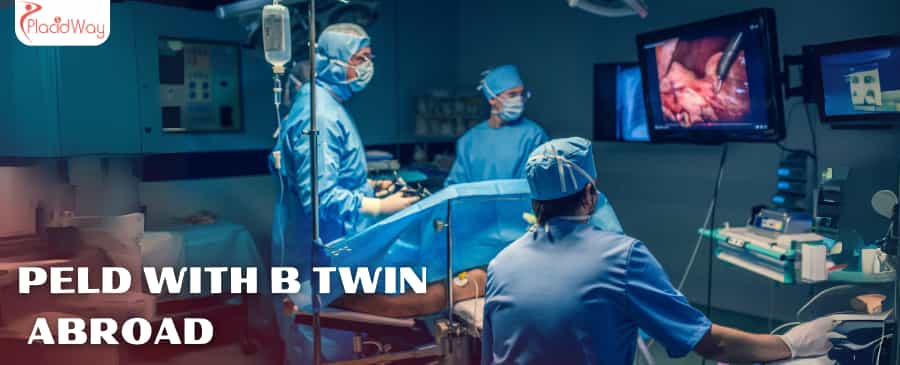
PELD represents a revolutionary leap in spine surgery. It's a highly specialized, minimally invasive procedure designed to remove herniated disc material that presses on spinal nerves, causing discomfort. Unlike traditional open back surgery, PELD uses tiny incisions, a high-definition endoscope, and specialized instruments, leading to less tissue damage, reduced pain, and a quicker return to your daily life. For those seeking even broader solutions, techniques like Biportal Endoscopic Spine Surgery (BESS) offer a "twin" approach, providing another advanced, minimally invasive option for comprehensive spinal care.
The quest for effective, affordable, and high-quality medical care often leads patients to consider medical tourism. Many find that travelling abroad for PELD or BESS not only provides access to world-class surgeons and state-of-the-art facilities but also significant cost savings. This guide will delve deep into PELD and its advanced counterparts, exploring the symptoms they treat, how they work, recovery expectations, and why choosing to undergo these procedures abroad might be the best decision for your spinal health and overall well-being.
What are the common symptoms of a herniated disc that PELD and BESS treat?
A herniated disc, sometimes called a "slipped" or "ruptured" disc, occurs when the soft inner material of a spinal disc pushes through a tear in the tougher outer layer. This can irritate or compress nearby nerves, leading to a range of uncomfortable and often debilitating symptoms. If you're searching for "why does my back hurt" or "sciatica symptoms," these could be signs:
- Radiating Pain (Sciatica): This is perhaps the most common symptom, especially for lumbar (lower back) herniations. Pain typically shoots down one leg, often following the path of the sciatic nerve. It can range from a dull ache to a sharp, burning sensation.
- Numbness or Tingling: You might experience sensory changes, such as numbness or a "pins and needles" sensation, in the area supplied by the affected nerves. Patients often search for "numbness in leg and back pain."
- Weakness: The muscles supplied by the affected nerves can weaken, making it difficult to lift your foot, grasp objects, or perform certain movements. Some might search for "foot drop symptoms."
- Localized Pain: Pain in the lower back or neck where the herniation occurred. This pain can worsen with certain movements, coughing, or sneezing.
- Loss of Reflexes: In some severe cases, reflexes can be diminished or absent.
These symptoms can significantly impact your quality of life, making everyday activities challenging. PELD and BESS are designed to directly address the root cause by removing the disc material pressing on these nerves.
What causes spinal disc herniation and who is at risk?
Understanding the causes behind a herniated disc can help in prevention and treatment. While sometimes a specific event triggers a herniation, it's often the result of gradual wear and tear over time.
- Age-Related Degeneration: As we age, our spinal discs lose water content, becoming less flexible and more prone to tearing. This is a common reason why people search for "disc degeneration causes."
- Trauma or Injury: A sudden twist, fall, or impact can put immense pressure on a disc, causing it to herniate.
- Improper Lifting: Using your back muscles instead of your leg and thigh muscles to lift heavy objects is a frequent culprit.
- Repetitive Motions: Certain occupations or activities that involve constant bending, twisting, or lifting can increase risk.
Who is at risk?
- Genetics: A family history of disc problems can increase your predisposition.
- Obesity: Excess body weight puts added stress on the spinal discs.
- Smoking: Nicotine can reduce oxygen supply to the discs, accelerating degeneration.
- Occupation: Jobs requiring heavy lifting, pushing, pulling, or prolonged sitting/driving.
- Lack of Exercise: Weak core muscles provide less support for the spine.
Addressing these risk factors, where possible, can aid in both prevention and recovery.
What is PELD (Percutaneous Endoscopic Lumbar Discectomy) and how does it compare to Biportal Endoscopic Spine Surgery (BESS)?
When searching for "minimally invasive back surgery options" or "endoscopic discectomy," PELD often comes up as a leading choice. It's a game-changer for those seeking relief without the extensive recovery associated with traditional open spine surgery.
Percutaneous Endoscopic Lumbar Discectomy (PELD):
- "Keyhole" Surgery: PELD involves a tiny incision (around 7-8 mm) through which a thin tube containing an endoscope (a camera) and specialized instruments is inserted.
- Direct Visualization: The surgeon views the spine on a monitor, navigating precisely to the herniated disc material.
- Precise Removal: The herniated portion of the disc is meticulously removed, relieving pressure on the nerve.
- Uniportal Approach: PELD uses a single access portal, making it incredibly precise for specific types of disc herniations.
- Benefits: Minimal muscle damage, reduced blood loss, smaller scar, faster recovery, and significantly less post-operative pain.
Biportal Endoscopic Spine Surgery (BESS) - The "B twin" approach:
While PELD is uniportal, Biportal Endoscopic Spine Surgery (BESS) utilizes two separate small incisions – one for the endoscope and another for the surgical instruments. This "B twin" (biportal) approach offers distinct advantages for certain cases:
- Enhanced Visualization: The separate portals allow for a broader, more flexible view of the surgical field.
- Greater Instrument Mobility: Surgeons can manipulate instruments with more freedom, similar to traditional open surgery but through tiny incisions. This is beneficial for complex herniations or when more extensive decompression is needed.
- Versatility: BESS can be applied to a wider range of spinal conditions beyond just disc herniations, including spinal stenosis or facet joint problems.
- Benefits: Similar to PELD, BESS offers minimal invasiveness, reduced pain, and quick recovery compared to open surgery.
PELD vs. BESS - Which is right for you? The choice between PELD and BESS often depends on the specific characteristics of your disc herniation, its location, and the surgeon's expertise. Both are excellent minimally invasive options, and a consultation with a spine specialist will determine the most suitable approach for your condition.
Who is an ideal candidate for PELD or Biportal Endoscopic Spine Surgery (BESS)?
If you're wondering "Am I eligible for PELD surgery?" or "Who can get endoscopic spine surgery?", here are the general criteria:
- Diagnosed Disc Herniation: An MRI or CT scan clearly shows a herniated disc compressing a spinal nerve.
- Failed Conservative Treatment: You have undergone at least 6 to 12 weeks of non-surgical treatments (physical therapy, medications, injections) without significant or lasting improvement in symptoms.
- Persistent Symptoms: You experience persistent and debilitating pain, numbness, tingling, or weakness that significantly impacts your daily life.
- Good General Health: You are generally healthy enough to undergo a surgical procedure.
- No Severe Spinal Instability: These procedures are primarily for disc herniation and are generally not indicated for severe spinal instability or conditions requiring fusion.
Your spine specialist will carefully evaluate your medical history, symptoms, and diagnostic imaging to determine if PELD or BESS is the appropriate treatment for your specific condition.
What is the recovery process and expected timeline after PELD or BESS?
One of the most appealing aspects of minimally invasive spine surgery like PELD and BESS is the significantly faster and less painful recovery compared to traditional open surgery. Patients often ask, "How long is PELD recovery?" or "What can I expect after BESS surgery?"
- Immediately Post-Op: Most patients can walk within a few hours after the procedure and are often discharged the same day or within 24 hours. Pain levels are generally much lower than with open surgery.
- First Few Days: You might experience some mild discomfort at the incision site. Pain medication will be prescribed, but many patients find they need less than expected. Avoiding strenuous activities, heavy lifting, and prolonged sitting or standing is crucial.
- 1-2 Weeks: You can typically return to light daily activities, including short walks. You might start a gentle physical therapy program to strengthen your core and improve flexibility.
- 4-6 Weeks: Most patients can gradually increase their activity levels, including returning to work (if not physically demanding) and more moderate exercise. Physical therapy often continues to optimize recovery.
- 3-6 Months: Full recovery, with significant pain relief and improved function, is generally observed within this timeframe. It's important to continue with a healthy lifestyle and any recommended exercises to prevent recurrence.
Individual recovery times can vary based on the extent of the herniation, your overall health, and adherence to post-operative instructions. Following your surgeon's guidance and committing to physical therapy are key to a successful outcome.
What are the potential risks and complications of PELD and BESS procedures?
Like any surgical procedure, PELD and BESS carry potential risks, although the incidence of complications is significantly lower than with traditional open spine surgery. Patients often search for "is PELD surgery safe?" or "BESS risks."
Potential risks and complications include:
- Infection: Though rare, any surgical site can become infected. Antibiotics are often given to reduce this risk.
- Bleeding: Minimal blood loss is typical, but excessive bleeding is a rare possibility.
- Nerve Injury: While the goal is to relieve nerve compression, there's a small risk of incidental nerve damage, which could lead to temporary or, very rarely, permanent numbness, weakness, or increased pain.
- Cerebrospinal Fluid (CSF) Leak: The dura, the membrane surrounding the spinal cord, can be accidentally punctured, leading to a CSF leak. This usually resolves on its own but may require additional treatment.
- Recurrent Disc Herniation: Although the herniated fragment is removed, a small risk remains that the disc may re-herniate at the same level in the future.
- Incomplete Relief of Symptoms: While successful for most, some patients may not experience complete pain relief.
- Anesthesia Risks: Risks associated with general or local anesthesia, although these are thoroughly assessed pre-operatively.
Your surgeon will discuss these risks in detail and take all necessary precautions to minimize their occurrence. The high success rates and low complication rates of PELD and BESS make them very attractive options.
How does the cost of PELD and BESS surgery abroad compare globally?
Affordable Spine Surgery | Best Spine Surgery Abroad






.png)
.png)



-(10).png)

.png)











Share this listing