


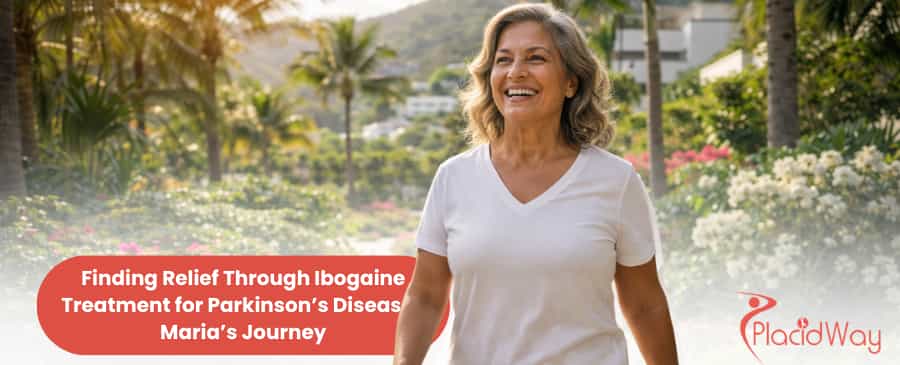
Profession: Retired Educator
Residence: Toronto, Canada
Treatment: Ibogaine Treatment for Parkinson's Disease
Treatment Destination: Mexico
Partner Clinic: New Path Ibogaine
For thirty-five years, my life was defined by the steady, deliberate motion of writing on a chalkboard. As an educator in Toronto, my hands were my primary tools for communication, guiding thousands of young minds through literature and history. I had always envisioned my retirement as a peaceful continuation of that guiding role, transitioning from a teacher of many to a dedicated, hands-on grandmother. But life, as I quickly learned, rarely adheres to our carefully drafted lesson plans. It started with a quiet, almost imperceptible tremor in my right hand—a slight flutter while pouring my morning tea or turning the pages of a beloved novel.
At first, I blamed it on age or fatigue, brushing it off with a soft laugh. However, the tremor slowly grew from a whisper to a relentless, unignorable presence. When my neurologist in Toronto finally uttered the words "Parkinson’s Disease," the clinical coldness of the room seemed to swallow all the air. I sat there, a 62-year-old woman who had spent her life feeling completely in control, suddenly realizing that my own body was slowly slipping out from under my command. The diagnosis felt less like a medical condition and more like a heavy, dark curtain falling over the vibrant retirement I had so eagerly anticipated.
The emotional turmoil of those early days was suffocating. I am naturally a soft-spoken woman, someone who internalizes struggles to protect my family. I didn't want my adult children to worry, and I certainly didn't want my precious grandchildren to look at me with pity. But behind closed doors, the fear was paralyzing. Every new symptom—the muscle rigidity, the subtle dragging of my right foot, the loss of my fluid handwriting—felt like a tiny theft of my identity. I was terrified of becoming a burden, of losing the independence I had cherished my entire life.
The Frustration of Fading Independence
As the months turned into years, the reality of living with Parkinson's settled in, bringing with it a deep, profound frustration. The traditional medications prescribed to me, while initially helpful, soon became a chaotic rollercoaster of side effects. I was caught in a relentless cycle of "on" and "off" periods. During the "off" times, my body felt encased in lead; during the "on" times, the medication caused unpredictable, jerky movements that were just as debilitating. I found myself retreating from the activities that once brought me immense joy.
The hardest moments were always with my grandchildren. I remember a specific Sunday afternoon when my youngest granddaughter asked me to help her bake chocolate chip cookies—a tradition we had started when she was just a toddler. As I tried to whisk the batter, my arm locked up, and the bowl clattered violently against the granite counter. The sudden noise startled her, and the look of confusion and slight fear in her eyes broke my heart into a million pieces. I excused myself to the bathroom and wept softly into a towel. I was losing my role in their lives, relegated to a quiet observer rather than an active participant.
This frustration birthed a quiet determination within me. I refused to let this disease write the final chapter of my story. I began spending my sleepless nights researching alternative therapies, desperately seeking something beyond the rigid limitations of conventional Canadian healthcare protocols. It was during these late-night dives into medical journals and patient forums that I first encountered the concept of a unique patient story about Ibogaine treatment in Mexico. The more I read about its potential to reset neural pathways and alleviate neurodegenerative symptoms, the more a tiny spark of hope began to flicker in my chest.
The Heavy Decision to Seek Care Across Borders
Discovering a potential lifeline is one thing; deciding to grasp it across international borders is entirely another. When I first broached the idea of traveling for an alternative treatment for Parkinson's in Mexico, my family was understandably apprehensive. The concept of medical tourism in Mexico carried an emotional weight and a stigma that we had to carefully unpack together. My children worried about my safety, the legitimacy of the clinics, and the sheer physical toll of traveling while dealing with advanced Parkinson’s symptoms.
I shared their concerns. The cross-border decision was daunting. I am a woman who loves the familiar comfort of my Toronto neighborhood; the idea of flying to a foreign country for a complex neurological treatment was completely out of my comfort zone. I spent weeks agonizing over the potential risks versus the rewards. I worried about the cost, the language barrier, and the frightening "unknown" aspects of receiving healthcare abroad. What if it didn't work? What if I ended up worse off than before?
Yet, the alternative—slowly fading into the background of my own life, confined to a chair while my grandchildren grew up without my active presence—was far more terrifying than any flight to Mexico. The turning point came when I realized that affordable healthcare abroad wasn't just about saving money; it was about accessing innovative therapies that were simply unavailable to me at home. I summoned every ounce of courage I possessed, looked my worried daughter in the eyes, and told her that I had to try. I had to fight for my long-term quality of life.
Finding a Guiding Light Through Medical Tourism
Making the decision was only the first step; executing it felt like an insurmountable mountain. That is when I connected with a dedicated medical tourism provider who completely changed the trajectory of my journey. From my very first phone call, the patient coordinator listened to my soft, trembling voice with an empathy that immediately put me at ease. They didn't treat me like a medical file; they treated me like a mother and a grandmother who was desperately fighting to get her life back.
The provider took the overwhelming burden of research and logistics entirely off my shoulders. They facilitated comprehensive virtual consultations with the neurologists at New Path Ibogaine. During these video calls, the Mexican medical professionals patiently answered every single question my family and I had. They explained the science behind the treatment, the extensive medical monitoring that would take place, and provided transparent, detailed quotes. For the first time since my diagnosis, I felt like I was part of a team, rather than a passive recipient of bad news.
They handled my flights, arranged for a medical liaison to meet me at the San Diego airport, and coordinated my secure transport across the border. This seamless coordination allowed me to stop worrying about the mechanics of the trip and focus entirely on preparing my mind and body for the healing process. The provider bridged the gap between my fearful uncertainty in Toronto and the cutting-edge medical care waiting for me in Mexico.
Arriving for My Ibogaine Treatment for Parkinson’s in Mexico
The journey from Toronto to San Diego was a blur of nervous anticipation. However, the moment my medical liaison greeted me and we drove the short distance to the clinic, a profound sense of peace washed over me. New Path Ibogaine was nothing like the sterile, cold hospitals I was used to. It felt like a wellness retreat—bathed in natural light, with lush greenery and a deeply calming atmosphere. My first impression was one of absolute safety and profound dignity.
The medical team conducted exhaustive pre-treatment cardiological and neurological screenings. They wanted to ensure my body was completely prepared for the Ibogaine protocol. When the day of the procedure arrived, I was escorted to a quiet, medically equipped suite. The doctor held my trembling hand, looking me squarely in the eyes with a reassuring smile. As the medicine was administered, I closed my eyes and allowed the journey to begin. The experience was deeply introspective, a complex neurological reset that felt as though my brain was meticulously untangling years of crossed wires.
Throughout the entire hours-long process, I was never alone. The constant, comforting presence of the nursing staff checking my vitals and softly whispering words of encouragement anchored me. I felt incredibly safe. It wasn't just a clinical procedure; it was a holistic embrace of my physical and emotional well-being. The treatment journey challenged me, but the unparalleled support of the Mexican medical team carried me safely through to the other side.
My Recovery and Small Victories
Waking up the morning after the primary treatment was a surreal experience. The heavy, dark fog that had clouded my mind for years seemed to have lifted, leaving a crisp clarity in its wake. But the most profound shock came when I looked down at my right hand, resting on the white blanket of my clinic bed. It was still. The relentless, violent tremor that had dictated my life for so long was reduced to a barely noticeable, faint vibration. I stared at my hand for what felt like hours, tears of absolute disbelief and joy streaming down my face.
The recovery phase in Mexico was a carefully orchestrated process of physical therapy and emotional integration. There were ups and downs, of course. My body was exhausted from the profound neurological reset, and my muscles needed to relearn how to move without the constant interference of the disease. Yet, every day brought a new, beautiful small victory. I managed to button my own cardigan. I held a glass of water without spilling a single drop. These seemingly mundane tasks were monumental triumphs for me.
The emotional healing was just as significant as the physical changes. The intense fear of the future, the heavy burden of feeling useless, slowly evaporated. I was supported by holistic therapists who helped me process the trauma of my chronic illness. As the days passed, my shuffling gait transformed into a steady, confident stride. The growing sense of hope was intoxicating; for the first time in years, I wasn't just surviving my illness—I was actively reclaiming my body.
Reclaiming My Title as Grandmother
Returning home to Toronto was nothing short of a triumphant homecoming. Walking through the arrival gates at the airport without the need for a wheelchair or a supportive arm left my family in absolute awe. The transformation I underwent post-treatment was undeniable. My face, once stiff and masked by the disease, was now expressive and quick to smile. The heavy cloak of Parkinson's had been lifted, revealing the vibrant, determined woman I always knew was still inside.
Today, the positive impact on my physical and emotional well-being continues to blossom. While I understand that Ibogaine Treatment in Mexico is a management tool and not a magical cure, the relief it has provided has given me my life back. My medication load has been drastically reduced, and those torturous "off" periods are practically non-existent. I am no longer a prisoner in my own home.
Just last week, my granddaughter came over, and together, we baked two dozen chocolate chip cookies. I whisked the batter myself, my arm steady and strong. When she hugged me tight and thanked me, I knew that every ounce of fear I had faced in making my cross-border decision was worth it. I have successfully reintegrated into my daily family roles, retaining my independence and, most importantly, my cherished title as an active, joyful grandmother.
A Message of Hope and Courage to Others
If you are sitting exactly where I was a few months ago—feeling trapped by a neurodegenerative diagnosis, overwhelmed by failing medications, and terrified of the future—I want you to hear my voice. You do not have to accept the fading of your light. There is a vast world of innovative medical care out there, and sometimes, the key to unlocking your healing lies just across a border. It takes courage to step into the unknown of medical tourism, but the reward of regaining your life is beyond measure.
Do not let fear dictate your health journey. Be your own advocate, ask the hard questions, and dare to explore alternative treatments. My journey with Ibogaine treatment for Parkinson's disease in Mexico proved to me that hope is not just a passive feeling; it is an action you must choose to take. You deserve to live a life full of motion, independence, and joy.
Ready to Explore Your Own Healing Journey?
If Maria’s story resonates with you and you are seeking alternative, effective relief from Parkinson's Disease or other neurological conditions, you don't have to face it alone. Discover how safe, affordable healthcare abroad can change your life.
Contact Us Today







.png)









Share this listing