


Regaining the Word: How Charles from the UK Restored Speech and Mobility Post-Stroke in Bratislava
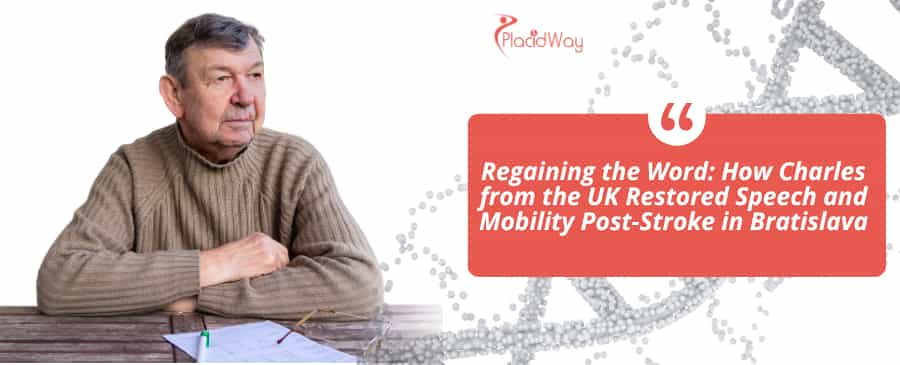
Patient Name: Charles
Profession: Retired History Teacher
Residence: London, United Kingdom
Treatment: Stem Cell Therapy for Post-Stroke Recovery
Treatment Destination: Bratislava, Slovakia
Medical Tourism Platform: PlacidWay
Partner Clinic: CellCenter
The Day the Words Stopped: My Devastating Stroke Diagnosis
As a retired history teacher, my life had always revolved around words. I spent decades lecturing, storytelling, and debating with students. Words were my identity, my connection to the world, and my greatest joy. But one seemingly ordinary Tuesday morning in my London home, my world went entirely silent. I remember trying to call out to my wife, Sarah, to ask if she wanted tea, but instead of the familiar sound of my voice, only a garbled, confused noise escaped my lips. Moments later, the right side of my body gave way, and I collapsed onto the kitchen floor.
The days that followed in the hospital were a blur of sterile lights, frantic doctors, and the terrifying realization of what had happened. I had suffered an ischemic stroke. While the doctors assured me I was lucky to be alive, the damage to my brain was profound. I was left with severe expressive aphasia—meaning I could understand everything being said to me, but I couldn't form the words to reply—and debilitating weakness in my right arm and leg. My independence had vanished overnight.
Lying in that hospital bed, staring at the ceiling, the emotional turmoil was unbearable. I was a man who had built his life on communication, now entirely muted. The frustration of knowing exactly what I wanted to say but being physically incapable of producing the sound was a special kind of torture. I felt like a prisoner locked inside my own mind, screaming for help but making no sound.
Hitting a Wall: The Frustration of Post-Stroke Care in the UK
I will always be grateful to the NHS for saving my life during those critical first hours. Their emergency response was nothing short of miraculous. However, once I was discharged and the acute danger had passed, the reality of long-term post-stroke recovery in the UK began to set in. The transition from life-saving care to rehabilitation was jarring. I was placed on long waiting lists for intensive physiotherapy and speech therapy, receiving only occasional, short sessions that barely scratched the surface of my needs.
Months went by, and my progress plateaued. The physical therapists told me I had to adjust to a 'new normal,' suggesting that significant improvements were unlikely at my age and stage. That phrase—'new normal'—felt like a death sentence to my spirit. I refused to accept that spending the rest of my life in a wheelchair, unable to read a book aloud to my grandchildren, was my only option.
The uncertainty of my condition weighed heavily on my family. Sarah was exhausted from acting as my full-time caregiver and translator. I began to research aggressively—using my good left hand to scour the internet for alternative therapies. I discovered that advanced regenerative treatments, particularly those focusing on neuro-regeneration, existed, but they were largely inaccessible or prohibitively expensive in the UK. The frustration of knowing there might be a solution just out of reach was agonizing.
Looking Beyond Borders: Discovering Medical Tourism in Slovakia
My deep dive into medical research eventually led me to the concept of medical tourism. At first, the idea of traveling abroad for complex medical care sounded incredibly daunting. I was a stroke survivor who struggled to walk to the bathroom; how could I possibly navigate international healthcare? But as I read more patient story stroke recovery accounts, a pattern emerged. Patients were traveling across Europe and seeing remarkable results through innovative therapies that simply weren't available to me at home.
I began to focus my search on affordable healthcare abroad, specifically targeting destinations known for high medical standards and regenerative medicine. That’s when I discovered medical tourism in Slovakia. Bratislava, its capital, had quietly become a hub for cutting-edge medical treatments, boasting world-class facilities and specialists at a fraction of the cost I would pay privately in the UK or the US.
Choosing to pursue treatment abroad carried an enormous emotional weight. There were concerns about safety, language barriers, and the sheer physical toll of the journey. What if it didn't work? What if it was a scam? But weighing those fears against the certainty of my current miserable plateau, the choice became clear. I had to try. I had to find a way to access this stem cell therapy in Slovakia.
A Guiding Light: How PlacidWay Medical Tourism Assistance Changed Everything
Knowing I wanted to go to Slovakia was one thing; actually organizing it was another. The sheer volume of clinics and medical terminology online was overwhelming. I didn't know who to trust or how to begin the process. That is when I stumbled upon PlacidWay support. From the very first interaction, their medical tourism assistance transformed my anxiety into actionable hope. They weren't just a directory; they were a lifeline.
The team at PlacidWay helped me search through different certified options tailored specifically to post-stroke recovery. They helped me find the options they thought were best suited to my specific neurological deficits. What impressed me the most was that they facilitated direct connections with the medical professionals. Through their platform, I was able to exchange messages directly with the neurologists abroad, sending them my medical records and MRI scans.
PlacidWay even arranged a virtual video consultation between me, Sarah, and the lead doctor in Bratislava. Being able to see the doctor's face, ask questions (through Sarah), and hear a detailed, personalized treatment plan melted away my lingering doubts. Following the consultation, PlacidWay assisted me in getting a formal, transparent quote for the medical procedures. There were no hidden fees, and I knew exactly what the medical intervention would cost before I ever left London.
Arriving in Bratislava: Hope at the Clinic
The journey to Bratislava was exhausting, but as we landed in the picturesque Slovakian capital, a profound sense of anticipation washed over me. The city was a beautiful blend of historic charm and modern infrastructure, far removed from the intimidating, clinical atmosphere I had feared. The air felt different here; it felt like a place of healing.
When I arrived at CellCenter, my first impressions exceeded every expectation. The facility was pristine, state-of-the-art, and radiated a calm professionalism. We were greeted immediately by an English-speaking coordinator who knew my entire case history. There was no need to repeat my story or jump through administrative hoops; they were ready for me.
The initial days consisted of comprehensive evaluations. Neurologists, physiotherapists, and specialists conducted a battery of tests far more thorough than anything I had experienced back home. They mapped my deficits with incredible precision and explained exactly how the regenerative treatment would target the damaged neural pathways in my brain. The anxiety of being in a foreign country vanished, replaced entirely by a sense of profound trust.
The Treatment Journey: My Stem Cell Therapy for Stroke Recovery
The core of my post-stroke treatment in Bratislava involved targeted stem cell therapy. Before the procedure, the medical team walked me through the science. They explained that while dead brain tissue couldn't be revived, these specialized cells could help reduce inflammation, promote the healing of surrounding tissues, and encourage neuroplasticity—the brain's ability to rewire itself and form new connections.
The procedure itself was surprisingly straightforward and minimally invasive. I had built it up in my mind to be an agonizing ordeal, but it was nothing of the sort. The medical team at CellCenter made me feel completely comfortable, ensuring I experienced absolutely no pain. They monitored my vitals constantly and kept Sarah informed every step of the way. Their bedside manner was a perfect balance of scientific brilliance and deep human empathy.
Alongside the cellular treatments, I was enrolled in an intensive, customized rehabilitation program. This wasn't the once-a-week therapy I was used to; this was vigorous, daily work designed to take advantage of the biological boost my body had just received. The combination of cutting-edge regenerative medicine and rigorous physical therapy was the catalyst my body had been desperately waiting for.
Small Victories: Finding My Voice and Mobility Again
The recovery phase was not an overnight miracle; it was a journey of intense emotional ups and downs. Some days my body felt heavy and unresponsive, and the dark clouds of doubt would creep back in. But then, the small victories began to appear. About three weeks post-treatment, I felt a distinct, undeniable tingling in my right hand—a hand that had hung lifeless at my side for over a year. A few days later, I was able to twitch my fingers on command.
Then came the breakthrough I had been praying for. I was sitting with Sarah, trying to practice the vocal exercises the clinic had provided. I took a deep breath, looked her in the eyes, and pushed the thought from my brain to my lips. 'Good morning, my love,' I said. My voice was raspy, slow, and a bit hesitant, but the words were clear. They were mine. Sarah burst into tears, and we held each other, weeping with a joy I cannot adequately put into words.
As the weeks progressed, my mobility improved drastically. The wheelchair was retired in favor of a walking cane. The heavy fog that had clouded my brain began to lift, and my stamina returned. The growing sense of hope as I healed was intoxicating. I was no longer a victim of a stroke; I was an active participant in my own recovery, witnessing my body rebuild itself day by day.
A New Chapter: Empowering Others to Seek Healthcare Abroad
Today, back in the UK, my life looks vastly different from the grim picture painted by my initial prognosis. I am walking independently, enjoying long strolls through our local park. More importantly, I am talking. I am back to debating history, reading stories aloud, and telling my family how much they mean to me. The physical and emotional transformation I underwent in Slovakia has given me a second chance at life, drastically improving my quality of life.
Reflecting on how I overcame this medical issue, I realize the most crucial step was refusing to accept 'no' for an answer. The decision to explore medical tourism in Slovakia saved me. The guidance and PlacidWay support I received allowed me to navigate a complex international healthcare landscape safely and confidently, connecting me with trusted doctors who possessed the tools to heal me.
To anyone sitting in the dark right now, feeling abandoned by limited healthcare options or trapped by a devastating diagnosis: do not give up. There is a whole world of advanced, affordable healthcare abroad waiting for you. Look beyond your borders. Advocate for yourself, seek out platforms that can guide you, and take control of your healing journey. Hope is out there, and sometimes, you just have to travel a little ways to find it.
Ready to Start Your Own Success Story?
Connect with top-tier medical specialists abroad and discover how personalized, advanced therapies can transform your life. Let PlacidWay guide your journey to recovery.
Get Your Free Consultation TodayDisclaimer: The narratives presented here reflect the true experiences of individuals, though names have been altered to ensure privacy. These stories are intended to offer information and inspiration but should not replace professional medical guidance. Outcomes and experiences can differ widely from person to person. Always seek the advice of qualified healthcare professionals before making any medical choices, as they can provide tailored advice and support for your unique health needs.

Share this listing