


Stroke Treatment in Slovakia: How Arthur from the UK Restored His Mobility
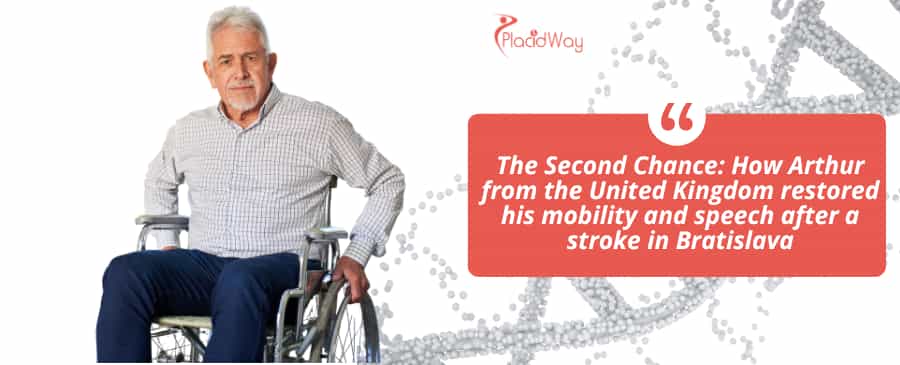
Patient Name: Arthur
Profession: Former Architect
Residence: London, United Kingdom
Treatment: Stroke Treatment and Rehabilitation
Treatment Destination: Bratislava, Slovakia
Medical Tourism Platform: PlacidWay
Partner Clinic: CellCenter
The Day My World Went Silent: Facing Life After a Stroke
I remember the morning of my stroke with agonizing clarity. I was 64 years old, sitting in my kitchen in London, enjoying my usual cup of tea while reading the morning paper. Without warning, the cup slipped from my hand, shattering on the tile floor. When I tried to call out to my wife, the words trapped themselves in my throat, emerging only as a distorted mumble. My right side had gone completely numb.
In the blink of an eye, my life as an active, independent man was stripped away. The diagnosis was an ischemic stroke. While the doctors in the UK saved my life, the aftermath was devastating. I had lost the ability to move my right arm and leg, and my speech was severely impaired. The emotional turmoil of being trapped in my own body, unable to articulate my thoughts or walk without heavy assistance, was a dark and suffocating cloud.
Frustrations at Home: Searching for Meaningful Recovery
The initial months of rehabilitation at home were disheartening. Despite the best efforts of the local healthcare system, the therapy sessions were infrequent due to high demand and long waiting lists. I felt like my progress had hit a concrete wall. My neurologist gently suggested that I might have reached my maximum level of recovery and that I should learn to adapt to my new limitations.
I refused to accept that "this is as good as it gets." My wife and I began spending countless hours online, typing phrases like "how I overcame a stroke" and researching advanced therapies that could stimulate neuroplasticity. We discovered that innovative restorative treatments were available privately, but the costs in the United Kingdom were astronomical, far beyond our retirement savings.
The frustration was palpable. I felt a deep sense of uncertainty about my future. Was I destined to spend the rest of my life confined to a wheelchair, unable to have a proper conversation with my grandchildren? The fear of permanent dependency drove me to look beyond the borders of my own country.
Discovering Affordable Healthcare Abroad: A Glimmer of Hope
As we expanded our search, the concept of traveling for medical care caught our attention. I read numerous patient story stroke treatment accounts from individuals who had traveled to Eastern Europe for cutting-edge care. That was when I first learned about medical tourism in Slovakia, specifically in the capital city of Bratislava.
At first, the idea carried a significant emotional weight. The prospect of affordable healthcare abroad sounded appealing, but it was fraught with terrifying questions. Would the quality of care meet the standards I was used to? Could I trust foreign doctors with my fragile condition? The unknown aspects of international treatment were daunting, to say the least.
How PlacidWay Medical Tourism Assistance Changed Everything
Navigating the complex world of international clinics was overwhelming until we found PlacidWay. Reaching out to them was the turning point in my journey. The level of PlacidWay support we received was nothing short of extraordinary. They didn’t just hand us a list of clinics; they acted as our dedicated medical coordinators, guiding us through every single step of the decision-making process.
With PlacidWay medical tourism assistance, I was able to search through highly vetted options tailored to my specific neurological needs. They facilitated a direct line of communication between me and the medical specialists in Slovakia. I could exchange messages with the doctors, asking every detailed question my wife and I had drafted.
The most reassuring part was the virtual video consultation PlacidWay arranged. Seeing the lead neurologist face-to-face on my screen, hearing him explain the potential treatment plan with profound empathy and expertise, completely dissolved my anxieties. Following the consultation, PlacidWay ensured we received a comprehensive, formal quote, leaving no hidden costs to worry about. They empowered me to make an informed choice with absolute confidence.
Arrival in Bratislava: First Impressions and Embracing the Care
Stepping off the plane in Bratislava, a mix of anxiety and hopeful anticipation washed over me. The city itself had a calming, historic charm that instantly put me at ease. It didn't feel like I was arriving for a daunting medical procedure; it felt like a retreat focused entirely on my healing.
When we first arrived at the clinic, any lingering doubts vanished. The facility was pristine, ultra-modern, and radiated a sense of calm professionalism. The medical team welcomed us with warm smiles and perfect English, making communication effortless. They spent hours with me on that first day, conducting thorough evaluations and mapping out a personalized treatment plan.
My Stroke Treatment in Slovakia: A Journey of Science and Compassion
The actual stroke treatment in Slovakia involved a sophisticated combination of advanced regenerative medicine and intensive, targeted neuro-rehabilitation. The medical staff at CellCenter took the time to explain the science behind the regenerative protocols, ensuring I understood how the therapy aimed to reduce inflammation and stimulate the repair of damaged brain tissue.
The procedure itself was surprisingly smooth and painless. I felt constantly monitored and deeply cared for by the nursing staff, who treated me with profound dignity. Their compassionate bedside manner was a stark contrast to the rushed, clinical environments I had experienced previously. They celebrated my presence and treated my recovery as their personal goal.
Beyond the main procedure, the comprehensive approach included daily speech therapy and advanced physiotherapy utilizing state-of-the-art robotic assistance. It was rigorous, challenging work, but I felt a renewed fire within me, fueled by the dedication of the team surrounding me.
The Road to Recovery: Small Victories and Finding My Voice
The recovery phase was an emotional rollercoaster of exhausting effort and euphoric breakthroughs. There were days when my muscles ached and frustration crept back in, but the medical team was always there to lift my spirits. The true magic happened in the small, quiet victories.
About three weeks into the therapy, I was sitting with my speech therapist. She asked me to repeat a phrase I had been struggling with for months. I took a deep breath, focused my mind, and the words flowed out: "I would like a cup of tea." It wasn't mumbled; it was clear. My wife burst into tears, and I felt a profound sense of liberation. My voice was returning.
The physical improvements followed. The stiffness in my right leg began to loosen. I transitioned from a wheelchair to a walker, and eventually, to a simple walking cane. Each step I took was a testament to the power of the treatment and my own resilience.
A Second Chance at Life: My Post-Treatment Transformation
Returning to the United Kingdom, I was a transformed man, both physically and emotionally. The friends and family who greeted me at the airport were astounded by my progress. I walked off the plane with my cane, standing tall, and greeted them with clear, joyful words. The dark cloud that had settled over my life after the stroke had finally lifted.
Today, my quality of life has improved immensely. I can hold a pen, play in the garden with my grandchildren, and converse fluidly without the agonizing pause of a lost word. My stroke treatment in Slovakia didn't just repair my body; it restored my spirit and gave me back my identity.
I share my story because I want anyone out there struggling with the aftermath of a stroke to know that a plateau at home doesn't have to be the end of the line. Thanks to PlacidWay, I found the right clinic, the right doctors, and ultimately, my second chance at life. Don't be afraid to look beyond your borders for hope; your recovery is worth the journey.
Ready to Start Your Own Success Story?
Let PlacidWay help you connect with top-tier medical specialists abroad. Discover how personalized, advanced treatments can transform your life, just like it did for Arthur.
Get Your Free Consultation Today



Share this listing