


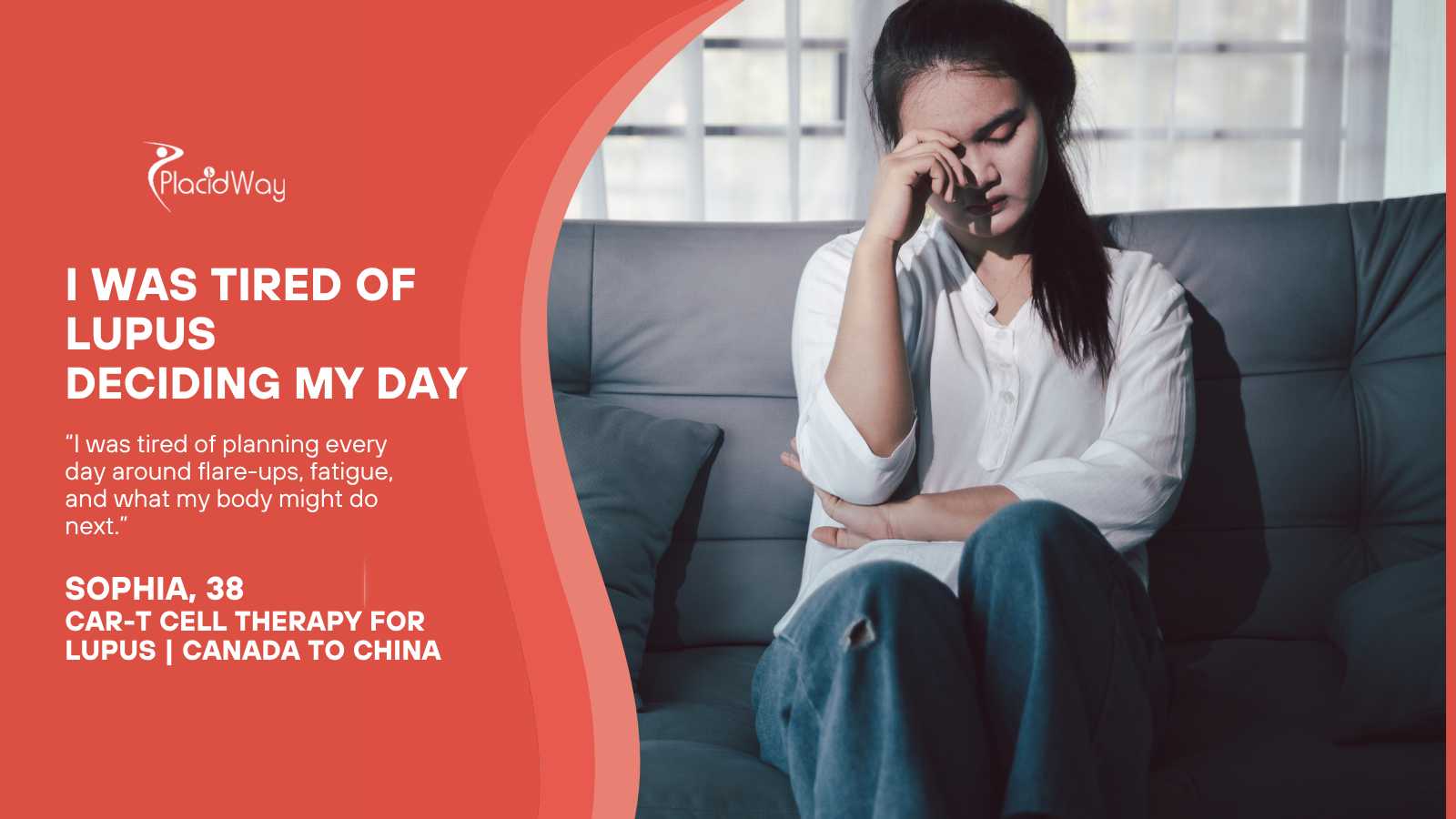
Patient Profile
Name: Sophia
Age: 38
Residence: Toronto, Canada
Treatment: CAR-T Cell Therapy
Destination: Beijing, China
Provider: Beijing Bioocus Medical Group
Journey at a Glance
◉ Diagnosis: Refractory Systemic Lupus Erythematosus
◉ Local barrier: Exhausted conventional immunosuppressants
◉ Reason for travel: Seeking advanced cellular therapy options
◉ Treatment decision: CAR-T immune system reset
◉ Destination country: China
◉ Time abroad: 6 weeks
◉ Recovery status: Gradual energy restoration, monitoring phase
◉ Current outcome: Decreased joint inflammation and clear thinking
Systemic Lupus Erythematosus (SLE) is a chronic autoimmune condition where the body's immune system attacks healthy tissues, causing widespread inflammation and organ stress. For years, conventional treatments like high-dose steroids and immunosuppressants managed my symptoms, but eventually, my body stopped responding effectively. Faced with mounting side effects and declining kidney function, I realized I needed an alternative approach to halt the continuous disease activity.
My search for advanced care eventually led me to explore cellular options abroad. I decided to travel to China for a CAR-T immune reset at Beijing Bioocus Medical Group. This specialized cellular therapy offered a way to target the malfunctioning B cells driving my lupus, providing a structured pathway when local medical options were exhausted.
Understanding systemic lupus and chronic fatigue
People often think chronic illness means spending your days resting in bed, but lupus is far more disruptive to your daily routines. My mornings started with stiff, swollen fingers that made buttoning a shirt or holding a coffee mug feel like an athletic challenge. Gardening was my favorite weekend outlet, yet digging in the soil became too painful for my joints to handle after just a few minutes.
The fatigue was a heavy, constant shadow that sleep could never clear away. I would wake up feeling as though I had run a marathon overnight. Simple tasks like grocery shopping required planning every step so I wouldn't run out of stamina halfway through the aisle. Over the years, my world shrank to fit the narrow boundaries of what my inflamed joints would tolerate.
"I was tired of organizing my entire life around flare-ups, prescription schedules, and the constant fear of what my immune system would attack next."
Social plans became impossible to keep because I never knew how my body would react from one day to the next. Friends would invite me out for dinner, and I would have to decline because my energy levels hit zero by mid-afternoon. My partner took on most of the household responsibilities, and while he was supportive, the quiet frustration of losing my independence weighed heavily on me.
Hitting the wall with traditional medications
For a long time, standard drugs managed to keep the inflammation under control. I went through cycles of prednisone, hydroxychloroquine, and various strong immunosuppressants prescribed by my local rheumatologist. But lupus is a moving target, and my immune system eventually found ways around every drug we tried. The dosages crept higher, and the side effects began causing stomach problems and thinning hair.
The tipping point arrived when routine blood work showed protein leaking into my urine, indicating kidney involvement. My doctor explained that we were running out of conventional medications that could provide meaningful relief without introducing severe toxicity. They offered another standard biologic drug, but warned that the likelihood of achieving true remission was minimal.
Choosing CAR-T therapy for lupus management
I spent late nights reading medical research papers and patient discussion boards to see what options existed outside standard guidelines. That is when I learned about CAR-T cell therapy being adapted for severe autoimmune diseases. The scientific logic made sense: extracting my T-cells, engineering them to target the rogue B cells responsible for the inflammation, and reinfusing them to reboot the immune system.
Accessing this innovative protocol locally was not feasible for my case, so I began looking internationally. Exploring treatment abroad brought plenty of worries. I wondered about safety standards, language barriers, and how I would manage recovery thousands of miles from home.
Through careful research, I connected with Beijing Bioocus Medical Group. To manage the administrative hurdles, I used PlacidWay to help transmit my medical reports and coordinate initial correspondence with the overseas care team. Having that organizational support made the decision feel manageable.
- My primary concerns before departure included:
- Whether my physical strength was sufficient for the cell collection phase.
- The exact duration of the required stay in Beijing before air travel was cleared.
- Managing potential side effects during the early cellular adaptation stage.
Navigating treatment and cell collection in Beijing
Arriving in Beijing marked the beginning of an intense medical chapter. The first major phase involved apheresis, where a machine filtered my blood to collect my T-cells over several hours. It felt similar to donating plasma, though it left me deeply tired. I spent the following days resting in my room while the laboratory technicians prepared the cellular modifications.
The conditioning phase was undeniably difficult. I received a brief course of chemotherapy to clear space in my bone marrow and calm my hyperactive immune system before the reinfusion. Nausea and profound weakness set in during these days, requiring my husband to assist me with basic movements around the room.
The reinfusion day itself was remarkably straightforward. A nurse connected a small bag of modified cells to my IV line, and the procedure finished quickly. My temperature fluctuated over the next 48 hours as the cells activated, but the clinical staff monitored my vital signs around the clock to ensure my safety.
Rebuilding strength through patience and recovery
Recovery after cellular therapy is not an overnight transformation. When I returned home to Toronto, my body required extensive rest and gentle pacing. The brain fog lifted first; I noticed one afternoon that I could read through an entire book chapter without losing my focus or needing to reread sentences.
Joint mobility improved much more gradually over several months. By month three, I woke up without that sharp, binding stiffness in my fingers. I have slowly resumed light household activities and recently managed to plant a few flowers in my yard.
I attribute these improvements to a combination of the CAR-T immune reset, careful dietary adjustments to reduce inflammation, and low-dose maintenance guidance from my doctors. Healing has required immense patience and ongoing rest, but the steady return of my physical energy has made the journey worthwhile.
Looking Back
"Undergoing cellular therapy is a demanding physical commitment that requires realistic expectations. Yet, regaining clear focus and physical comfort has given me my quality of life back."
Exploring Advanced Treatment Pathways?
If you are researching specialized international medical options, gathering verified clinic details is an essential first step.
Request Information & Compare ClinicsConnect with accredited care coordinators to review your treatment suitability and travel planning.





.png)








Share this listing