
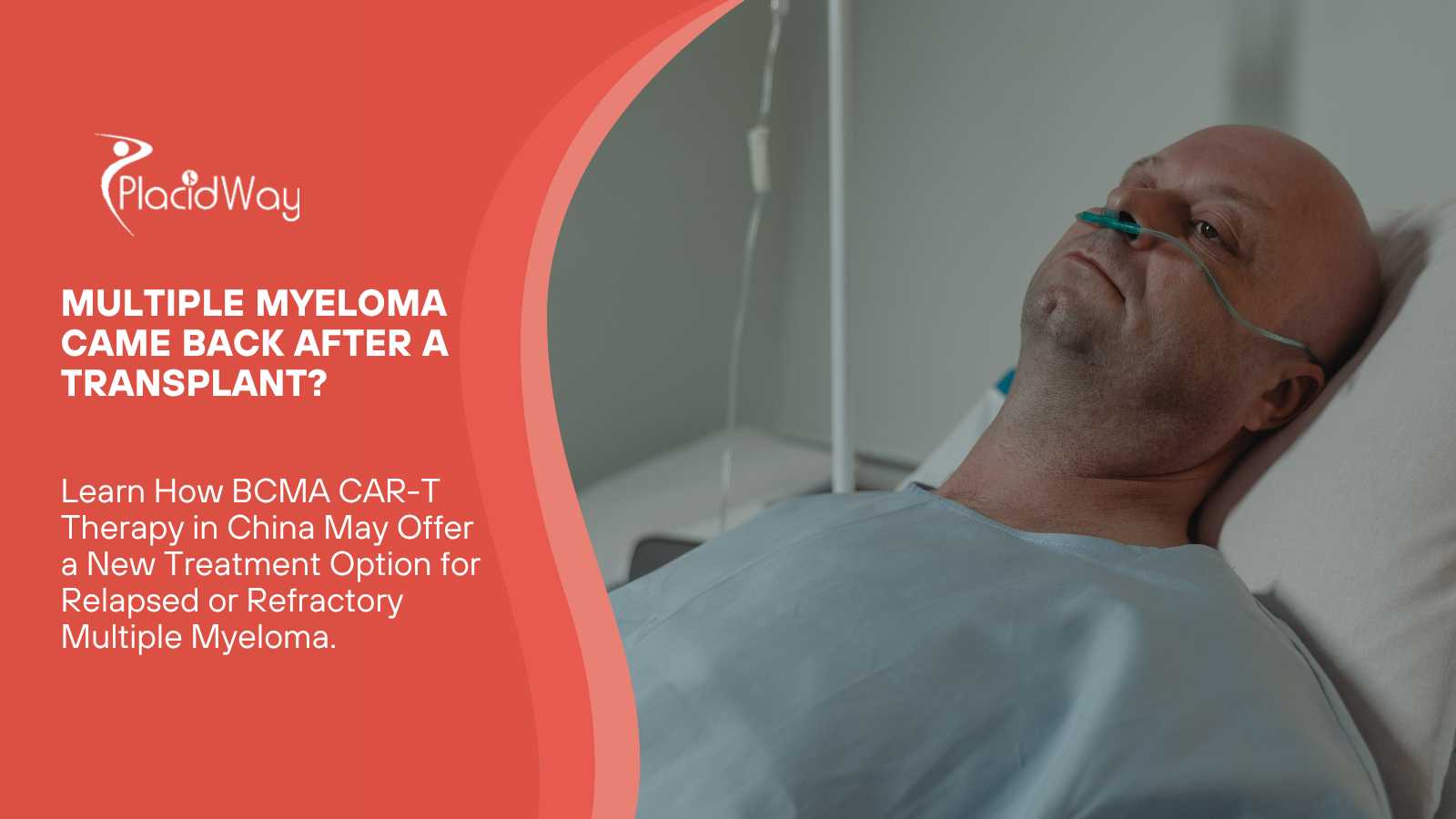
“Your numbers are climbing again.”
After everything you have already been through — induction treatment, the stem cell transplant, the long months of recovery — hearing that multiple myeloma has come back can feel like the ground giving way a second time. If your disease returned after an autologous stem cell transplant, you are almost certainly asking one urgent, exhausting question: is there anything left to try?
For many patients, there is. A newer approach built for exactly this situation — BCMA CAR-T therapy in China — has helped some adults with relapsed or refractory multiple myeloma reach deep, lasting remissions after standard treatments stopped working. It is not a guaranteed cure, and it is not right for everyone. But for the right patient, it can be a genuine path forward when local options feel like they have run out. This guide explains — honestly — who it may help, what the evidence really shows, and how to find out whether it could be an option for you or someone you love.
China now has NMPA-approved BCMA-directed CAR-T therapies for defined groups of previously treated patients. Eligibility, however, depends on much more than having had a transplant. Your previous medications, timing of relapse, current disease burden, organ function, infections, blood counts, and the exact CAR-T product being considered all matter. Treatment should be delivered through a legally licensed medical institution with an experienced cellular-therapy program and access to emergency care.
Quick Summary: BCMA CAR-T in China After Myeloma Relapse
- Who may be evaluated: adults with confirmed relapsed or refractory multiple myeloma, including some patients whose disease returned after autologous stem cell transplantation. Product-specific eligibility requirements still apply.
- China regulatory status: the National Medical Products Administration has approved BCMA-directed products including equecabtagene autoleucel and ciltacabtagene autoleucel for defined previously treated adult populations.
- How it works: your own T cells are collected, genetically modified to recognize BCMA on myeloma cells, manufactured into a personalized cellular therapy, and infused back into your body.
- Evidence after transplant: prior autologous stem cell transplantation does not automatically rule out BCMA CAR-T, although recent research suggests previous ASCT and its timing can influence treatment outcomes.
- Major safety concerns: cytokine release syndrome, low blood counts, infections, neurologic complications, and other product-specific toxicities require specialist monitoring and rapid emergency support.
- Estimated cost: as a broad reference, commercial CAR-T in China has been reported at roughly USD 70,000–190,000 for the treatment, versus USD 375,000–700,000+ for the drug alone in the US. These are general reference points only — always request a written USD quote covering the CAR-T product, hospitalization, testing, bridging treatment, medicines, complication care, and follow-up.
- Provider credentials to verify: Medical Institution Practicing License, physician practice registration, NMPA authorization of the CAR-T product, cellular-therapy experience, ICU access, blood-bank support, infectious-disease capability, and a documented post-infusion monitoring plan.
What Does Multiple Myeloma Relapse After a Stem Cell Transplant Mean?
Multiple myeloma relapse after an autologous stem cell transplant means that myeloma cells have become detectable or clinically active again after a period of disease control. A transplant can produce a substantial remission, but multiple myeloma can return because small populations of malignant plasma cells may survive treatment and later expand.
Relapse does not look exactly the same in every patient. Some people first develop rising monoclonal protein or abnormal serum free-light-chain measurements without new symptoms. Others experience anemia, kidney problems, elevated calcium, bone lesions, plasmacytomas, pain, or other signs of active disease. Your hematologist needs to determine both whether the disease has progressed and how aggressively it is behaving.
| Assessment after myeloma relapse | Why it matters before CAR-T |
|---|---|
| Previous treatment history | Determines whether you meet the indication for a specific BCMA CAR-T product and identifies prior drug resistance. |
| Blood and urine myeloma markers | Helps confirm progression and establish a baseline for later response assessment. |
| Bone marrow evaluation when indicated | Can assess plasma-cell involvement and provide disease biology information. |
| Imaging when clinically appropriate | Looks for active bone disease, soft-tissue plasmacytomas, or extramedullary disease. |
| Heart, kidney, liver, infection and performance assessment | Helps determine whether cellular therapy can be delivered safely and whether medical issues require stabilization first. |
Where BCMA CAR-T Therapy Fits After Multiple Myeloma Relapse in China
BCMA CAR-T is an established cellular-therapy approach for selected patients with relapsed or refractory multiple myeloma, but it is not automatically the next treatment simply because myeloma returned after transplant. Your treatment sequence matters.
BCMA stands for B-cell maturation antigen, a protein expressed on plasma cells and commonly present on multiple myeloma cells. CAR-T products are engineered so a patient's T cells can recognize this target and attack cells carrying BCMA.
China's National Medical Products Administration has granted conditional marketing authorization to BCMA-directed therapies for defined adult populations. Official NMPA information for equecabtagene autoleucel and ciltacabtagene autoleucel describes use in adults with relapsed or refractory multiple myeloma who progressed after at least three prior lines of therapy, including exposure to a proteasome inhibitor and an immunomodulatory agent. The exact current product label must be checked before treatment because indications can evolve.
Why BCMA CAR-T May Be Considered in Relapsed Myeloma
- It uses a different treatment mechanism from conventional anti-myeloma drugs.
- It may be considered after multiple previous therapies have stopped controlling disease.
- It can produce deep responses in some heavily pretreated patients.
- It is generally delivered as a cellular-therapy course rather than continuous indefinite treatment.
Why BCMA CAR-T May Need to Wait
- Your prior treatment history may not match the approved product indication.
- Rapidly progressing disease may require temporary disease control while cells are prepared.
- Active infection or unstable medical problems may make treatment unsafe.
- Blood counts, organ function, performance status, disease location, and prior therapies can affect candidacy.
Approved CAR-T therapy and enrollment in a clinical trial are not interchangeable. Experimental dual-target CAR-T, allogeneic CAR-T, next-generation constructs, or combinations should be described as research unless they have received the appropriate regulatory approval for your situation.
How BCMA CAR-T Therapy Works for Relapsed Multiple Myeloma
BCMA CAR-T therapy reprograms your own immune cells rather than replacing your bone marrow. That makes it fundamentally different from the autologous stem cell transplant you may already have received.
- Your T cells are collected. A procedure called leukapheresis separates white blood cells containing T lymphocytes from your bloodstream.
- The T cells are modified. The manufacturing process gives the cells a chimeric antigen receptor designed to recognize BCMA.
- The CAR-T cells are expanded and tested. Manufacturing and quality-control steps occur before the personalized product is released for use.
- Disease may need temporary control. Some patients receive bridging treatment while waiting, depending on disease activity and the treatment plan.
- Lymphodepleting treatment is given. Short-course chemotherapy before infusion reduces competing lymphocytes and creates conditions that can support CAR-T expansion.
- The CAR-T cells are infused. The engineered cells can recognize BCMA-bearing myeloma cells, activate, expand, and attack them.
Who May Be Evaluated for BCMA CAR-T Therapy in China?
A previous transplant alone neither qualifies nor disqualifies you for BCMA CAR-T. Eligibility requires a complete medical review against the chosen product's approved indication or the protocol of a legitimate clinical trial.
| Evaluation area | What the CAR-T team needs to determine |
|---|---|
| Diagnosis and relapse status | Whether active relapsed or refractory multiple myeloma is confirmed using accepted diagnostic and response criteria. |
| Previous therapy | Number and type of treatment lines, drug classes used, response duration, and treatment resistance. |
| Transplant history | Date of ASCT, recovery, complications, duration of remission, and treatments given since transplant. |
| Disease burden | Whether disease can remain controlled long enough to complete cell collection, manufacturing and preparation. |
| Organ function | Whether heart, lung, liver and kidney function are adequate for the planned therapy. |
| Infection status | Whether active infections, viral conditions or immune suppression require treatment or additional precautions. |
| Neurologic and functional status | Baseline condition for safety assessment and post-infusion neurologic monitoring. |
What 2025 Evidence Shows About BCMA CAR-T After Prior ASCT
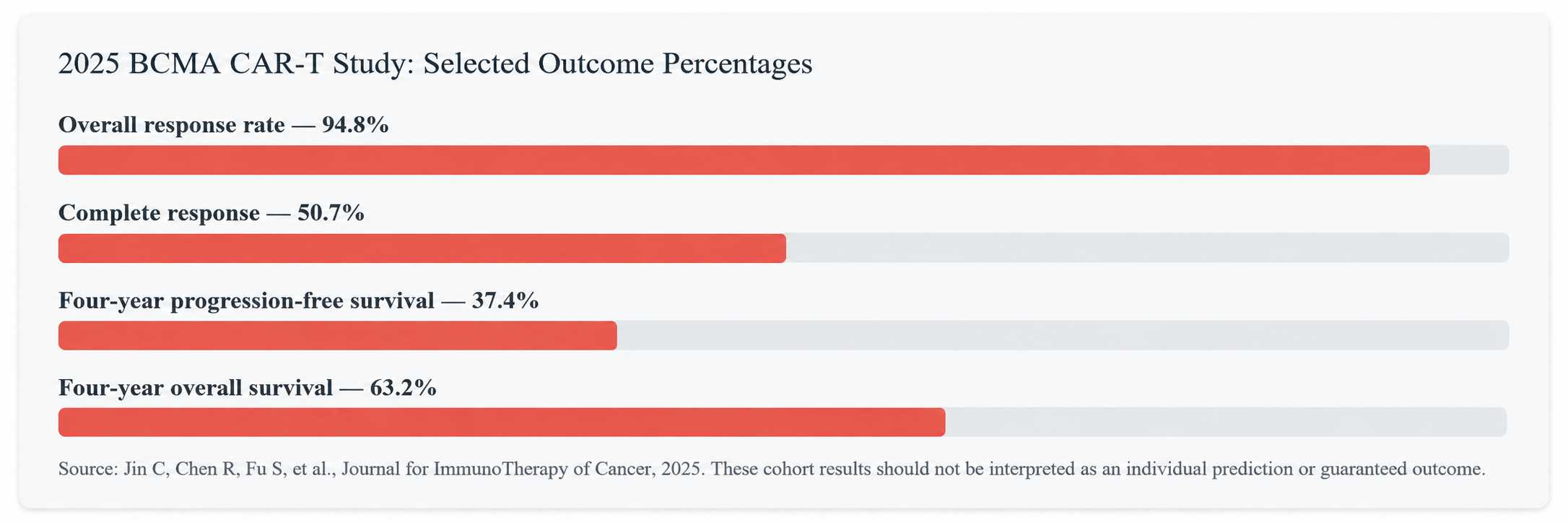
Recent evidence is especially relevant for patients whose multiple myeloma returned after autologous stem cell transplantation. A 2025 long-term study reported outcomes for 141 patients with relapsed or refractory multiple myeloma treated with BCMA CAR-T. Among evaluable patients, the objective response rate was 94.8%, while 50.7% achieved complete response.
The same report estimated four-year progression-free survival at 37.4% and four-year overall survival at 63.2%. Importantly for this article's audience, researchers found that a history of ASCT was associated with less favorable efficacy and survival outcomes. Patients who had received ASCT within the previous year also showed evidence of reduced T-cell fitness. These findings describe associations in a clinical cohort; they do not mean CAR-T cannot work after transplant.
How Durable Can BCMA CAR-T Responses Be?
Longer follow-up from the CARTITUDE-1 study provides additional context for ciltacabtagene autoleucel. In the 2025 analysis, one-third of 97 heavily pretreated participants remained alive and progression-free for at least five years after a single infusion without maintenance therapy. The study was not a China medical-tourism study, so its results should not be used as a China-specific success rate.
Cilta-cel Durability Context From Published Follow-Up
Context only: approximately 27-month PFS of 54.9% was reported in earlier CARTITUDE-1 follow-up, while the 2025 long-term analysis reported 33% of treated patients alive and progression-free for at least five years. These figures describe a clinical-trial population and should not be presented as an expected personal outcome.
A Patient's Story: When “Out of Options” Wasn't the End
Elena, 58 — United States. Multiple myeloma relapsed roughly two years after an autologous stem cell transplant. Her insurer declined to authorize the next therapy her team suggested.
“When the numbers started rising again, I felt like we were back at the beginning — except more tired,” Elena recalls. “My daughter was the one who kept searching. She found the words BCMA CAR-T and, honestly, I didn't believe it applied to someone like me who'd already had a transplant.”
Elena and her daughter sent her full treatment timeline for a records review before booking anything. She was told plainly what was uncertain as well as what was possible — that her prior transplant could affect how the cells performed, and that she would need weeks of close monitoring. “Nobody promised me a cure. That's actually why I trusted them. They walked us through every risk before they talked about hope.”
Months after her infusion, Elena describes having “time back I was told I didn't have” — while being careful to add that her result is her own. Individual results vary, and outcomes cannot be guaranteed.
This is an illustrative patient profile representing common experiences described by relapsed-myeloma patients and their families, not a specific identifiable individual. Published PlacidWay patient testimonials are shared only with written consent and include an “individual results vary” disclaimer.
BCMA CAR-T Treatment Process in China: From Records Review to Follow-Up
International CAR-T treatment should begin before you purchase a flight. A legitimate program generally needs a detailed remote medical review to determine whether an in-person evaluation is reasonable and whether the proposed product matches your treatment history.
| Stage | Clinical purpose | What you should confirm |
|---|---|---|
| Remote record review | Determine whether a CAR-T consultation is appropriate. | Exact records required, translation rules and responsible hematologist. |
| In-person eligibility evaluation | Confirm diagnosis, disease status and treatment fitness. | Which tests must be repeated in China and why. |
| Leukapheresis | Collect T cells for manufacturing. | Product name, collection plan and manufacturing arrangements. |
| Manufacturing period | Engineer and prepare your personalized CAR-T product. | Expected timeline, manufacturing failure policy and where you must stay. |
| Bridging treatment if needed | Control active myeloma until infusion. | Why bridging is recommended and how it may affect timing or blood counts. |
| Lymphodepletion | Prepare the immune environment for CAR-T expansion. | Monitoring plan and expected treatment setting. |
| CAR-T infusion | Administer the cellular product. | Product identity, release confirmation and immediate monitoring plan. |
| Early monitoring | Detect CRS, neurologic toxicity, infection and cytopenias. | Emergency contact, ICU pathway and required distance from hospital. |
| Long-term follow-up | Assess response, blood-count recovery and delayed complications. | Which monitoring can transfer to your home oncologist and which must remain with the CAR-T center. |
Manufacturing and monitoring schedules vary by product and center. Avoid any website promising a universal number of days from arrival to discharge. Your actual timeline depends on cell collection, manufacturing, disease stability, bridging treatment, complications and the hospital's protocol.
BCMA CAR-T Risks, Side Effects and Emergency Warning Signs
BCMA CAR-T can cause serious and occasionally life-threatening complications. This is why treatment belongs in an experienced cellular-therapy setting with physicians trained to recognize immune-related toxicity quickly.
| Potential complication | What it can involve | Why monitoring matters |
|---|---|---|
| Cytokine release syndrome | Fever and systemic inflammation that may progress to low blood pressure or low oxygen in more serious cases. | Severity can change quickly and may require urgent specialist treatment. |
| Neurologic toxicity | Confusion, language difficulty, altered awareness, tremor, seizure or other neurologic changes depending on the product and patient. | Baseline and repeated neurologic assessment help identify deterioration. |
| Cytopenias | Low neutrophils, platelets or red blood cells that may persist after infusion. | Can increase infection, bleeding and transfusion needs. |
| Infections | Immune suppression can increase susceptibility to bacterial, viral or fungal infection. | Rapid testing and treatment are important when fever or infection symptoms appear. |
| Reduced normal antibody production | Targeting plasma-cell biology can affect normal immune function. | Longer-term immune monitoring may be necessary. |
- fever or shaking chills;
- difficulty breathing or new low oxygen levels;
- fainting, severe dizziness or signs of low blood pressure;
- new confusion, inability to speak normally or unusual behavior;
- seizure or loss of consciousness;
- uncontrolled bleeding;
- sudden severe weakness or rapidly worsening illness.
Do not use the percentages from one CAR-T study as your personal risk estimate. Toxicity differs by product, disease burden, previous treatment, patient health, center practice and other factors. Ask for the specific hospital's protocol for CRS, neurologic toxicity, prolonged cytopenias, infections, ICU transfer and after-hours emergencies.
BCMA CAR-T Cost in China: What an International Quote Should Include
As a broad, non-binding reference, commercial CAR-T therapy in China has been reported in the range of roughly USD 70,000–190,000 for the treatment itself, compared with USD 375,000–700,000 or more for the drug alone in the United States. These figures are general reference points drawn from medical-travel and industry reporting — they are not a verified self-pay quote for your situation, and totals vary widely by product, hospital, complications and length of stay. For that reason, always request a written quotation that separates the cellular product from the medical services surrounding it.
| Cost component | What to ask | Possible additional expense |
|---|---|---|
| CAR-T product and manufacturing | Is the cellular product included in the written total? | Repeat collection or manufacturing-related contingencies. |
| Pre-treatment evaluation | Which blood tests, marrow tests, imaging and specialist evaluations are included? | Repeat testing when outside records cannot be accepted. |
| Leukapheresis | Are collection, processing and storage included? | Central-line placement or additional collection procedures. |
| Bridging therapy | Is treatment needed while CAR-T is prepared? | Drug, infusion, imaging and hospitalization costs. |
| Lymphodepletion and infusion | Are chemotherapy, infusion services and routine medicines included? | Additional supportive medications or treatment delays. |
| Hospitalization | How many routine inpatient days are covered? | Longer admission, isolation, ICU care or specialist consultations. |
| Complication management | Are medicines, transfusions and emergency interventions included? | CRS treatment, infection care, blood products or intensive care. |
| Post-discharge monitoring | How many follow-up visits and laboratory checks are included? | Extended stay, additional imaging, immune monitoring or rehospitalization. |
| International travel | How long should the patient and caregiver budget to remain locally? | Flights, accommodation, visa expenses, interpreter and local transportation. |
Can BCMA CAR-T Prices in China Be Compared Directly With Other Countries?
Not responsibly without matching the exact product and every included service. The reference ranges above illustrate why families travel — the gap is real — but a product price in one country cannot be compared with a hospital package elsewhere unless both totals include equivalent testing, leukapheresis, lymphodepletion, hospitalization, complication management and follow-up.
How to Choose a CAR-T Hospital and Hematology Team in China
For a high-risk cellular therapy, hospital selection should begin with licensing and clinical capability rather than hotel-style services. Chinese law requires medical institutions to obtain a practicing license, and China also uses registration systems for medical professionals.
International accreditation can provide additional information about organizational processes, but it should not replace verification of Chinese licensing, the CAR-T product's NMPA status, and the treating team's actual cellular-therapy experience.
| Trust signal | What to verify |
|---|---|
| Medical Institution Practicing License | Legal facility name, license status and responsible health authority. |
| NMPA product status | Exact generic and trade name, approved indication and whether your treatment is approved therapy or research. |
| Hematologist registration | Physician identity, legal practice registration and hospital affiliation. |
| CAR-T experience | Experience with the specific BCMA product and with post-transplant multiple myeloma. |
| Emergency capability | ICU access, oxygen support, blood bank, emergency laboratory testing and specialist coverage. |
| Complication protocol | Written process for CRS, neurologic changes, infection and prolonged cytopenias. |
| Aftercare plan | Required monitoring period, emergency contact, laboratory schedule and transfer of care to your home oncologist. |
| Transparent quote | Itemized costs, exclusions, refund or cancellation terms and complication-related charges. |
International Travel and Patient Demographics for BCMA CAR-T in China
Reliable public data describing the nationality, gender and age distribution of international patients traveling specifically to China for BCMA CAR-T treatment are not available in the sources reviewed for this article. Assigning percentages to American, Canadian, European, Middle Eastern or Asian medical travelers would therefore be speculative.
Clinical-study demographics should also not be presented as medical-tourism demographics. For example, the 2025 Chinese BCMA CAR-T cohort included patients with a median age of about 60 years, but that does not tell us which countries international patients travel from or who is most likely to seek treatment in China.
| Patient information | Reliable data status | How this article handles it |
|---|---|---|
| Age in published BCMA CAR-T cohort | Available | Reported only as clinical-study context. |
| Countries of origin of international CAR-T patients in China | Information not available in a reliable national dataset reviewed here | No invented percentages. |
| Gender distribution of international CAR-T travelers | Information not available | No unsupported demographic claim. |
What International Patients Should Arrange Before China CAR-T Travel
- Obtain preliminary medical acceptance before booking non-refundable travel.
- Confirm visa requirements applicable to your nationality and proposed length of stay.
- Carry translated treatment records, pathology information and a full medication list.
- Clarify whether the hospital recommends or requires a caregiver during post-infusion monitoring.
- Plan enough local accommodation for possible schedule changes or extended monitoring.
- Confirm how emergencies are handled after discharge and whether interpreters are available around the clock.
- Arrange a written handover plan with your oncologist at home before returning internationally.
Questions to Ask Before Traveling to China for BCMA CAR-T
The strongest way to compare CAR-T programs is to ask each hospital the same clinical, regulatory and financial questions. Written answers are more useful than general statements about experience or success.
- What exact BCMA CAR-T product are you recommending?
- Is this an NMPA-approved treatment for my situation or part of a clinical trial?
- Which part of my previous treatment history makes me eligible?
- How does my previous stem cell transplant affect expected treatment planning?
- Do I have extramedullary disease, high tumor burden or other factors that could affect outcomes?
- Who is the responsible hematologist and how can I verify their practice registration?
- How many patients has this team treated with this specific CAR-T product?
- What happens if my disease progresses while the cells are being prepared?
- What is your protocol for CRS, neurologic toxicity, infection and low blood counts?
- Is an ICU available in the same hospital?
- How long must I remain near the hospital after infusion?
- What is the total estimated cost in USD and what is excluded?
- What happens financially if manufacturing is unsuccessful or treatment is delayed?
- How will response be measured after CAR-T?
- What information will you send to my oncologist when I return home?
Frequently Asked Questions About BCMA CAR-T Therapy in China
Can I receive BCMA CAR-T if multiple myeloma returned after an autologous stem cell transplant?
Possibly. Previous autologous stem cell transplantation does not automatically prevent BCMA CAR-T treatment. Eligibility depends on your current disease status, previous treatment lines, the CAR-T product's approved indication, organ function, infection status, blood counts and other clinical factors reviewed by a qualified cellular-therapy team.
Does relapse after a stem cell transplant mean I need another transplant?
Not necessarily. Treatment after relapse can include several drug classes, antibody-based therapies, cellular therapies, clinical trials or, in selected circumstances, another transplant strategy. The best sequence depends on previous treatments, response duration, disease biology, overall health and which therapies are accessible and medically appropriate.
Is BCMA CAR-T therapy approved for multiple myeloma in China?
Yes. China's NMPA has approved BCMA-directed CAR-T products for defined adults with relapsed or refractory multiple myeloma. Examples include equecabtagene autoleucel and ciltacabtagene autoleucel. Approval does not mean every patient qualifies, so the current product label should be matched carefully against your treatment history.
How do doctors decide whether I am eligible for BCMA CAR-T in China?
Doctors review your diagnosis, prior treatment lines, drug exposure, relapse pattern, disease burden, previous transplant, blood counts, organ function, infection status and general performance. They then compare those findings with the exact NMPA-approved indication or, when applicable, a formally registered clinical-trial protocol.
Does having a previous ASCT reduce the chance that BCMA CAR-T will work?
A 2025 study found prior ASCT was associated with less favorable outcomes and reduced CAR-T expansion in its patient cohort. This is an association, not a rule predicting an individual result. Timing of transplant, T-cell fitness, disease characteristics and subsequent treatments should be reviewed personally by the CAR-T team.
How much does BCMA CAR-T therapy cost in China?
As a broad reference, commercial CAR-T in China has been reported at roughly USD 70,000–190,000, versus USD 375,000–700,000+ for the drug alone in the US — but these are general figures, not a quote. Ask the hospital for an itemized USD estimate covering the CAR-T product, leukapheresis, testing, bridging treatment, lymphodepletion, hospitalization, complication management, follow-up and any services specifically excluded.
What are the most important risks of BCMA CAR-T therapy?
Important risks include cytokine release syndrome, infections, prolonged low blood counts and neurologic complications. Other adverse effects can occur depending on the product and patient. Because some problems can become serious rapidly, CAR-T treatment requires structured monitoring, emergency communication and access to clinicians experienced in cellular-therapy toxicities.
How long do international patients need to stay in China after CAR-T?
There is no single safe stay length for every patient. The required period depends on the CAR-T product, hospital protocol, complications and response. Ask the treating center how long you must remain hospitalized and how long you must stay within rapid traveling distance of the hospital after discharge.
What medical records should I send before a BCMA CAR-T consultation in China?
Provide your diagnostic pathology, bone marrow reports, imaging, laboratory trends and a chronological list of every myeloma treatment. Include medication names, dates, responses, progression dates, transplant records and complications. The hospital may request additional tests or translated documents before deciding whether an in-person evaluation is appropriate.
Can I travel to China alone for BCMA CAR-T treatment?
Ask the hospital before planning solo travel. Cellular therapy can involve fever, weakness, neurologic changes and unexpected hospitalization, and some centers may strongly recommend or require caregiver support during part of the monitoring period. International patients should also have a local emergency plan and reliable communication with the treating team.
Can BCMA CAR-T cure relapsed multiple myeloma?
CAR-T can produce very deep and durable remissions in some patients, and long-term studies have reported a subgroup remaining progression-free for five years or longer. However, multiple myeloma can still relapse after CAR-T. It should not be described to an individual patient as a guaranteed cure.
What happens if multiple myeloma returns after BCMA CAR-T?
Treatment after BCMA CAR-T relapse depends on when progression occurs, which targets remain present, prior therapies and overall health. Options may include non-BCMA treatments, bispecific antibodies, other cellular-therapy targets or clinical trials. Sequencing is complex and should be planned by an experienced multiple-myeloma specialist.
You Have Been Told “No” Before. Let's Find Out What's Still Possible.
If multiple myeloma has come back after your transplant, you don't have to work out the next step alone. Send your records for a free, no-obligation case review, and a dedicated PlacidWay patient coordinator will personally help you understand whether BCMA CAR-T may be an option, compare provider responses, and organize the exact questions to ask — honestly, and in your language, every step of the way.
Medical Disclaimer for BCMA CAR-T and Multiple Myeloma
Disclaimer: This information is for educational purposes only and does not replace professional medical advice. Always consult a qualified healthcare provider before making medical decisions.
BCMA CAR-T therapy is a complex treatment with potentially serious complications. Eligibility, product selection, expected benefits, timing and safety considerations must be determined by qualified hematology and cellular-therapy specialists after reviewing your complete medical history.
References
- Ciltacabtagene Autoleucel Injection Approved for Marketing – National Medical Products Administration of China
- Equecabtagene Autoleucel Injection Approved with Conditions – National Medical Products Administration of China
- Long-Term Follow-Up of BCMA CAR-T Cell Therapy in Relapsed/Refractory Multiple Myeloma – Journal for ImmunoTherapy of Cancer / PubMed Central
- Long-Term Five-Year Remission and Survival After Ciltacabtagene Autoleucel – Journal of Clinical Oncology / PubMed
- International Myeloma Working Group Recommendation on Sequencing Immunotherapy for Multiple Myeloma – PubMed
- Phase II Study of Zevorcabtagene Autoleucel in Relapsed/Refractory Multiple Myeloma – PubMed Central
- Law of the People's Republic of China on Basic Medical and Health Care and the Promotion of Health – Ministry of Justice of China
- Licenses for Hospitals and Medical Staff to Go Digital – State Council of the People's Republic of China





.png)

.png)





.png)









Share this listing