


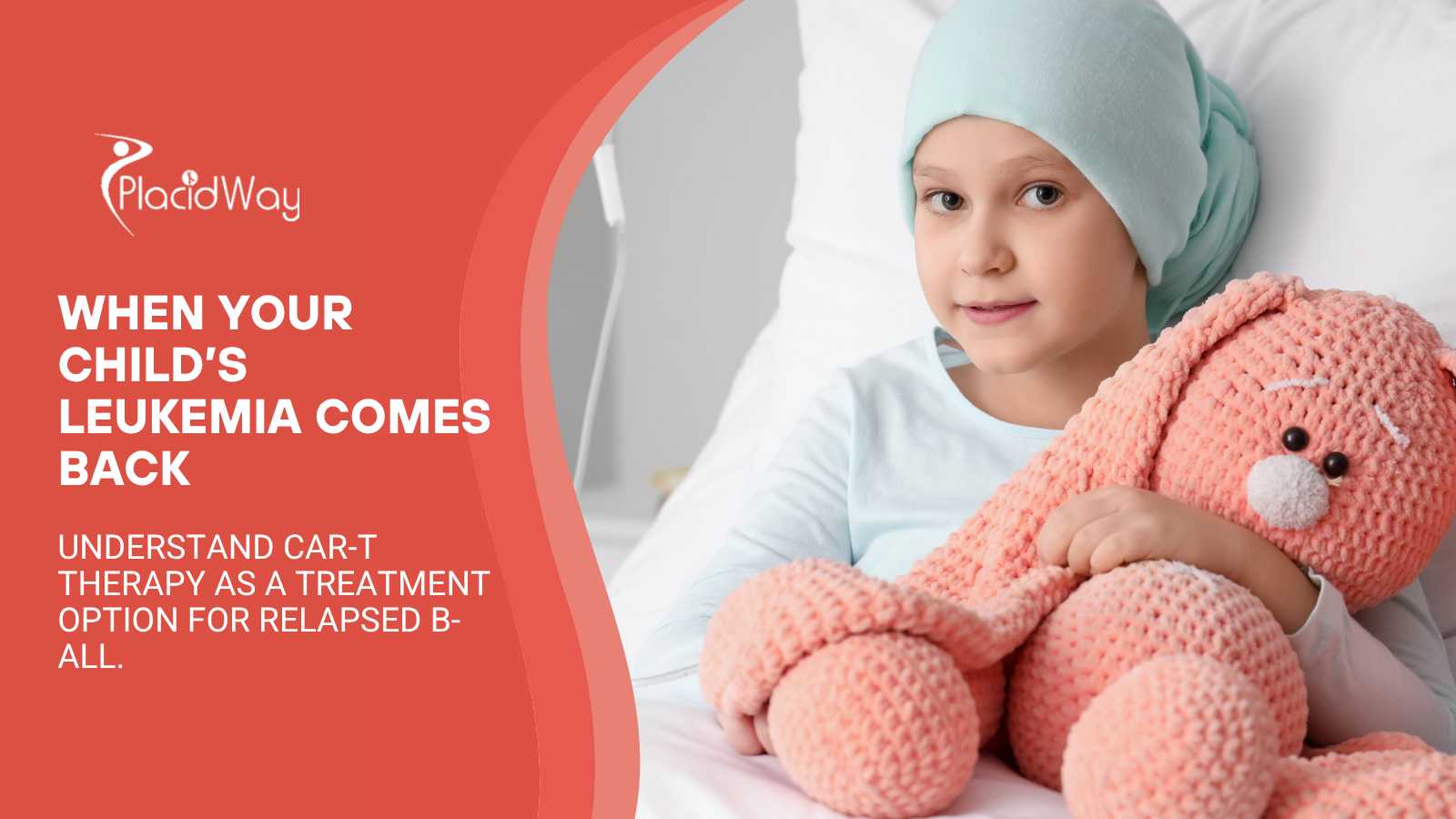
Hearing that your child’s leukemia has returned can change the conversation overnight. If the diagnosis is relapsed or refractory B-cell acute lymphoblastic leukemia, or B-ALL, CAR-T treatment in China may be one of the options your pediatric hematology team considers. China has an expanding CAR-T treatment and research ecosystem, including a pediatric CD19 CAR-T therapy approved in 2025 for certain patients aged 3–21. Treatment remains highly specialized, potentially serious complications require experienced hospital care, and total costs can reach tens of thousands of dollars or more. Before choosing a program, verify its Chinese Medical Institution Practice License, the treating physician’s registration, the regulatory status of the CAR-T product or clinical trial, cell-manufacturing quality controls, and access to pediatric intensive-care support.
Quick Summary: Pediatric CAR-T for Relapsed B-ALL in China
- Where CAR-T fits: CD19-directed CAR-T can be considered for selected children and young adults with CD19-positive relapsed or refractory B-ALL.
- China access: Puzolcabtagene autoleucel received its first Chinese approval in November 2025 for CD19-positive relapsed/refractory B-ALL in patients aged 3–21.[4]
- Planning cost: PlacidWay’s campaign planning benchmark for CAR-T treatment in China is approximately $70,000–$190,000, but this is not a pediatric-specific fixed price or treatment quote. Product, hospitalization, complications and length of stay can change the total substantially.
- Evidence: A 2025 Chinese pediatric cohort of 116 children with relapsed/refractory B-ALL reported a 98.3% complete-remission rate and 90.5% MRD-negative complete remission at day 28. Long-term outcomes were lower, which shows why an early response should never be described as a guaranteed cure.[2]
- Main safety concerns: Cytokine release syndrome, or CRS, neurologic toxicity known as ICANS, infection, low blood counts and prolonged B-cell suppression require experienced monitoring.[1]
- Hospital checks: Verify the facility’s Medical Institution Practice License, pediatric hematology capability, cellular-therapy program, ICU access, infection management and emergency escalation plan.[6]
- Important caution: CAR-T is not right for every child. Eligibility depends on leukemia subtype, antigen expression, disease burden, previous treatment, infection status, organ function and the specific product or protocol.
What Does It Mean When B-ALL Comes Back After Treatment?
Relapsed B-ALL means leukemia returned after your child had previously reached remission. Refractory B-ALL means treatment did not produce the expected remission, or the leukemia remained detectable despite therapy.
B-ALL begins in immature B lymphocytes, a type of white blood cell. Standard pediatric treatment can be highly effective, but relapse changes the risk calculation. The timing of relapse, where leukemia returns, genetic features, measurable residual disease, previous transplant history and response to salvage treatment all influence what doctors consider next.
CAR-T matters in this setting because it uses immune cells rather than simply adding another conventional chemotherapy combination. For CD19-positive B-ALL, the treatment can redirect a child’s T cells toward the CD19 marker carried by most B-lineage leukemia cells.
How Does CD19 CAR-T Therapy Work for Relapsed B-ALL?
CD19 CAR-T therapy takes T cells, modifies them so they recognize CD19 on leukemia cells, expands those cells in a controlled manufacturing process, and returns them to the patient through an infusion.
Think of the CAR, or chimeric antigen receptor, as a new recognition system placed on a T cell. Once infused, these engineered cells can identify CD19-positive leukemia cells and activate an immune attack. This is different from a stem cell transplant, which replaces the blood-forming immune system with donor stem cells.
| Treatment | What it does | Typical role in relapsed B-ALL |
|---|---|---|
| CAR-T therapy | Re-engineers immune T cells to recognize a leukemia target such as CD19. | Can induce deep remission in selected relapsed/refractory CD19-positive disease. |
| Salvage chemotherapy | Uses anti-cancer medicines to reduce leukemia burden and seek another remission. | May be used alone, before CAR-T, or as part of another treatment strategy. |
| Blinatumomab or other immunotherapy | Redirects immune cells toward leukemia through a different immune mechanism. | May be considered depending on prior treatment, antigen expression and local guidelines. |
| Allogeneic stem cell transplant | Replaces blood-forming cells with donor stem cells and adds a graft-versus-leukemia effect. | May be recommended before or after CAR-T in selected patients; the decision is individualized. |
Which Children May Be Candidates for CAR-T Therapy?
A child may be evaluated for CAR-T when B-ALL has relapsed or proved refractory and the leukemia expresses the target required by the specific CAR-T product, most commonly CD19.
Eligibility is more detailed than diagnosis alone. A CAR-T team usually reviews pathology, flow cytometry, measurable residual disease, previous chemotherapy, immunotherapy and transplant history, active infections, heart and lung function, neurologic history, liver and kidney function, blood counts, disease burden and the ability to collect suitable T cells.
Factors That May Support Evaluation
- Confirmed B-lineage ALL
- Relapsed or refractory disease
- Appropriate target expression, such as CD19
- Clinical condition compatible with cellular therapy
- Controllable infection status
- A treatment program covering the child’s age
Issues Requiring Closer Review
- Severe uncontrolled infection
- Major organ dysfunction
- High leukemia burden
- Previous severe neurologic problems
- Loss of the intended leukemia antigen
- Rapidly progressing disease requiring urgent stabilization
These are general clinical considerations, not an eligibility test. The final decision must come from the pediatric hematology and CAR-T team reviewing your child’s records.
What Do Recent CAR-T Studies Show for Children With B-ALL?
Recent evidence continues to show very high initial response rates in pediatric relapsed/refractory B-ALL, but it also shows that relapse after CAR-T remains an important problem.
A 2025 report from Peking University People’s Hospital evaluated 116 children with relapsed/refractory B-ALL treated with anti-CD19 CAR-T. Complete remission was reported in 98.3% and MRD-negative complete remission in 90.5% by day 28. With median follow-up of 47.9 months, reported overall survival was 69.3% and event-free survival was 59.0%. Severe, grade 3 or higher CRS occurred in 21.6%, while neurotoxicity was reported in 5.0%.[2]
Histogram-Style View: Reported Outcomes in a 2025 Chinese Pediatric Cohort
Source: Shang et al., 2025.[2] Outcome measures represent different clinical endpoints and should not be interpreted as parts of a single total.
A separate 2025 pediatric and young-adult CAR-T study reported an MRD-negative complete remission rate of 89%. Leukemia-free survival was approximately 71% at one year and 64% at two years.[3]
Line Graph: Reported Leukemia-Free Survival After CAR-T
Source: PLAT-02 results published in 2025.[3] The line connects reported point estimates for readability and is not a recreation of the study’s Kaplan-Meier curve.
Why Are Families Looking at Pediatric CAR-T Therapy in China?
Families consider China because its cellular-therapy ecosystem has expanded rapidly and because pediatric access changed significantly in late 2025.
On November 4, 2025, puzolcabtagene autoleucel received its first approval in China for CD19-positive relapsed or refractory B-ALL in patients aged 3–21.[4] This matters because earlier Chinese commercial B-ALL CAR-T approvals primarily addressed adults, while many pediatric programs relied on clinical research or institution-specific pathways.
Regulatory approval does not mean every child qualifies, every hospital offers the product, or every program follows the same protocol. Parents need to ask whether the proposed therapy is an NMPA-authorized commercial product, part of an approved clinical trial, or another legally permitted clinical pathway—and receive that information in writing.
| Source region emphasized by campaign | Why families may investigate China | Main planning issue |
|---|---|---|
| Middle East / GCC | Advanced cellular therapies may have limited local availability for some indications. | Fast record transfer, Arabic support, caregiver travel and financing. |
| Southeast Asia | Regional proximity and differences in domestic CAR-T availability. | Treatment timing, interpreter support and return-home follow-up. |
| South Asia | Large patient population and uneven access to advanced pediatric cellular therapy. | Visa timing, affordability, medical-record review and infectious-disease screening. |
| United States / Canada | Families may explore alternatives after eligibility, insurance or cost barriers. | Determine whether a comparable approved pathway is available closer to home first. |
Data limitation: Reliable public data quantifying international pediatric CAR-T travelers to China by nationality, age and gender are not available. The regions above reflect the campaign’s priority source markets rather than a claimed patient-travel census. No travel statistics have been invented.
How Much Could CAR-T Therapy for B-ALL Cost in China?
A realistic budgeting conversation should separate the CAR-T product or cellular-therapy charge from hospitalization, testing, complications, travel and follow-up.
For campaign planning, PlacidWay uses a broad China CAR-T range of approximately $70,000–$190,000. That range is not a guaranteed price, is not specific to every pediatric B-ALL product, and should never replace an itemized hospital quotation.
For context, a U.S. commercial-insurance claims study of pediatric B-ALL CAR-T reported a median 90-day total healthcare cost of approximately $620,500 among 37 patients.[5] These numbers are not directly equivalent because the U.S. figure represents claims-based total healthcare spending while the China campaign range is a treatment-planning benchmark.
| Market | Available cost context | Important limitation |
|---|---|---|
| China | Approx. $70,000–$190,000 campaign planning range for CAR-T. | Not a fixed pediatric B-ALL quote; exact product and hospital costs vary. |
| United States | Median 90-day healthcare cost of $620,500 in one pediatric B-ALL commercial-claims study.[5] | Includes broader healthcare utilization and cannot be compared one-to-one with an overseas package. |
| UK / Europe | Patient-paid cost varies substantially by country, reimbursement system and eligibility. | There is no single defensible self-pay figure for “Europe.” |
What Should an Itemized CAR-T Quote Include?
| Cost component | What parents should ask |
|---|---|
| Pre-treatment assessment | Are pathology review, marrow testing, flow cytometry, imaging and organ-function tests included? |
| Leukapheresis | Is T-cell collection included in the quoted price? |
| CAR-T manufacturing/product | What exact product or protocol is proposed and what is its regulatory status? |
| Bridging therapy | Is treatment needed while cells are prepared, and is it charged separately? |
| Lymphodepleting therapy | Are medicines, monitoring and admission included? |
| Hospital stay | How many inpatient days are budgeted and what happens if the stay is longer? |
| Complication care | Are ICU care, CRS treatment, infection care or readmission billed separately? |
| Post-discharge follow-up | Which blood tests and clinic visits are included before your child can travel home? |
What Does the Pediatric CAR-T Journey in China Look Like?
The CAR-T journey usually involves several separate stages rather than one procedure performed on one day.
The campaign uses roughly six to eight weeks as a planning window for an international journey, but actual timing can be shorter or longer depending on manufacturing, leukemia control, infections, the child’s condition, hospital protocol and travel logistics.
| Timeframe | Biological or clinical process | What your child may experience | Activity level | Parent action |
|---|---|---|---|---|
| Before travel | Record review and preliminary candidacy assessment. | Usually no CAR-T-specific effects yet. | Depends on leukemia and current treatment. | Send complete pathology, treatment history and recent test results. |
| Initial hospital evaluation | Confirm diagnosis, CD19 status, disease burden and organ function. | Blood tests, marrow testing and other assessments. | Variable. | Ask the team to explain the treatment plan and alternatives. |
| Cell collection | T cells are collected through leukapheresis. | Several hours connected to an apheresis system; access requirements vary. | Light activity afterward if medically stable. | Confirm manufacturing timeline and what happens if collection is inadequate. |
| Manufacturing / bridging period | CAR-T cells are prepared; leukemia may need temporary control. | Depends on any bridging treatment. | Individualized. | Remain reachable and follow infection precautions. |
| Lymphodepletion | Short preparative therapy reduces competing lymphocytes before infusion. | Fatigue, nausea or blood-count suppression may occur. | Reduced. | Report fever or new symptoms promptly. |
| CAR-T infusion and early monitoring | Engineered cells are infused and begin expanding. | Some children develop fever, CRS, neurologic symptoms or other complications. | Closely supervised. | Stay close to the treatment team and understand emergency escalation. |
| Post-infusion assessment | Blood counts, disease response and complications are reassessed. | Fatigue and immune suppression may continue. | Gradual increase only with medical clearance. | Obtain a written follow-up and emergency plan before flying home. |
What Are the Main Risks of CAR-T Therapy in Children?
CAR-T can cause serious and occasionally life-threatening complications, which is why it should be given in a hospital program capable of recognizing and treating them quickly.
Two of the best-known complications are cytokine release syndrome and ICANS. CRS is an inflammatory reaction that can cause fever, low blood pressure, low oxygen and organ dysfunction. ICANS can cause confusion, altered behavior, language difficulty, reduced consciousness or seizures. Pediatric assessment is adapted to the child’s age.[1]
| Risk | What it may look like | Why hospital experience matters |
|---|---|---|
| CRS | Fever, falling blood pressure, breathing difficulty, low oxygen. | Rapid grading, supportive care and anti-inflammatory treatment may be required. |
| ICANS | Confusion, unusual behavior, difficulty speaking, sleepiness or seizures. | Requires neurologic assessment and rapid escalation when severe. |
| Infection | Fever, chills, cough, weakness or other infection symptoms. | Immune suppression and low blood counts can make infection dangerous quickly. |
| Prolonged cytopenias | Low red cells, platelets or infection-fighting cells. | May require transfusion support, infection prevention and prolonged follow-up. |
| B-cell aplasia / low antibodies | Reduced normal B cells and antibody production. | Long-term immune monitoring and supportive treatment may be needed. |
How Should Parents Choose a CAR-T Hospital in China?
The first question should not be whether a hospital has an impressive website; it should be whether the facility is legally licensed and clinically equipped for pediatric cellular therapy.
Chinese medical institutions must be registered and hold a Medical Institution Practice License under the medical-institution regulatory framework.[6] International accreditation such as JCI can be an additional trust signal when present, but it is not a substitute for Chinese licensing and should not be treated as mandatory proof of quality.
Pediatric CAR-T Hospital Verification Checklist
- Ask for the hospital’s current Medical Institution Practice License and issuing authority.
- Confirm the hospital treats children with acute leukemia, not only adult CAR-T patients.
- Ask how many pediatric B-ALL CAR-T cases the team has managed.
- Verify whether pediatric ICU support is on site or immediately accessible.
- Ask who manages CRS, ICANS, sepsis and prolonged cytopenias.
- Request the exact CAR-T product or trial name and its regulatory status.
- Ask how cell identity, viability, sterility and release testing are documented.
- Confirm 24/7 clinical contact after infusion.
- Ask whether interpreters are available during consent and emergency discussions.
- Request the complete treatment quote, exclusions, cancellation terms and complication-cost policy in writing.
How Can Parents Verify the CAR-T Doctor’s Credentials in China?
Your child should be evaluated by physicians legally registered to practice and experienced in pediatric hematology, leukemia and cellular therapy.
China operates a practice-registration system for doctors and other medical professionals.[7] For an international family, a physician’s title alone is not enough. Ask the hospital to confirm the doctor’s legal registration, specialty role and direct experience managing pediatric CAR-T complications.
How Should a Family Prepare to Travel to China for Pediatric CAR-T?
Travel planning should begin only after the receiving medical team has reviewed the child’s records and provided a realistic clinical pathway.
A child with relapsed leukemia may not have the flexibility of an ordinary medical traveler. Timing can change because of infection, disease progression, blood counts, bridging therapy or cell-manufacturing schedules. Visa requirements also vary by nationality and circumstance, so families should confirm the appropriate entry documentation directly with the relevant Chinese embassy or consular authority.
| Before departure | During treatment | Before returning home |
|---|---|---|
| Complete medical-record review | Keep one caregiver consistently available | Obtain discharge summary and treatment record |
| Confirm passport and visa requirements | Stay within the hospital’s required distance | Confirm fitness to fly |
| Arrange interpreter support | Follow infection-prevention instructions | Set up handoff with home hematologist |
| Plan flexible accommodation | Keep emergency contact numbers available | Know what symptoms require emergency care |
| Budget for unexpected hospitalization | Keep school expectations flexible | Confirm long-term laboratory schedule |
What Happens if Leukemia Returns After CAR-T?
Relapse after CAR-T can occur, and the next treatment depends partly on why the leukemia escaped the original CAR-T cells.
Some relapses remain CD19-positive, which may reflect limited CAR-T persistence or other biological factors. Others become CD19-negative, meaning leukemia cells no longer display enough of the target recognized by the CAR-T cells. Researchers are therefore studying alternative targets, dual-target approaches such as CD19/CD22, repeat cellular therapy and strategies involving stem cell transplantation.
This is another reason to ask about the hospital’s long-term plan before treatment begins. Parents should know how the team monitors MRD, what tests are performed after remission and what options would be considered if disease returns.
What Records Are Needed for a Pediatric CAR-T Case Review?
A useful CAR-T review requires enough information to confirm the diagnosis, understand every previous treatment and evaluate the current disease state.
- Original B-ALL pathology and diagnostic reports
- Bone marrow aspiration and biopsy reports
- Flow cytometry, including current CD19 expression when available
- Cytogenetic and molecular testing
- MRD results and dates
- Complete chemotherapy and immunotherapy history
- Previous stem cell transplant information, if applicable
- Recent complete blood count and chemistry results
- Recent infection history and microbiology results
- Cardiac, liver, kidney and neurologic assessments when available
- Current medication list and treating oncologist’s summary
Do not stop or delay your child’s current treatment while waiting for an international opinion unless the treating oncology team specifically advises it.
Frequently Asked Questions About Pediatric CAR-T for Relapsed B-ALL
Is CAR-T therapy safe for children with relapsed B-ALL?
CAR-T can be given to children, but it is not risk-free. CRS, neurologic toxicity, infection and prolonged low blood counts can become serious. Safety depends heavily on appropriate patient selection, pediatric monitoring and rapid access to experienced hematology and intensive-care teams.[1]
What is the success rate of CAR-T for pediatric B-ALL?
Initial remission rates can be very high, but there is no single universal success rate. A 2025 Chinese cohort reported 98.3% complete remission at day 28, while longer-term event-free survival was lower. Response depends on disease biology, burden and other factors.[2]
Can CAR-T cure relapsed childhood leukemia?
CAR-T can produce deep and sometimes durable remissions, but it should not be described as a guaranteed cure. Some children relapse after treatment. Doctors may recommend additional monitoring, transplantation or another strategy depending on the child’s relapse risk and response.
Is pediatric CAR-T for B-ALL approved in China?
Yes, for a defined population. Puzolcabtagene autoleucel received approval in China in November 2025 for CD19-positive relapsed or refractory B-ALL in patients aged 3–21. Other products or protocols may have different approved age ranges and indications.[4]
How much does pediatric CAR-T therapy cost in China?
PlacidWay’s broad campaign planning range for CAR-T in China is approximately $70,000–$190,000, but pediatric B-ALL pricing varies by product, hospital and complications. Parents should request a written itemized quote rather than assume a package covers every possible hospital expense.
How long would our family need to stay in China for CAR-T?
The overall process commonly takes several weeks because evaluation, cell collection, manufacturing, preparative treatment, infusion and monitoring occur in stages. The campaign uses roughly six to eight weeks for planning, but the treating hospital should provide the actual schedule for your child.
Can a parent stay with a child during CAR-T treatment in China?
Caregiver access depends on each hospital’s pediatric ward, isolation and ICU policies. Ask before travel whether one parent can remain with the child, whether overnight stays are permitted and what changes if the child requires intensive care.
What happens while CAR-T cells are being manufactured?
Some children need bridging therapy to control leukemia while the CAR-T product is prepared. The choice depends on disease burden, previous treatment and clinical condition. Bridging treatment should be planned by the leukemia and CAR-T team rather than arranged independently.
Can CAR-T be used after a stem cell transplant?
CAR-T can be considered in some patients whose B-ALL relapses after allogeneic stem cell transplantation. The approach is specialized because prior transplant history influences T-cell sourcing, toxicity, relapse strategy and whether another transplant is later considered.
What if my child’s leukemia is CD19-negative?
A CD19-directed CAR-T product generally requires leukemia cells to express the CD19 target. If CD19 is absent or lost, the team may investigate other targets or treatment strategies. Current flow cytometry is therefore an important part of candidacy assessment.
How do we know whether a Chinese CAR-T program is legitimate?
Verify the hospital’s Medical Institution Practice License, the doctor’s registration, the proposed product or trial’s regulatory status, pediatric cellular-therapy experience, manufacturing quality controls, ICU access and written complication-management plan before making travel or payment commitments.[6][7]
What is the first step if we want another opinion about CAR-T?
Need Help Comparing Pediatric CAR-T Options?
PlacidWay can help families organize questions, compare available providers, understand quoted costs and request information for an initial treatment review. A case review does not guarantee that CAR-T will be recommended or that a child will qualify.
Disclaimer
Disclaimer: This information is for educational purposes only and does not replace professional medical advice. Always consult a qualified healthcare provider before making medical decisions.
Medical review note: Because this is pediatric oncology YMYL content, the final published version should be reviewed by a credentialed pediatric hematologist/oncologist or cellular-therapy specialist. No reviewer name has been fabricated for this draft.
References
- Pediatric CAR T-Cell Therapy (PDQ®) – National Cancer Institute
- Impact of Pre-Infusion Disease Burden on Outcomes in Pediatric Relapsed/Refractory B-ALL Following Anti-CD19 CAR T-Cell Therapy – PubMed
- Outcomes of PLAT-02 and PLAT-03 in Pediatric B-ALL – PubMed
- Puzolcabtagene Autoleucel: Pediatric First Approval – PubMed
- Healthcare Cost and Utilization for CAR-T Therapy in Pediatric Acute Lymphoblastic Leukemia – PubMed
- Rules for the Administration of Medical Institutions – National Health Commission of China
- NMPA Announcement on ICH Guideline E11A: Pediatric Extrapolation – National Medical Products Administration





















Share this listing