


Autologous Stem Cell Therapy for Spinal Cord Injury in Vienna, Austria by Kobinia Med
A spinal cord injury can instantly alter the trajectory of a person's life, stripping away mobility, independence, and hope. For years, patients have been told that neurological damage is permanent and that standard rehabilitation is the only path forward. However, medical science is rapidly evolving beyond traditional boundaries.
Today, Autologous Stem Cell Therapy for Spinal Cord Injury in Vienna, Austria offers a groundbreaking alternative. By harnessing the body’s own regenerative capabilities, patients are discovering new avenues for healing and functional recovery. Watch to learn how Kobinia Med is pioneering point-of-care stem cell treatments that are changing the landscape of neurological care.
Video Chapters & Quick Navigation
The Devastating Reality of Spinal Cord Injuries
The central nervous system is an incredibly complex and delicate network responsible for transmitting signals between the brain and the rest of the body. When trauma occurs to the spinal cord, it disrupts these vital communication pathways. This disruption can lead to partial or complete paralysis, fundamentally altering a patient's independence.
Traditionally, the medical consensus has been that central nervous system tissues cannot regenerate once severely damaged. Following an injury, the body naturally forms a glial scar around the trauma site . While this scar prevents further tissue death, it acts as a physical and chemical barrier that stops surviving nerve fibers from reconnecting.
Patients are often left managing symptoms rather than treating the underlying neurological deficit. Standard therapies focus heavily on physical rehabilitation, wheelchair training, and pharmaceutical pain management. However, patients and their families continuously search for treatments that offer functional restoration, rather than just symptom management.
The Breakthrough of Autologous Stem Cell Therapy
The landscape of neurological rehabilitation is experiencing a monumental shift thanks to regenerative medicine. Autologous stem cell therapy for spinal cord damage utilizes the patient's own biological material to stimulate repair. The term "autologous" is critical here, as it means the cells are harvested from the patient's own body, entirely eliminating the risk of tissue rejection.
Adult stem cells, particularly Mesenchymal Stem Cells (MSCs), are harvested primarily from bone marrow or adipose (fat) tissue. These highly potent cells possess unique immunomodulatory and regenerative properties. When introduced into the cerebrospinal fluid, they migrate directly to the site of the spinal injury .
Instead of merely masking pain or spasms, stem cells actively work to alter the microenvironment of the spinal cord. They secrete vital growth factors that reduce chronic inflammation, break down the restrictive glial scar, and promote angiogenesis—the formation of new blood vessels. This creates an environment where neuroplasticity can actually occur.
Why Autologous Cells Are the Safest Option
When researching spinal cord injury treatment options in Europe, patients will often encounter both allogeneic (donor) and autologous (self) cell therapies. Autologous treatments are widely considered the gold standard for safety in regenerative medicine. Because the cells carry your exact DNA, your immune system recognizes them as friendly.
This eliminates the need for harsh immunosuppressive drugs, which are often required when using donor cells. Immunosuppressants can leave a patient highly vulnerable to infections, which is particularly dangerous for individuals with spinal cord injuries who may already suffer from compromised immune function or recurring urinary tract infections.
Why Choose Vienna, Austria for Neurological Care?
Vienna is not just a city of historical architecture and classical music; it is a global epicenter for advanced medical research and clinical excellence. Austria’s healthcare system consistently ranks among the best in the world, renowned for its stringent safety regulations, cutting-edge medical technology, and highly skilled physicians.
Patients seeking minimally invasive stem cell treatment in Vienna benefit from European Union medical standards. The clinical protocols used in Austrian medical facilities adhere strictly to high ethical and safety guidelines. This provides immense peace of mind for international patients traveling from the United States, the UK, or the Middle East.
Furthermore, Vienna offers a highly accessible and accommodating environment for patients with limited mobility. The city’s infrastructure, comprehensive public transport, and specialized medical hotels make the logistics of medical travel smooth and stress-free. Traveling for medical care is daunting, but Vienna provides a serene, highly supportive backdrop for recovery.
Kobinia Med: Pioneers in Regenerative Medicine
At the forefront of this medical revolution is Kobinia Med, a highly specialized clinic in Vienna dedicated to point-of-care regenerative therapies. Founded and led by renowned medical experts, the clinic has become a beacon of hope for patients suffering from severe neurological deficits .
Kobinia Med operates on the philosophy that the body holds its own key to healing. Rather than relying on laboratory-cultivated cells that take weeks to grow and may mutate, they utilize a direct point-of-care protocol. This means the entire procedure—from cell extraction to processing and reinjection—happens within a single, streamlined surgical session.
The clinic’s multidisciplinary team comprises expert neurosurgeons, neurologists, and anesthesiologists. They work collaboratively to assess each patient's unique injury level, ensuring that the stem cell delivery method is perfectly tailored to maximize therapeutic outcomes. This highly personalized approach sets Kobinia Med apart from standard medical tourism destinations.
Understanding the Point-of-Care Stem Cell Protocol
One of the most frequently asked questions by prospective patients is how the actual procedure works. The point of care stem cell therapy for spinal cord damage is designed to be minimally invasive, highly efficient, and exceptionally safe. It is performed under local anesthesia or mild sedation, ensuring the patient remains comfortable throughout.
Step 1: Cell Harvesting
The procedure begins with the extraction of stem cell-rich tissue. At Kobinia Med, physicians typically harvest cells from the patient's adipose tissue (body fat) via a specialized mini-liposuction technique, or from the bone marrow via a small aspiration . Both locations are abundant reservoirs of high-quality mesenchymal stem cells.
Step 2: Isolation and Processing
Once the tissue is collected, it is immediately transferred to a closed-system processing unit within the same surgical theater. Using advanced centrifugation and filtration technology, the medical team separates the highly potent stem cells and growth factors from the rest of the tissue. Because the cells are not sent off to an external laboratory to be cultured over several days, there is zero risk of contamination or loss of cellular vitality.
Step 3: Targeted Delivery
The final and most crucial step is returning the concentrated stem cells to the patient’s body. For spinal cord injuries, the cells are typically administered via an intrathecal injection. A fine needle is used to deliver the cells directly into the cerebrospinal fluid, allowing them to bypass the blood-brain barrier and travel straight to the site of the spinal lesion .
The Mechanisms of Regeneration: How It Works
It is important to understand that stem cells do not magically replace dead nerves overnight. Instead, they act as cellular paramedics, initiating a cascade of biological repairs. When the MSCs arrive at the injury site, their first task is to assess the microenvironment and release specific cytokines.
These specialized proteins drastically reduce the chronic neuroinflammation that constantly surrounds a spinal injury. By lowering inflammation, the stem cells protect the remaining healthy nerve fibers from secondary damage—a process known as neuroprotection . This alone can result in a significant reduction of neuropathic pain for many patients.
Following the anti-inflammatory response, the cells release neurotrophic factors. These factors stimulate the patient's own dormant resident stem cells and encourage existing neurons to sprout new axon connections. While full structural repair takes time, this process of neuroplasticity is what eventually leads to functional improvements over the following months.
Patient Outcomes: What to Expect After Treatment
Setting realistic expectations is a critical part of the medical journey. Stem cell therapy is a highly individualized treatment, and outcomes vary based on the severity of the injury, the time elapsed since the trauma, and the patient's overall health. However, clinical observations from Kobinia Med reveal highly encouraging trends in patient recovery.
Improvements in Motor Function and Sensation
Many patients report the gradual return of superficial and deep sensation below the level of their injury. This might start as a tingling sensation or the ability to feel temperature changes. Over time, some patients experience an increase in voluntary motor control, allowing for improved core stability, better limb movement, and in some extraordinary cases, assisted stepping .
Reduction in Spasticity and Pain
Severe muscle spasticity and chronic neuropathic pain are two of the most debilitating side effects of paraplegia and tetraplegia. Following stem cell treatment, a significant number of patients experience a profound reduction in muscle spasms. This allows them to reduce their dependence on heavy muscle relaxants, which often cause severe fatigue and cognitive fog.
Autonomic Function Restoration
Perhaps one of the most vital quality-of-life improvements noted by patients is the recovery of autonomic functions. Regaining better bowel and bladder control, as well as improved sexual function and cardiovascular stability, drastically restores personal dignity and independence. These invisible improvements are frequently cited as the most life-changing results of the therapy.
Comparing Standard Care vs. Stem Cell Therapy
To fully grasp the value of regenerative medicine, it helps to compare it directly against the current standard of care for spinal cord injury patients. The traditional medical approach is largely compensatory, while stem cell therapy is actively restorative.
| Feature | Standard Traditional Care | Autologous Stem Cell Therapy |
|---|---|---|
| Primary Goal | Symptom management and learning to live with the disability. | Biological repair, neuroprotection, and functional restoration. |
| Treatment Method | Physical therapy, mobility aids, invasive spinal fusion surgeries. | Minimally invasive cell harvesting and targeted intrathecal injection. |
| Pain Management | Heavy reliance on daily pharmaceuticals (opioids, muscle relaxants). | Natural reduction of inflammation leading to long-term pain relief. |
| Hospital Stay | Often requires prolonged hospitalization after traditional surgery. | Outpatient or short-stay procedure, allowing rapid return to comfort. |
Preparing for Your Medical Journey to Vienna
Deciding to pursue advanced medical treatment abroad is a major life decision. PlacidWay simplifies this journey by acting as your dedicated medical tourism facilitator. They bridge the gap between international patients and top-tier clinics like Kobinia Med in Vienna, ensuring that every detail is meticulously planned.
Before traveling, patients undergo a thorough remote consultation. You will be asked to provide recent MRI scans, medical reports, and a detailed history of your injury. The medical team in Austria will review these documents to determine your candidacy for the procedure. This ensures you only travel if the therapy presents a genuine opportunity for improvement .
Once approved, the logistical planning begins. From securing medical visas to arranging wheelchair-accessible transportation from Vienna International Airport, every step is handled with precision. Patients are guided to accommodations near the clinic, allowing them to rest comfortably before and after their point-of-care procedure.
The Role of Post-Treatment Rehabilitation
It is crucial to note that stem cell therapy is not a standalone magic wand. It is a powerful biological catalyst that must be paired with rigorous physical therapy. Once the stem cells have created a favorable environment for nerve growth, the body needs physical movement to "train" those new neural pathways.
Patients are strongly encouraged to engage in intensive, specialized physiotherapy following their return home. Modalities like robotic-assisted walking, functional electrical stimulation (FES), and hydrotherapy become exponentially more effective when the central nervous system has been biologically primed by stem cells. The synergy between regenerative medicine and advanced physical therapy is where the true miracles of recovery happen.
Taking the Next Step Toward Functional Independence
Living with a spinal cord injury can feel like being trapped in a static state, waiting for a scientific miracle. That scientific evolution is no longer confined to the future; it is actively happening right now in Vienna. Autologous Stem Cell Therapy by Kobinia Med represents a viable, safe, and scientifically grounded path toward reclaiming lost function.
By utilizing the unadulterated healing power of your own biological cells, you avoid the risks of traditional invasive surgeries and immune rejection. Whether your goal is to reduce paralyzing spasticity, regain bowel control, or fight for the return of voluntary motor skills, regenerative medicine opens a door that standard care has long considered closed.
If you or a loved one is battling the severe limitations of a spinal cord injury, there is hope beyond standard rehabilitation. The dedicated specialists in Austria are ready to evaluate your case and guide you through the transformative potential of point-of-care stem cell therapy.
Ready to Explore Stem Cell Therapy in Vienna?
Take control of your neurological recovery. Connect with Kobinia Med through PlacidWay for a comprehensive medical evaluation. Let our team handle the logistics while you focus on your healing journey.
REQUEST A FREE CONSULTATION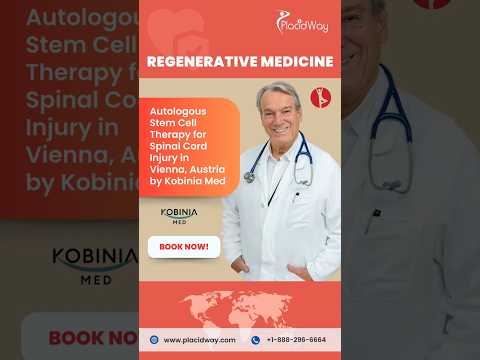


.png)









Share this listing