
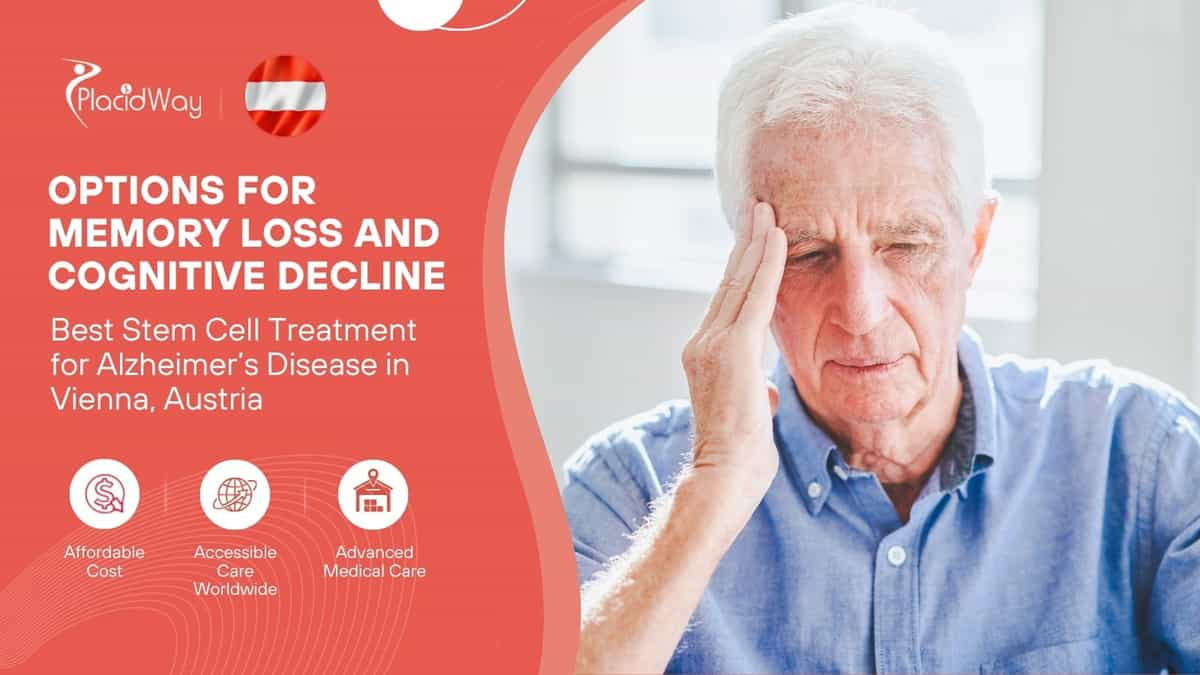
Memory loss can begin subtly but gradually affect conversations, daily routines, independence, and family relationships. As Alzheimer's disease progresses, patients and families often look beyond conventional management and investigate emerging approaches, including regenerative medicine and stem-cell research. Stem Cell Treatment for Alzheimer’s Disease in Vienna Austria should currently be presented as an emerging, research-based approach rather than a proven cure. Regenerative medicine research is actively investigating whether specific cells or cell-derived approaches could potentially influence neuroinflammation, neuronal survival, tissue repair, or other biological processes involved in neurodegeneration.
Key Takeaways About Stem Cell Treatment for Alzheimer's Disease
- Emerging Field: Stem-cell approaches for Alzheimer's remain an active area of research, focusing on neuroinflammation and cellular signaling rather than proven brain reversal.
- No Guaranteed Cure: Patients and families should remain cautious of non-compliant providers promising a guaranteed reversal of cognitive loss.
- Regulatory Status Matters: Stem cell therapy for dementia in Austria and Europe operates under rigorous European Medicines Agency (EMA) and Federal Office for Safety in Health Care (BASG) oversight.
- Personalized Evaluation: Eligibility depends heavily on the specific Alzheimer's stage, overall systemic health, current medications, and baseline cognitive status.
- Vienna Advantage: Vienna provides access to advanced medical infrastructure, top-tier academic research environments, and sophisticated diagnostic tools.
- Clinical Trial Pathways: Advanced cell therapies are frequently accessible via authorized clinical research pathways or specific hospital exemptions.
- Conventional Care Still Matters: Regenerative medicine for Alzheimer's in Vienna should complement, rather than automatically replace, established medical and supportive protocols.
Understanding Alzheimer's Disease, Memory Loss, and Cognitive Decline
What Is Alzheimer's Disease?
Alzheimer's disease is a progressive neurodegenerative disease that primarily affects memory, orientation, and higher-level executive thinking. Over time, progressive cellular changes lead to difficulties with language, behavioral shifts, functional mobility challenges, and gradual loss of daily independence.
Common Symptoms
Memory Problems
Short-term memory lapses, forgetting recent events, or repeating questions.
Difficulty Finding Words
Struggling to follow conversations or locate everyday vocabulary.
Reduced Problem-Solving
Challenges with managing finances, tracking bills, or following multi-step tasks.
Time/Place Confusion
Losing track of dates, seasons, or familiar geographical surroundings.
Mood Changes
Increased anxiety, irritability, withdrawal, or changes in mood and behavior.
Daily Task Difficulties
Increasing difficulty completing familiar activities such as cooking, shopping, or using appliances.
Alzheimer's Disease vs General Dementia
Dementia is an overarching umbrella term describing a decline in mental ability severe enough to interfere with daily life. Alzheimer's disease is the specific, most common underlying biological cause of dementia, accounting for an estimated 60% to 80% of total cases worldwide.
What Is Stem Cell Therapy?
Stem cells are foundational biological cells capable of self-renewal, developing into specialized cell lines, and secreting signaling molecules that interact with surrounding tissues.
Types of Stem Cells Relevant to Research
- Mesenchymal Stromal/Stem Cells (MSCs): Extensively studied for immunomodulatory and anti-inflammatory paracrine signaling.
- Neural Stem/Progenitor Cells: Investigated for their theoretical potential to support central nervous system environments.
- Induced Pluripotent Stem Cells (iPSCs): Reprogrammed adult cells used primarily in disease modeling and drug testing.
- Hematopoietic Stem Cells: Used in blood and immune system treatments; generally not applied to neurodegenerative protocols.
How Researchers Think Stem Cells Could Help Alzheimer's
Rather than physically replacing lost brain tissue or "regrowing the brain," researchers are investigating whether cell-based approaches might influence neuroinflammation modulation, deliver neuroprotective signaling molecules, support immune cell interactions, or encourage endogenous neural repair mechanisms.
Can Stem Cell Treatment Cure Alzheimer's Disease?
Direct Answer: There is currently no established stem cell treatment proven to cure Alzheimer's disease.
Patients evaluating Alzheimer's stem cell treatment in Austria must understand the distinct boundary between investigative research promises and clinically established, regulatory-approved therapeutics.
| Research Claim | What Patients Should Understand |
|---|---|
| May reduce neuroinflammation | Requires human clinical trial validation; lab models vary. |
| May support neuronal survival | Paracrine support is not equivalent to reversing established disease. |
| May influence brain repair mechanisms | Mechanisms are actively under investigation across early-phase studies. |
| May improve cognitive outcomes | Efficacy must be rigorously demonstrated through controlled Phase III trials. |
The National Institute on Aging (NIA) currently tracks hundreds of active Alzheimer's and related-dementia studies covering drugs, diagnostics, non-drug interventions, and disease mechanisms, reflecting how expansive the scientific research landscape remains.
What Does Current Research Show?
Preclinical & Early Human Research
While laboratory and animal models have yielded valuable cellular insights, promising preclinical findings do not automatically translate into effective human therapies. Early human research generally involves small patient populations, safety-focused protocols, and early-phase trial parameters with limited long-term follow-up data.
From Stem Cell Research to Approved Clinical Treatment
Stem Cell Approaches Being Investigated
Mesenchymal Stem Cells
Studied for immunomodulatory properties and signaling effects. Mechanism does not equal proven clinical efficacy.
Neural Progenitors
Investigated for potential relevance to targeted CNS microenvironments and supportive brain repair research.
iPSC Models
Allows researchers to model patient-specific Alzheimer's cell lines, test drugs, and evaluate future cellular strategies.
Why Consider Vienna, Austria for Advanced Alzheimer's Care?
Vienna is globally recognized for its academic medicine infrastructure, world-class university hospitals, advanced diagnostic capabilities, and specialized multidisciplinary neurological teams comprising neurologists, geriatricians, neuropsychologists, and rehabilitation specialists.
Austria's Regulatory Framework for Cell-Based Therapies
The Federal Office for Safety in Health Care (BASG) regulates medicines derived from human cells and tissues in Austria. Under Austrian and European Union directives, Advanced Therapy Medicinal Products (ATMPs) include somatic cell therapies, gene therapies, and tissue-engineered products.
Austria's clinical trials operate under the strict European Union Clinical Trials Regulation, utilizing the Clinical Trials Information System (CTIS) for authorization, safety monitoring, and compliance verification.
Approved Therapy, Clinical Trial, or Experimental Treatment?
| Category | Regulatory Status | Patient Consideration |
|---|---|---|
| Authorized Treatment | Full EMA/BASG regulatory clearance satisfied. | Established therapeutic pathway with proven clinical profile. |
| Authorized Clinical Trial | Approved research protocol logged in CTIS. | Investigational; requires strict patient inclusion criteria. |
| Hospital Exemption | Regulated custom preparation for individual patients. | Verify exact legal authorization and hospital oversight. |
| Unregulated Treatment | Lacks authorized regulatory backing or trial clearance. | Significant safety risk; explicitly warned against by BASG. |
BASG Warning: European regulatory authorities specifically warn patients against non-compliant cell therapies operating outside recognized EMA, BASG, or CTIS frameworks.
What Alzheimer's Patients Should Verify Before Treatment
- Exact name & type of cells used
- Cell source & processing method
- Route of administration
- Official BASG/EU regulatory status
- Published human safety data
- Emergency care arrangements
- Total itemized cost estimate
- Long-term follow-up protocols
Who May Be Considered for Advanced Care?
Patient interest in regenerative medicine does not equal medical eligibility. Eligibility must be evaluated by a certified neurologist based on a confirmed Alzheimer's diagnosis, documented cognitive stage, overall medical history, medication stability, and realistic treatment expectations.
How Alzheimer's Patients Are Evaluated in Vienna
What Might a Treatment Journey in Vienna Look Like?
- Medical Record Review: Prior diagnostic scans, lab tests, and clinical histories are submitted.
- In-Person Neurological Consultation: Comprehensive evaluation by a Vienna-based memory specialist.
- Diagnostic Verification: High-resolution MRI, PET scans, or cognitive batteries conducted locally.
- Therapeutic Planning: Explanation of risks, realistic goals, and formal consent protocols.
- Treatment & Monitoring: Administration performed in a licensed medical facility under clinical supervision.
- Follow-Up Care: Cognitive and safety reassessments scheduled before returning home.
Stem Cell Therapy vs Established Alzheimer's Care
| Feature | Emerging Cell Therapy | Established Alzheimer's Management |
|---|---|---|
| Primary Objective | Investigational biological support | Symptom management & disease modification |
| Clinical Evidence | Early-phase research & active trials | Extensive Phase III clinical trial data |
| Regulatory Approval | Requires verification per trial/exemption | Established EMA / FDA approved drugs |
Established therapies continue to evolve rapidly worldwide. For instance, the FDA's 2026 announcements regarding new at-home administration options for monoclonal antibodies such as lecanemab demonstrate ongoing progress in conventional Alzheimer's management.
Cost of Stem Cell Treatment for Alzheimer's in Vienna
Medical pricing varies according to the chosen diagnostic pathway, facility level, cell processing complexity, and follow-up requirements.
| Service Component | Price (USD) | Pricing Approach |
|---|---|---|
| Neurology Consultation | Included in package / Quote | Protocol dependent |
| Diagnostic Imaging (MRI / PET) | Facility dependent | Request quote |
| Cell Processing & Administration | $8,700–$13,800 | Protocol dependent |
Red Flags to Watch For
Avoid Any Provider Promising:
- "Guaranteed 100% memory restoration."
- "A permanent cure for Alzheimer's disease."
- "Instant reversal of cognitive decline."
- Therapy without requiring medical records or imaging.
BASG specifically warns that claims of unprecedented efficacy without supporting medical evidence indicate non-compliant medical practices.
Questions to Ask Your Specialist
- What is my exact stage of Alzheimer's disease based on imaging?
- What specific type and source of cells are being evaluated?
- Is this procedure part of an authorized BASG / CTIS clinical trial?
- What specific outcome measures will be monitored during follow-up?
International patients traveling to Vienna should prepare complete medical records, travel with a dedicated family caregiver, choose accessible lodging near medical centers, and organize a seamless follow-up plan connecting their Vienna specialist with their local home neurologist.
Frequently Asked Questions
Is stem cell treatment for Alzheimer's available in Vienna?
Availability depends on the specific therapy, regulatory status, and whether it is conducted via authorized European research pathways.
Can stem cells cure Alzheimer's disease?
No established stem cell therapy is currently proven to cure Alzheimer's disease.
Can stem cells reverse memory loss?
Current medical evidence does not support claims of reversing established memory loss.
What stem cell types are studied for Alzheimer's?
Research focuses primarily on Mesenchymal Stromal/Stem Cells (MSCs), Neural Progenitor Cells, and iPSC models.
Is stem cell therapy safe for Alzheimer's patients?
Safety depends on manufacturing controls, administration routes, protocol authorization, and medical supervision.
How much does stem cell treatment for Alzheimer's cost in Vienna?
Costs vary depending on required diagnostics, facility fees, and the specific trial or clinical protocol.
How long must international patients stay in Vienna?
Stays typically range from several days to two weeks depending on testing, administration, and safety monitoring.
Can patients participate in clinical trials?
Yes, provided they meet explicit inclusion and exclusion criteria of CTIS-registered clinical trials.
How can I verify if a therapy is regulated in Austria?
Cross-check provider information against public Federal Office for Safety in Health Care (BASG) registries.
Should I stop current medication before treatment?
No. Never alter or discontinue prescribed Alzheimer's medications without physician approval.
What medical records should I bring to Vienna?
Bring recent brain imaging (MRI/PET), cognitive test scores, full medical history, and current prescription details.
How do I choose the best stem cell treatment option?
Prioritize regulatory authorization, clinical trial evidence, and qualified neurologists over promotional marketing claims.
Featured Provider
Stem Cell Treatment for Alzheimer’s Disease in Europe
CellCenter provides stem cell therapy and regenerative medicine services in Bratislava and Malacky, Slovakia, offering international patients access to specialized care in Central Europe.
View Clinic ProfileExplore Alzheimer's Treatment Options in Vienna
PlacidWay helps you compare authorized providers for Alzheimer’s Treatment in Vienna Austria, evaluate diagnostic options, and consult certified neurological specialists across Europe.
Request Alzheimer's Care InformationDisclaimer: This content is provided strictly for educational and informational purposes and does not constitute medical advice, formal diagnosis, or treatment recommendations. Stem cell therapies for Alzheimer's disease remain under investigation. Always consult a qualified physician or neurologist regarding any medical condition or treatment plan.
References & Official Sources
- Federal Office for Safety in Health Care (BASG) - Austrian ATMP & Cell Therapy Regulations
- BASG Warnings on Non-Compliant and Illegal Cell Therapies
- EU Clinical Trials Information System (CTIS)
- National Institute on Aging (NIA) - Alzheimer's Disease Clinical Research Landscape
- US Food and Drug Administration (FDA) - Alzheimer's Treatment Updates 2026
- European Medicines Agency (EMA) - Advanced Therapy Medicinal Products (ATMPs)
























Share this listing