
Living with Parkinson’s disease involves managing persistent daily challenges such as hand tremors, stiffness, slowed movement, balance difficulties, and medication fluctuations. While conventional therapies manage symptoms, researchers are actively investigating cell-based approaches through Parkinson’s Stem Cell Therapy in Vienna Austria to potentially address underlying neurological damage.
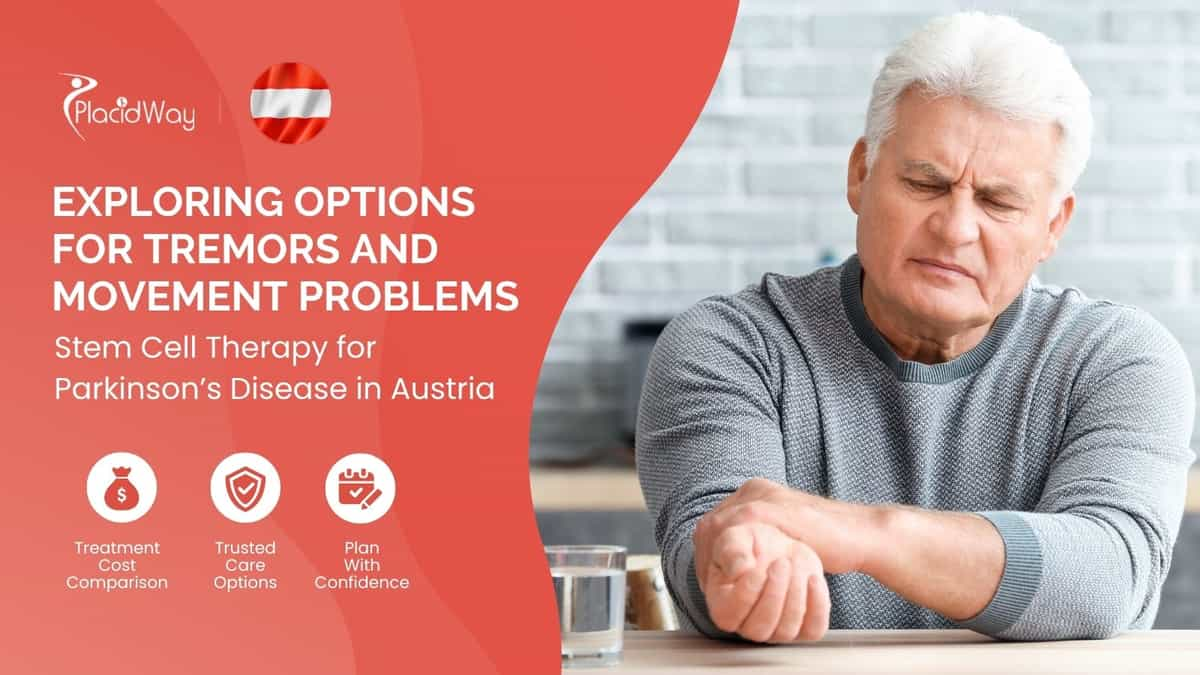
Is Stem Cell Therapy a Cure for Parkinson's Disease?
Not currently as an established routine treatment. Stem cell therapy for Parkinson’s disease in Vienna, Austria, and across Europe is an active field of investigational research aimed at cell replacement and neuroprotection, but it is not a proven or permanent cure.
- Primary Target: Parkinson’s stem cell therapy in Vienna focuses on investigating dopamine-producing neuron replacement.
- Current Clinical Status: Stem cell treatment for Parkinson's disease in Vienna Austria is strictly investigational or subject to specific clinical trials in Europe.
- Caution on "Cure" Claims: Replacing neurons does not immediately cure the broader neurodegenerative mechanisms of Parkinson's disease. Claims guaranteeing complete reversal or total tremor elimination should be treated with extreme caution.
- Care Strategy: Experimental Parkinson's treatment should complement—not replace—established therapies such as Levodopa, physiotherapy, and Deep Brain Stimulation (DBS).
What Is Parkinson's Disease and Why Does It Affect Movement?
Parkinson's disease is a complex neurodegenerative disorder primarily characterized by the gradual loss of dopamine-producing neurons in a region of the brain called the substantia nigra. Dopamine is a critical chemical messenger responsible for coordinating smooth, controlled muscle movements.
Common Motor Symptoms
- Resting tremor
- Bradykinesia (slowed movement)
- Rigidity and muscle stiffness
- Postural instability & gait problems
Non-Motor Symptoms
- Sleep disturbances & fatigue
- Constipation & digestive issues
- Depression, anxiety, & mood shifts
- Cognitive changes, speech & swallowing difficulties
Parkinson's treatment in Vienna requires a personalized strategy because the disease manifests differently in every individual—varying by stage, symptom pattern, progression rate, age, overall health, and medication response.
Parkinson's Disease Progression and Dopamine Depletion
Understanding the biological breakdown of dopamine signaling highlights why regenerative medicine for Parkinson's focuses heavily on neuronal replacement.
Dopamine Neuron Retention vs. Parkinson's Disease Stage
Source: National Institute of Neurological Disorders and Stroke (NINDS / NIH). The graphic is a conceptual illustration and does not represent exact clinical measurements.
Cell-Based Approaches Being Investigated for Parkinson's
When investigating stem cell treatment for Parkinson's disease in Europe, patients encounter various cell types. It is vital to note that mesenchymal stem cells, neural progenitor cells, and stem-cell-derived dopamine neurons have fundamentally different biological mechanisms.
| Cell-Based Approach | Research Objective | Key Consideration |
|---|---|---|
| Embryonic Stem-Cell-Derived Dopaminergic Cells | Replace lost dopamine-producing neurons in target brain regions. | Cell identity, safety, purity, and immune considerations. |
| iPSC-Derived Cells (Induced Pluripotent) | Generate patient-specific replacement dopaminergic neurons. | Complex manufacturing and rigorous safety verification. |
| Neural Stem/Progenitor Approaches | Explore direct neural differentiation and repair pathways. | Developmental stage and integration capabilities vary widely. |
| Other Cell-Based Approaches (e.g., MSCs) | Investigate secondary neuroprotective or immunomodulatory effects. | Evidence differs substantially; does not replace dopamine neurons directly. |
Research Evidence vs. Commercial Claims: Evidence for a promising cell therapy in a clinical trial does not automatically validate every stem cell treatment marketed to Parkinson's patients globally. Always check peer-reviewed research and regulatory registration.
The Scientific Evidence Pathway
Before any clinical adoption occurs, investigational treatments undergo a rigorous multi-stage validation process.
Evidence Hierarchy for Regenerative Medicine
Source: European Medicines Agency (EMA) Framework for Advanced Therapy Medicinal Products (ATMPs). The bar lengths illustrate the progression of evidence and are not numerical evidence scores.
Stem Cell Therapy for Tremors and Movement Problems
Searching for stem cell therapy for tremors and stem cell therapy for movement problems often leads patients to ask whether cell replacement can directly resolve daily physical impairments like bradykinesia, rigidity, and gait instability.
What Research Hopes to Achieve
- Restore local dopamine signaling in striatal pathways
- Improve overall motor speed and fluid movement
- Reduce severity of resting tremors
- Lessen motor fluctuations and medication dependence
What Patients Must Realistically Expect
- Results are not immediate; neuronal integration takes time
- Dopamine replacement may not address non-motor symptoms
- Treatments are protocol-specific and not universally effective
- Tremor improvement varies dramatically between individuals
Evaluation and Candidate Eligibility
Patients considering Parkinson’s stem cell therapy Austria options must undergo extensive medical evaluations. Clinical protocols strictly regulate who "may be evaluated" rather than offering automatic eligibility.
Neurological Assessment
Confirmed Parkinson's diagnosis, rigorous disease staging, evaluation of motor/non-motor scales, and current Levodopa response review.
Cognitive & Psychiatric
Screening for severe cognitive impairment or psychiatric instability that could interfere with follow-up protocols.
Advanced Imaging
High-resolution MRI, PET/SPECT neuroimaging to evaluate dopaminergic pathway integrity, and comprehensive blood panels.
The Investigational Treatment Journey & Delivery
Cell administration techniques vary according to research protocols. Patients must understand that simple intravenous (IV) stem cell injections should not automatically be equated with direct brain neuronal replacement.
| Step | Phase | Clinical Action |
|---|---|---|
| Steps 1–3 | Pre-Evaluation | Medical record review, specialized neurology consultation, baseline motor documentation. |
| Steps 4–6 | Protocol Clearance | Eligibility verification, protocol explanation, and rigorous informed consent acquisition. |
| Steps 7–8 | Cell Processing & Delivery | Targeted cell preparation; administration via protocol-specific delivery (e.g., neurosurgical stereotactic delivery). |
| Steps 9–10 | Monitoring & Follow-up | Short-term surgical surveillance and multi-year long-term outcomes tracking. |
Stem Cell Therapy vs Established Parkinson's Care
Comparison with Standard Medical Treatments
| Option | Main Goal | Clinical Role |
|---|---|---|
| Levodopa / Carbidopa | Replenish brain dopamine levels directly | Established Gold Standard |
| Dopamine Agonists / MAO-B Inhibitors | Mimic dopamine or slow dopamine breakdown | Established Standard Care |
| Therapy (Physical, OT, Speech) | Maintain mobility, balance, swallowing, and independence | Essential Supportive Care |
| Stem Cell Therapy | Investigate potential cell replacement/repair | Investigational / Developing |
Cell-Based Therapy vs Deep Brain Stimulation (DBS)
| Factor | Cell-Based Therapy | Deep Brain Stimulation (DBS) |
|---|---|---|
| Main Concept | Biological cell replacement or neuroprotection | Surgical neuromodulation via electrical impulses |
| Primary Goal | Restore dopamine-producing neuron networks | Modulate abnormal electrical signals causing tremors |
| Clinical Status | Developing / Clinical Research | Established for selected advanced patients |
| Evidence Base | Evolving early-stage human trials | Extensive multi-decade clinical trial data |
Why Consider Vienna for Advanced Parkinson's Care?
Vienna, Austria, is internationally recognized for its academic medical research infrastructure, specialized neurology university centers, and stringent regulatory standards under European law. Medical care in Austria is overseen by the Federal Office for Safety in Health Care (BASG) alongside EU Advanced Therapy Medicinal Products (ATMP) frameworks.
| Regulatory Status | What It Means for Patients |
|---|---|
| Authorized Treatment | Approved for routine clinical use under specific, strict regulatory indications. |
| Clinical Trial | Investigated under a formally authorized, ethically reviewed research protocol (e.g., CTIS registered). |
| Unproven / Experimental | Lacks peer-reviewed evidence or proper regulatory clearance for routine marketing. |
Cost of Stem Cell Therapy for Parkinson's in Vienna
Giving an unsupported "average cost" is misleading because stem cell therapy cost Vienna estimates depend on whether care is delivered within an authorized clinical trial, a specialized hospital setting, or a comprehensive rehabilitation package. All medical estimates are presented in USD ($).
Important: These figures are indicative planning ranges, not official Vienna prices or guaranteed treatment fees. Authorized clinical trials may follow different payment rules, and patients should request a detailed, itemized quotation before making treatment decisions.
Essential Components of a Formal Quotation
When evaluating medical quotes for Parkinson's care abroad, ensure the following line items are itemized in USD ($):
- Neurological consultation and baseline Parkinson's motor scoring
- Diagnostic imaging (MRI, SPECT/PET scans) and blood screening
- Cell processing, laboratory quality control, and donor screening
- Surgical or delivery procedure fees including neurosurgical team
- Hospital stay, nursing, and immediate post-procedure monitoring
- Follow-up consultations and long-term surveillance protocols
Warning Signs: Red Flags for Parkinson's Stem Cell Claims
Red Flags to Avoid
- Claims of a "guaranteed cure" or total tremor elimination
- Promises to reverse disease progression completely
- Claims of "zero risk" or secret proprietary cell formulas
- Lack of published, peer-reviewed human clinical trial data
- High-pressure tactics requiring immediate cash payment
- Relying exclusively on patient testimonials over scientific data
Responsible Program Indicators
- Transparent explanation of clinical uncertainty and risks
- Clear regulatory oversight (e.g., BASG, EMA clearance)
- Published cell source and certified manufacturing standards
- Integration with established neurology care teams
- Comprehensive long-term outcome monitoring
15 Questions for Your Vienna Parkinson's Specialist
- What exactly is this cell treatment intended to achieve for my condition?
- Is this research protocol designed specifically for Parkinson's disease?
- What specific type of stem cells will be used?
- Where are the cells sourced and how are they processed?
- What peer-reviewed human clinical evidence supports this specific treatment?
- Is this procedure officially authorized or investigational?
- Is this study registered on ClinicalTrials or the EU CTIS registry?
- What are the immediate and long-term known risks?
- What long-term risks remain uncertain?
- How will changes in tremor and mobility be objectively measured?
- What established alternative treatments should I consider first?
- What is the itemized total cost in USD ($)?
- Will I need immunosuppressive medication after treatment?
- Who will coordinate care with my local neurologist after I return home?
- Who is responsible if medical complications occur during my stay?
Planning an International Patient Journey to Vienna
| Stage | Key Actions Required | Coordination Focus |
|---|---|---|
| 1. Before Travel | Compile complete neurological history, MRI/PET imaging, Levodopa dosage records, and baseline symptom logs. | Remote review by Vienna specialists. |
| 2. During Treatment | In-person neurological testing, eligibility review, treatment administration, short-term monitoring. | Clinical center and care companion. |
| 3. After Return | Scheduled symptom tracking, local physical therapy, structured communication between centers. | Vienna Specialist ? Local Neurologist ? Patient. |
Stem Cell Therapy in Europe
Cell Center - Stem Cell Therapy in Bratislava and Malacky, Slovakia
Frequently Asked Questions
1. Is stem cell therapy a cure for Parkinson's disease?
No. Stem cell therapy is currently an experimental and investigational approach aimed at replacing damaged cells. It is not an established cure.
2. Can stem cells reduce Parkinson's tremors?
Research protocols are investigating whether dopaminergic cell replacement can improve motor function, including tremors. However, guaranteed tremor elimination cannot be promised.
3. Can stem cell therapy improve walking and movement?
Clinical studies measure motor endpoints such as bradykinesia and gait stability, but results vary widely based on individual disease progression and treatment protocols.
4. What type of stem cells are used for Parkinson's?
Studies primarily focus on embryonic stem-cell-derived dopaminergic neurons, iPSC-derived cells, and neural progenitor cells.
5. Are stem cell treatments for Parkinson's approved in Austria?
Therapies must strictly follow BASG and EU advanced therapy (ATMP) regulations. Most cell-based treatments remain restricted to authorized clinical trials.
6. How much does Parkinson's stem cell therapy cost in Vienna?
Pricing depends on the specific medical center, diagnostic requirements, and procedure scope. Always request an itemized quotation in USD ($).
7. Can stem cell therapy replace Levodopa?
No. Stem cell therapy should not replace established Parkinson's care. Any adjustments to medication must be managed carefully by a qualified neurologist.
8. What is the difference between stem cell therapy and DBS?
Deep Brain Stimulation (DBS) is an established surgical neuromodulation technique using electrical impulses, while stem cell therapy is an investigational approach aimed at biological cell replacement.
9. What tests are needed before stem cell therapy for Parkinson's?
Evaluation may include neurological assessment, brain imaging, medication review, medical history, and functional motor assessments to determine eligibility and establish a baseline.
10. What are the risks of stem cell therapy for Parkinson's?
Potential risks may include infection, immune reactions, procedure-related complications, abnormal cell growth, and unexpected neurological effects. Risks depend on the specific cell product and protocol.
11. How long does it take to see results from stem cell therapy?
Potential changes are generally evaluated over months rather than immediately. Clinical studies use structured follow-up to monitor motor function, safety, and other neurological outcomes.
12. How can I verify a Parkinson's stem cell program in Vienna?
Check the provider's medical credentials, regulatory status, scientific evidence, treatment protocol, eligibility criteria, informed-consent process, and whether the therapy is part of an authorized clinical trial.
Explore Medical Options with PlacidWay
PlacidWay connects patients with international healthcare providers, helping you research advanced medical options for Stem Cell Treatment for Parkinson’s Disease in Vienna Austria, review accredited centers, and request transparent information.
Request Medical InformationDisclaimer: This content is provided for educational and informational purposes only and does not constitute formal medical advice, diagnosis, or treatment. Stem cell therapy for Parkinson's disease remains an investigational area of research. Always consult with a qualified neurologist or healthcare professional regarding any medical condition or treatment plan.
High-Authority References
- National Institute of Neurological Disorders and Stroke (NINDS/NIH) — Parkinson's Disease Information
- National Institute on Aging (NIA/NIH) — Parkinson's Disease Basics
- Michael J. Fox Foundation for Parkinson's Research
- BASG Austria — Federal Office for Safety in Health Care
- ClinicalTrials — Database of Publicly and Privately Supported Clinical Studies
- International Parkinson and Movement Disorder Society (MDS)

























Share this listing