


Advanced Knee Surgery Planning by Dr. Darshan Angadi Using Cutting-Edge 8Chilli Virtual Reality (VR) Platform
In the rapidly evolving landscape of medical technology, advanced knee surgery planning by Dr. Darshan Angadi using the cutting-edge 8Chilli Virtual Reality (VR) platform represents a monumental leap forward. For decades, orthopedic surgeons relied heavily on flat, two-dimensional imaging to navigate highly complex three-dimensional joint spaces. Today, immersive spatial computing is completely revolutionizing the modern operating room environment.
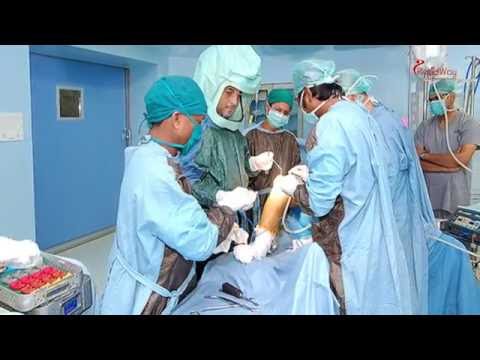
By stepping into a highly detailed metaverse environment before the very first surgical incision is ever made, surgeons can meticulously map out complex arthroplasty procedures. This advanced virtual reality in orthopedic surgery drastically reduces intraoperative risks and significantly improves patient recovery times.
Video Chapters & Quick Navigation
The Evolution of Orthopedic Surgery: Moving Beyond 2D Imaging
For several decades, the standard protocol for pre-operative planning in knee replacement surgery relied almost exclusively on flat radiological images. X-rays, CT scans, and MRIs provided surgeons with essential data, but they fundamentally required the human brain to mentally reconstruct a three-dimensional anatomical model. This cognitive load naturally introduced a small but ever-present margin for spatial error during the interpretation phase.
As highlighted in the presentation at , traditional 2D imaging often fails to capture the true depth and complex topography of severe bone deformities. Osteophytes, bone spurs, and intricate cartilage degradation can look highly misleading when viewed on a flat digital monitor. When the surgeon finally opens the joint during the actual procedure, they may encounter anatomical surprises that were completely invisible on the initial 2D scans.
The introduction of immersive 3D virtual reality in orthopedics changes this dynamic entirely. Instead of guessing the exact trajectory of a bone cut or the optimal size of an implant based on flat lines, surgeons can physically walk around a patient-specific holographic joint. This transition from passive observation to active spatial interaction marks one of the most significant milestones in the history of orthopedic joint reconstruction.
The Hidden Dangers of Traditional Surgical Templating
Traditional surgical templating involves overlaying digital implant shapes onto a 2D radiograph to estimate the correct size. However, magnification errors in standard X-rays can easily lead to a mismatch in implant sizing, which compromises the longevity of the knee replacement. If an implant is even a few millimeters too large, it can cause severe soft tissue irritation and persistent postoperative pain for the patient.
Conversely, an undersized implant can lead to bone subsidence and premature mechanical failure of the artificial joint. By eliminating these outdated templating methods, modern virtual reality surgical planning platforms ensure that the implant perfectly matches the unique geometry of the patient's femur and tibia. The exact spatial alignment required for long-term kinematic success is calculated before the patient is even under anesthesia.
Understanding the Cutting-Edge 8Chilli Virtual Reality Platform
The 8Chilli VR platform is a remarkably sophisticated spatial computing environment designed specifically to address the complex demands of modern healthcare professionals. Unlike consumer-grade virtual reality headsets meant for gaming, the 8Chilli ecosystem is a medical-grade visualization tool. It seamlessly processes dense medical imaging data and translates it into interactive, high-fidelity 3D holograms in real time.
At , the video demonstrates how the 8Chilli HintVR software automatically ingests standard DICOM files generated from a patient's CT or MRI scans. Within minutes, the platform's proprietary algorithms segment the various tissue types—differentiating between dense cortical bone, spongy cancellous bone, ligaments, and muscular structures. This creates a hyper-realistic, manipulatable digital twin of the patient's exact knee joint.
What sets the 8Chilli platform apart from its competitors is its unparalleled focus on multi-user collaboration and intuitive spatial mechanics. Surgeons do not need to be computer scientists to operate the software; they use natural hand gestures to rotate, zoom, and dissect the virtual knee model. This incredibly low barrier to entry ensures that even veteran orthopedic surgeons can quickly adopt the technology without facing a steep technological learning curve.
Seamless DICOM Integration and Spatial Computing
The magic of the 8Chilli platform lies in its ability to handle massive sets of DICOM data without experiencing latency or frame rate drops. In a virtual reality environment, smooth visual performance is absolutely critical to prevent user nausea and ensure precise surgical measurements. The platform uses advanced cloud-rendering techniques to offload heavy computational tasks, keeping the headset lightweight and perfectly responsive.
Surgeons can effortlessly isolate specific anatomical structures by turning off rendering layers with a simple pinch gesture. If a physician only wants to evaluate the articular surface of the tibia, they can instantly make the femur, patella, and surrounding soft tissues completely invisible. This level of granular control is simply impossible to achieve with traditional physical models or standard desktop viewing software.
Dr. Darshan Angadi's Innovative Approach to Pre-Operative Assessment
Dr. Darshan Angadi has emerged as a pioneering figure in the integration of immersive technologies within the field of orthopedic surgery. His specific methodology revolves around utilizing the 8Chilli platform to conduct entirely virtual "dry runs" of complex total knee arthroplasties (TKA). By simulating the entire procedure in the metaverse, he essentially performs the surgery twice—once virtually and once in reality.
As discussed at , Dr. Angadi emphasizes the importance of understanding the unique kinematic alignment of each individual patient. Every knee joint degrades differently due to variations in genetics, weight distribution, and historical biomechanical trauma. By studying the 3D digital twin in the 8Chilli VR space, Dr. Angadi can accurately predict how the soft tissues will behave once the arthritic bone is removed and replaced with titanium components.
This proactive approach allows for the identification of potential anatomical roadblocks long before the patient enters the operating theater. For instance, if the virtual model reveals an unusually dense sclerotic bone cyst, Dr. Angadi can order specific specialized instruments to be ready on the surgical tray. This meticulous foresight prevents mid-surgery delays, reduces the time the patient spends under anesthesia, and dramatically lowers the risk of post-operative infection.
Customizing the Surgical Approach for Complex Deformities
Patients presenting with severe varus (bow-legged) or valgus (knock-kneed) deformities pose a significant challenge during total knee replacement. Restoring the natural mechanical axis of the leg requires highly precise bone resection angles that are extremely difficult to calculate using standard 2D x-rays. Dr. Angadi uses the VR platform to simulate multiple different bone cut scenarios to see which angle yields the most stable joint.
The 8Chilli software allows him to digitally place the virtual implant onto the resected bone model and test the range of motion in the virtual space. He can visually confirm if the patella tracks smoothly within the femoral groove or if it is prone to subluxation. This predictive capability ensures that complex deformities are corrected with mathematical precision, resulting in a knee that feels completely natural to the patient.
The Step-by-Step Virtual Reality Pre-Operative Workflow
Understanding the exact sequence of events in a VR-assisted surgical plan helps illuminate why this technology is so profoundly disruptive to the medical industry. The process begins in the radiology department and ends with a flawlessly executed operation. Every step is highly standardized to ensure maximum safety, strict data compliance, and optimal patient outcomes.
At , the presentation outlines the seamless transition from raw data collection to immersive spatial interaction. The workflow is designed to add minimal administrative overhead while delivering maximum clinical value to the surgical team. Below is a detailed breakdown comparing the traditional planning method against the modern 8Chilli VR workflow.
| Surgical Phase | Traditional 2D Planning | 8Chilli VR Platform Workflow |
|---|---|---|
| Imaging & Data | Standard X-rays and MRI viewed on flat desktop monitors. | High-resolution CT/MRI scans converted into interactive 3D holograms automatically. |
| Implant Sizing | Manual templating using acetate overlays; prone to magnification errors. | Virtual implants snapped onto 3D bone models with millimeter-perfect accuracy. |
| Surgical Rehearsal | Mental visualization by the surgeon; no physical or digital practice run. | Full virtual dry-run of bone resections and ligament balancing in the metaverse. |
| Team Briefing | Verbal discussion and pointing at static images on a light board. | Entire surgical staff can simultaneously view and interact with the 3D surgical plan. |
Transforming Surgical Training and Global Collaboration
The utility of the 8Chilli VR platform extends far beyond the immediate needs of the primary operating surgeon. It is rapidly becoming one of the most powerful educational tools in modern medical history. Historically, orthopedic residents learned how to perform complex knee replacements by looking over the shoulder of an attending surgeon in a crowded operating room.
As noted at , this traditional apprenticeship model is highly restrictive. Residents rarely get hands-on experience with the most difficult, complex cases due to the inherent risks to patient safety. With the 8Chilli platform, medical students and junior surgeons can repeatedly practice intricate bone cuts and implant positioning in a completely risk-free virtual environment, significantly accelerating their mastery of the procedure.
Furthermore, the platform's multi-user capabilities facilitate unprecedented global collaboration. A surgeon facing a rare anatomical anomaly in India can instantly share the 3D digital twin of their patient's knee with a specialist in the United States. Both physicians can don their VR headsets, step into the exact same virtual room, and collectively plan the optimal surgical approach in real-time, regardless of their physical geographical location.
Lowering the Institutional Learning Curve
Teaching hospitals that have adopted the 8Chilli VR training modules report a drastic reduction in the time it takes for residents to achieve surgical competency. Because the virtual environment provides immediate visual feedback on the accuracy of virtual bone cuts, trainees can quickly identify and correct their spatial alignment errors. This immersive repetition builds deep muscle memory and cognitive confidence.
This democratization of high-level surgical knowledge is critical for improving healthcare outcomes on a global scale. By lowering the institutional learning curve, developing nations can rapidly upskill their local orthopedic surgeons using the exact same virtual curriculum utilized by elite medical institutions in the Western world. Virtual reality bridges the gap in global medical education.
Measurable Impacts on Patient Safety and Surgical Outcomes
At the core of all medical technological advancement is the ultimate goal of improving patient safety and post-operative quality of life. The implementation of 8Chilli VR planning in Dr. Angadi’s practice has yielded highly measurable, statistically significant improvements in standard clinical metrics. Pre-operative virtual planning directly translates into a more efficient and safer physical operation.
According to the insights shared at , one of the most critical benefits is the profound reduction in overall surgical time. Because every complex decision—from implant sizing to resection angles—has been finalized in the metaverse, the surgical team proceeds with remarkable speed and confidence. Less time spent in the operating room means less time the patient’s internal tissues are exposed to the open air.
This reduction in operative time directly correlates with a lower incidence of surgical site infections and reduced intraoperative blood loss. Furthermore, precise implant alignment achieved through VR planning minimizes the risk of unnatural joint friction. Patients frequently report a more natural feeling knee, a faster return to daily activities, and a significantly lower reliance on post-operative pain management medications.
Key Patient Benefits of VR-Assisted Arthroplasty
- Reduced Anesthesia Exposure: Faster surgeries mean patients spend less time under general or spinal anesthesia, lowering cardiovascular risks.
- Minimized Soft Tissue Damage: Exact pre-planned cuts prevent unnecessary manipulation and retraction of surrounding muscles and ligaments.
- Enhanced Implant Longevity: Perfect mechanical alignment significantly reduces the asymmetric wear and tear on the polyethylene implant components.
- Faster Rehabilitation: A well-balanced knee joint allows physical therapists to initiate aggressive mobilization protocols much earlier in the recovery phase.
The Intersection of Virtual Reality and Robotic-Assisted Surgery
The future of total knee arthroplasty does not lie in a single technology, but rather in the seamless convergence of multiple digital modalities. Dr. Darshan Angadi's use of the 8Chilli platform is essentially laying the foundational groundwork for the next major evolution in orthopedics: the total integration of virtual reality planning with intraoperative robotic execution.
As visualized at , the data generated during the 8Chilli VR planning phase can theoretically be exported directly into surgical robotic arms, such as the Mako or ROSA systems. In this highly advanced workflow, the surgeon uses the VR headset to define the exact spatial boundaries of the bone cuts. The robotic arm then acts as a highly precise execution tool, physically preventing the saw blade from exiting the pre-approved digital boundaries.
This symbiotic relationship between immersive spatial computing and robotic precision entirely eliminates the phenomenon of human hand tremor during bone resection. The VR platform handles the cognitive planning and spatial mapping, while the robotic arm ensures flawless mechanical execution. This combination ensures that the artificial knee joint is implanted with sub-millimeter accuracy, representing the absolute pinnacle of modern surgical science.
Predictive Analytics and AI in the Metaverse
Looking even further ahead, the integration of Artificial Intelligence (AI) into the 8Chilli VR platform will offer predictive outcome analytics. The software will soon be capable of analyzing a patient's 3D anatomy, comparing it against thousands of historical surgical data points, and automatically suggesting the most statistically successful surgical approach. It is a brilliant fusion of big data and personalized medicine.
As Dr. Angadi continues to champion these cutting-edge methodologies, the broader orthopedic community is taking careful notes. The days of relying on 2D images and mechanical guesswork are rapidly coming to a close. The implementation of advanced knee surgery planning using the 8Chilli Virtual Reality platform is setting a new, uncompromised gold standard for patient care worldwide.
Experience the Future of Precision Orthopedic Care
Don't leave your joint health to chance. Discover how advanced, technology-driven knee surgery can dramatically improve your mobility, reduce your recovery time, and provide lasting relief from chronic pain. Connect with world-class orthopedic specialists today.
REQUEST YOUR FREE CONSULTATION





.png)

.jpg)









Share this listing