
Overcoming Challenges with Ibogaine Therapy for Parkinson’s Disease in Tijuana, Mexico at New Path – Sean’s Story
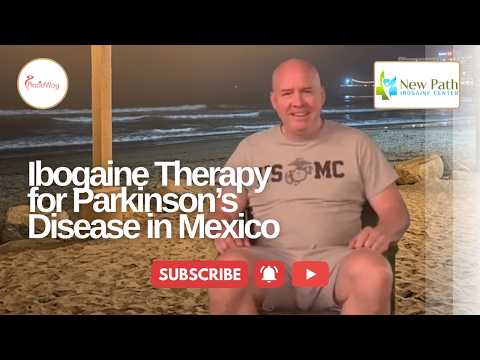
Sean’s story shares his personal experience seeking ibogaine therapy for Parkinson’s disease in Tijuana, Mexico at New Path Clinic. Living with Parkinson’s and the challenges associated with ongoing medication use, Sean traveled to Tijuana looking for an alternative approach that might complement the care he had already received.
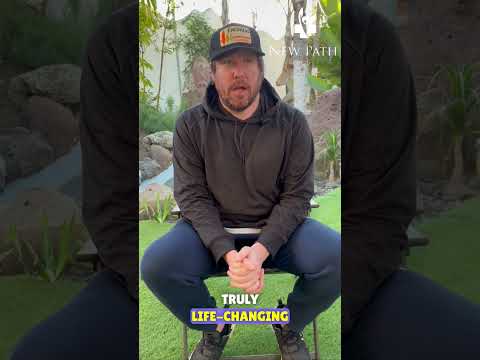
In this patient testimonial, Sean describes the New Path facilities, the clinical team, his ibogaine treatment experience, and changes he personally noticed during the days following treatment. Five days after his ibogaine session, he reports reducing his Parkinson’s medications by approximately 75% and feeling more stable. These observations represent Sean’s individual experience and should not be interpreted as evidence that ibogaine produces the same result for other people with Parkinson’s disease.
Ibogaine is a psychoactive substance with significant medical risks, including effects on heart rhythm. Its use for Parkinson’s disease remains investigational. Anyone considering this type of treatment should discuss potential risks, medication interactions, conventional treatment options, and appropriate medical screening with qualified healthcare professionals.
Video Chapters & Quick Navigation
Understanding the Challenges of Parkinson’s Disease
Parkinson’s disease is a progressive neurological disorder associated with changes in dopamine-producing neurons in the brain. It can affect movement, coordination, balance, and everyday independence. Common motor symptoms include tremor, muscular rigidity, slowed movement known as bradykinesia, and problems with posture or balance.
However, Parkinson’s is not limited to movement symptoms. Many patients also experience fatigue, sleep disturbances, mood changes, anxiety, depression, cognitive difficulties, and other non-motor symptoms. The combination of physical and emotional challenges can significantly affect quality of life and may lead some patients to investigate additional treatment approaches alongside conventional neurological care.
Sean’s story reflects this search. After dealing with Parkinson’s and ongoing medication management, he traveled to New Path Clinic in Tijuana to explore medically supervised ibogaine therapy as an alternative treatment experience.
Parkinson’s Medications and Long-Term Treatment Challenges
Levodopa, commonly used with carbidopa, remains one of the most important medications for managing motor symptoms of Parkinson’s disease. It works by providing the brain with a substance that can be converted into dopamine, helping compensate for declining dopamine activity.
Many people experience meaningful symptom improvement with levodopa, especially earlier in the course of the disease. Over time, however, some patients develop changes in how long each dose works. These fluctuations may include periods when symptoms are better controlled and periods when stiffness, tremor, or difficulty moving return.
Some patients also develop levodopa-induced dyskinesia, which can involve involuntary movements associated with long-term treatment. Medication schedules may therefore require adjustment as Parkinson’s progresses.
These challenges can make long-term Parkinson’s management increasingly complex. However, medication changes should be supervised by a neurologist or another qualified clinician. Patients should not reduce or stop Parkinson’s medications based solely on another patient’s testimonial or treatment experience.
What Is Ibogaine Therapy for Parkinson’s Disease?
Ibogaine is a psychoactive alkaloid associated with the root bark of Tabernanthe iboga, a plant traditionally used in parts of West Central Africa. In more recent decades, ibogaine has attracted research interest because of its complex effects on several neurotransmitter systems and its use in some international treatment programs.
Researchers have explored ibogaine and related compounds primarily in areas such as substance dependence, neurobiology, and neuroplasticity. Laboratory research has also examined possible relationships between ibogaine-related compounds and neurotrophic factors such as glial cell line-derived neurotrophic factor, or GDNF.
These scientific questions are important, but they should not be interpreted as proof that ibogaine regenerates dopamine-producing neurons, reverses Parkinson’s disease, or stops disease progression in humans. Its role in Parkinson’s treatment remains investigational.
Ibogaine also has significant safety considerations. It can affect cardiac electrical activity and may interact with medications or underlying medical conditions. Medical screening, medication review, ECG evaluation, laboratory testing, and appropriate monitoring are therefore especially important for patients considering treatment.
| Treatment Approach | Primary Purpose | Important Considerations |
|---|---|---|
| Levodopa Therapy | Helps replace dopamine activity to improve Parkinson’s motor symptoms. | Long-term treatment may involve motor fluctuations or dyskinesia in some patients, requiring medication adjustment. |
| Dopamine Agonists | Stimulate dopamine receptors and may help manage Parkinson’s symptoms. | Potential adverse effects can include sleepiness, hallucinations and impulse-control problems in some patients. |
| Deep Brain Stimulation | Uses surgically implanted electrodes to influence brain circuits involved in movement. | Requires careful patient selection and involves the risks and follow-up associated with neurosurgery and implanted hardware. |
| Ibogaine Therapy | Investigational use involving a psychoactive compound that affects several neurotransmitter systems. | Its effectiveness for Parkinson’s disease has not been established. Cardiac, neurological and medication-interaction risks require careful medical evaluation. |
Sean’s Experience with Ibogaine Therapy at New Path Clinic
The center of this video is Sean’s own experience at New Path Clinic in Tijuana. At [00:10], he discusses his positive impression of the clinic’s facilities and staff.
For someone traveling internationally for treatment of a chronic neurological condition, the clinical environment can be an important part of the experience. Patients may be undergoing unfamiliar procedures while also managing mobility limitations, medication schedules, anxiety, fatigue, and other symptoms associated with Parkinson’s.
At [00:24], Sean describes his ibogaine ceremony and treatment as giving him a “new breath of hope” in his struggle with Parkinson’s disease.
That statement captures an important part of his individual experience. It does not establish that ibogaine changes the biological progression of Parkinson’s, but it shows how meaningful the treatment experience felt to Sean personally.
Sean Reports a 75% Reduction in Parkinson’s Medication
One of the most notable parts of Sean’s testimonial occurs at [00:50]. Five days after his ibogaine treatment session, Sean says that he had reduced his Parkinson’s medications by approximately 75%.
He also reports feeling “much more stable” and says that ibogaine appeared, from his perspective, to make his remaining Parkinson’s medications more effective.
This is an important distinction for patients watching the video: the 75% reduction is Sean’s self-reported result. It should not be interpreted as an expected outcome of ibogaine treatment or as a recommendation for other Parkinson’s patients to reduce medication.
Changes to levodopa, dopamine agonists, or other Parkinson’s medications can significantly affect movement and other symptoms. Any medication adjustment should be individualized and supervised by qualified medical professionals familiar with the patient’s neurological condition and medication history.
Sean’s experience nevertheless helps explain why he viewed his treatment positively. At [01:07], he connects his medication reduction with his hope of lowering the likelihood of medication-related side effects over time.
Traveling to Tijuana, Mexico for Ibogaine Therapy
Sean traveled internationally to receive ibogaine treatment in Tijuana, Mexico. One reason some patients investigate treatment outside their home country is that access to ibogaine differs significantly between jurisdictions.
For patients considering medical travel for an investigational therapy, the key question should not simply be whether a treatment is available. Patients should examine who is administering it, how candidates are screened, how complications are managed, what monitoring takes place, and how follow-up care is coordinated.
Before choosing an ibogaine program in Tijuana or elsewhere, patients should ask detailed questions about the facility’s clinical protocols and the professionals involved in their care.
What to Check Before Traveling for Ibogaine Treatment
- Cardiac Screening: Ask whether the program requires an ECG, medical history review and relevant laboratory testing before treatment. Ibogaine can affect the heart’s electrical rhythm, including QT interval prolongation.
- Medication Review: Patients should provide the medical team with a complete list of prescription medications, non-prescription medicines and supplements so potential interactions can be evaluated.
- Qualified Medical Supervision: Ask which physicians and nurses supervise treatment and what monitoring is used during and after ibogaine administration.
- Emergency Preparedness: Confirm what emergency equipment, medications and transfer protocols are available if a serious cardiac or neurological event occurs.
- Psychological Preparation: Ibogaine can produce a prolonged and intense psychoactive experience. Patients should understand what to expect and what psychological support is available.
- Travel Coordination: International patients should also understand transportation, border crossing, accommodation, treatment duration and post-treatment travel requirements before leaving home.
Sean’s Observations of Patients Seeking Care for PTSD, Depression and Addiction
Sean’s testimonial also discusses people he met while staying at New Path Clinic. At [01:45], he says he was inspired by patients who had traveled there with conditions including depression, drug addiction and PTSD.
These observations broadened Sean’s impression of the treatment environment. He describes witnessing what he considered meaningful changes in other patients during the week he spent at the clinic.
Ibogaine has received particular attention internationally for its investigational use in substance dependence, including opioid dependence. Some individuals report changes in withdrawal symptoms, cravings and their psychological relationship with substance use after treatment.
However, patient experiences vary, and ibogaine should not be described as a guaranteed treatment for addiction, PTSD or depression. These conditions require individualized assessment, and people considering psychoactive treatment should be screened for medical and psychiatric risks.
The Role of the Medical Team in Sean’s New Path Experience
Although Sean discusses ibogaine throughout the video, his positive assessment is not limited to the substance itself. He repeatedly emphasizes the people involved in his care.
At [01:23], Sean describes the staff as professional and speaks positively about their talent and their “spirit of giving and healing.”
This type of supportive environment can be particularly meaningful for someone traveling internationally while managing a chronic illness. Medical monitoring, communication, emotional support, mobility assistance and appropriate follow-up can all influence how safely and comfortably a patient moves through treatment.
Support after the ibogaine experience also matters. Patients with Parkinson’s still require ongoing neurological care, medication management and evaluation of their symptoms after returning home. An investigational treatment experience should therefore be considered within the patient’s broader long-term healthcare plan rather than as a substitute for continued medical care.
Sean closes his testimonial with strong praise for New Path and describes what he witnessed there in highly emotional terms. His story offers prospective patients a first-person view of one individual’s experience with ibogaine therapy for Parkinson’s disease in Tijuana, while underscoring why patients should carefully evaluate both potential benefits and significant medical risks before considering treatment.
Explore Ibogaine Therapy at New Path Clinic in Tijuana
If Sean’s story has encouraged you to learn more about ibogaine therapy in Tijuana, PlacidWay can help you connect with New Path Clinic and ask questions about medical screening, treatment protocols, medication considerations, monitoring and follow-up care. Ibogaine therapy for Parkinson’s disease remains investigational, and suitability should be evaluated individually by qualified healthcare professionals.
REQUEST A CLINICAL CONSULTATIONView Full Video Transcript
[00:00:00] sad thing about what I'm going to say here um I've been very impressed with the facilities and the staff
[00:00:10] uh here at New Path uh clinic and um my experience with the Ivane uh ceremony and the the the
[00:00:24] treatment has been so far uh a a a new breath of hope uh in in my struggle to deal
[00:00:36] with Parkinson's um so far 5 days after the uh the actual iberine treatment session um I have cut down
[00:00:50] my Parkinson's meds by about 75% and
[00:00:57] I'm I'm also much more stable and the I gain seems to make the Parkinson's drugs more effective and uh
[00:01:07] uh and over time of course that will decrease the likelihood of having side effects so so far uh it's
[00:01:15] been a very positive experience uh the staff is extremely professional they're wonderful people it's a it's a a team
[00:01:23] of people you rarely see a team of people that are this many individuals who are this talented and this
[00:01:30] and with the spirit of giving and healing that they have uh in one place so uh and I've also
[00:01:37] been inspired by those who came here for other with other conditions like depression and drug addiction and uh and
[00:01:45] PTSD and uh and seen their lives transformed where in the in just a week that I've been here so
[00:01:52] this this place actually is somewhat magical and they they perform miracles here






















Share this listing