


Resilience and Reproduction: Navigating Motherhood After a Breast Cancer Diagnosis
Breast cancer remains one of the most significant health challenges for women globally, yet the conversation is shifting from mere survival to the quality of life after treatment. For many young women, the most pressing concern following a diagnosis is the potential loss of their reproductive future. Modern medicine has evolved to offer solutions that bridge the gap between intensive oncology treatments and the dream of starting a family.
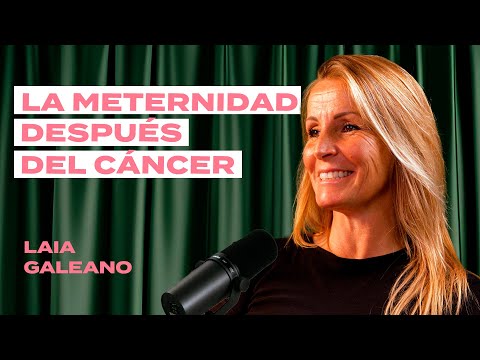
In this deep-dive exploration, we follow the expert insights of Dr. Carlos Dosouto, a specialist in assisted reproduction, and the moving testimony of Laia Galeano. Their conversation illuminates the path from the shock of a diagnosis to the joy of holding a healthy child. This journey involves complex decisions regarding oocyte preservation, the psychological management of cancer, and the revolutionary science of epigenetics in egg donation.
Video Chapters & Quick Navigation
The Medical Context: When Oncology Meets Reproductive Science
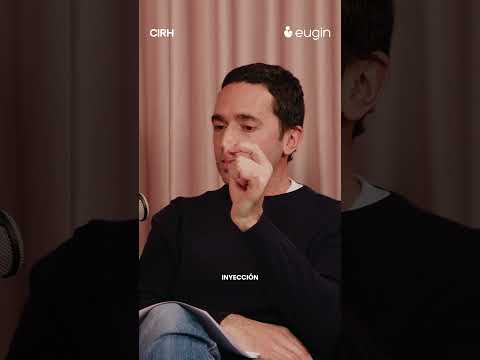
Breast cancer is not only a challenge to general health but also a significant hurdle for reproductive wellness. As Dr. Carlos Dosouto explains at the beginning of the discussion [00:01], millions of people receive this diagnosis annually, making awareness and early detection vital. However, for women in their childbearing years, the diagnosis often arrives before they have had the chance to become mothers.
The standard treatments for breast cancer, including chemotherapy and hormonal therapy, are designed to save lives but can have a devastating impact on ovarian function. Chemotherapy agents are often gonadotoxic, meaning they can diminish or entirely deplete a woman's egg reserve. This creates a secondary trauma for patients who must simultaneously fight for their lives and mourn their future fertility.
Understanding the urgency of this situation is critical. The "onco-fertility" field seeks to provide immediate interventions that can store genetic material before these harsh treatments begin. As the doctor notes, access to proper treatments and early diagnosis are the keys to maintaining these life-altering options.
The Vital Role of Fertility Preservation Protocols
One of the most effective strategies discussed is the urgent freezing of oocytes. Dr. Dosouto highlights that whenever possible, specialists proceed to vitrify eggs immediately before the start of chemotherapy [00:53]. This provides a "safety net" for the future, allowing women to focus on their recovery without the added pressure of biological clocks.
Hormonal treatments used to prevent cancer recurrence also complicate the picture. Substance that block female hormones are often required for years, conditioning the probability of a natural pregnancy. Because of this, reproductive specialists and oncologists must work in tandem to find "windows of time" [01:03] where a patient can safely pause treatment to attempt to conceive.
Managing expectations is perhaps the most difficult part of this process. Patients often pin all their hopes on a few frozen eggs, not realizing that biological outcomes are never guaranteed. The decision to use these eggs, or to pursue other paths like egg donation (ovodonation), is a deeply personal crossroads that requires expert guidance and emotional support.
Laia’s Story: A Life Interrupted by Carcinoma
Laia Galeano represents the lived reality of these medical statistics. At 45 years old today, she looks back at her 37-year-old self—a woman who was just beginning to seek pregnancy in March 2017 when she discovered a lump in her breast [03:12]. Her diagnosis of hormone-dependent intraductal carcinoma changed everything in an instant.
Laia’s life was already defined by care and resilience. She had left a high-paying but unfulfilling job in the pharmaceutical industry to start an animal sanctuary and a "forest school" for children [02:47]. Her world revolved around nurturing others, yet she was suddenly forced into a position where she had to fight for her own survival.
Her story highlights a common misconception: that motherhood is only tied to "romantic love" or finding the perfect partner. Laia admits she had waited for that "perfect" moment, only to realize that life rarely adheres to our ideal timelines. The urgency of cancer forced her to re-evaluate her priorities and move forward with her dream of motherhood, even in the shadow of a life-threatening illness.
The Psychological and Physical Toll of Treatment
Cancer treatment is a "journey" that is as much psychological as it is physical. Laia speaks candidly about the fear of mastectomy—of losing a part of her femininity and body [09:12]. She describes the clinical language of doctors as often cold and detached, focusing on survival statistics while the patient is mourning their physical identity.
The introduction of Tamoxifen brought its own challenges. While it serves to block hormones and prevent recurrence, it can also lead to weight gain, mood swings, and a feeling of being disconnected from one’s own vitality [30:07]. Laia’s decision to eventually stop the treatment to pursue motherhood was a calculated risk, driven by a desire to live a full life rather than a cautious one.
She sought support from other women who had walked this path, finding strength in their shared experiences. These groups provided a space to discuss the "taboos" of post-cancer life, including the difficult choice to prioritize the dream of a family over the strict, decade-long protocols recommended by some oncologists.
Shattering the Stigma of Ovodonation and the Power of Epigenetics
When Laia’s few frozen eggs failed to produce a viable pregnancy, she was faced with the option of egg donation (ovodonation). At first, this path felt like a surrender—a loss of her genetic legacy. However, Dr. Dosouto introduces a powerful metaphor that changed her perspective: the Architect and the Plan [17:15].
In this analogy, the donor provides the "blueprints" (the DNA), but the mother is the "architect" and the "builder." Through the science of epigenetics, the mother’s body determines how that genetic code is expressed. Her blood, her nutrients, and her womb literally construct the child. The resulting child is not just a guest; they are a part of the mother in every biological sense that matters for development and bonding.
This realization allowed Laia to release her grief over her own eggs. She came to see the donor as a collaborator in a miracle rather than a replacement. This shift in mindset is essential for many patients who feel that using a donor diminishes their motherhood. As Laia discovered, the bond formed through gestation and care far outweighs the weight of a genetic sequence.
Triumph: Successful Pregnancy and Lactation After Cancer
Against the odds, Laia successfully conceived her daughter, Ana. Her pregnancy was a period of intense joy and, naturally, some anxiety. She describes the moment she finally believed she would be a mother after so many "no’s" as a period of profound shock and realization [24:45].
One of the most remarkable aspects of Laia’s success was her ability to breastfeed. Despite being told it might be impossible or physically difficult due to her history and surgery, she has been successfully nursing Ana from her healthy breast for five months [30:07]. This act of nursing became a symbol of her body’s healing—a return to functionality and a deep connection to her daughter.
Today, Ana is described as the "double" of her father, yet Laia feels no distance because of the lack of genetic shared traits. The process of gestation and the daily reality of raising a child have cemented a bond that is unshakeable. Her story is a testament to the fact that motherhood is an active role of creation, not just a passive genetic inheritance.
A Message of Hope for Future Mothers
Laia’s advice to her younger self—and to women facing similar diagnoses—is simple yet profound: do not wait for the "perfect" conditions to pursue your dreams. Life is unpredictable, and while a diagnosis is devastating, it does not have to be the end of your story. As she notes at the end of the episode [35:54], the "Disney moments" of life are rare, but real joy is found in the resilience to move forward.
Fertility preservation is a critical tool that every young cancer patient should be informed about. Even if the initial path fails, alternatives like ovodonation provide a secondary bridge to a fulfilling life. The key is transparency, education, and finding a medical team that treats you as a whole person with dreams, not just a set of symptoms to be cured.
Ready to Take the Next Step Toward Fertility?
PlacidWay Medical Tourism connects you with top-rated fertility and reproductive clinics, offering expert care, advanced treatment options like egg preservation and ovodonation, and a seamless international experience.
GET A FREE QUOTEView Full Video Transcript
00:00 Breast cancer is one of the main causes of death among women globally. Every year, millions of people receive this diagnosis, which highlights the urgency in awareness, early detection, and access to appropriate treatments.
00:15 Although advances in research and medicine have improved survival rates, the fight against this disease remains a global challenge. Prevention, education, and investment in research remain key in this battle.
00:30 But breast cancer is not just a challenge in a woman's general health; it is also a challenge at the level of reproductive health. Often the diagnosis arrives before having been a mother.
00:45 The treatment includes substances that block female hormones to prevent recurrence. That conditions the probability of both being a mother naturally and being one through assisted reproduction.
01:00 For that reason, and increasingly, whenever possible, oocyte freezing is carried out urgently just before starting chemotherapy treatment.
01:15 After a period of treatment, in some cases, oncologists give a margin of time for patients to be mothers if they so desire and if they achieve it. The management of expectations placed on frozen oocytes, the decision to be or not to be a mother after cancer, and the need in some cases to resort to egg donation are some of the topics we will talk about with today's guest.
01:30 In this chapter, I wanted to bring someone who, with their anonymous testimony here on the Eugin set, told us their story and we talked about topics that I think matter a lot and that many of you can feel identified with.
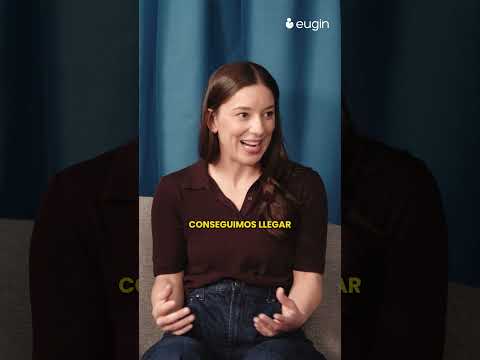
01:45 And I brought Laia Galeano. Laia, good morning. Welcome to "Nobody said it would be easy." It's a pleasure to have you here. Thank you for the generosity on your part to expose yourself because in the end, being here implies that many people will see and hear you and I think listening to your case is of great value.
02:00 Laia is 45 years old, she is the youngest of four siblings and grew up in a house with a lot of life and, as she says, with a lot of noise. She always thought she wanted to be a young mother, at least having two children.
02:15 Her life passed and the years too, and the truth is that like many other women, motherhood had no place in her plans. She had the belief that motherhood would arrive when she found the perfect man.
02:30 When she was 27 years old, she undertook an animal rescue project as a respectful alternative to the conventional zoo and a children's forest school that required her 24/7 all year round.
02:45 Her life continued to pass and at 37 she considered that it was already enough age to be a mother and not postpone it anymore. She thought the ideal moment would never arrive, so in January 2017 she decided to start seeking pregnancy.
03:00 And in March of that same year, she was diagnosed with breast cancer and that's where it all begins. Well, Laia, I think today we have a lot to talk about, right?
03:12 I felt a lump here and immediately it was diagnosed... It's a journey. Suddenly they start talking to you... for me, it was mastectomy. And suddenly they start talking to you with a cold terminology... what matters is that you stay alive.
05:30 I had to give food to my animals, you don't understand, I told the oncologist. And he told me, "the one who doesn't understand is you, you have cancer and you're going to feel bad."
10:15 After 10 days they could extract three oocytes. I didn't quite understand. "Three are enough," they told me. I thought that I could be a biological mother later with all the peace in the world.
17:15 I always explain that when we do egg donation, you are like the architect who has to interpret some plans. You are the one who is going to orchestrate all this. Ana is not the same for having been with you in your womb.
24:30 I was in shock. I had to learn to love her. But it's that you are taking care of a life. It's the same love I've felt for years when I raised lives. Ana is here, and it was the 25th of December.
35:50 If I could go back, I would tell Laia first not to wait for the perfect man, who probably won't arrive. There can be a good man, a good father. That's how I saw Alberto.
37:00 Until here the first season of "Nobody said it would be easy." It has been a whole journey in very interesting and beautiful conversations with guests who have allowed us to tell their stories from different perspectives. Thank you to the whole team.


.png)
.png)









Share this listing