
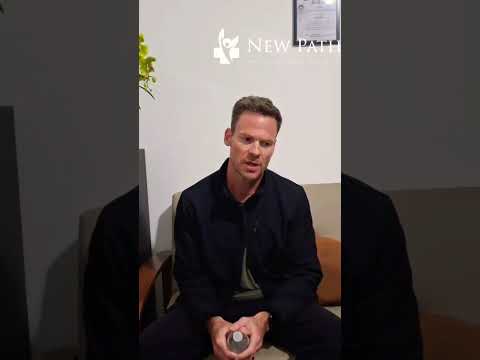
Living with a serious movement disorder can affect vision, head control, coordination, independence, and the ability to complete ordinary daily activities. In this video, a patient describes living for more than two years with severe eyelid dysfunction, involuntary neck movement, and a persistent right-arm tremor before traveling to Tijuana, Mexico, for a medically supervised neurological treatment protocol.
His experience focuses on the changes he personally noticed after beginning treatment, including being able to keep his eyes open, improved control of his head and neck, reduced arm tremor, and greater physical comfort. He also describes the medical staff, rehabilitation exercises, and his relief at being able to see normally again.
For patients researching Parkinson's treatment and movement disorder care in Tijuana, Mexico, this story offers a patient-focused look at neurological symptoms, treatment supervision, early changes after treatment, and the importance of continued rehabilitation. His experience is individual and should not be interpreted as evidence that the same protocol will produce the same results for another patient.
Video Chapters & Quick Navigation
Parkinson's Symptoms and Complex Movement Disorders
Parkinson's disease and other neurological movement disorders can affect muscle control, coordination, tremor, posture, eye movement, and everyday independence. Symptoms vary considerably between patients, and a person may experience several movement-related problems at the same time.
The patient featured in this video describes a particularly difficult combination of symptoms. His eyelids would not open normally, his head moved involuntarily toward the left, and he experienced a tremor in his right arm.
Before finding the treatment described in the video, he had already consulted multiple doctors and specialists while looking for an approach that might improve his symptoms.
The experience presented here should be viewed as one patient's neurological treatment journey rather than proof that a specific therapy can reverse Parkinson's disease or other movement disorders.
Living With Severe Eyelid Dysfunction for More Than Two Years
One of the patient's most disabling symptoms involved his eyelids. At [00:00], he explains that one of his main goals was simply to get his eyelids functioning again.
He says that for approximately two and a half years, his eyelids had not been opening normally on their own. This significantly affected his ability to use his vision independently even though the underlying problem involved control of the eyelids rather than the eyes themselves.
How Eyelid Dysfunction Affected Daily Life
Severe difficulty opening the eyelids can interfere with walking, reading, navigating unfamiliar environments, and completing ordinary daily activities. For this patient, regaining voluntary control of his eyes was therefore one of the most important treatment goals.
Neurological eyelid disorders can have different causes, and appropriate treatment depends on an accurate diagnosis. Patients experiencing similar symptoms should be evaluated by qualified neurological and ophthalmic specialists.
Involuntary Head Movement and Cervical Dystonia Symptoms
The patient's movement difficulties were not limited to his eyelids. At [00:15], he describes how his head would rotate toward the left without him intentionally commanding the movement.
This type of involuntary neck movement can make it difficult to hold the head in a comfortable forward-facing position. Depending on the underlying diagnosis, involuntary head turning may be associated with conditions such as cervical dystonia or other movement disorders.
Persistent abnormal positioning of the neck can also contribute to discomfort and make ordinary movements more difficult. The patient later describes improvement in his ability to move his head as part of his treatment experience.
Right-Arm Tremor and Loss of Motor Control
Another symptom discussed in the video is a tremor affecting the patient's right arm. At [00:21], he identifies the right-arm tremor as another major neurological problem he had been experiencing.
Tremors can interfere with writing, eating, holding objects, playing musical instruments, and other tasks requiring controlled hand and arm movement.
Different neurological conditions can produce tremor, and treatment depends on the specific diagnosis. Medication, rehabilitation, neurological procedures, and other approaches may be considered depending on the patient's symptoms and medical evaluation.
Searching for Answers Through Multiple Doctors and Specialists
The patient's journey included an extensive search for medical help before traveling for the treatment shown in the video.
At [00:23], he describes seeing multiple doctors and specialists. He also mentions seeking care through a war-related injury and illness study center in Washington, D.C.
Despite those efforts, he says he had not found an approach that adequately addressed the neurological problems he was experiencing.
Patients with complex neurological symptoms sometimes require evaluations from several specialties because similar symptoms can occur in different disorders. A detailed neurological assessment is important before deciding on any treatment approach.
The Neurological Treatment Protocol Described by the Patient
The patient describes a dramatic change after beginning the treatment protocol he received in Tijuana.
At [00:42], he says that his situation changed very quickly after treatment began.
The video does not provide enough detailed clinical information to establish exactly which biological mechanisms produced these changes. For that reason, the patient's experience should not be described as proof of neurological regeneration, brain repair, or disease reversal.
Patients considering an innovative neurological protocol should ask exactly what medications, compounds, procedures, or rehabilitation methods are being used and what clinical evidence supports their use for the patient's specific diagnosis.
What Patients Should Ask About an Alternative Neurological Protocol
- Diagnosis: What neurological condition is being treated?
- Treatment Components: What medications, therapies, or procedures are included?
- Medical Evidence: What evidence supports the proposed treatment for this condition?
- Medical Supervision: Who monitors the patient during treatment?
- Risks: What potential complications or side effects should be understood?
- Follow-Up: What rehabilitation and neurological monitoring are required afterward?
| Symptom Discussed | Before Treatment | What the Patient Reports After Treatment |
|---|---|---|
| Eyelid Control | Unable to open normally for approximately 2.5 years | Reports being able to sit with his eyes open after treatment |
| Head and Neck Movement | Head moved involuntarily toward the left | Later demonstrates greater ability to move his head |
| Right-Arm Tremor | Persistent right-arm tremor | Reports and demonstrates that the tremor had decreased |
| Physical Comfort | Living with significant neurological limitations | Describes experiencing a strong sense of comfort |
Changes the Patient Reports After Beginning Treatment
One of the most striking parts of the testimonial is how quickly the patient says he noticed changes in his eyelid control.
At [00:48], he explains that within approximately one hour of his first dose, he was sitting with his eyes open and able to focus on objects around the room without physically holding his eyelids open.
At [01:15], the video shows his eyelids open as he looks toward the camera and demonstrates blinking.
Later, at [02:41], he demonstrates being able to look and move more freely, describing movements that had previously been difficult and painful.
Changes in His Right-Arm Tremor
The patient also reports a change in his tremor during the early treatment period.
At [01:28], the video shows him discussing and demonstrating that the tremor affecting his right arm had decreased.
This represents his immediate experience during treatment. It does not establish how long the improvement lasted or whether the same response would occur in another patient with Parkinson's disease, dystonia, tremor, or another movement disorder.
Medical Supervision During Neurological Treatment in Tijuana
The patient also speaks positively about the staff involved in his care.
At [02:00], he describes the staff as professional and says he had good interactions with the team.
Medical supervision is particularly important when patients undergo non-standard or alternative neurological treatments. Patients should understand which professionals are involved, how vital signs and neurological status are monitored, and what emergency resources are available.
The exact monitoring requirements depend on the therapies being administered. Patients should request specific information from the treating facility rather than assuming that all neurological protocols require the same type of monitoring.
Eye Exercises and Rehabilitation After Treatment
The patient's experience also included active rehabilitation rather than relying only on the treatment itself.
At [01:36], he describes looking at the flame of a candle and intentionally using his eyes as part of his recovery.
After spending approximately two and a half years with limited eyelid function, retraining eye movement and control was an important part of adapting to the changes he was experiencing.
Rehabilitation can be an important component of neurological care. Depending on the diagnosis, this may include physical therapy, occupational therapy, movement exercises, visual exercises, or other forms of structured rehabilitation recommended by qualified professionals.
Regaining Physical Comfort and the Ability to See
For this patient, one of the most meaningful outcomes was not a laboratory measurement but the return of basic physical comfort after years of difficult neurological symptoms.
At [02:15], he describes experiencing a feeling of comfort during the treatment period.
At the end of the update, at [02:50], he reflects on how meaningful it was simply to be able to see again.
After living with severe eyelid dysfunction for more than two years, this represented a significant personal change in his daily experience.
However, the video captures a short period in one patient's treatment journey. Longer-term neurological outcomes, durability of symptom improvement, and the effect of the protocol on the underlying condition are not established by this testimonial alone.
Explore Parkinson's and Movement Disorder Treatment Options in Tijuana
If you are researching neurological treatment in Mexico, request information about the diagnosis being treated, proposed protocol, medical supervision, expected risks, rehabilitation, treatment costs, and follow-up before deciding whether a program may be appropriate for you.
REQUEST YOUR FREE CONSULTATION

























Share this listing