


For couples facing challenges with conception due to blocked fallopian tubes, deciding between a Tubal Reanastomosis procedure in Turkey and In Vitro Fertilization (IVF) is a highly significant medical decision. The path to parenthood is unique for every individual, and understanding the precise anatomical and biological requirements for each treatment modality is essential. Medical advancements have made both surgical repair and assisted reproductive technologies highly effective, but their application depends heavily on a patient's specific clinical profile.
This comprehensive analysis explores the clinical criteria that reproductive endocrinologists use to determine the most viable path forward for patients dealing with tubal factor infertility. By evaluating factors such as ovarian reserve, seminal fluid parameters, and maternal age, specialists can pinpoint whether a minimally invasive tubal reversal surgery or a full IVF cycle will yield the highest probability of a healthy pregnancy. We will examine the specific scenarios where surgical intervention is favored and contrast them with the distinct clinical indications that make IVF the superior primary strategy.
Video Chapters & Quick Navigation
- 1. The Anatomy of Fallopian Tube Blockages
- 2. Defining the Tubal Reanastomosis Surgery
- 3. Profiling Ideal Candidates for Tubal Reversal
- 4. How Advanced Maternal Age Dictates Treatment
- 5. Analyzing Male Factor Infertility Variables
- 6. Clinical Indicators Prioritizing IVF Treatment
- 7. Comparative Data: Surgery vs Assisted Reproduction
- 8. Reproductive Healthcare Infrastructure in Turkey
1. The Anatomy of Fallopian Tube Blockages
The fallopian tubes serve as the critical biological conduit where natural fertilization occurs. When an ovary releases a mature egg during ovulation, the fimbriae at the end of the fallopian tube sweep the egg inside. Simultaneously, sperm must travel through the cervix, uterus, and up into these slender tubes to meet the waiting egg.
Tubal factor infertility accounts for approximately twenty-five to thirty percent of all female infertility cases worldwide. Blockages can manifest due to a variety of pathological conditions, including previous pelvic inflammatory disease (PID), severe endometriosis, or scar tissue formation resulting from prior abdominal surgeries. In many instances, the blockage is intentionally created through a previous tubal ligation procedure for contraceptive purposes.
When assessing a patient for a Tubal Reanastomosis procedure in Turkey, specialists must accurately determine the exact location and extent of the blockage. Distal blockages (near the ovary) often cause hydrosalpinx, a condition where the tube fills with fluid, which can negatively impact IVF success rates if left untreated. Proximal blockages (near the uterus) are sometimes easier to address surgically, depending on the length of healthy tubal tissue remaining.
Common Diagnostic Tools for Tubal Evaluation
- Hysterosalpingogram (HSG): A specialized X-ray utilizing a contrast dye introduced through the cervix to visualize the uterine cavity and the patency of the fallopian tubes.
- Sonohysterography (SIS): An ultrasound-based technique utilizing saline solution to expand the uterine cavity, offering a clear view of internal structures and potential tubal fluid movement.
- Diagnostic Laparoscopy: A minimally invasive surgical procedure that allows direct visual inspection of the exterior of the uterus, ovaries, and fallopian tubes to check for adhesions or severe endometriosis.
2. Defining the Tubal Reanastomosis Surgery
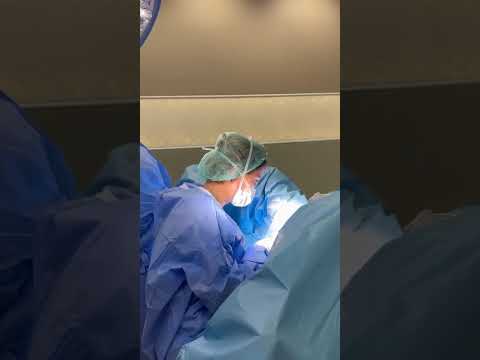
Tubal Reanastomosis, frequently referred to as tubal reversal surgery, is a highly delicate microsurgical procedure designed to restore the functional continuity of a previously blocked or severed fallopian tube. As highlighted in the video [00:25], this intervention has been streamlined significantly, often requiring only a single night of hospitalization for the patient.
The surgical technique demands immense precision, utilizing advanced operative microscopes and exceptionally fine sutures. The surgeon must carefully excise the scarred or blocked portion of the tube and meticulously align the remaining healthy segments. The success of the procedure is heavily dependent on the diameter and structural integrity of the tubal segments being joined together.
Modern approaches to tubal surgery for infertility predominantly utilize laparoscopy or mini-laparotomy techniques. These minimally invasive methods drastically reduce postoperative discomfort, lower the risk of infection, and promote a rapid recovery timeline. Following a successful surgery, patients can theoretically attempt to conceive naturally during every subsequent ovulatory cycle, offering a cumulative pregnancy rate over time.
3. Profiling Ideal Candidates for Tubal Reversal
The decision to proceed with surgical repair rather than assisted reproductive technology is strictly governed by a specific set of clinical criteria. The expert in the video [00:10] clearly outlines that surgery is the optimal path when the absolute only reproductive barrier is the physical occlusion of the tubes. This implies that all other physiological components of reproduction must be functioning flawlessly.
An ideal candidate for a Tubal Reanastomosis procedure in Turkey is typically a younger woman who demonstrates robust ovarian reserve. Ovarian reserve is medically quantified through blood tests measuring Anti-Müllerian Hormone (AMH) and basal Follicle Stimulating Hormone (FSH), alongside an antral follicle count via transvaginal ultrasound. High quality and quantity of remaining oocytes are mandatory to justify the surgical restoration of the natural conception pathway.
Furthermore, the candidate must possess an adequate length of healthy fallopian tube. Generally, a minimum of four centimeters of functional tubal length is required post-surgery to ensure the tube can properly capture the egg and facilitate its transport to the uterus. If previous surgeries or infections have caused extensive damage leading to minimal healthy tissue, the prognosis for surgical success decreases dramatically.
Strict Criteria for Reanastomosis Approval
- Optimal Ovarian Function: Documented evidence of regular ovulation and excellent hormone profiles indicating high egg quality.
- Sufficient Tubal Length: Pre-surgical assessment indicating enough viable, unscarred tubal tissue to perform a successful microscopic anastomosis.
- Absence of Pelvic Adhesions: A pelvic cavity free from severe scar tissue (adhesions) that could restrict tubal mobility or function post-repair.
4. How Advanced Maternal Age Dictates Treatment
One of the most profound variables in reproductive medicine is maternal age. As noted by the specialist [00:38], high age directly correlates with a natural decline in both the quantity and chromosomal quality of a woman's eggs. This biological reality fundamentally alters the strategic approach to treating tubal factor infertility.
For women over the age of thirty-five, and particularly those over thirty-eight, time becomes a critical clinical factor. The process of recovering from tubal surgery and subsequently waiting several months to attempt natural conception expends valuable reproductive time. During this waiting period, the remaining ovarian reserve continues its natural depletion, potentially narrowing the window of opportunity for a successful pregnancy.
In cases of advanced maternal age paired with diminished egg quality, IVF is unequivocally the preferred recommendation over tubal surgery. IVF offers a highly accelerated path to conception by directly retrieving multiple eggs within a single cycle. Furthermore, IVF allows for Preimplantation Genetic Testing for Aneuploidies (PGT-A), which screens embryos for chromosomal abnormalities before transfer, significantly mitigating the increased risk of miscarriage associated with older age.
5. Analyzing Male Factor Infertility Variables
A comprehensive fertility evaluation must place equal weight on both partners. The feasibility of a Tubal Reanastomosis procedure in Turkey is entirely negated if significant male factor infertility is diagnosed. The expert explicitly states [00:45] that any disruption in sperm volume, count, or motility mandates a shift in strategy toward assisted reproductive techniques.
A standard semen analysis evaluates several critical parameters based on World Health Organization (WHO) guidelines. Oligozoospermia refers to a low sperm concentration, while asthenozoospermia indicates poor forward motility. Teratozoospermia signifies a high percentage of sperm with abnormal morphology. For natural conception to occur post-tubal reversal, the male partner must produce a semen sample that meets or exceeds all normal thresholds to independently navigate the female reproductive tract.
When male factor parameters are compromised, restoring the physical pathways of the fallopian tubes provides no clinical benefit, as the sperm lack the required vitality to reach and fertilize the egg naturally. In these specific scenarios, specialized IVF procedures, particularly Intracytoplasmic Sperm Injection (ICSI), become absolutely necessary to bypass both the tubal blockage and the sperm deficiencies simultaneously.
Sperm Parameters Impacting Treatment Choices
- Total Motile Count: The absolute number of sperm swimming in a forward progression. Low counts drastically reduce the odds of natural conception even with open tubes.
- Morphological Integrity: The shape and structure of the sperm head and tail. Abnormal shapes prevent the sperm from penetrating the tough outer shell of the oocyte.
- Seminal Volume: Inadequate fluid volume can hinder the successful transport and survival of sperm within the highly acidic vaginal environment.
6. Clinical Indicators Prioritizing IVF Treatment
In Vitro Fertilization completely circumvents the necessity for functional fallopian tubes. By extracting mature oocytes directly from the ovaries and fertilizing them in a controlled embryology laboratory, IVF effectively bypasses any tubal pathology. As emphasized in the professional consultation [00:50], when the direct, uncompromised goal is achieving immediate pregnancy without risking further time loss, IVF takes absolute precedence.
The IVF treatment cycle involves precise pharmacological stimulation of the ovaries using exogenous gonadotropins to encourage the simultaneous development of multiple ovarian follicles. Once mature, these eggs are harvested via a minor, ultrasound-guided transvaginal aspiration. The subsequent fertilization phase utilizes either conventional incubation or the highly targeted ICSI technique, depending on the earlier seminal fluid analysis.
IVF is particularly advantageous for patients presenting with complex, multifaceted infertility. If a patient presents with blocked tubes alongside concurrent conditions such as severe pelvic endometriosis or anovulatory disorders like PCOS, surgical tubal repair alone will not resolve the entirety of their reproductive challenges. IVF provides a comprehensive, controlled environment that manages multiple infertility factors simultaneously, maximizing the statistical probability of a successful live birth.
7. Comparative Data: Surgery vs Assisted Reproduction
Evaluating the optimal path requires a stark comparison of outcomes, risks, and timelines associated with both a Tubal Reanastomosis procedure in Turkey and standard IVF protocols. Patients must balance the desire for natural conception against the clinical efficacy and speed offered by laboratory interventions.
One critical medical consideration post-tubal surgery is the elevated risk of ectopic pregnancy. While surgery aims to restore normal anatomy, any previously operated tubal tissue carries a higher likelihood of an embryo implanting within the tube itself rather than the uterus. Conversely, standard IVF protocols involve transferring a developed embryo directly into the uterine cavity, which significantly minimizes, though does not entirely eliminate, ectopic risks.
Financial and logistical planning also play substantial roles in this decision matrix. Tubal reversal is a single surgical event that, if successful, allows for cost-free conception attempts indefinitely. IVF is structured in distinct cycles, with each cycle incurring specific costs for medications, laboratory work, and clinical monitoring. However, the per-cycle success rate of IVF generally far exceeds the per-month natural conception rate following surgery, making it the more predictable, though potentially more intensive, option.
Clinical Comparison Matrix
| Clinical Aspect | Tubal Reanastomosis | In Vitro Fertilization (IVF) |
|---|---|---|
| Time to Conception | Requires months of natural trying post-healing. | Accelerated timeline; results known within weeks. |
| Male Factor Handling | Completely ineffective for male infertility issues. | Highly effective using ICSI technology. |
| Multiple Birth Risk | Low; matches standard biological incidence rates. | Can be controlled via elective single embryo transfer. |
| Genetic Screening | Not physically possible prior to natural conception. | Allows for comprehensive PGT-A chromosomal testing. |
8. Reproductive Healthcare Infrastructure in Turkey
The global landscape of reproductive medicine has seen a massive shift toward specialized medical tourism. Patients seeking high-tier fertility treatments, including complex microsurgeries and advanced IVF protocols, are increasingly selecting international destinations. Turkey has established a formidable reputation within this sector, driven by stringent medical regulations and heavy investments in clinical infrastructure.
Clinics offering a Tubal Reanastomosis procedure in Turkey often feature specialized surgical suites equipped with state-of-the-art optical magnification equipment essential for precise tubal repair. Furthermore, the embryology laboratories supporting IVF cycles maintain rigorous international accreditation standards, utilizing advanced time-lapse incubators and highly specialized cryopreservation vitrification techniques.
Beyond the technological capabilities, the expertise of reproductive endocrinologists and specialized microsurgeons in the region is a primary draw. Medical professionals frequently manage high volumes of complex infertility cases, resulting in deeply refined clinical protocols. This combination of advanced facilities and extensive physician experience provides patients with a comprehensive, highly optimized environment for pursuing their reproductive goals, regardless of whether the final recommendation points toward surgical intervention or assisted reproduction.
Ready to Evaluate Your Fertility Options?
Connect with leading reproductive specialists to determine whether tubal surgery or IVF is the most strategic path for your unique medical profile. Get a personalized medical assessment today.
Get Free QuoteView Original Video Transcript
00:00 Hocam hangi hastada tüpler aç?lmal?, hangi hastada tüp bebek yap?lmal??
00:05 Evet biz tüpleri açabiliyoruz ama hangi hastalarda ve ne zaman IVF.
00:10 E?er kad?n?n yumurta kalitesi iyiyse, ya?? gençse, erkekte sperm problemi söz konusu de?ilse...
00:16 Ve bizim tek s?k?nt?m?z tüplerin ba?l? olmas?, kapal? olmas?ysa...
00:21 Ve hasta bununla küçük bir prosedür i?lemle, sadece bir gece hastanede yatarak...
00:26 Tekrar tüplerinin aç?lmas? mümkün.
00:28 Biz de bu noktada tubal reanastomozisi öneriyoruz.
00:32 Fakat hastan?n anne olmas?n? zorla?t?ran bir tak?m unsurlar varsa...
00:37 Mesela yüksek ya?, ileri ya?, yumurta kalitesinde dü?üklük...
00:42 Ya da partnerimizde sperm say?s?nda, volümünde ya da hareketinde herhangi bir bozukluk söz konusu ise...
00:49 O zaman i?i riske atmadan, do?rudan amac?m?z çocuk sahibi olmaksa...
00:54 IVF (Tüp Bebek) çok daha ön plana ç?k?yor.





-Package-in-Kyrenia,-Cyprus-by-Kyrenia-IVF-Center.jpg)



.jpg)









Share this listing