


Choosing the right facial rejuvenation surgery can be an overwhelming journey, especially when navigating the complex medical terminology surrounding facial anatomy. When considering a highly technical deep plane facelift vs SMAS facelift in South Korea, understanding the underlying structural differences is absolutely vital for achieving your desired aesthetic. Patients travel from around the globe to consult with elite specialists in Seoul, seeking advanced techniques that provide dramatic yet imperceptible anti-aging results.
The core philosophy of modern facial plastic surgery has shifted away from simply pulling the skin tighter, which historically led to unnatural, windblown appearances. Today, the focus is on repositioning the descended facial structures back to their youthful anatomical origins. By comprehensively analyzing the surgical approach to retaining ligaments, we can uncover exactly why certain facelift techniques yield superior, longer-lasting, and more natural outcomes for patients dealing with moderate to severe facial sagging.
Video Chapters & Quick Navigation
- Understanding the Difference Between Deep Plane and SMAS Facelift
- What is a SMAS Facelift and Why Are Results Limited?
- The Critical Role of Retaining Ligaments in Facelift Surgery
- The Science Behind Natural Looking Facelift Results in South Korea
- Targeting Marionette Lines and Jowls with Deep Plane Techniques
- How to Avoid Pixie Ear Deformity After Facelift
- Comparing Longevity: SMAS Facelift Recovery Time and Results
- Choosing the Best Facelift Surgeon in Seoul South Korea
Understanding the Difference Between Deep Plane and SMAS Facelift
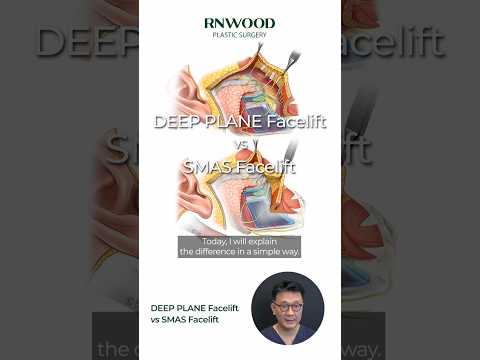
To truly grasp the advancements in aesthetic surgery, one must dive deep into the anatomical layers of the human face. The Superficial Musculoaponeurotic System, commonly known as the SMAS, is a continuous layer of tissue that covers the deeper structures of the cheek and connects to the neck muscles. For decades, manipulating this SMAS layer was considered the gold standard in facial rejuvenation procedures.
However, as surgical techniques have evolved, leading experts have identified fundamental limitations in solely addressing the SMAS. As Dr. Minhee Ryu points out at [00:15], the absolute key differentiator lies in the management of the facial retaining ligaments. The decision of whether to release these rigid structural tethers is what separates an average outcome from a truly transformative one.
When patients inquire about the fundamental difference between deep plane and SMAS facelift surgeries, the conversation must invariably turn to mobility. The anterior portion of the face—the area around the mouth, nose, and mid-cheek—is highly dynamic and prone to significant descent as we age. Successfully restoring this area requires an approach that frees the tissues from their aged, fallen positions rather than merely stretching them against their natural anchor points.
What is a SMAS Facelift and Why Are Results Limited?
A traditional SMAS facelift involves elevating the skin and then tightening the underlying SMAS layer through plication (folding) or imbrication (cutting and overlapping). While this method provides a noticeable improvement over skin-only facelifts of the past, it encounters a significant anatomical roadblock. In this technique, the dense, fibrous bands that anchor the SMAS to the facial bones are left completely intact.
At [00:24], it is clearly explained that during a standard SMAS procedure, the crucial zygomatic and masseteric retaining ligaments are not released. Because these ligaments remain tightly bound to the bone, the surgeon's ability to vertically lift the midface and anterior facial tissues is heavily restricted. The tissues essentially hit a wall of resistance created by these unreleased ligaments.
The Problem with High Skin Tension in SMAS Procedures
When the underlying structural layer cannot move freely due to intact ligaments, the surgeon is forced to find another way to create a smooth contour. As highlighted at [00:36], because the internal movement is limited, the surgeon often needs to pull the outer skin envelope much more aggressively. This compensatory mechanism is the root cause of many undesirable facelift side effects.
Relying on the skin to support the lift creates immense tension across the face. Skin is a remarkably elastic organ designed to stretch and accommodate movement, but it is not engineered to bear the long-term structural weight of the facial tissues. When subjected to this high tension, the skin will inevitably stretch back out over a relatively short period, compromising the longevity of the surgical result.
Furthermore, this excessive pulling is exactly what generates the classic "done" or artificial appearance that patients fear. At [00:45], the connection is made between this high skin tension and a stretched, highly unnatural facial aesthetic. The face appears flattened rather than volumized, erasing the delicate contours that define a youthful visage.
What Are Retaining Ligaments in Facelift Surgery?
To fully appreciate advanced facelift techniques, we must examine the specific anatomy of facial retaining ligaments. These are strong, tree-like fibrous structures that originate from the facial skeleton and extend outward, traversing through the SMAS layer to insert directly into the undersurface of the skin. They act as anchoring points, keeping the facial tissues compartmentalized.
- Zygomatic Ligaments: Located along the cheekbone (zygomatic arch), these ligaments tether the midface tissues. When they age and stretch slightly, they contribute to the formation of malar bags and the deepening of the nasolabial folds.
- Masseteric Ligaments: Positioned along the jawline over the masseter muscle, these fibrous bands restrict upward movement of the lower facial tissues. Their tethering effect is directly responsible for the stubborn appearance of jowls along the mandibular border.
During youth, these ligaments are short and taut, maintaining high, firm cheek contours. As time passes, gravity and volume loss cause the surrounding tissues to descend around these fixed points, creating the visible folds and hollows associated with facial aging. Attempting to lift the face without addressing these rigid anchors is akin to trying to smooth a wrinkled carpet while heavy furniture is still sitting on it.
The Science Behind Natural Looking Facelift Results in South Korea
The deep plane facelift was developed to solve the mechanical limitations of the traditional SMAS lift. This sophisticated procedure requires the surgeon to navigate beneath the SMAS layer, entering an avascular glide plane known as the deep plane. This space sits just above the facial muscles responsible for expression.
By operating in this deeper, sub-SMAS layer, the surgeon gains direct access to the base of the retaining ligaments. As noted at [00:56], a skilled deep plane surgeon will safely and methodically release both the zygomatic and masseteric retaining ligaments. This release is a delicate and highly technical maneuver that requires an intimate knowledge of facial nerve anatomy to perform safely.
The Profound Impact of Full Ligament Release
The moment these retaining ligaments are released, the entire anterior portion of the face becomes mobile as a single, unified composite flap. This includes the skin, subcutaneous fat, and the SMAS layer together. At [01:04], Dr. Ryu emphasizes that when these structural constraints are removed, the midface and lower face can finally move and lift properly in a vertical direction.
Because the tissues are moving as a cohesive unit, the relationship between the skin and the underlying fat remains intact. This preserves the natural volume and contours of the face, avoiding the flattened, skeletal look that can accompany superficial lifts. The result is a profound, yet completely natural looking facelift result characteristic of top-tier surgical work in South Korea.
Targeting Marionette Lines and Jowls with Deep Plane Techniques
The most common complaints driving patients to seek facial plastic surgery revolve around the lower third of the face. The development of heavy jowls obscuring the jawline and deep marionette lines extending downwards from the corners of the mouth are notoriously difficult to correct with non-invasive treatments or superficial surgical methods.
Because the deep plane technique completely mobilizes the tissue by releasing the masseteric ligaments, it offers unparalleled correction of these specific areas. At [01:14], it is outlined how this approach clearly and decisively improves the cheeks, mouth corners, marionette lines, and jowls. The dropped fat pads are physically repositioned back up onto the cheekbones where they originated.
By lifting from this deep foundational layer, the structural support is borne entirely by the strong, fibrous SMAS tissue, not the fragile skin. As confirmed at [01:19], the lifting power comes intrinsically from the deep layer. This allows the skin to simply be gently redraped over the newly elevated facial framework, completely eliminating any horizontal stretching or tension near the mouth.
How to Avoid Pixie Ear Deformity After Facelift Surgery
One of the most tell-tale signs of a poorly executed facelift is the dreaded "pixie ear" deformity. This occurs when the earlobe is pulled downward and forward, attaching directly to the side of the face without a natural curvature. It is an aesthetic complication that immediately signals to observers that cosmetic surgery has taken place.
A pixie ear is almost exclusively the result of high skin tension. When a surgeon relies on the skin to support the lift (as is common when ligaments aren't released), the heavy facial tissues pull backward and downward against the incision lines around the ear. At [00:49], the video warns that standard SMAS lifts carry a significantly higher chance of visible scarring and this specific earlobe deformity due to this exact mechanical tension.
Conversely, understanding how to avoid pixie ear deformity after facelift surgery requires a deep plane approach. Because the deep plane method supports the lift entirely beneath the muscle, the skin tension is virtually zero, as stated at [01:24]. The incisions around the ear heal beautifully without widening, and the earlobe remains completely in its natural, unstressed anatomical position. This results in incredibly discreet scars that are practically invisible even upon close inspection.
Comparing Longevity: SMAS Facelift Recovery Time and Results
When investing in a surgical procedure, patients rightly inquire about the longevity of the results. The durability of a facelift is directly proportional to which tissues are bearing the load of the lift. Skin stretches easily over time; thick, fibrous fascial layers do not.
In a traditional SMAS lift where skin tension is utilized, the initial results may look smooth, but the skin will gradually yield to the weight of the unreleased, heavy tissues beneath it. This inevitably leads to a shorter-lasting result, often requiring secondary revision surgeries much sooner. The initial "tight" feeling during the SMAS facelift recovery time is often just surface tension rather than deep structural security.
The deep plane technique secures the heavy fascial layers with permanent internal sutures to stable, immovable structures like the temporal fascia. Because the skin is completely tension-free, it does not stretch back out. At [01:28], it is highlighted that this tension-free approach yields results that are both highly natural and significantly longer-lasting, often enduring 10 to 15 years before the natural aging process requires further intervention.
Surgical Approach Comparison Breakdown
| Feature | Traditional SMAS Facelift | Deep Plane Facelift |
|---|---|---|
| Retaining Ligaments | Not fully released; tethering remains. | Safely and completely released. |
| Skin Tension | High. Relies on skin pulling for smoothness. | Virtually zero. Skin is gently redraped. |
| Anterior Midface Lifting | Limited mobility and improvement. | Excellent vertical repositioning of cheeks. |
| Risk of Pixie Ear/Wide Scars | Higher risk due to tension on incisions. | Extremely low risk; tension-free closure. |
Why Choose a Top Facelift Surgeon in Seoul, South Korea?
The cost of a deep plane facelift in South Korea is often a driving factor for international patients, but the true draw is the unparalleled expertise of the surgeons. South Korea has established itself as the global epicenter for advanced aesthetic surgery. Surgeons operating in clinics like RNWOOD Seoul undergo rigorous, specialized training focused intensely on facial anatomy and intricate sub-SMAS techniques.
Performing a deep plane lift requires navigating dangerously close to the delicate branches of the facial nerve. This is not a procedure that can be mastered casually. It demands a surgeon who performs facial procedures exclusively, possessing the tactile experience necessary to safely separate the rigid retaining ligaments without damaging surrounding vascular or neurological structures.
By choosing an expert in Seoul, patients are investing in a meticulous, anatomically correct approach. The focus is entirely on structural integrity rather than superficial shortcuts. This dedication to surgical excellence ensures that the lifting comes from the deep layer, avoiding the pitfalls of skin tension and guaranteeing a result that allows patients to age gracefully over the next decade.
Making the Right Choice for Your Facial Anatomy and Goals
In summary, as reiterated at [02:15], the choice between these two procedures comes down to ligament release. In a SMAS facelift, the retaining ligaments are not released, anterior facial improvement is highly limited, and problematic skin pulling is often required to achieve any visible contour change.
On the other hand, the deep plane approach embraces anatomical logic. By expertly releasing these deep tethers, the entire anterior part of the face improves clearly and dramatically. The lifting is firmly rooted in the robust deep layer, ensuring that the skin remains soft, tension-free, and natural-looking.
Ultimately, a successful facial rejuvenation journey begins with an accurate anatomical assessment. Consulting with a board-certified specialist who possesses mastery over deep plane techniques is the most critical step. They can evaluate your specific degree of laxity, explain the exact location of your retaining ligaments, and design a surgical plan that guarantees a refreshed, undetectable, and long-lasting restoration of your youth.
Ready to Restore Your Natural Youthful Contours?
Connect with elite, board-certified facial plastic surgeons in South Korea. Discover how a customized deep plane facelift can safely address jowls and marionette lines with zero skin tension. Take the first step toward long-lasting, imperceptible results today.
Request Your Free ConsultationView Full Video Transcript
[00:00] Hello, this is Dr. Minhee Ryu from RNWOOD Seoul.
[00:04] Many patients ask me about DEEP PLANE Facelift versus SMAS Facelift.
[00:10] Today, I will explain the difference in a simple way.
[00:13] The key point is: Do we Release the Retaining Ligaments... or not?
[00:19] And because of that, can we improve the Anterior part of the face... or not?
[00:24] In a SMAS Facelift, the Zygomatic and masseteric Retaining Ligaments are NOT released.
[00:30] Even if we lift the SMAS layer, Anterior part of the face does NOT improve enough.
[00:36] Because movement is limited, the surgeon often needs to pull the skin more.
[00:42] This may cause: Higher skin tension.
[00:45] Stretched or unnatural look.
[00:49] Higher chance of visible scar & pixie ear deformity.
[00:53] Shorter-lasting result.
[00:55] In a DEEP PLANE Facelift, we safely Release the zygomatic and masseteric Retaining Ligaments.
[01:01] This is the most important difference.
[01:04] When the Retaining Ligaments are released, the Anterior part of the face can move and lift properly.
[01:12] We can clearly improve: Cheeks, Mouth corners, Marionette line, Jowl.
[01:19] The lifting comes from the DEEP Layer, NOT from the Skin.
[01:24] So: Skin tension is very low.
[01:28] The result is natural & long-lasting.
[01:31] Lower risk of visible scar & pixie ear deformity.
[01:35] In Summary. In a SMAS Facelift: Retaining Ligaments are NOT released.
[01:40] Anterior part of the face improvement is limited.
[01:44] More skin pulling is needed.
[01:47] On the other hand, In a DEEP PLANE Facelift: Retaining Ligaments are released.
[01:52] Anterior part of the face improves clearly.
[01:56] Lifting is from the DEEP layer, not skin.








.jpg)









Share this listing