


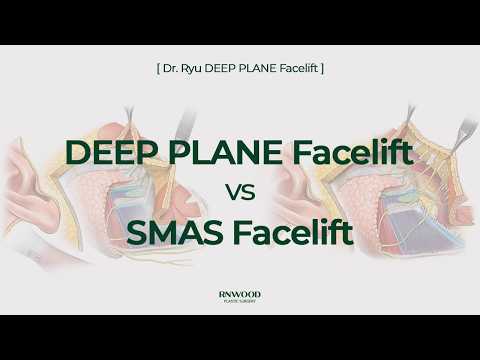
When considering facial rejuvenation, understanding the surgical approach is the most important factor in achieving a natural, youthful appearance. Patients traveling for an advanced deep plane facelift procedure in South Korea often seek clarity on why certain techniques yield better, longer-lasting outcomes. The debate primarily centers around two popular methods: the traditional SMAS lift and the modern deep plane approach.
At the core of this discussion is facial anatomy and how surgeons manipulate underlying tissues to restore a youthful contour. As facial aging progresses, the skin loses elasticity, but more importantly, the foundational fat pads and muscle layers descend. Simply pulling the skin tighter cannot adequately address these structural shifts.
To achieve a truly refreshed look without the telltale signs of surgery, the underlying architecture of the face must be repositioned. This requires a deep understanding of the retaining ligaments that anchor facial tissues to the bone structure. By examining the fundamental differences in how these ligaments are handled, patients can make informed decisions about their aesthetic journey.
Video Chapters
- Understanding Facial Anatomy
- What is a Traditional SMAS Facelift?
- Mechanics of Advanced Deep Plane Surgery
- The Role of Retaining Ligaments
- Comparing Results: Tension vs Structural Lift
- Avoiding Pixie Ear Deformity and Visible Scars
- Ideal Candidates for Anterior Rejuvenation
- Expertise in Seoul South Korea
Understanding Facial Anatomy and the Aging Process for Long Lasting Facial Rejuvenation
The human face is a complex structure made up of interconnected layers including skin, superficial fat, muscle layers, deep fat pads, and bone. At the center of facial plastic surgery is the Superficial Musculoaponeurotic System, commonly known as the SMAS. This continuous layer of tissue covers the deeper structures of the face and neck, acting as a supportive mesh.
As we age, gravity, sun exposure, and the natural loss of collagen cause this SMAS layer to stretch and sag. This downward descent results in the formation of jowls, deepened nasolabial folds, and a loss of jawline definition. Traditional approaches often focused solely on the skin, but modern surgical techniques recognize that true rejuvenation requires lifting this foundational SMAS layer.
Holding the skin and the SMAS layer in place are strong, fibrous bands known as retaining ligaments. These act like internal anchor points, tethering the facial tissues to the underlying facial skeleton. Understanding the anatomy of these ligaments is the key to comprehending why some surgical outcomes look beautifully natural while others appear tight and artificially pulled.
What is a Traditional SMAS Facelift Surgery?
The SMAS lift has been the gold standard in facial plastic surgery for decades. In this procedure, the surgeon makes incisions around the ears, elevates the skin to expose the underlying SMAS layer, and then tightens or folds the SMAS. As mentioned at [00:27], a critical limitation of this technique is that the strong retaining ligaments are generally not released.
Because these dense fibrous attachments remain intact, the surgeon's ability to pull the SMAS layer upward is physically restricted. The tissues remain tethered to the bone in the midface and jawline. Consequently, the SMAS layer can only be shifted a small amount before the tension becomes too great against the immovable ligaments.
Since the underlying muscular and fat layers cannot be adequately lifted, the anterior part of the face—which includes the cheeks and the area around the mouth—does not experience sufficient improvement. To compensate for this lack of internal movement, surgeons are often forced to rely heavily on pulling the overlying skin to achieve a visually tighter contour. This over-reliance on skin pulling leads to numerous aesthetic and structural complications.
The Consequences of High Skin Tension
When the skin is pulled tightly over unreleased internal structures, it operates under high tension. As detailed around [00:41], this limited internal movement requires the surgeon to pull the skin significantly more to generate a visible lift. High skin tension is the primary cause of the "windswept" or stretched appearance often associated with outdated cosmetic procedures.
Beyond an unnatural appearance, high skin tension compromises the longevity of the surgical result. Skin is an elastic organ that will eventually stretch out again when placed under constant mechanical stress. Therefore, procedures that rely on skin tension for lift tend to have shorter-lasting results, as the skin gradually yields to the pull of gravity and the underlying unreleased ligaments.
The Mechanics of Advanced Deep Plane Facelift in South Korea
In stark contrast to traditional methods, the advanced deep plane facelift operates below the SMAS layer. The surgeon dissects beneath the muscle casing, entering a natural glide plane in the face. By working in this deeper anatomical space, the surgeon has direct access to the structural attachments that cause facial sagging.
As highlighted at [01:01], the defining characteristic of this advanced approach is the safe and methodical release of the retaining ligaments. Rather than fighting against these tethers, the deep plane technique surgically frees them. This allows the entire composite flap of skin, fat, and muscle to be repositioned upward as a single, cohesive unit.
Because the lift occurs from the deep layer, the skin overlying the repositioned tissues is not subjected to stretching or pulling. The skin is simply gently re-draped over the newly elevated facial contours. This fundamental shift in mechanical force—lifting from within rather than pulling from without—is what generates a youthful appearance that looks completely natural and completely un-operated.
The Crucial Role of Releasing Zygomatic and Masseteric Retaining Ligaments
The central thesis of superior facial rejuvenation, as introduced around [00:15], is the decision to release or not release the retaining ligaments. There are several ligaments in the face, but the two most critical for midface and lower face rejuvenation are the zygomatic ligaments and the masseteric ligaments. Understanding their function is vital for prospective patients.
The zygomatic ligaments attach the skin and cheek tissue directly to the cheekbone (zygoma). When these ligaments are not released, the descended cheek fat pads cannot be lifted back to their high, youthful position over the cheekbones. By carefully freeing the zygomatic ligaments, the surgeon can restore volume to the midface, alleviating the hollow look that often accompanies aging.
Similarly, the masseteric ligaments tether the tissues of the lower cheek and jawline to the masseter muscle. These ligaments block the upward mobility of the jowls. Releasing the masseteric ligaments allows the descended tissues along the jawline to be swept upward and backward. This creates a sharp, clean jawline contour that is impossible to achieve with a superficial skin pull.
Transforming the Anterior Part of the Face
The lateral part of the face (near the ears) is relatively easy to tighten with any surgical method. However, the anterior part of the face (the central area including the nose, mouth, and chin) is notoriously difficult to correct. As explained at [01:10], when the retaining ligaments are released, the anterior part of the face can move and lift properly.
This comprehensive mobilization provides dramatic improvements to specific anterior zones that trouble many patients. The cheeks are elevated, the heavy folds around the mouth corners are softened, and the deep marionette lines that cause a frowning appearance are smoothed out. The jowls are entirely repositioned, restoring a smooth transition from the chin to the ear.
Comparing Results: Unnatural Skin Tension vs Deep Structural Lifting
When evaluating facial plastic surgery options, the difference in surgical mechanics translates directly into vastly different physical outcomes. The fundamental distinction lies in where the actual lifting force is applied. If the force is applied to the skin, the results are compromised. If the force is applied to the deep structural layers, the results are optimal.
Because the deep plane approach relies on internal repositioning rather than external stretching, the tension on the skin is virtually eliminated. The skin remains soft, pliable, and retains its natural texture and pore structure. It does not look shiny or pulled tight across the cheekbones, which is a common complaint among patients who have undergone superficial lifts.
Furthermore, releasing the ligaments provides a highly durable lift. Because the internal structures are firmly secured in their new, elevated positions, and there is no constant downward pull from tight skin, the results are exceptionally long-lasting. Patients enjoy a refreshed appearance that endures the test of time much better than traditional methods.
| Feature Comparison | SMAS Facelift | Deep Plane Facelift |
|---|---|---|
| Retaining Ligaments | Not Released | Safely Released |
| Skin Tension | High (stretching required) | Very Low (natural draping) |
| Anterior Face Improvement | Limited improvement | Clear, comprehensive lifting |
| Risk of Pixie Ear | Higher risk due to tension | Significantly lower risk |
| Result Longevity | Shorter-lasting | Natural and long-lasting |
How to Avoid Pixie Ear Deformity and Visible Facelift Scars
One of the most feared complications of facial plastic surgery is the creation of obvious surgical signs. As mentioned at [00:54], procedures that utilize high skin tension carry a significantly higher chance of visible scars and pixie ear deformity. Understanding why this happens helps patients appreciate the benefits of advanced surgical techniques.
A "pixie ear" deformity occurs when the tension from the pulled facial skin drags the earlobe downward, elongating it and attaching it directly to the side of the cheek. This creates an unnatural, pointed appearance to the bottom of the ear. This complication is a direct result of relying on the skin, rather than the deep tissues, to hold up the heavy weight of the descended facial fat and muscle.
Similarly, when surgical incisions are closed under heavy tension, the body's natural healing process creates wider, thicker scar tissue to compensate for the mechanical stress. Because the deep plane approach lifts from the deep layer and completely eliminates tension on the closure lines, the skin edges heal beautifully. This results in nearly imperceptible scars that are easily hidden within the natural contours of the ear and hairline.
Ideal Candidates for Comprehensive Anterior Facial Rejuvenation Procedures
Determining the right surgical approach depends entirely on the specific aging concerns of the patient. While a superficial lift might be adequate for a younger patient with very mild skin laxity and no structural descent, it falls short for those experiencing moderate to severe facial aging. The deep plane technique is designed for those who require comprehensive structural correction.
Ideal candidates for the advanced release of retaining ligaments are individuals who have noticed a significant flattening of their midface and cheeks. If you are experiencing heavy, drooping tissue at the corners of your mouth that creates a permanent sad or tired expression, you require anterior facial improvement. As noted around [01:18], these specific zones can clearly improve with the deep anatomical approach.
Furthermore, patients with pronounced jowls and deep marionette lines are prime candidates. Because the deep plane lift effectively frees the masseteric ligaments, it can cleanly elevate the jawline tissue, restoring a crisp, youthful angle to the lower face and neck. Patients seeking a one-time, long-lasting investment in their appearance will benefit most from this structurally sound technique.
Why Seoul, South Korea is the Premier Destination for Facial Plastic Surgery
South Korea has established itself as the global epicenter for advanced aesthetic and plastic surgery. The level of precision, surgical innovation, and anatomical understanding found in Seoul is unparalleled. Surgeons in South Korea perform a high volume of complex facial reconstructive and cosmetic procedures, leading to an incredibly refined skill set, particularly with intricate surgeries like the deep plane lift.
The ability to safely and effectively release the zygomatic and masseteric retaining ligaments requires profound anatomical knowledge and surgical dexterity. This is not a procedure that can be performed casually; it requires the expertise of a highly specialized facial plastic surgeon. Clinics in Seoul are equipped with state-of-the-art technology and adhere to rigorous safety protocols to ensure optimal patient outcomes.
For patients traveling internationally for surgical care, choosing a recognized expert who specializes in deep structural facial lifting is paramount. The meticulous attention to detail ensures that the lifting comes strictly from the deep layer, avoiding the pitfalls of skin tension. The result is a profoundly natural, refreshed, and youthful appearance that honors the patient's unique facial identity without looking artificially altered.
Key Takeaways for Facial Rejuvenation Patients
- SMAS Limitations: Traditional methods leave retaining ligaments intact, restricting movement and limiting midface rejuvenation.
- Skin Tension Risks: Relying on skin pulls leads to an unnatural stretched look, wider scars, and potential earlobe deformities.
- Ligament Release: Safely freeing zygomatic and masseteric ligaments is essential for lifting the anterior portion of the face.
- Deep Structural Lift: Elevating tissue from below the SMAS layer ensures zero skin tension and a remarkably natural outcome.
- Long-Term Longevity: Because the internal anatomy is firmly repositioned, the aesthetic results last significantly longer than superficial skin lifts.
Ready to Transform Your Appearance with Expert Care?
Discover if an advanced deep plane facelift procedure in South Korea is the right choice for your comprehensive facial rejuvenation. Connect with top-tier specialists to evaluate your unique anatomy and aesthetic goals today.
Get Free QuoteView Full Video Transcript
[00:00] Hello, this is Dr. Minhee Ryu from RNWOOD Seoul. Many patients ask me about Deep Plane Facelift versus SMAS Facelift. Today, I will explain the difference in a simple way.
[00:15] The key point is: Do we release the retaining ligaments... or not? And because of that, can we improve the Anterior part of the face... or not?
[00:27] In a SMAS Facelift, the zygomatic and masseteric retaining ligaments are NOT released. Even if we lift the SMAS layer, Anterior part of the face does not improve enough.
[00:41] Because movement is limited, the surgeon often needs to pull the skin more. This may cause Higher skin tension. Stretched or unnatural look.
[00:54] Higher chance of visible scar & pixie ear deformity. Shorter-lasting result.
[01:01] In a Deep Plane Facelift, we safely Release the zygomatic and masseteric retaining ligaments. This is the most important difference.
[01:10] When the retaining ligaments are released, the Anterior part of the face can move and lift properly.
[01:18] We can clearly improve: Cheeks, Mouth corners, Marionette line, Jowl. The lifting comes from the Deep Layer, NOT from the Skin. So: Skin tension is very low.
[01:33] The result is natural & long-lasting. Lower risk of visible scar & pixie ear deformity.
[01:41] In Summary. In a SMAS Facelift: Retaining ligaments are NOT released. Anterior part of the face improvement is limited. More skin pulling is needed.
[01:55] On the other hand, in a Deep Plane Facelift: Retaining ligaments ARE released. Anterior part of the face improves clearly. Lifting is from the deep layer, not skin.
[02:08] I hope this helps you understand the difference between DEEP PLANE Facelift and SMAS Facelift. If you have more questions, please leave a comment.
[02:18] I will make more educational content for you. This is Dr. Minhee Ryu from RNWOOD Seoul. Thank you!










.jpg)









Share this listing